Reviewed by the XROSS HOUSE team — a Tokyo-based operator of share houses and furnished apartments across 11 prefectures in Japan, with more than 50,000 residents housed to date.
- The JLPT (Japanese-Language Proficiency Test) has 5 levels. N5 is the easiest and N1 is the hardest.
- In 2026 the test is held twice: Sunday, July 5 and Sunday, December 6. Some overseas cities hold it only once a year.
- Every level is scored out of 180. To pass, you need the overall pass mark and the minimum score in each section.
- For the Specified Skilled Worker (i) visa, N4 or above (or JFT-Basic) meets the Japanese requirement in most fields.
- The certificate never expires, but employers and schools can set their own rules on how recent it must be.
Planning a move to Japan? Ask us about housing
What is the JLPT?
The JLPT is the most widely taken Japanese test for people whose first language is not Japanese. It is run by the Japan Foundation and Japan Educational Exchanges and Services (JEES). According to the official site, about 1.9 million people applied worldwide in 2025, the largest number so far.
Employers, schools and the immigration system all use JLPT results as a common yardstick. That is why the question most readers have is not only "how hard is it?" but "which level do I actually need?" This guide answers both.
The JLPT is a multiple-choice test with machine-scored answer sheets. There is no speaking or writing section, so a certificate shows how well you read and listen, not how well you speak.
Source: JLPT, About the test, JLPT statistics and JLPT FAQ (as of October 2026)
JLPT levels N5 to N1 explained
The table below sums up the official level descriptions in plain words, with what each level means for daily life in Japan.
| Level | What the official summary says | What it means in daily life |
|---|---|---|
| N5 | Some basic Japanese: hiragana, katakana and basic kanji, and short, slow conversations | You can read simple signs and greet neighbors. Forms and contracts still need help |
| N4 | Basic Japanese: familiar daily topics with basic words and kanji, and slowly spoken conversation | You can shop, take trains and handle simple chats. This is the line for many entry-level work visas |
| N3 | A bridge level: everyday topics, newspaper headlines and everyday conversation at close to natural speed | You can follow most daily conversations and simple instructions at work |
| N2 | Everyday Japanese plus, to a degree, a wider range of situations: clear articles and news at close to natural speed | You can work in a Japanese-speaking team. Many office job listings ask for this level |
| N1 | Japanese in a wide range of situations: complex and abstract writing, and natural-speed news and lectures | Close to professional use. Useful for roles that need formal Japanese |
Source: JLPT, N1-N5: Summary of linguistic competence required for each level (as of October 2026)
Search for a room
Only furnished properties with appliances are listed!
Test sections, timing and passing scores
Sections and test time
| Level | Sections and time |
|---|---|
| N1 | Vocabulary, Grammar and Reading 110 min / Listening 55 min |
| N2 | Vocabulary, Grammar and Reading 105 min / Listening 50 min |
| N3 | Vocabulary 30 min / Grammar and Reading 70 min / Listening 40 min |
| N4 | Vocabulary 25 min / Grammar and Reading 55 min / Listening 35 min |
| N5 | Vocabulary 20 min / Grammar and Reading 40 min / Listening 30 min |
The official site notes that test times may change, so check the guide for your test session.
How passing works
Every level has a total score of 0 to 180. N1, N2 and N3 split this into three sections of 60 points each: Vocabulary and Grammar, Reading, and Listening. N4 and N5 use two sections: Vocabulary, Grammar and Reading (120 points) and Listening (60 points).
You pass only if you reach the overall pass mark and the minimum in every section. A high total does not help if one section falls below its minimum.
| Level | Overall pass mark | Section minimums |
|---|---|---|
| N1 | 100 / 180 | 19 in each of the 3 sections |
| N2 | 90 / 180 | 19 in each of the 3 sections |
| N3 | 95 / 180 | 19 in each of the 3 sections |
| N4 | 90 / 180 | 38 in Vocabulary, Grammar and Reading / 19 in Listening |
| N5 | 80 / 180 | 38 in Vocabulary, Grammar and Reading / 19 in Listening |
Everyone who takes the test receives a Score Report. Those who pass also receive a Certificate of Proficiency.
Source: JLPT, Test sections and test time and JLPT, Scoring and pass marks (as of October 2026)
2026 test dates, registration and results
Test dates
The JLPT is held twice a year. In 2026 the first test is on Sunday, July 5 and the second test is on Sunday, December 6. In Japan both sessions are held. Overseas, some cities hold the test only in July or only in December.
How to register
- In Japan: the test is run by JEES. Create a MyJLPT account (you can do this at any time), apply and pay online, receive your test voucher, and check your results on MyJLPT after the test.
- Outside Japan: you apply through the local host institution in your test city. The registration method and period differ by city, so check the overseas test site list on the JLPT website early.
When results come out
For the July 2026 test, online results were available from August 27, 2026. Score Reports for the July test are mailed in early September in Japan, and reach overseas test takers through host institutions around mid-October. For the December test, Score Reports are mailed in early February in Japan and handed out overseas around mid-March.
If you need a certificate for a job or visa application, plan around these dates. A December test usually means waiting until the following year for the paper certificate.
Source: JLPT, About the test, JLPT, Application in Japan and JLPT, Results online (as of October 2026)
Search for a room
Only furnished properties with appliances are listed!
Which JLPT level do you need for work and visas?
The immigration rules name JLPT levels only for some statuses. The table below shows where a level appears in official rules. For everything else, the level you need is set by the employer or school.
| Goal | Japanese requirement |
|---|---|
| Specified Skilled Worker (i), most fields | JLPT N4 or above, or the JFT-Basic test, plus a skills test for the field |
| Specified Skilled Worker (i), nursing care | N4 or above (or JFT-Basic) plus the Nursing Care Japanese Language Evaluation Test |
| Specified Skilled Worker (i), automobile transport (taxi and bus drivers) and railway train operation | N3 or above |
| Highly Skilled Professional (points system) | No JLPT is required, but N1 and N2 are listed as bonus-point items in the points table |
Under the Specified Skilled Worker system, people who completed Technical Intern Training (ii) may be exempt from the skills and Japanese tests. Our SSW visa guide explains the whole process, and our Japan work visa guide covers the other working statuses.
These are general rules. Whether you qualify depends on your own case, so check the official pages and confirm with the immigration office or your employer.
Source: Specified Skilled Worker, steps, Specified Skilled Worker (i), nursing care and Immigration Services Agency, Points table for Highly Skilled Professionals (PDF) (as of October 2026)
Level and job type: a practical view
- N4 to N3: common for factory, food service, construction and care roles, where much of the training is hands-on.
- N2: often listed for office jobs, customer service and roles where you read emails and documents in Japanese.
- N1: often listed for translation, interpretation and roles that need formal business Japanese.
- English-speaking roles: IT and English teaching jobs may not ask for a JLPT level at all. Our guides to IT jobs in Japan and teaching English in Japan cover these.
Job listings differ a lot, so read each one carefully. Even when a role does not require Japanese, N4 or N3 makes daily life far easier: reading train signs, talking to a doctor, or sorting rubbish correctly.
Starting work in Japan? Ask us about a furnished room
How to prepare for the JLPT in Japan
Many people come to Japan before they reach their target level and study here. A Japanese language school gives you structured classes, and daily life gives you constant practice. Our guide to Japanese language schools in Japan explains how schools work and what they cost. If you come as a student, read our Japan student visa guide too.
A few habits help most learners:
- Take a past-style practice test early. The official site publishes sample questions, so you can find your weakest section before you choose a level.
- Train listening every day. Each section has its own minimum, and listening is where many people lose points.
- Pick a level you can pass with a margin. Passing N3 is more useful on a CV than failing N2.
- Use Japanese at home. Living with Japanese speakers or other learners gives you real conversations every day.
Search for a room
Only furnished properties with appliances are listed!
Where to live while you study or start work
Whether you arrive for language school or a new job, the first months are busy: residence card, bank account, phone and classes. A home that is ready on day one takes one big task off the list. Our guides to the residence card and opening a bank account cover the paperwork.
| Option | What to expect |
|---|---|
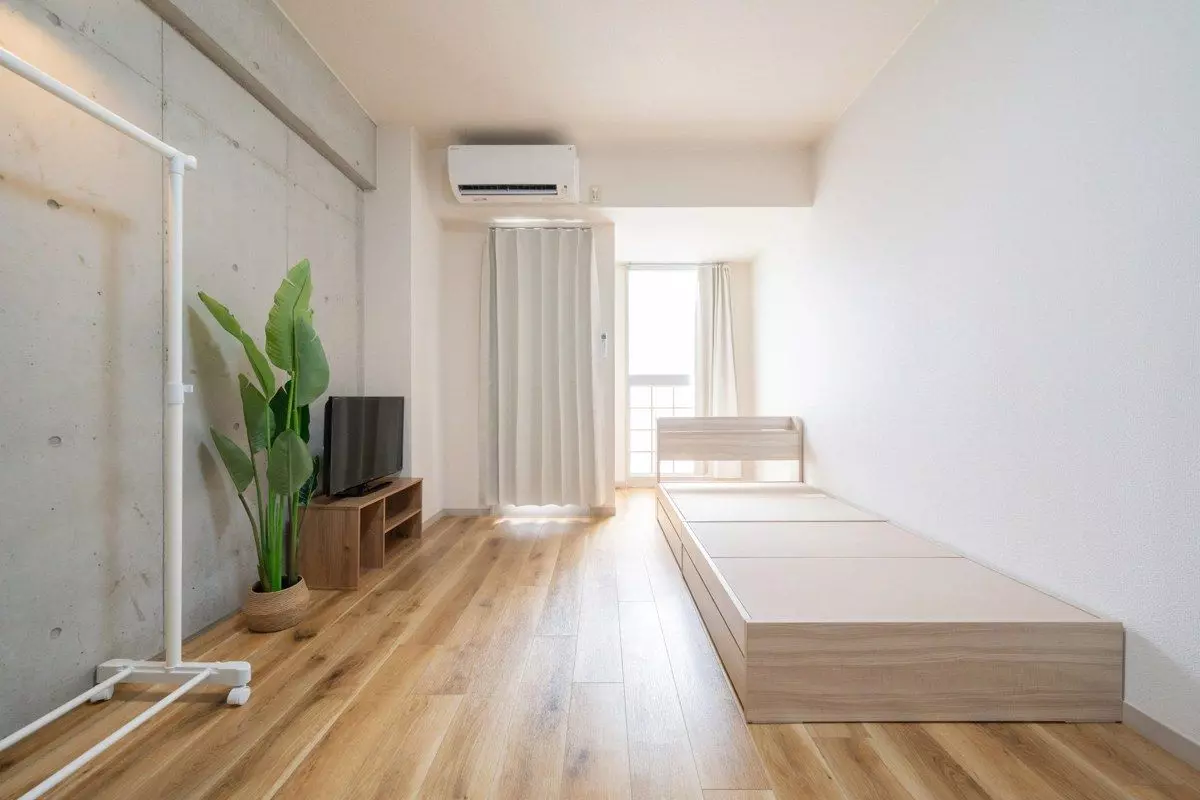
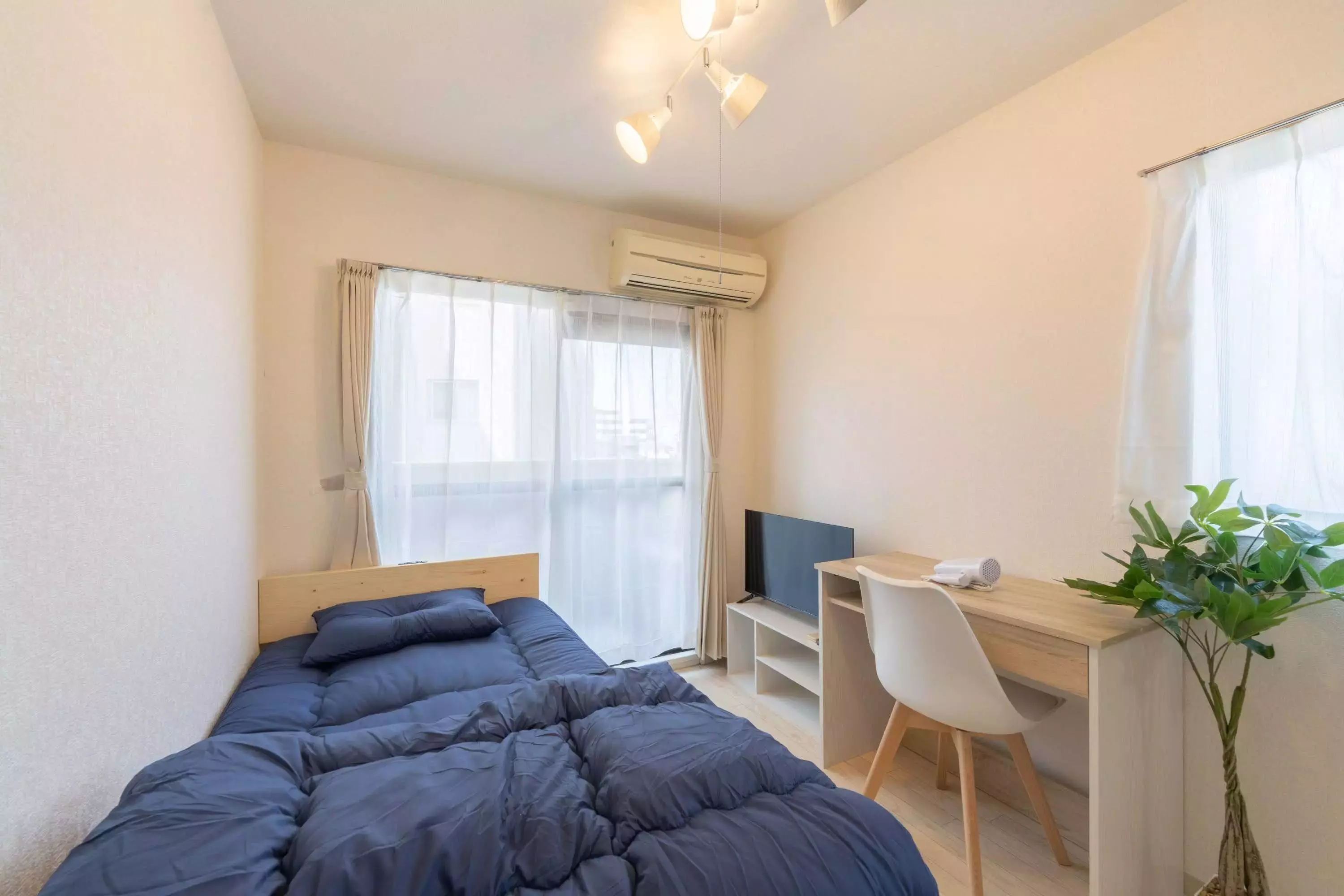
| Share house | Furnished room, shared kitchen and bathroom, and utilities and Wi-Fi in one monthly fee. Daily chances to speak Japanese with other residents |
| Furnished apartment | Your own kitchen and bathroom, with furniture and appliances already in the room. Quiet space for study |
| Regular apartment | Usually needs a deposit, key money, an agency fee and a guarantor, and you must buy furniture. Hard to arrange from abroad |
How your home can help your Japanese
Where you live shapes how much Japanese you hear each day. A few points to weigh when you choose:
- Listening practice: in a share house you hear Japanese in the kitchen and living room, and you use it to sort out small things like rubbish days or bathroom times. This is the kind of everyday listening the JLPT tests.
- Low setup time: a furnished room means no furniture shopping or utility contracts in your first weeks, so more time goes to study.
- Quiet when you need it: if you study best alone, a private room in a share house or a furnished apartment gives you your own desk space.
- Commute to class: choose an area on a direct train line to your school or workplace. Less time on trains means more time for practice tests.
XROSS HOUSE runs share houses and furnished apartments in 11 prefectures: Tokyo, Kanagawa, Saitama, Chiba, Osaka, Aichi, Hyogo, Kyoto, Nara, Fukuoka and Hokkaido. Many language students and new workers start in a share house, where Japanese practice comes with everyday life. If you want your own space for study, a furnished apartment is the other choice.
- Share houses: a furnished private or shared room with a shared kitchen, bathroom and living room. Utilities and shared supplies are part of the monthly common service fee, and free shared Wi-Fi is included. Browse our share houses in Tokyo.
- Furnished apartments: your own home with a private kitchen and bathroom. Furniture and appliances are included. You set up your own internet.
Start-up costs compared with a typical rental
| Item | Typical Japanese rental | XROSS HOUSE |
|---|---|---|
| Deposit, key money and agency fee | Deposit and key money are often around one month's rent each, plus an agency fee | No deposit, no agency fee. One-time initial fee: share house ¥30,000; furnished apartment ¥30,000 during the current campaign (normally ¥50,000). Guarantee fees are separate (see below) |
| Furniture and appliances | Usually you buy your own | Included |
The initial fee is the only one-time payment to XROSS HOUSE at move-in, but it is not your total. Rent and the guarantee company charges below are paid in addition. Before you sign, ask for a written estimate that lists every cost from move-in to move-out, including move-out costs, so you know the full amount in advance. See our fees page for current details.
Guarantor and guarantee company
- No personal joint guarantor is needed.
- Individual contracts generally require joining a rent guarantee company. An initial guarantee fee and a monthly guarantee fee are charged separately, on top of the initial fee. The amounts are given in your estimate.
- If you pay everything from the initial costs through to the move-out costs in full at move-in, you do not need to join a guarantee company.
You can view rooms online, sign online and apply from abroad. Our team answers in English and other languages. XROSS HOUSE also has women-only properties.
Studying Japanese in Japan? Contact us about a room
If you are from India or the Philippines, our guides for Indians living in Japan and jobs in Japan for Filipinos add country-specific tips.
FAQ: JLPT levels and living in Japan
What JLPT level do I need to work in Japan?
It depends on the visa and the job. The Specified Skilled Worker (i) visa needs N4 or above (or JFT-Basic) in most fields. Many office jobs list N2, while some IT and English teaching roles need no JLPT at all (as of October 2026).
When is the JLPT held in 2026?
On Sunday, July 5 and Sunday, December 6, 2026. Some overseas cities hold only one of the two sessions, so check your local host institution (as of October 2026).
What score do I need to pass the JLPT?
Every level is scored out of 180. The overall pass mark is 100 for N1, 90 for N2, 95 for N3, 90 for N4 and 80 for N5. You must also reach the minimum score in every section (as of October 2026).
Does a JLPT certificate expire?
No. The official FAQ says the certificate never expires. Employers and schools may still ask for a recent result, so check their rules.
Is N4 enough to live in Japan?
N4 covers basic daily topics: shopping, trains and simple conversations. Contracts, medical visits and city office procedures can still be hard, so many people keep studying toward N3 after they arrive.
Does the JLPT test speaking?
No. The JLPT is a multiple-choice test of vocabulary, grammar, reading and listening. Employers often check speaking in the interview instead.
Can I rent a room in Japan before I pass the JLPT?
Yes. XROSS HOUSE does not ask for a JLPT result. You can apply from abroad, and our team answers in English. Individual contracts generally require joining a guarantee company, with guarantee fees charged separately.
Talk to our English-speaking team about your room
Whichever JLPT level you are aiming for, life in Japan is the best classroom. If you are planning to study or work here and need a furnished room, XROSS HOUSE supports your search for a home, so please feel free to contact us.