Reviewed by the XROSS HOUSE team — a Tokyo-based operator of share houses and furnished apartments across 11 prefectures in Japan, with more than 50,000 residents housed to date.
- Filipinos mainly work in Japan through four routes: Specified Skilled Worker, Technical Intern Training (being replaced by Employment for Skill Development from 1 April 2027), the Engineer/Specialist in Humanities/International Services status, and the government-run nurse and caregiver program under the Japan–Philippines Economic Partnership Agreement (JPEPA).
- For Specified Skilled Worker (i), you pass a skills test for your field and a basic Japanese test. A university degree is not the entry ticket, and the tests are held in the Philippines.
- Overseas jobs are processed through the Department of Migrant Workers (DMW, formerly POEA). A job offer you cannot trace to a licensed agency and an approved job order is a warning sign.
- DMW's guidance says never to pay a fee without an employment contract and an official receipt, and never to accept a tourist visa for work.
- Line up your first address before you fly. City offices need it for registration after you land.
Planning to work in Japan? Ask about your first home
Work in Japan for Filipinos: which visa routes are real?
Japan does not have a single "work visa". It grants a status of residence tied to a type of work, and each status has its own rules. The table below lists the routes most Filipino applicants meet, with the official page behind each one (as of October 2026).
| Route | Who it suits | What the official pages say |
|---|---|---|
| Specified Skilled Worker (i) | Hands-on jobs in 19 fields such as nursing care, construction, food service, accommodation and agriculture | Pass a skills test and a Japanese test; stay up to 5 years in total; family cannot accompany you |
| Specified Skilled Worker (ii) | Experienced workers in 11 fields | No upper limit on stay; family can accompany you |
| Technical Intern Training, then Employment for Skill Development | People starting without prior skills | The current program is being replaced; the new one starts on 1 April 2027 |
| Engineer/Specialist in Humanities/International Services | Office, engineering, translation, design and language-teaching roles | Generally a university degree or equivalent education; stay of 5 years, 3 years, 1 year or 3 months |
| JPEPA nurse and certified careworker candidates | Nurses and careworkers placed through a government program | Applications go through DMW with JICWELS; language training comes first |
Sources: official Specified Skilled Worker page, the ISA Engineer/Specialist page and the Immigration Services Agency outline of the Employment for Skill Development program (revised July 2026).
Specified Skilled Worker: the route most searches are really about
When people search "Japan hiring for Filipino" or "Japan job vacancies for Filipino", the vacancies behind the results are usually Specified Skilled Worker jobs. The official Specified Skilled Worker page says the status covers 19 fields for type (i), including nursing care, construction, manufacturing, agriculture, fishery and hospitality. It also states that you earn the same salary as Japanese workers doing the same work.
The Philippines has a formal link to this system. According to the Ministry of Foreign Affairs of Japan, a Memorandum of Cooperation on the Specified Skilled Worker system was signed with the Philippine government on 19 March 2019. Its stated purpose is a framework for sending and accepting workers properly, including the elimination of malicious intermediary organizations.
Technical Intern Training and what replaces it
Japan passed a law in June 2024 that restructures Technical Intern Training into a new program called Employment for Skill Development. The Immigration Services Agency outline of the Employment for Skill Development program (revised July 2026) says it comes into operation on 1 April 2027. The aim is to build skills to Specified Skilled Worker (i) level through three years of employment in fields facing labor shortages.
The outline also describes the entry level and the way out. Before you start working you need to pass a basic Japanese test (for example JFT-Basic or JLPT N5) or take equivalent training. Changing employers is allowed once you meet set conditions, which include passing a skills test and a higher Japanese test. To move on to Specified Skilled Worker (i), you pass the skills evaluation and a Japanese test at the A2.2 level, for example JLPT N4. As of July 2026, the only Specified Skilled Worker fields not set up for the new program are motor transport and aviation.
Engineer/Specialist and office jobs
This status covers work that needs technical or humanities knowledge, or knowledge based on foreign culture. The ISA lists engineers, interpreters, designers, language instructors and marketing staff as examples. The usual education requirement is a university degree or equivalent education. Read the full conditions on the ISA Engineer/Specialist page before you apply.
For a deeper look at how work statuses compare, see our Japan work visa guide. If your plan is English teaching, our teach English in Japan guide covers that route. Readers who want to compare notes can also see our sister guide on jobs in Japan for Indians.
How the DMW (POEA) process works for Japan jobs
The Department of Migrant Workers took over from the Philippine Overseas Employment Administration (POEA), and the old POEA pages are still archived on the DMW website. The practical rule has not changed: legitimate overseas recruitment runs through licensed agencies with approved job orders.
- Find the employer and the job order. The archived DMW guidance says job vacancies abroad are only prospects until a concrete job order is on file.
- Check the agency. Confirm on the DMW website that the agency is licensed and that it holds a job order for the job you are applying for.
- Take the required tests. For Specified Skilled Worker, that means the skills test and the Japanese test described above. The official exam page lists test dates in the Philippines, and says people who completed Technical Intern Training do not need to retake the tests in the same field.
- Sign an employment contract. The contract is what your visa application and your Philippine processing are based on.
- Complete Philippine processing. Departing workers are processed by DMW, including the Overseas Employment Certificate (OEC) used as exit clearance. Ask your agency or the DMW for the current requirements.
- Visa and travel. Your Japanese employer files for a Certificate of Eligibility, and you then apply for the visa at the Japanese embassy or an authorized center.
Processing rules, fees and document lists change. We are a housing provider and cannot judge whether any individual qualifies for a status of residence or a recruitment program. Confirm your own case with DMW and the Embassy of Japan in the Philippines, and with the Foreign Residents Support Center in Japan once you arrive.
In January 2026, the DMW's Migrant Workers Office in Osaka posted an advisory warning applicants against submitting forged test certificates under the Specified Skilled Worker system.
Know your start date? Reserve your first home in Japan
Search for a room
Only furnished properties with appliances are listed!
Illegal recruiters and placement fees: what DMW tells applicants
The DMW publishes warning signs worth reading before you pay anyone.
Warning signs listed by DMW
- Fees without receipts. The agent collects a placement fee or any other fee and gives no official receipt.
- Promises of a fast flight. The recruiter guarantees quick deployment, or offers to send you on a tourist or visit visa. DMW's guidance says not to accept a tourist visa for work.
- No licensed office. Deals are made in public places or by house-to-house visits instead of at the agency's registered address.
- Medical exams or training before an employer exists. You are asked to pay for either one with no confirmed employer.
- No contract and no visa details. The recruiter cannot show an employment contract or a work visa.
Sources: the DMW archive pages on how to identify an illegal recruiter and avoid illegal recruitment.
What about placement fees?
The archived DMW guidance says not to pay more than the allowed placement fee, and not to pay anything without a valid employment contract and an official receipt. Fee rules differ by program and have been updated over time, so ask the DMW which rules apply to your program before you pay anyone.
Jobs in Japan for Filipinos without experience
"Jobs in Japan for Filipino without experience" is one of the most-searched versions of this topic, and the honest answer depends on the route.
- Specified Skilled Worker (i): you need to pass tests, not hold years of experience. The skills test is specific to your field, and the Japanese test is JFT-Basic or JLPT. People without work history can prepare for the exam, though passing still takes real study time.
- Employment for Skill Development: it is designed for people who enter without skills, and it starts on 1 April 2027. Before then, Technical Intern Training is the program in operation.
- Engineer/Specialist: this is the harder route to enter without a background, because the status looks at your education and the fit between your studies or experience and the job.
Search for a room
Only furnished properties with appliances are listed!
Salary: what can be said honestly
No official page promises a particular salary for these routes. The Specified Skilled Worker page says pay is the same as Japanese workers doing the same job, so the useful question to ask any employer is what a Japanese colleague in the same role earns, and what is deducted for housing and utilities. Wages vary by region and sector, so we do not quote a monthly figure here.
Caregiver jobs in Japan for Filipinos
Nursing care is one of the 19 Specified Skilled Worker fields, so caregiver jobs are open through that route once you pass the nursing care skills test and the Japanese test.
There is also a separate government program for nurses and careworkers under JPEPA. The Embassy of Japan in the Philippines publishes each call on its JPEPA candidates page, with applications taken by DMW in cooperation with JICWELS. Accepted candidates study Japanese before they start work at hospitals and care facilities. Quotas, training periods and conditions are set in each call, so read the current announcement on the embassy or DMW site.
Starting caregiver work in Japan? Plan your housing early
Search for a room
Only furnished properties with appliances are listed!
Where to live when you start work in Japan
Whatever route you take, you will need an address. After landing, you register at the city or ward office, and many procedures that follow depend on that address, including insurance. See our National Health Insurance guide for how that works.
A typical Japanese rental is built for residents who already live there: a landlord may ask for a Japanese guarantor, the room is empty, and upfront payments can add up to several months' rent. A newcomer who has just arrived on a contract is better served by a place that is ready to live in. Some employers also arrange company housing, and if yours does not, our moving to Japan housing guide compares the options.
Specified Skilled Worker (i): your employer must help with housing
If you come as a Specified Skilled Worker (i), your employer is required to give you 10 kinds of support, and housing assistance is one of them. According to the official support page (as of October 2026), someone from the company serves as the guarantor for the home you will live in, or the company rents you housing it holds. The same support covers help with opening a bank account and signing up for a phone, electricity and gas.
So ask your employer about housing before you sign: who arranges it, whose name the contract is in, and how the cost is deducted from your pay. If the company wants to rent a furnished room for you, XROSS HOUSE handles corporate contracts, and no guarantee company is needed for them.
XROSS HOUSE share houses: the common first home
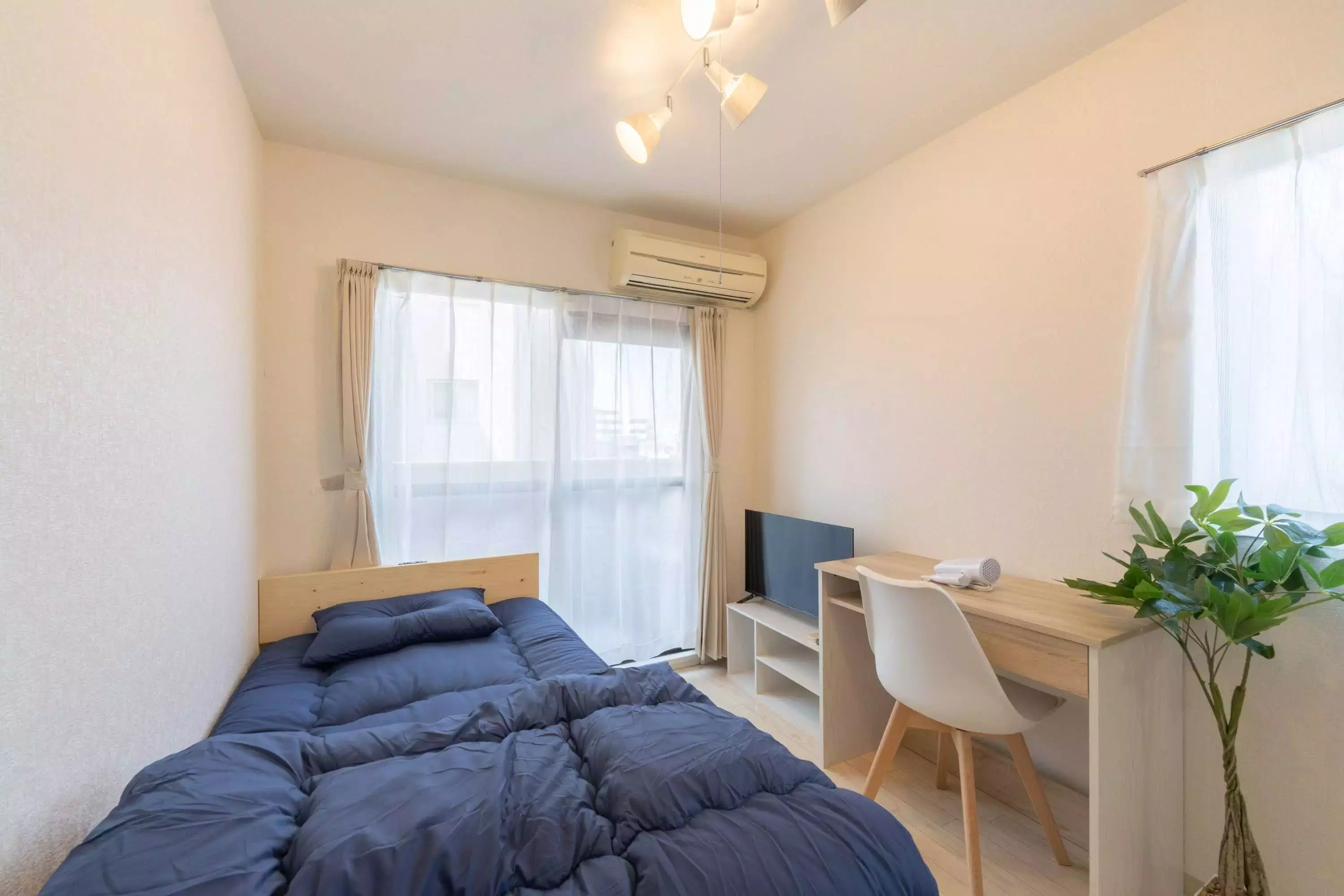
A share house gives you a furnished room, either private or shared, and shared use of the kitchen, bathroom and living room. Wi-Fi comes with the share house's monthly common fee. It is the lower-cost way to start, and living with other residents helps when everything around you is new.
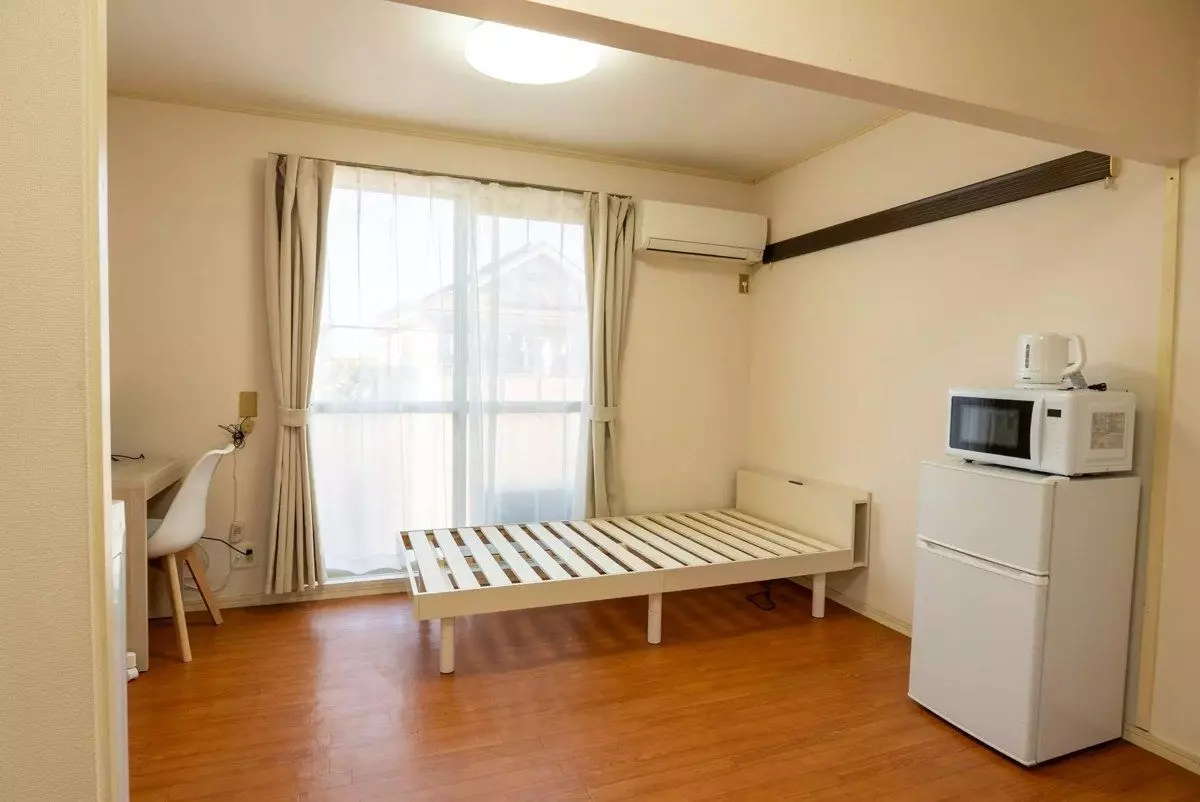
Furnished apartments: your own space
A furnished apartment is a room of your own with a private kitchen and bathroom, and furniture and appliances are already inside. Internet is not included, so arrange it separately.
| Share house | Furnished apartment | |
|---|---|---|
| Room | Furnished private or shared room; shared kitchen, bathroom and living room | Own room with private kitchen and bathroom |
| Furniture and appliances | Furnished (varies by room type) | Included (varies by property) |
| Registration fee | ¥30,000 | ¥30,000 under a current campaign (normally ¥50,000) |
| Deposit and agency fee | None | None |
| Minimum stay | From 1 month | From 1 month |
The registration fee is the first payment on your contract, and it is not your total. Rent, plus the guarantee company charges described below, are paid in addition. Details are on our fees page.
Do you need a guarantor?
- No personal joint guarantor is needed.
- For individual contracts, joining a rent guarantee company is generally required. An initial guarantee fee and a monthly guarantee fee are charged separately, on top of the registration fee, and the details are confirmed at application.
- If you pay everything from the registration fee through the move-out costs in one lump sum upfront, you do not need to join a guarantee company.
Arranging it before you fly
All statuses of residence are accepted. You can view rooms online and sign an online contract from abroad, and the earliest move-in is 7 days after you apply. If your employer wants to house you, XROSS HOUSE offers corporate contracts, used by more than 650 companies. Corporate contracts do not require a guarantee company. Our team supports you in English, Japanese, Chinese, Korean and more.
Ask about share houses and furnished apartments
FAQ: Jobs in Japan for Filipinos
Is DMW the same as POEA?
The Department of Migrant Workers (DMW) took over the role of the Philippine Overseas Employment Administration (POEA). Old POEA guidance, including its warnings about illegal recruitment, is still archived on the DMW website. Use the DMW site to check that an agency is licensed and that it holds a job order.
Do Filipinos pay a placement fee to work in Japan?
It depends on the program, and the rules have been updated over time. DMW's archived guidance says never to pay a fee without a valid employment contract and an official receipt, and not to pay more than the allowed placement fee. Confirm what applies to you with DMW before paying anyone.
Can I work in Japan without experience or a degree?
Possibly, through Specified Skilled Worker, where you pass a field skills test and a Japanese test instead of showing a degree. The new Employment for Skill Development program, starting 1 April 2027, is designed for people who enter without skills. The Engineer/Specialist status generally looks at education and how it matches the job. Read the official Specified Skilled Worker page for the current conditions.
How do I become a caregiver in Japan from the Philippines?
There are two main routes. Nursing care is one of the Specified Skilled Worker fields, so you pass the skills test and the Japanese test for it. The other is the JPEPA program for nurses and certified careworkers, with applications taken by DMW in cooperation with JICWELS, followed by language training in the Philippines and Japan. See the Embassy of Japan in the Philippines for current calls.
What level of Japanese do I need to work in Japan?
For Specified Skilled Worker (i), you pass a Japanese test, either JFT-Basic or JLPT, along with your field's skills test. For the new Employment for Skill Development program, the ISA outline says you need to pass a basic test at the A1 level (for example JLPT N5) or take training before starting work. Engineer/Specialist roles depend on the job and the employer.
Can I bring my family to Japan?
It depends on your status. According to the official Specified Skilled Worker page, Specified Skilled Worker (i) holders cannot bring family, while type (ii) holders can. For other statuses, check the ISA page for your own status.
Do I need a Japanese guarantor to rent a room?
At XROSS HOUSE, no personal joint guarantor is needed. For individual contracts you generally join a rent guarantee company, with an initial guarantee fee and a monthly guarantee fee charged separately; the details are confirmed at application. If you pay everything from the registration fee through the move-out costs in one lump sum upfront, you do not need to join a guarantee company.
Ask our English-speaking team about your move
Finding the job comes first, and your first address follows close behind it. If you want to compare share houses and furnished apartments before you fly, our team can walk you through both in English.