Reviewed by the XROSS HOUSE team — a Tokyo-based operator of share houses and furnished apartments across 11 prefectures in Japan, with more than 50,000 residents housed to date.
- The SSW visa (Specified Skilled Worker) lets you work in Japan in set industries after passing a skills test and a Japanese test.
- SSW (i) allows up to 5 years in total. SSW (ii) has no upper limit and allows family.
- You apply through a Japanese employer, who requests a Certificate of Eligibility for you.
- For SSW (i), your employer must support you with housing, including the rental contract.
- Ask how housing will work before you sign your job offer.
Starting work in Japan? Ask us about your first home
What is the SSW visa in Japan?
"SSW visa" is the common name for the Specified Skilled Worker status of residence, called "Tokutei Ginou" in Japanese. Japan created it in 2019 to bring in workers for industries that cannot find enough staff at home. Instead of a university degree, you show your skills by passing a test for your field, plus a Japanese language test.
There are two levels:
- SSW (i): for workers with a certain level of skill. This is where most people start.
- SSW (ii): for workers with advanced, experienced-level skill in the same field.
The program is large. According to the Immigration Services Agency (ISA), 404,527 people held SSW (i) and 12,420 held SSW (ii) at the end of March 2026 (preliminary figures).
Source: Immigration Services Agency of Japan, Initiatives to Accept Foreign Nationals (English PDF, revised July 17, 2026) (as of October 2026)
SSW (i) and SSW (ii) compared
| Item | SSW (i) | SSW (ii) |
|---|---|---|
| Skill level | A certain level of skill, confirmed by a test | Advanced, experienced-level skill, confirmed by a test |
| Japanese test | Required, such as JLPT N4 or JFT-Basic | Depends on the field |
| Length of stay | Up to 3 years per grant; 5 years in total (6 years if there are reasonable grounds) | Renewed every 3 years, 2 years, 1 year or 6 months, with no upper limit |
| Family | Basically not allowed | Spouse and children can join you if requirements are met |
| Employer support plan | Required (10 kinds of support, including housing) | Not required |
| Fields | 19 fields | 11 fields |
Time spent unable to work because of pregnancy, childbirth or childcare does not count towards the 5-year limit of SSW (i).
Source: ISA, Initiatives to Accept Foreign Nationals (English PDF) and ISA operational guidelines for Specified Skilled Workers (Japanese PDF, October 2026) (as of October 2026)
Search for a room
Only furnished properties with appliances are listed!
Which jobs can you do? The SSW fields
SSW is tied to a field. You can only work in the field you passed the test for. As of October 2026, the government lists 19 fields:
| Field | SSW (ii) available? |
|---|---|
| Nursing care | No (a separate "Care" status exists for qualified care workers) |
| Building cleaning management | Yes |
| Industrial product manufacturing | Yes (some job categories only) |
| Construction | Yes |
| Shipbuilding and ship machinery | Yes |
| Automobile repair and maintenance | Yes |
| Aviation | Yes |
| Accommodation | Yes |
| Agriculture | Yes |
| Fishery and aquaculture | Yes |
| Food and beverage manufacturing | Yes |
| Food service | Yes |
| Automobile transportation (truck, taxi and bus drivers) | No |
| Railway | No |
| Forestry | No |
| Wood industry | No |
| Linen supply | No |
| Warehousing and logistics | No |
| Resource circulation | No |
Warehousing and resource circulation were added by a Cabinet decision in January 2026. Hiring in a newly added field starts only after its detailed rules take effect, so check the official page for your field before you prepare for a test.
Source: ISA, Initiatives to Accept Foreign Nationals (English PDF) and ISA Specified Skilled Worker page (as of October 2026)
SSW visa requirements
Age and health
You must be 18 or older on the day you land in Japan, and in good health. A medical check is part of the application.
Skills test
Each field runs its own skills test. Some are held overseas, and some only in Japan. Dates and places change, so check the test page for your field.
Japanese test
For SSW (i), you show basic Japanese for daily life and work, usually by passing the JFT-Basic or JLPT N4. Some fields add more. Nursing care also requires its own care Japanese test, and taxi drivers, bus drivers and railway staff need around N3 level.
The Technical Intern Training route
If you completed Technical Intern Training (ii) satisfactorily, you are exempt from the skills test and the Japanese test when you move into related work. Satisfactory completion means at least 2 years and 10 months of training, plus a passed skill test or an evaluation from the training employer.
Source: ISA operational guidelines for Specified Skilled Workers (Japanese PDF, October 2026) and the official SSW website (as of October 2026)
These are general conditions. Whether you qualify depends on your own case, and passing the tests does not by itself guarantee a visa. Confirm with the ISA or the Japanese embassy in your country.
Search for a room
Only furnished properties with appliances are listed!
How to apply from abroad, step by step
- Pass the tests for your field: the skills test and the Japanese test.
- Get a job offer and sign an employment contract with a Japanese employer. Your pay must be at least equal to what a Japanese worker would receive for the same work.
- Certificate of Eligibility (COE): your employer applies for it at the regional immigration bureau on your behalf, with a support plan for SSW (i).
- Visa application: your employer sends you the COE, and you apply for the visa at the Japanese embassy or consulate. The COE is valid for 3 months from issue.
- Arrival: you receive your residence card on landing at major airports and register your address within 14 days. See our residence card guide.
If you are already in Japan, for example as a student, you apply for a change of status instead of a COE.
Source: ISA, Initiatives to Accept Foreign Nationals (English PDF) (as of October 2026)
Got your COE? Ask us about move-in dates
Changing jobs and the new 2027 program
SSW workers can change employers within the same field. A change of employer needs a change-of-status permission, and you cannot start at the new company until it is granted. Moving to a different field is possible only between fields whose skills overlap under the tests.
From April 1, 2027, Japan replaces Technical Intern Training with a new program called Employment for Skill Development. It is a 3-year program that trains people up to the SSW (i) level, so it will become another road into SSW.
Source: ISA, Outline of Employment for Skill Development Program (English PDF, revised July 2026) and ISA Q&A on the SSW system (Japanese) (as of October 2026)
Search for a room
Only furnished properties with appliances are listed!
Housing on an SSW visa: what your employer must do
For SSW (i), the employer, or a registered support organization it hires, must give you 10 kinds of support. Housing is one of them. Under the ISA support guidelines, the employer must do at least one of the following:
- Help you find a rental, and if a guarantor is needed and you have none, act as your guarantor or arrange a rent guarantee company and become your emergency contact.
- Rent a home in its own name and provide it to you, without making a profit on the rent.
- Provide company housing it owns.
The guidelines also say each person should have at least 7.5 m² of room space, including in shared rooms, and that housing should be on the same level as for Japanese workers. If a guarantee company is used, the guarantee fee is paid by the employer or the support organization. Deposits and similar move-in costs are generally paid by the worker, and you also pay your own rent.
Source: ISA operational guidelines on support for SSW (i) workers (Japanese PDF) and ISA page on support and registered support organizations (Japanese) (as of October 2026)
Questions to ask before you sign
- Will the company provide housing, or help me rent my own?
- Whose name will the rental contract be in?
- How much is rent, and will it be deducted from my salary?
- Is the room furnished, and what is its floor area?
- How far is it from the workplace?
For SSW (ii), the employer has no duty to support your housing, so you arrange it yourself. This is also the time many workers look for a bigger place for their family.
A furnished first home in Japan
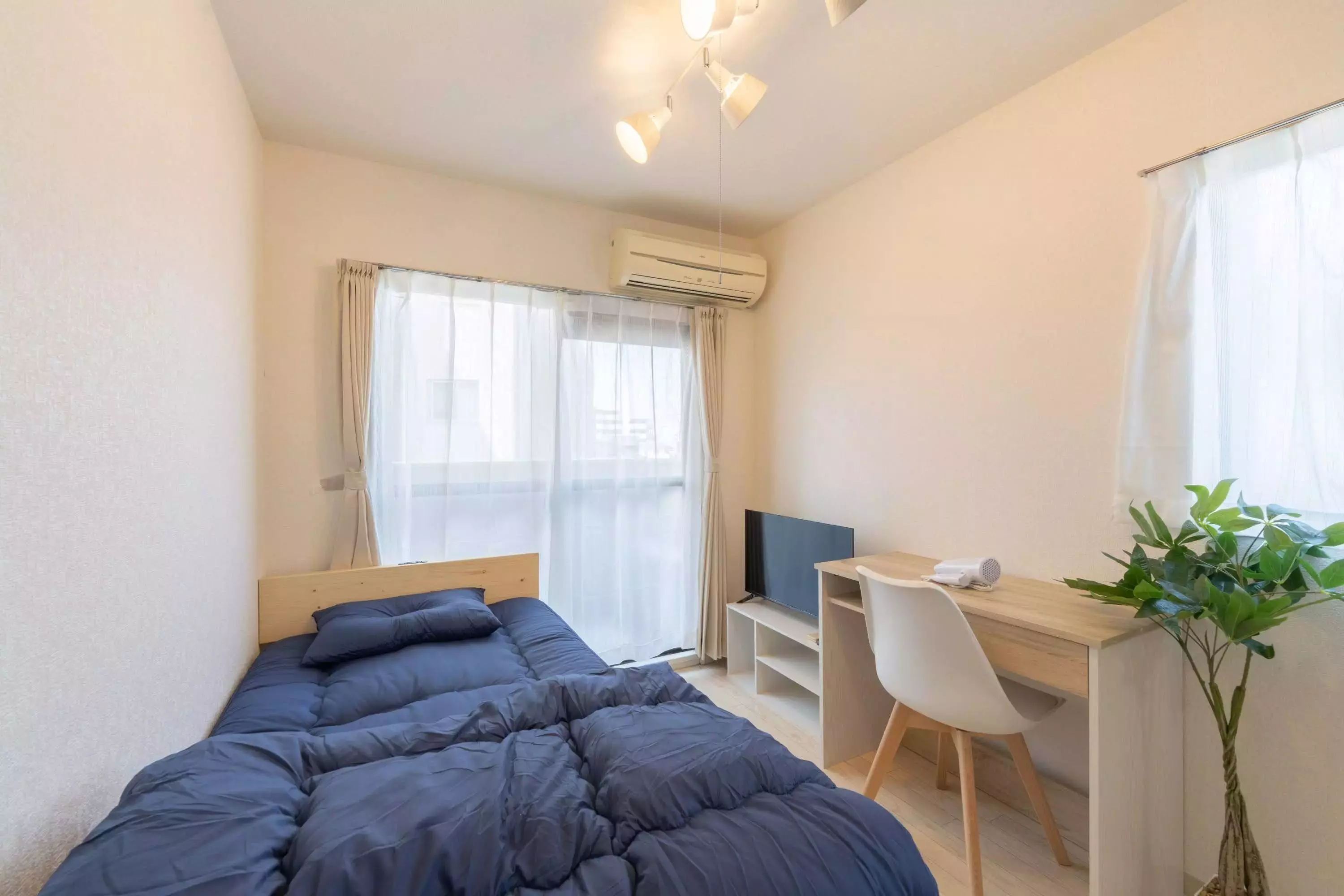
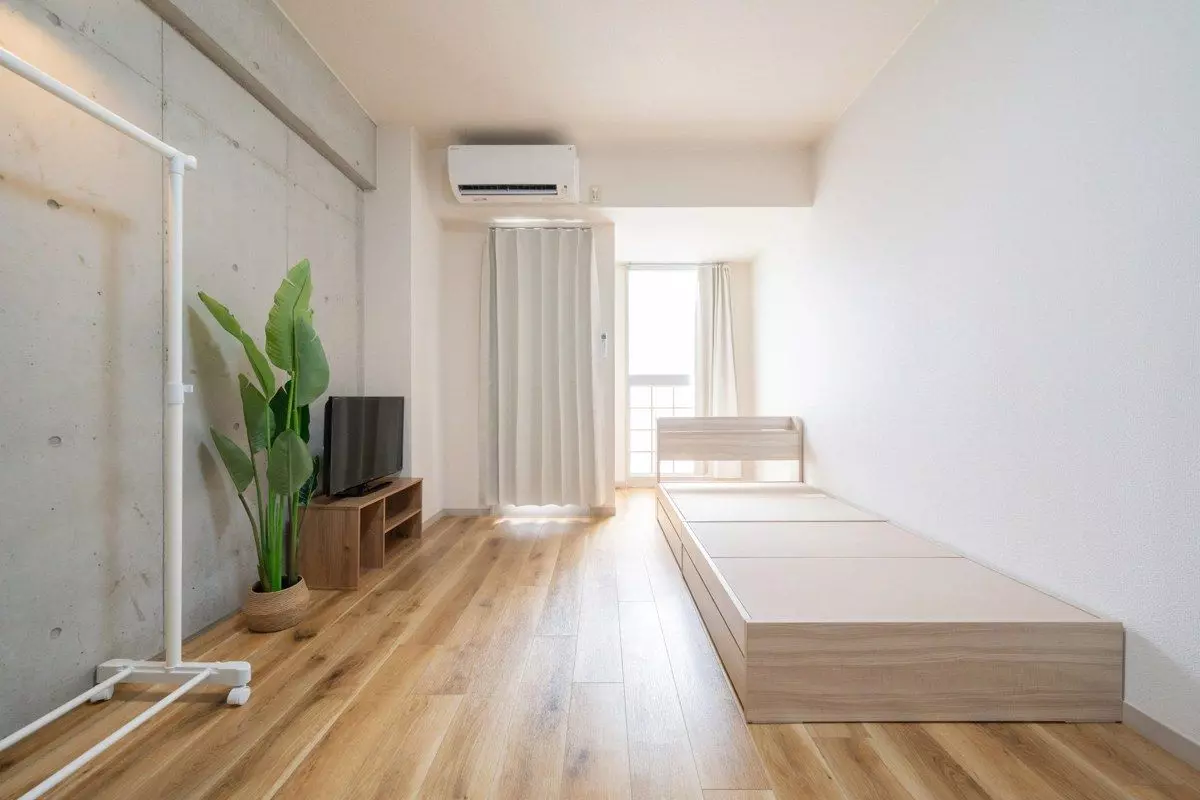
Many SSW workers start in a furnished room close to work, then decide on a long-term area later. XROSS HOUSE offers two options:
- Share houses: a furnished private or shared room, with a shared kitchen, bathroom and living room, and free shared Wi-Fi. It is the lower-cost way to start, and other residents are around when everything is new.
- Furnished apartments: your own home with a private kitchen and bathroom. Furniture and appliances are already in the room, and you set up your own internet. A support service fee of ¥1,500 a month is charged per resident.
We can tell you the floor area of each room, so you can check it against your employer's housing plan.
Start-up costs compared with a typical rental
| Item | Typical Japanese rental | XROSS HOUSE |
|---|---|---|
| Deposit | Often around one month's rent | No deposit |
| Agency fee | Typically charged | No agency fee |
| Initial fee | Not applicable | Share house: ¥30,000. Furnished apartment: ¥30,000 during the current campaign (normally ¥50,000) |
| Furniture and appliances | Usually you buy your own | Included |
| Move-out fee | Cleaning and repair costs vary | Share house: ¥16,500. Furnished apartment: ¥55,000 |
The initial fee is the only one-time payment at move-in, but it is not your total. Rent and the guarantee company charges below are paid in addition. Ask for a written estimate: it lists every cost from move-in to move-out before you sign. See our fees page for current details.
All statuses of residence are accepted. You can view rooms online, sign online and apply from abroad, and the earliest move-in is 7 days after applying. Employers and support organizations can also sign a corporate contract with us to house their staff. XROSS HOUSE provides corporate housing to more than 650 companies, and our team answers in English and other languages.
Ask about a share house or furnished apartment
Guarantor and guarantee company
- No personal joint guarantor is needed.
- Individual contracts generally require joining a rent guarantee company. An initial guarantee fee and a monthly guarantee fee are charged separately, on top of the initial fee. The amounts are given in your estimate.
- If you pay everything from the initial costs through to the move-out costs in full at move-in, you do not need to join a guarantee company.
For more on starting work here, see our guides to jobs in Japan for Indians, jobs in Japan for Filipinos, the Japan work visa and National Health Insurance.
FAQ: SSW visa in Japan
What is the difference between SSW 1 and SSW 2 in Japan?
SSW (i) is for a certain level of skill, allows up to 5 years in total and basically does not allow family. SSW (ii) is for advanced skill, can be renewed with no upper limit and allows a spouse and children to join you if requirements are met. SSW (ii) is available in 11 of the 19 fields (as of October 2026).
What is the age limit for the SSW visa in Japan?
The ISA guidelines set a minimum age of 18 on the day you land in Japan. Employers set their own hiring conditions on top of this (as of October 2026).
Which Japanese test do I need for SSW?
For SSW (i), usually the JFT-Basic or JLPT N4. Nursing care adds a care Japanese test, and driving and railway jobs need around N3. If you completed Technical Intern Training (ii) satisfactorily in related work, the Japanese test is generally waived (as of October 2026).
Can I bring my family on an SSW visa?
On SSW (i), family accompaniment is basically not allowed. On SSW (ii), your spouse and children can join you if requirements are met (as of October 2026).
Can I change jobs on an SSW visa?
Yes, within the same field. You need a change-of-status permission for the new employer, and you cannot work there until it is granted (as of October 2026).
Does my employer have to provide housing on SSW?
For SSW (i), the employer must support your housing: help you rent and act as guarantor or arrange a guarantee company, rent a home for you, or provide company housing. Rent itself is generally your cost. For SSW (ii), there is no such duty (as of October 2026).
Can I rent a room before I arrive in Japan?
Yes. XROSS HOUSE accepts applications from abroad, with online viewings and online contracts, and the earliest move-in is 7 days after applying. More answers are on our FAQ page.
Talk to our English-speaking team about your move
The SSW visa starts with a test and a job offer, and your first address follows soon after. If you are starting work in Japan and need a furnished room near your workplace, XROSS HOUSE supports your search for a home, so please feel free to contact us.