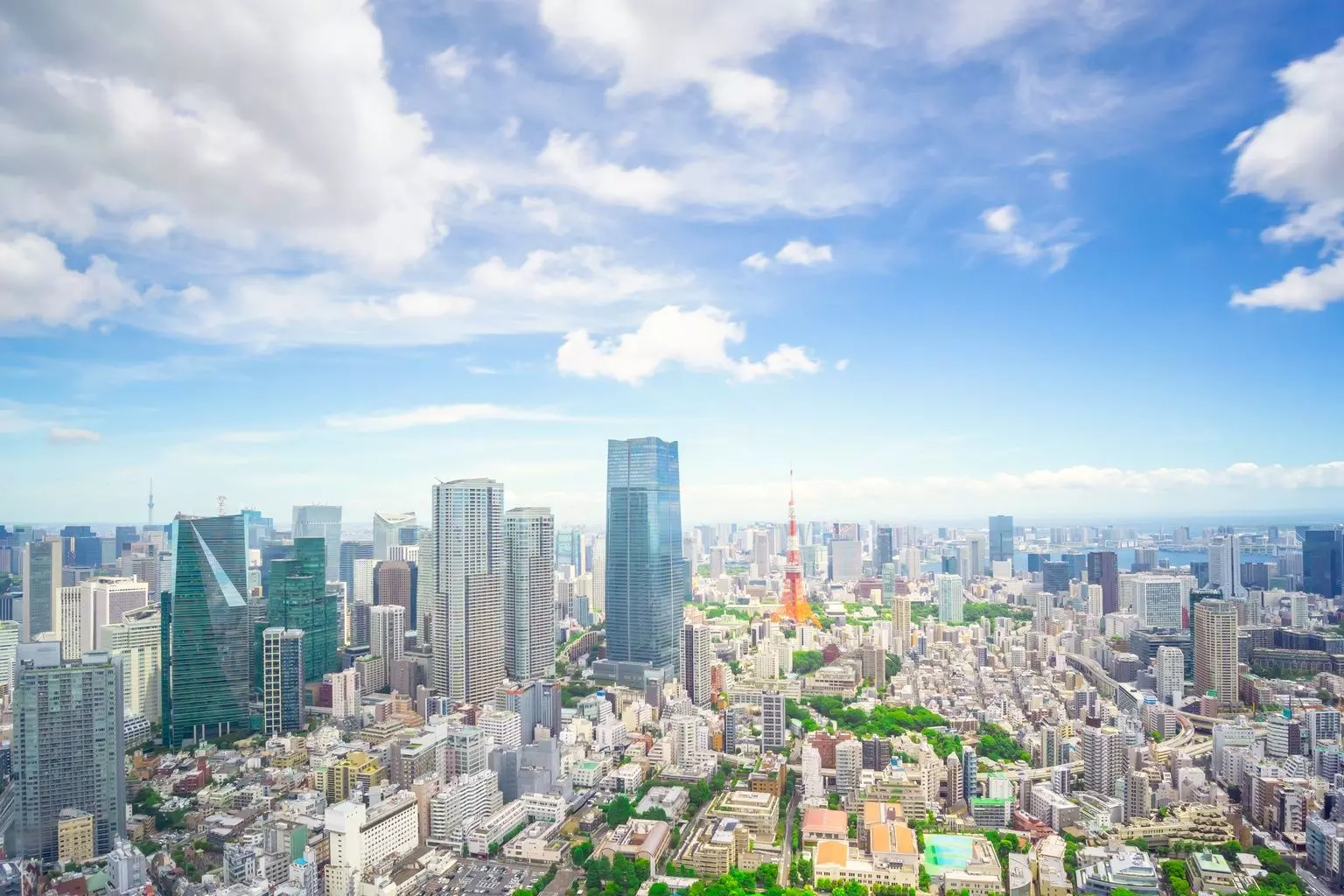
- According to the final figures from the Osaka Prefectural Police for Reiwa 6 (2024), reported criminal offenses were 81,225 in Osaka Prefecture and 40,011 in Osaka City. Divided by the city's population of 2,816,247, that is about 14.2 cases per 1,000 residents.
- Among Osaka City's 24 wards, both the counts and the per-resident figures vary. Wards with busy terminals and commercial districts, such as Umeda, Minami, Namba and Tennoji, tend to show higher numbers.
- A high count does not mean it is dangerous to live there. Across Osaka City, bicycle theft accounts for 13,127 cases, about 33%, so in daily life bicycle parking and locking make a real difference.
- Every ward has quiet residential areas a little away from the stations. The quickest way to judge is to check the area itself, using the “Yasumachi” app's crime map and viewings in both daytime and evening.
If you are looking for a room in Osaka, talk to XROSS HOUSE.
Talk to us about finding a room in Osaka
Overall trends in Osaka Prefecture and Osaka City
If you are wondering about safety in Osaka, start with the figures published by the Osaka Prefectural Police.
According to “Osaka Prefectural Police: Reiwa 6 Crime Statistics (final figures)” and its “Reported criminal offenses by crime type and method, by municipality”, there were 81,225 reported criminal offenses in Osaka Prefecture in Reiwa 6 (January–December 2024). Of these, 40,011 were in Osaka City, about half of the prefecture's total.
Osaka City has a population of 2,816,247 (Osaka City: “Estimated population of Osaka City as of October 1, Reiwa 7”, as of October 1, 2025). Dividing the count by the population gives about 14.2 cases per 1,000 residents. Of the reported offenses in Osaka City, theft accounts for 28,995 cases, about 72%, and bicycle theft alone accounts for 13,127 cases, about 33%.
Osaka City is made up of 24 wards, and the counts differ from ward to ward even within the same city. In the next section, we line up the figures ward by ward.
Reported criminal offenses by ward (Reiwa 6)
Here are the Reiwa 6 reported criminal offenses for Osaka City's 24 wards, together with an approximate figure per 1,000 residents. The wards are listed in the order of the city's administrative wards.
| Ward | Reported offenses (Reiwa 6) | Population (Oct. 1, 2025) | Per 1,000 residents (approx.) | Of which bicycle theft | Of which shoplifting | Notes |
|---|---|---|---|---|---|---|
| Kita | 4,985 | 150,457 | approx. 33.1 | 1,111 | 1,044 | Visitors gather around Umeda (Osaka Station) |
| Miyakojima | 1,438 | 110,310 | approx. 13.0 | 498 | 77 | |
| Fukushima | 1,012 | 83,763 | approx. 12.1 | 403 | 58 | Restaurants cluster around Fukushima Station |
| Konohana | 752 | 63,223 | approx. 11.9 | 268 | 60 | |
| Chuo | 6,098 | 119,502 | approx. 51.0 | 1,400 | 683 | Commercial and office areas such as Shinsaibashi, Namba and Honmachi |
| Nishi | 1,546 | 115,600 | approx. 13.4 | 595 | 82 | Commercial and office areas around Horie and Honmachi |
| Minato | 827 | 80,809 | approx. 10.2 | 270 | 126 | |
| Taisho | 639 | 59,568 | approx. 10.7 | 237 | 38 | |
| Tennoji | 1,196 | 88,640 | approx. 13.5 | 408 | 95 | Visitors gather around Tennoji Station |
| Naniwa | 2,316 | 85,814 | approx. 27.0 | 799 | 172 | Shoppers gather in areas such as Namba and Nipponbashi |
| Nishiyodogawa | 730 | 96,790 | approx. 7.5 | 245 | 41 | |
| Yodogawa | 2,146 | 190,515 | approx. 11.3 | 814 | 67 | Visitors gather around Shin-Osaka and Juso stations |
| Higashiyodogawa | 1,820 | 177,997 | approx. 10.2 | 732 | 112 | |
| Higashinari | 952 | 88,931 | approx. 10.7 | 354 | 34 | |
| Ikuno | 1,292 | 128,451 | approx. 10.1 | 493 | 44 | |
| Asahi | 777 | 90,730 | approx. 8.6 | 277 | 40 | |
| Joto | 1,230 | 169,074 | approx. 7.3 | 450 | 57 | |
| Tsurumi | 897 | 111,088 | approx. 8.1 | 341 | 98 | |
| Abeno | 1,376 | 113,267 | approx. 12.1 | 542 | 209 | Visitors gather at commercial facilities around Abeno and Tennoji |
| Suminoe | 1,391 | 116,906 | approx. 11.9 | 466 | 82 | |
| Sumiyoshi | 1,450 | 153,209 | approx. 9.5 | 600 | 83 | |
| Higashisumiyoshi | 1,354 | 130,756 | approx. 10.4 | 479 | 100 | |
| Hirano | 1,696 | 184,825 | approx. 9.2 | 682 | 121 | |
| Nishinari | 2,091 | 106,022 | approx. 19.7 | 663 | 95 | |
| Osaka City total | 40,011 | 2,816,247 | approx. 14.2 | 13,127 | 3,618 | Total of the 24 wards |
The sources are “Osaka Prefectural Police: Reiwa 6 Crime Statistics (final figures)” and its “Reported criminal offenses by crime type and method, by municipality”, and “Osaka City: Estimated population of Osaka City as of October 1, Reiwa 7”. The figure per 1,000 residents is a rough guide, calculated by dividing the Reiwa 6 reported offenses by the estimated population as of October 1, 2025. Treat it as a reference value.
The population in the table is the number of people who live in each ward. It does not include people who visit for work, school or shopping. As a result, wards with major terminal stations and commercial facilities tend to show higher counts relative to the number of residents.
Per 1,000 residents, the figure ranges from about 7 to about 51 depending on the ward. Wards that draw many people for shopping, sightseeing and work, such as Kita with Umeda, Chuo including Minami, and Naniwa with Namba and Nipponbashi, show larger numbers. On the other hand, wards with wide residential areas, such as Joto (about 7.3) and Nishiyodogawa (about 7.5), are on the lower side.
Talk to us about rooms that suit your needs
Search for a room
Only furnished properties with appliances are listed!
How to read the numbers: a high count does not mean it is dangerous to live there
The number of reported offenses is the number of incidents reported to the police. There are two points to keep in mind here.
Many visitors and daytime residents push the count up
The first point is the relationship between counts and population. Central Osaka draws large crowds during the day. As a result, incidents that happen in crowds, such as shoplifting, bicycle theft and theft of unattended belongings, are included in the counts. This is why the numbers look large when divided only by the number of residents.
For example, of Kita's 4,985 cases, 1,044 were shoplifting and 1,111 were bicycle theft. In Chuo, of 6,098 cases, 683 were shoplifting and 1,400 were bicycle theft. In both wards, the figures reflect the character of areas with many commercial facilities and a lot of bicycle parking.
The breakdown by type shows which everyday precautions matter
The second point is the breakdown by type. Across Osaka City, there were 13,127 cases of bicycle theft and 3,618 cases of shoplifting. In every ward, bicycle theft makes up a large share, from about 22% to 41% of each ward's reported offenses.
In other words, for people who use a bicycle, locking it and choosing where to park it is the most practical form of crime prevention. Rather than judging by the name of a ward, think about which precautions you need according to how you live, such as whether you ride a bicycle or come home late at night.
What to watch for near stations and at night
Here are some points to keep in mind around large stations, not only in Osaka.
Choose well-lit main streets on the way home at night
Streets in front of stations are busy at night, but the atmosphere can change one street over. During hours when fewer people are around, it is reassuring to choose a well-lit main street.
Use two locks on your bicycle and choose where you park it
Lock both the front and rear wheels, known as “double locking”. Near stations, the basic rule is to park in a bicycle parking lot or a well-lit spot. If you live in an apartment building, it also helps to check whether the bicycle parking area has a roof and lighting.
In crowded places, keep your bag and belongings in front of you
In crowds, basic habits help, such as carrying your bag in front of your body and not leaving your smartphone on a table.
Search for a room
Only furnished properties with appliances are listed!
Tips for finding a calm residential area
Almost every ward in Osaka City has residential areas a little away from the terminal stations and commercial districts. Even within the same ward, the atmosphere differs between the area in front of the station and the residential streets. Rather than deciding by the name of a ward, it is important to see the neighborhood where you would actually live.
Among the neighborhoods that have XROSS HOUSE furnished apartments, there are also calm residential areas where you can live comfortably. You can check each neighborhood's character on the station pages and property listing pages.
- Nishinari Ward | Properties around Tamade Station and Hanazonocho Station
- Naniwa Ward | Properties around Ashiharabashi Station, and the article on Ashiharabashi
- Ikuno Ward | Properties around Tsuruhashi Station
- Yodogawa Ward | Properties around Juso Station
You can search for properties in Osaka City all at once from the Osaka property listings page.
How to check the safety of an area
After looking at the numbers, check the neighborhood where you want to live.
Use the “Yasumachi” app's crime map
The Osaka Prefectural Police's “Yasumachi app” is an app that delivers crime occurrence information and crime prevention information. It has a crime map that lets you check crime occurrence in an area on a map, and a “Yasumachi mail” function that lets you choose districts and receive alerts (functions confirmed as of October 2026). Looking at what kinds of incidents occur around the stations you are interested in is a useful reference.
View the room in both daytime and evening
Viewings are often done during the day, but if you can, also walk the route from the station to the room in the evening or at night. The brightness of the streetlights, the foot traffic, and the look of the convenience stores and restaurants are things photos and numbers cannot tell you. If the property supports online viewings, you can check the room even from far away.
Check the building's security features
- Does it have an auto-lock entrance and security cameras?
- Is the room on the second floor or above? If it is on the first floor, are the windows and balcony protected?
- Does the bicycle parking area have a roof and lighting, and can you use two locks?
- Is there a parcel locker or similar facility so you do not have to meet anyone when receiving deliveries?
Features such as auto-locks and security cameras differ by property. If something concerns you, please check when you make an inquiry.
Talk to us about rooms, including security
Search for a room
Only furnished properties with appliances are listed!
Peace of mind inside the building: living in XROSS HOUSE
Just as important as the safety of the neighborhood is peace of mind inside the building once you start living there. If this is your first time living alone, also check whether there is somewhere to turn when you have trouble. For reference, XROSS HOUSE homes have the following support in place.
| What you may be wondering | How it works at XROSS HOUSE |
|---|---|
| Are there properties where women can live with peace of mind? | XROSS HOUSE also has women-only properties. |
| What if equipment breaks or a problem comes up with the home? | There is an emergency contact line, and we also make visits depending on the situation. |
| What if the neighborhood does not suit me after I move in? | You can stay from as little as one month, and you can cancel with one month's notice, with no early termination penalty. |
| I am not confident in Japanese | You can talk to us in Japanese, English, Chinese, Korean and other languages. |
XROSS HOUSE operates furnished apartments and share houses in major cities across Japan, including Osaka. Because the rooms come furnished, you do not need to buy furniture even if it is your first time living alone. XROSS HOUSE has provided homes to more than 50,000 people to date. Information on move-in costs and frequently asked questions is also available on the FAQ page.
If you would like to know about the character of a neighborhood or a room that fits your living conditions, talk to XROSS HOUSE.
Talk to us about rooms that fit your conditions
Frequently asked questions
Q. How safe is Osaka?
A. According to the final Reiwa 6 (2024) figures from the Osaka Prefectural Police, there were 81,225 reported criminal offenses in Osaka Prefecture and 40,011 in Osaka City. Divided by the city's population, that is about 14.2 cases per 1,000 residents. The figures vary by ward, and wards with terminals and commercial districts tend to show higher counts because of the large number of visitors.
Q. People search for “unsafe areas in Osaka”. How should I look into it?
A. We do not recommend labeling a ward as “bad” or “safe” based on its name alone. Reported offenses are affected by visitors and the daytime population, so a figure divided only by the number of residents does not show how risky it is for the people who live there. The most reliable approach is to check the counts and types by ward in the Osaka Prefectural Police statistics, walk around the station area you are interested in during the day and at night, and look at the Yasumachi app's crime map.
Q. Is it dangerous to live in a ward with a high count?
A. A high count does not necessarily mean it is dangerous to live there. For example, of Kita's 4,985 cases, 1,044 were shoplifting, and of Chuo's 6,098 cases, 1,400 were bicycle theft. These numbers reflect the character of wards with many commercial facilities and a lot of bicycle parking, and they should be considered separately from how comfortable the residential areas are.
Q. What can I do to prevent theft when using a bicycle in Osaka?
A. Bicycle theft in Osaka City totaled 13,127 cases in Reiwa 6, about 33% of all reported offenses. The basics are to use two locks, one on the front wheel and one on the rear wheel, and to park near stations in a bicycle parking lot or a well-lit spot. When choosing a property, also check whether the bicycle parking area has a roof and lighting.
Q. What should I watch for when walking in front of a station at night?
A. Areas in front of stations stay busy at night, but the atmosphere changes depending on the time. Choose well-lit main streets on the way home, and carry your bag in front of you. When you view a room, it is also a good idea to walk from the station to the room in the evening or later.
Q. Is there a way to check the safety of an area before I move in?
A. The Osaka Prefectural Police's Yasumachi app has a crime map that lets you check crime occurrence in an area on a map, and a function that sends crime prevention information by email. It also helps to check the counts by ward in the Osaka Prefectural Police crime statistics and to view rooms in both daytime and evening, so you can get a feel for the neighborhood.
Q. Can I rent a room in Osaka without a guarantor?
A. XROSS HOUSE homes do not require a joint guarantor (an individual). Instead, you generally need to sign up with a guarantor company, and an initial guarantee fee and a monthly guarantee fee are charged separately. However, if you pay everything from the initial costs through the move-out costs in a single lump sum at move-in, you do not need to sign up with a guarantor company.
Q. What should I check when choosing a home as a woman living alone?
A. It is reassuring to check whether the building has an auto-lock and security cameras, how well lit the route from the station to the room is, and whether the bicycle parking area has a roof and lighting. XROSS HOUSE also has women-only properties. Please let us know about any conditions you care about when you make an inquiry.
If you are looking for a room in Osaka, you will want to check the actual room and its surroundings as well as the safety data. For availability and any questions about your conditions, feel free to contact XROSS HOUSE.
Summary
According to the final Reiwa 6 figures from the Osaka Prefectural Police, there were 81,225 reported criminal offenses in Osaka Prefecture and 40,011 in Osaka City (about 14.2 per 1,000 residents). The figures vary by ward, but wards with terminals and commercial districts tend to show higher counts because of the large number of visitors. By type, bicycle theft makes up about 33% of the offenses in Osaka City as a whole.
Rather than choosing a neighborhood by the name of its ward, check the area around the stations you are interested in using both the numbers and your impressions from walking there by day and by night. The Osaka Prefectural Police's “Yasumachi app” crime map can also help you choose a neighborhood.