Reviewed by the XROSS HOUSE team — a Tokyo-based operator of share houses and furnished apartments in 10 prefectures across Japan, with more than 50,000 residents housed to date.
- Paid internships for overseas students use Designated Activities, up to one year.
- Unpaid: Temporary Visitor up to 90 days, Cultural Activities beyond that.
- Students already in Japan need permission before a paid internship.
- Funded programs often house you; most company internships do not.
Interning in Japan? Ask us about a furnished room
Can foreigners do an internship in Japan?
Yes. Japanese companies, universities and research institutes take international interns every year, and the government runs its own programs. What you can do, and for how long, depends on three things: whether you are still enrolled at a university, whether the internship is paid, and how long you will stay.
There are three common situations:
- You study at a university outside Japan and the internship is part of your degree. This is the classic student internship, and the rules below are written for it.
- You already study in Japan on a Student status of residence and want to intern at a Japanese company alongside your course.
- You have already graduated. The student internship statuses below require you to be enrolled, so graduates usually come through a structured program, such as METI's Japan Internship Program, or through a job offer and a work visa.
Which visa do you need for an internship in Japan?
For students enrolled at a university outside Japan, the Immigration Services Agency of Japan sets out the statuses below. In every case the internship must be part of your university's curriculum, related to your major and count toward credits, and the host company must have a system to guide you.
| Your internship | Status of residence | Key conditions |
|---|---|---|
| Paid, enrolled overseas | Designated Activities (Notice No. 9, internship) | Up to one year, and in total no more than half of your degree program. You must be enrolled at an institution that awards degrees. |
| Unpaid, 90 days or less | Temporary Visitor | If your passport is not visa-exempt, apply for a visa at a Japanese embassy or consulate before you travel. |
| Unpaid, more than 90 days | Cultural Activities | The host company in Japan applies for your Certificate of Eligibility. |
For a paid internship or one longer than 90 days, the host company applies for a Certificate of Eligibility (COE) in Japan first. Standard processing is 1 to 3 months, and a COE is valid for 3 months, so build both into your start date. You then apply for the visa at a Japanese embassy or consulate with the COE.
Source: Immigration Services Agency of Japan, Status of residence for internships, ISA, Guideline on internships by students of foreign universities (PDF, Japanese) and ISA, COE application (as of November 2026)
If you already study in Japan
Students on a Student status can intern without changing status, with one condition: a paid internship needs permission to engage in activity other than that permitted, before you start. An unpaid internship does not need this permission.
- Up to 28 hours a week (up to 8 hours a day during long school holidays): the comprehensive permission most students already hold for part-time work covers it.
- More than 28 hours a week outside long holidays: you also need an individual permission. It is generally given to final-year undergraduates who have almost all their credits, final-year graduate students, and students whose internship is closely tied to their major, such as required practical training for credit.
For the full Student status rules, see our Japan student visa guide.
Source: Immigration Services Agency of Japan, Status of residence for internships (as of November 2026)
Please note: this article explains the general system and is not legal advice. Whether your own application is approved is decided by the immigration authorities, so follow the official pages and your host organization for your case.
Search for a room
Only furnished properties with appliances are listed!
Internship programs in Japan: METI and OIST
Two well-known programs are run with public funding. Both arrange housing for their interns, which is worth knowing before you start comparing rents.
METI Japan Internship Program (JIP)
The Ministry of Economy, Trade and Industry runs an internship program that places foreign professionals with small and medium-sized Japanese companies. The 2026 round had these main conditions:
- Citizenship of a country on the OECD DAC list, excluding China. India, for example, is on the list. People living in Japan cannot apply.
- A final-year university student or a graduate, generally aged 18 to 39.
- Japanese at around JLPT N3 or above, or English.
- An online course of up to 20 days, or an in-person course of up to 30 business days in Japan. For the in-person course, the host company provides accommodation.
Applications for 2026 closed on June 30, 2026. Check the official site for the next call.
Source: METI, Japan Internship Program: For Foreign Talent (as of November 2026)
OIST Research Internship
The Okinawa Institute of Science and Technology offers research placements of 4 to 6 months in STEM fields, such as physics, chemistry, mathematics, neuroscience and marine science. OIST lists furnished accommodation on or off campus, support with the COE, an internship allowance and a round-trip air ticket.
Source: OIST, Research Internship Program (as of November 2026)
Technical Intern Training is a different program
Searches for "internship in Japan" from India and South-East Asia often mean Technical Intern Training. That is a separate status for on-the-job skills training, run through supervising organizations, not a student internship. From April 1, 2027, Japan replaces it with a new program called Employment for Skill Development. If you are looking for that kind of work, our SSW visa guide covers the related Specified Skilled Worker route.
Source: Immigration Services Agency of Japan, Employment for Skill Development system (PDF) (as of November 2026)
Starting an internship soon? Ask about a room
How to find an internship in Japan, step by step
- Talk to your university first. The career or international office knows whether an internship can count for credit, which the student internship statuses require. Many universities also have partner companies in Japan.
- Decide the length and whether it is paid. These two points decide your status of residence, so settle them before you accept an offer.
- Apply. Use company career pages, program sites such as JIP and OIST, and placement services that work with your university. For IT roles, our guide to IT jobs in Japan for foreigners lists where international candidates look.
- Let the host handle the COE for paid internships and unpaid ones longer than 90 days. Allow 1 to 3 months.
- Book housing and plan your first week. If you stay with a residence card, register your address at the city office within 14 days of moving in. See our residence card guide.
If your country has a working holiday agreement with Japan, a working holiday visa is another way to gain work experience without a degree requirement. Our Japan working holiday visa guide explains who qualifies.
Search for a room
Only furnished properties with appliances are listed!
Where to live during an internship in Japan
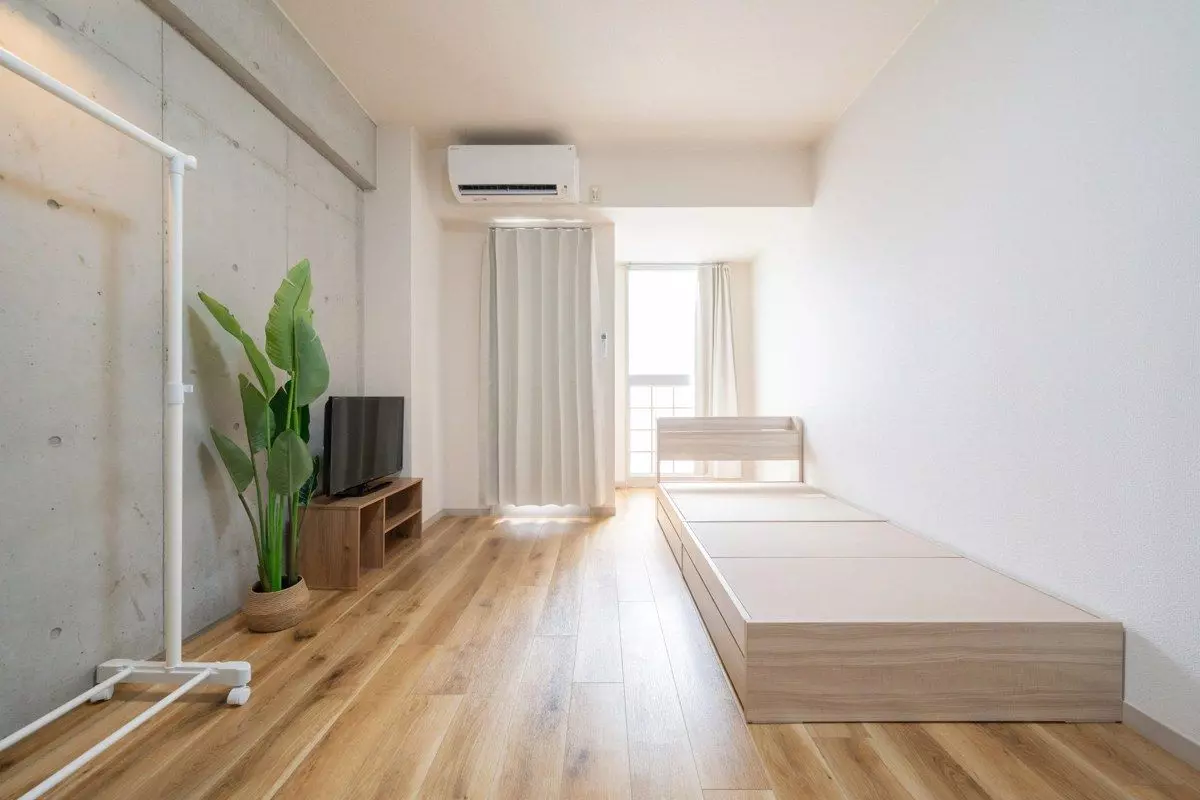
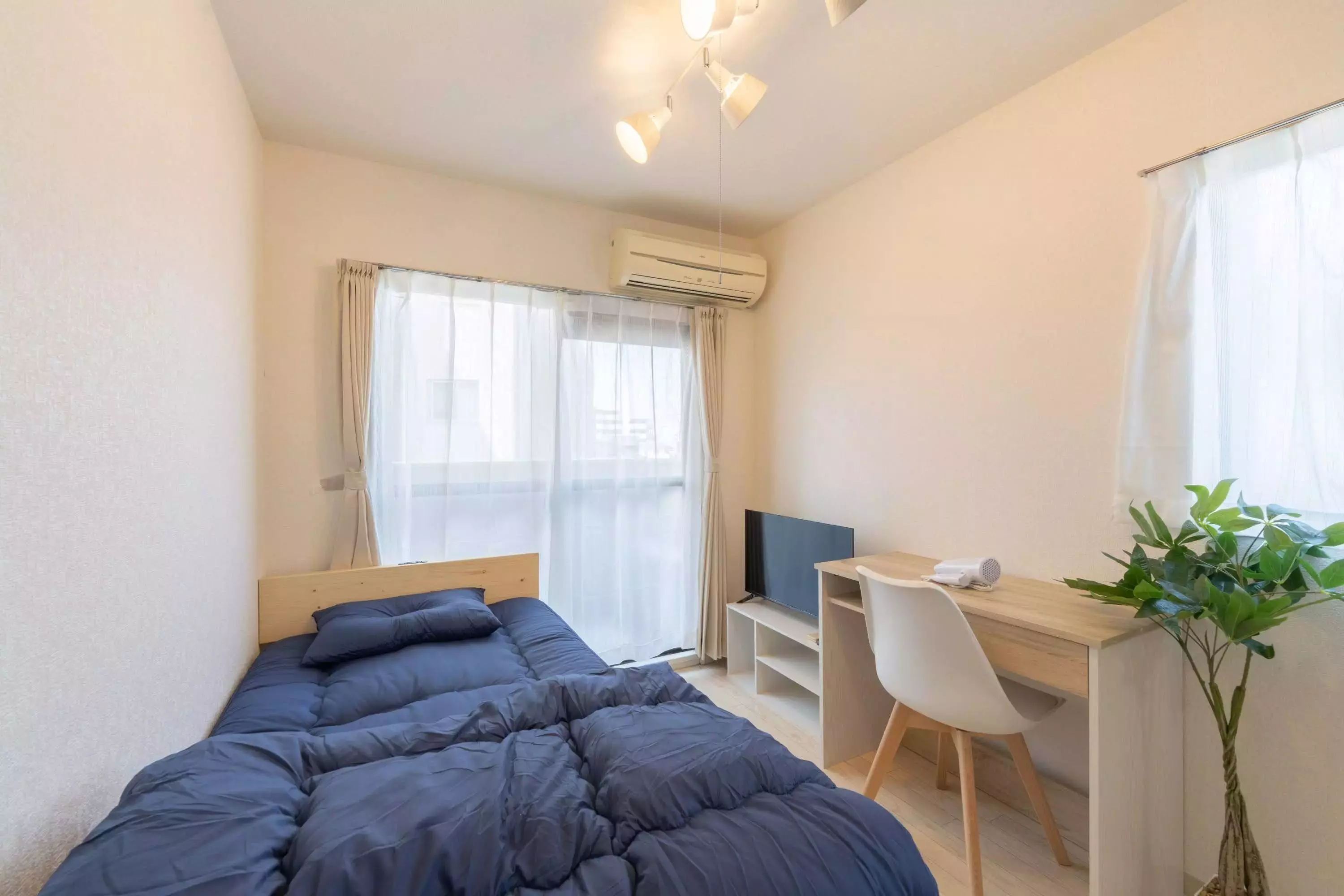
Unless your program provides housing, finding a room is usually the intern's job. A typical Japanese rental is set up for long stays, with an unfurnished room and several months' rent paid upfront, so it rarely suits a 3- or 6-month placement. Interns usually choose between two furnished options, and XROSS HOUSE offers both:
- Share houses: a furnished private or shared room, with a shared kitchen, bathroom and living room, and free shared Wi-Fi. Utilities and shared supplies are covered by a monthly common service fee, and other interns, students and workers live around you.
- Furnished apartments: your own home with a private kitchen and bathroom. Furniture and appliances are already in the room, and you set up your own internet. Utilities are in your name, or you can use our plan that bundles electricity, gas and water into one monthly charge.
Contracts start from one month, and all statuses of residence are accepted, including Temporary Visitor, so an unpaid intern on a short-term stay can rent a room too. You can view rooms online, sign online and apply from abroad. You can also apply about a month before your start date without paying rent for the weeks you are not there yet. The earliest move-in is 7 days after applying. A support service fee of ¥1,500 a month is charged per resident in both types; it covers our support when something goes wrong in your home, from repairs to other trouble.
For Tokyo specifically, compare our guides to monthly furnished apartments in Tokyo and share houses in Tokyo.
Start-up costs compared with a typical rental
| Item | Typical Japanese rental | XROSS HOUSE |
|---|---|---|
| Deposit, key money and agency fee | Deposit and key money are often about one month's rent each, plus an agency fee | No deposit and no agency fee. Registration fee: share house ¥30,000; furnished apartment ¥30,000 during the current campaign (normally ¥50,000) |
| Furniture and appliances | Usually you buy your own | Included |
| Minimum contract | Often around two years | From one month |
| Move-out fee | Cleaning and repair costs vary | Share house: ¥16,500. Furnished apartment: ¥55,000 |
The registration fee is the only one-time payment to us at move-in, but it is not your total. Rent is paid in advance, and guarantee company charges are added for individual contracts, as explained below. Some campaigns have conditions, so ask for a written estimate: it lists every cost from move-in to move-out before you sign. See our fees page for current details.
Get an estimate for your internship stay
Guarantor, guarantee company and corporate contracts
- No personal joint guarantor is needed.
- Individual contracts generally require joining a rent guarantee company. An initial guarantee fee and a monthly guarantee fee are charged separately, on top of the registration fee. The amounts are given in your estimate.
- If you pay everything from the registration fee through to the move-out fee in full at move-in, you do not need to join a guarantee company. It is a common choice for stays of one to three months.
If your host company prefers to arrange housing for you, it can sign a corporate contract with us instead. A corporate contract does not need a guarantee company. XROSS HOUSE provides housing to more than 650 companies, and our team answers in English. If you stay longer than three months with a residence card, also read our guide to National Health Insurance in Japan.
Search for a room
Only furnished properties with appliances are listed!
FAQ: Internship in Japan
Can foreigners do an internship in Japan?
Yes. University students abroad can intern as part of their degree, students already in Japan can intern alongside their course, and graduates can join structured programs such as METI's Japan Internship Program. The status of residence depends on pay, length and enrollment.
Do I need a visa for an unpaid internship in Japan?
For 90 days or less, an unpaid internship falls under Temporary Visitor, so you need a visa only if your passport is not visa-exempt. For more than 90 days, the status is Cultural Activities, and the host company applies for your Certificate of Eligibility first.
How long can an internship in Japan last?
A paid internship for students of overseas universities can last up to one year, and in total no more than half of the degree program. Programs set their own lengths: METI's in-person course is up to 30 business days, and OIST research internships run 4 to 6 months.
Can I do a paid internship on a student visa in Japan?
Yes, with permission to engage in activity other than that permitted, obtained before you start. Up to 28 hours a week is covered by the comprehensive permission. Longer hours need an individual permission, which is generally limited to final-year students and internships tied to your major.
Can Indians apply for the METI Japan Internship Program?
Yes. The program is open to citizens of countries on the OECD DAC list, excluding China, and India is on that list. Applicants must be final-year students or graduates, generally aged 18 to 39, and live outside Japan. The 2026 round closed on June 30, 2026.
Where can I stay for a 3-month internship in Tokyo?
A furnished share house room or a furnished apartment on a monthly contract is the usual choice. At XROSS HOUSE contracts start from one month, any status of residence is accepted, and you can apply and sign online from abroad.
Do I need a guarantor to rent a room as an intern?
No personal guarantor is needed at XROSS HOUSE. Individual contracts generally use a guarantee company, with an initial and a monthly guarantee fee charged separately. If you pay all costs from the registration fee to the move-out fee in full at move-in, you do not need to join one.
Talk to our English-speaking team
Once your internship is confirmed, the next question is where to live. If you need a furnished room in Japan for a few weeks or a few months, XROSS HOUSE supports your search for a home, so please feel free to contact us.