Reviewed by the XROSS HOUSE team — a Tokyo-based operator of share houses and furnished apartments across 11 prefectures in Japan, with more than 50,000 residents housed to date.
- The average monthly wage in Japan is ¥340,600 before tax, excluding overtime and bonuses (June 2025 data, full-time workers).
- Including bonuses and part-timers, the average annual salary is about ¥4.87 million.
- Pay rises with age until the mid-50s, and varies a lot by industry, education and company size.
- Foreign workers average ¥254,300 a month. Professional and technical visa holders average ¥313,200.
- Take-home pay is usually roughly 75–80% of gross, so budget rent from the net figure.
Planning a job move to Japan? Ask us about a furnished apartment
What is the average salary in Japan in 2026?
The Ministry of Health, Labour and Welfare (MHLW) publishes the most widely used figure each year. Its 2025 Basic Survey on Wage Structure puts the average monthly wage for full-time workers at ¥340,600, up 3.1% from the year before and a record high.
Two details matter when you read that number. First, "wage" here means the scheduled monthly cash earnings for June 2025, before tax. Overtime pay and bonuses are not included. Second, the survey covers full-time general workers at establishments with 10 or more employees, so very small workplaces and part-time jobs are left out.
| Group | Average monthly wage |
|---|---|
| All workers | ¥340,600 |
| Men | ¥373,400 |
| Women | ¥285,900 |
The average worker in the survey is 44.4 years old and has been with the same employer for 12.7 years. Many people who move to Japan for work are younger, so the age tables below may be a closer guide to your own situation.
Source: Ministry of Health, Labour and Welfare, 2025 Basic Survey on Wage Structure, summary of results (Japanese page) (as of October 2026)
Average annual salary in Japan
If you search for the average annual salary, you will see a different number. The National Tax Agency reports that people who worked the whole year earned an average of ¥4.87 million in 2025, up 1.9% and the fifth straight rise. Men averaged ¥5.97 million and women ¥3.42 million. Regular employees averaged ¥5.59 million, while non-regular workers averaged ¥2.10 million.
Why is this not simply 12 times ¥340,600? The tax figure includes bonuses, and it also counts part-time and other non-regular workers, which pulls the average down. The two surveys also measure different groups. Use the monthly wage to compare against a job offer's base pay, and the annual figure for a rough picture of yearly income.
Source: National Tax Agency, 2025 Statistical Survey of Actual Status for Salary in the Private Sector (Japanese page) (as of October 2026)
Average salary in Japan by age
Salaries in Japan have traditionally risen with age and years of service. The table shows the average monthly wage by age group, in thousands of yen.
| Age | All | Men | Women |
|---|---|---|---|
| 20–24 | ¥242.8k | ¥245.7k | ¥239.6k |
| 25–29 | ¥279.4k | ¥288.0k | ¥268.8k |
| 30–34 | ¥312.3k | ¥330.4k | ¥283.2k |
| 35–39 | ¥340.6k | ¥366.2k | ¥292.4k |
| 40–44 | ¥364.3k | ¥398.2k | ¥303.6k |
| 45–49 | ¥377.9k | ¥420.7k | ¥305.7k |
| 50–54 | ¥388.8k | ¥437.5k | ¥305.4k |
| 55–59 | ¥396.2k | ¥445.6k | ¥305.7k |
| 60–64 | ¥329.3k | ¥358.5k | ¥270.8k |
The overall average peaks in the late 50s and drops after 60, when many people move to re-employment contracts. Men peak at 55–59 with ¥445,600 a month.
For someone in their late 20s, the average is ¥279,400 a month. For someone in their early 30s, it is ¥312,300. These are averages across all industries and all employers, so your own offer can sit well above or below them.
Source: MHLW, 2025 Basic Survey on Wage Structure (Japanese page) (as of October 2026)
Search for a room
Only furnished properties with appliances are listed!
Average salary in Japan by gender
Men average ¥373,400 a month and women ¥285,900. Expressed as a ratio, women earn 76.6 for every 100 earned by men. That is the smallest gap since the survey series began in 1976, so the gap is narrowing, but it is still there.
The age table shows where the gap comes from. In the early 20s, men and women earn almost the same: ¥245,700 and ¥239,600. After that, men's pay keeps climbing into the 50s, while women's pay levels off at around ¥305,000 from the mid-40s. Differences in industry, job type and length of service all play a part.
Source: MHLW, 2025 Basic Survey on Wage Structure (Japanese page) (as of October 2026)
Average salary in Japan by industry, education and company size
Where you work matters as much as how old you are. The survey breaks the average down in several ways.
By industry
- Highest: electricity, gas, heat supply and water, at ¥444,000 a month.
- Second highest: academic research and professional and technical services, at ¥440,300.
- Lowest: accommodation and food services, at ¥277,200.
The gap between the top and the bottom is about ¥167,000 a month. If you work in a technical field, the offer you receive may differ a lot from the national average. Our guide to IT jobs in Japan looks at one such field.
By education
| Education | Average monthly wage |
|---|---|
| High school | ¥297,200 |
| Vocational school | ¥313,700 |
| Junior college | ¥321,200 |
| University | ¥396,300 |
| Graduate school | ¥517,400 |
By company size, employment type and position
| Category | Average monthly wage |
|---|---|
| Large company | ¥385,100 |
| Medium-sized company | ¥326,200 |
| Small company | ¥305,600 |
| Regular employees | ¥358,800 |
| Non-regular employees | ¥241,700 |
| Department manager | ¥635,800 |
| Section manager | ¥529,200 |
| Subsection chief | ¥399,200 |
Regular employees are people hired on open-ended contracts, usually with bonuses and a path to promotion. Non-regular employees include contract and part-time staff. If an employer offers you a choice, the difference in pay and in benefits is worth asking about.
Source: MHLW, 2025 Basic Survey on Wage Structure (Japanese page) (as of October 2026)
Starting a new job soon? Get a quote for a furnished apartment
Search for a room
Only furnished properties with appliances are listed!
Average salary in Japan for foreigners
The same MHLW survey separates out foreign workers. They earn an average of ¥254,300 a month, up 4.8% on the year, with an average age of 32.5. That is lower than the national figure of ¥340,600, but part of the reason is age and length of service: the foreign workers in the survey are about 12 years younger than the all-worker average.
A better comparison is by type of status, because the groups are very different.
| Status of residence group | Average monthly wage |
|---|---|
| Professional and technical fields (excluding Specified Skilled Worker) | ¥313,200 |
| Status-based (for example permanent residents and spouses of Japanese nationals) | ¥311,100 |
| Specified Skilled Worker | ¥221,400 |
| Technical intern | ¥190,300 |
| All foreign workers | ¥254,300 |
If you are an engineer, designer, teacher or other professional on a work visa, the relevant line is the first one: about ¥313,200 a month on average. These are averages for each group, not a forecast of what any one person will be offered, and this article does not judge who qualifies for any visa. To see how work visas work, read our work visa guide.
Source: MHLW, 2025 Basic Survey on Wage Structure (Japanese page) (as of October 2026)
Starting salary in Japan for new graduates
Japanese companies hire most new graduates in April and set their starting pay by education level. The MHLW survey reports the following averages, per month.
| Education | Average starting monthly wage |
|---|---|
| High school | ¥207,300 |
| Vocational school | ¥230,700 |
| Junior college | ¥235,500 |
| University | ¥262,300 |
| Graduate school | ¥299,000 |
A university graduate starts at around ¥262,300, a little below the age 25–29 average of ¥279,400. If you are coming with a degree and little work experience, these figures are a useful reference.
Source: MHLW, 2025 Basic Survey on Wage Structure (Japanese page) (as of October 2026)
Search for a room
Only furnished properties with appliances are listed!
Average salary in Tokyo and other regions
Pay is not equal across the country. In the 2025 survey, only four prefectures sit above the national average: Tokyo, Kanagawa, Aichi and Osaka. Tokyo is the highest at ¥418,300 a month, about ¥77,700 above the national figure.
Higher pay in Tokyo comes with higher living costs, rent above all. A good-looking salary in a big city can feel similar to a smaller one elsewhere once you pay for housing. Our cost of living in Japan guide breaks down the monthly budget.
Source: MHLW, 2025 Basic Survey on Wage Structure (Japanese page) (as of October 2026)
Take-home pay: how much of your salary do you keep?
The salary figures above are before tax. Your payslip will show deductions for health insurance, pension, employment insurance and income tax. From your second year, resident tax is added as well.
As a rough estimate, these deductions usually leave about 75–80% of your gross pay. The exact amount depends on your age, family situation, insurance and where you live, so treat the table below as a rough guide and not as a calculation.
| Gross monthly pay | Estimated take-home | Rent at about one-third of take-home |
|---|---|---|
| ¥250,000 | Roughly ¥188,000–¥200,000 | Roughly ¥62,000–¥67,000 |
| ¥300,000 | Roughly ¥225,000–¥240,000 | Roughly ¥75,000–¥80,000 |
| ¥340,600 (national average) | Roughly ¥260,000–¥270,000 | Roughly ¥87,000–¥90,000 |
For a closer look at what is deducted and how to file, read our guide to Japan taxes for foreigners.
Is ¥300,000 a good salary in Japan?
It depends on your age and where you live. A monthly wage of ¥300,000 is below the national average of ¥340,600. It sits between the averages for ages 25–29 (¥279,400) and 30–34 (¥312,300), and it is above the average of the lowest-paid industry, accommodation and food services (¥277,200).
In Tokyo, where the average is ¥418,300, ¥300,000 is a modest figure. Outside the four highest-paid prefectures, it can go further, especially on rent. We cover this question in more detail in Is ¥300,000 a good salary in Japan?
Minimum wage is the other end of the scale. To see what the floor looks like, read our minimum wage in Japan guide.
What salary do you need to rent a home in Japan?
A common guideline is to keep rent to about one-third of your take-home pay, or less. It is only a guideline, but it leaves room in the budget for food, transport, phone and savings. With the estimates in the table above, someone taking home ¥200,000 would aim for rent around ¥65,000 or less.
The bigger challenge is often the move-in cost. In a typical Japanese rental, deposit and key money are often said to be about one month's rent each, plus an agency fee. Add furniture and appliances, and the first month can cost a large amount before your first paycheck arrives. Salaries are often paid at the end of the month, so you may work for several weeks before you see any money.
XROSS HOUSE offers two options in 11 prefectures:
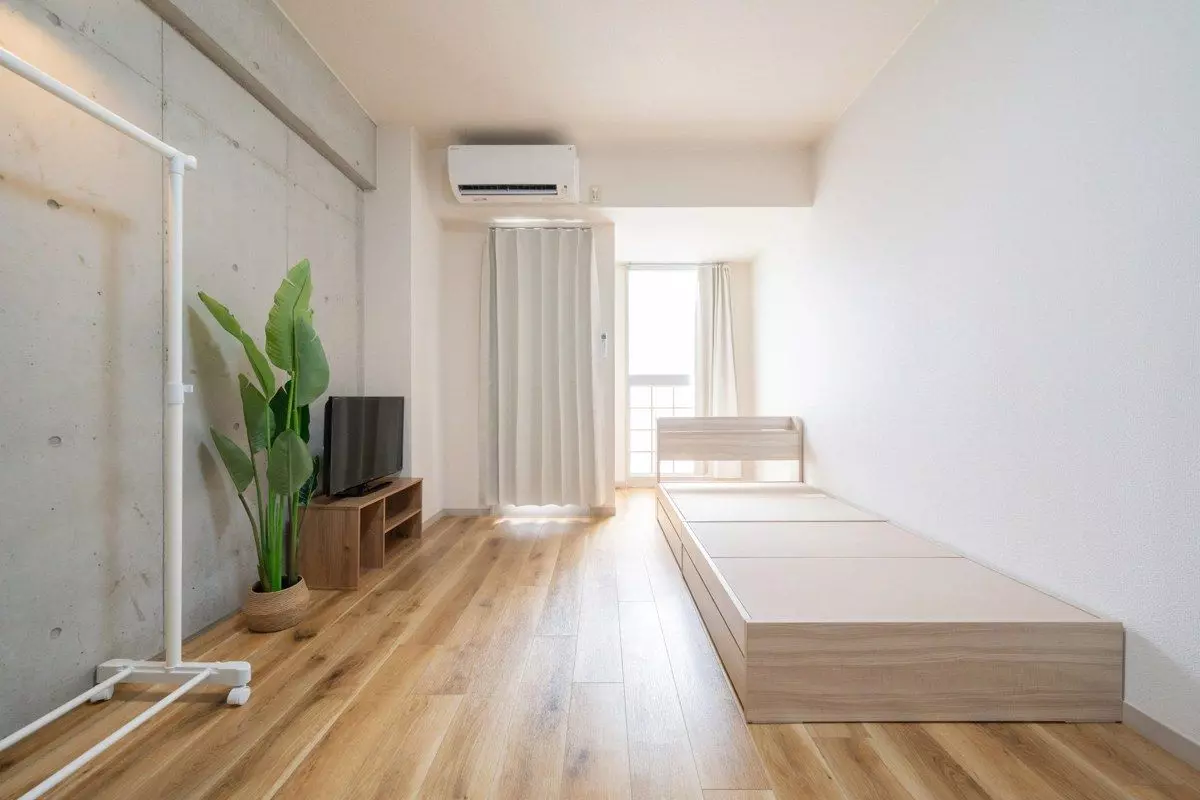
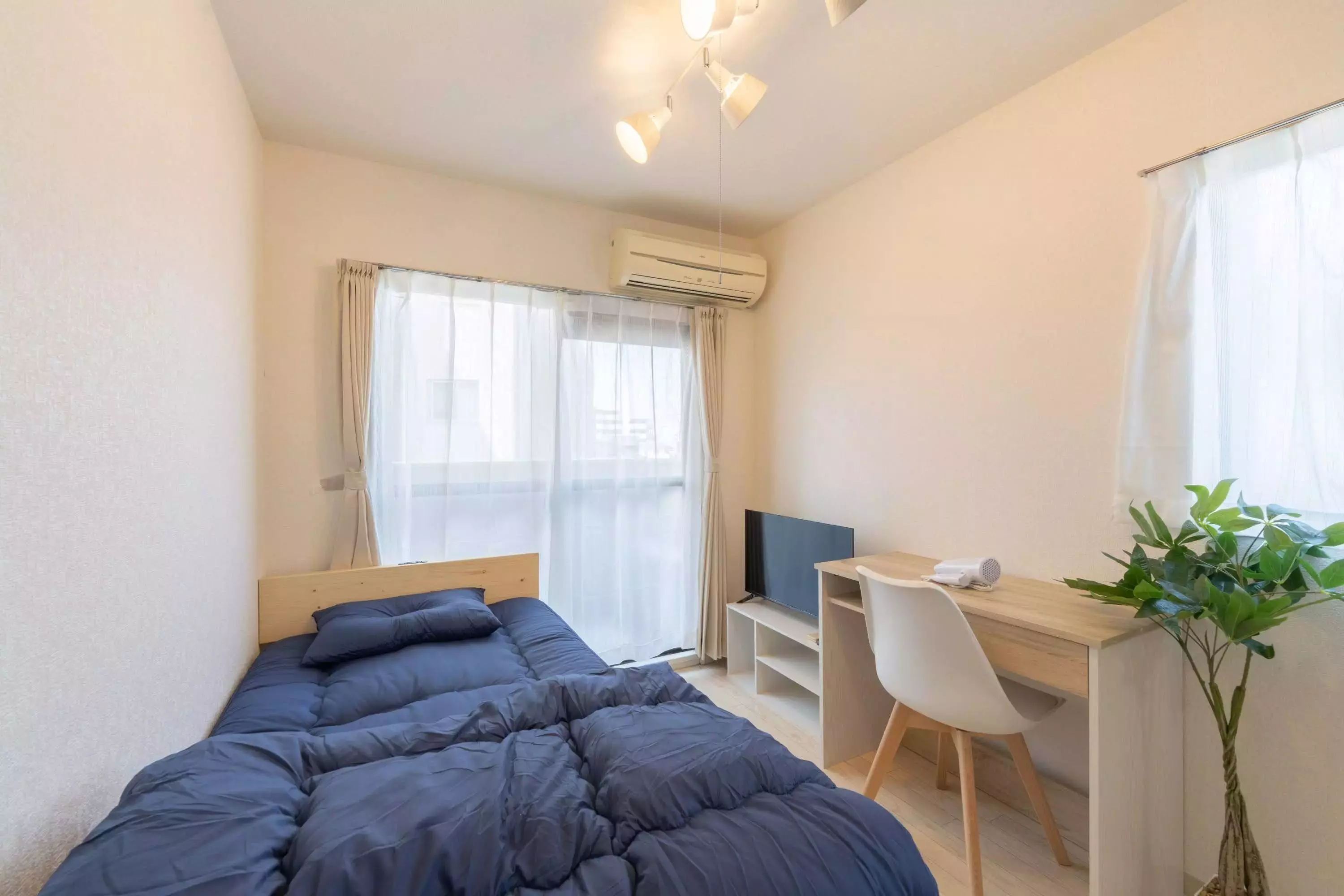
- Furnished apartments: the main option. Your own home with furniture and appliances already in the room, so you can move in with a suitcase. Stays can start from 1 month.
- Share houses: a private room in a shared home, a budget-friendly alternative. Wi-Fi is included.
English support is available, so you can ask about the contract and the move-in process in English.
Start-up costs compared with a typical rental
| Item | Typical Japanese rental | XROSS HOUSE |
|---|---|---|
| One-time move-in fees (deposit, key money, agency fee, etc.) | A deposit and key money of around one month's rent each are often said to be required, plus an agency fee | The initial fee is the only one-time move-in fee. Furnished apartment: ¥30,000 during the current campaign (normally ¥50,000). Share house: ¥30,000. No deposit and no agency fee |
| Furniture and appliances | Usually you buy your own | Included in furnished apartments |
For individual contracts, guarantee company fees are charged separately (details below).
See our fees page for current details.
Comparing your salary with rent? Get an estimate for a furnished apartment
Guarantor and guarantee company
- No personal joint guarantor is needed.
- Individual contracts generally require joining a rent guarantee company. An initial guarantee fee and a monthly guarantee fee are charged separately, on top of the initial fee.
- If you pay everything from the initial costs through to the move-out costs in one lump sum at move-in, you do not need to join a guarantee company.
Ask for a written estimate so you can see the total for your stay before you sign.
How to use these numbers when you get a job offer
- Check whether the offer is monthly or annual, and whether the figure includes bonuses, fixed overtime pay or allowances.
- Compare the base monthly pay with your age group in the table above.
- Compare it with the average for your industry and company size.
- Estimate take-home pay at roughly 75–80% of gross.
- Set a rent budget at about one-third of take-home, and check what the rent includes.
- Plan for the first month, since the first paycheck may arrive weeks after you start.
Ask the employer to explain anything unclear in the contract before you sign. Asking for a clear offer letter is normal in Japan and is not rude.
FAQ: Average salary in Japan
What is the average monthly salary in Japan?
The MHLW 2025 survey reports an average of ¥340,600 a month for full-time workers: ¥373,400 for men and ¥285,900 for women. This is before tax and excludes overtime and bonuses (as of October 2026).
Is ¥300,000 a good salary in Japan?
It is below the national average of ¥340,600 but above the average for ages 25–29 (¥279,400). It also depends on the city, since Tokyo's average is ¥418,300. Take-home would be roughly ¥225,000–¥240,000 (as of October 2026).
What is the average salary in Japan for foreigners?
Foreign workers average ¥254,300 a month. By group, professional and technical workers average ¥313,200, Specified Skilled Workers ¥221,400 and technical interns ¥190,300 (as of October 2026).
What is the average salary in Tokyo?
Tokyo has the highest average of any prefecture at ¥418,300 a month. Only Tokyo, Kanagawa, Aichi and Osaka are above the national average (as of October 2026).
How much is take-home pay on a ¥250,000 salary in Japan?
Deductions usually leave roughly 75–80% of gross pay, so about ¥188,000–¥200,000 a month. This is a rough estimate that varies by age, insurance and where you live. Resident tax is added from the second year.
Do Japanese salaries include bonuses?
The monthly wage of ¥340,600 does not include bonuses. The National Tax Agency's annual average of ¥4.87 million does, and it also includes part-time workers. Check your contract to see whether bonuses are part of your offer (as of October 2026).
Do I need a guarantor to rent from XROSS HOUSE?
No personal guarantor is needed. Individual contracts generally require a guarantee company, unless you pay everything from the initial costs to the move-out costs in one lump sum at move-in. More answers are on our FAQ page.
Ready to plan your first home in Japan? Talk to our team
If you are preparing to work in Japan, finding a place to live is one of the first jobs on the list. XROSS HOUSE will support your search for a furnished apartment or share house, so please feel free to contact us.