
What kind of income is 300,000 yen after tax? Annual income, gross pay, and tax
A take-home pay of 300,000 yen may look like a comfortable income, but in practice it does not mean you have that much free money to live on. The 300,000 yen is the amount left after taxes and social insurance premiums are taken out. As a rough guide, the gross monthly salary behind it is around 380,000 to 390,000 yen (approx. $2,530 to $2,600), which works out to an annual salary of about 4.5 million yen (approx. $30,000).
This income bracket is common among people in their 30s moving into mid-career as company employees, and many plan their lives assuming they will start a family. Because taxes and insurance take a heavy share, though, the disposable income often feels smaller than expected. Below, we look more closely at how a 300,000 yen take-home salary is actually structured.
What is the gross amount and annual income behind a 300,000 yen take-home salary?
If you take home 300,000 yen a month after tax, your gross salary is roughly 380,000 to 390,000 yen a month (approx. $2,530 to $2,600). With bonuses, your annual salary is likely around 4.5 to 4.8 million yen (approx. $30,000 to $32,000). Without a bonus, expect closer to 4.2 to 4.3 million yen (approx. $28,000 to $28,700) a year.
That places you in the middle range of Japan's income distribution, slightly above average. Whether it feels tight or comfortable depends heavily on your lifestyle and where you live, so it helps to look at the full picture rather than the headline number.
The taxes and social insurance behind your monthly take-home pay
On a gross monthly income of about 380,000 to 390,000 yen, several deductions apply: income tax, resident tax, health insurance, employee pension insurance, and employment insurance. On a 390,000 yen gross salary, these typically remove around 80,000 to 90,000 yen (approx. $530 to $600), leaving take-home pay near 300,000 yen.
Employee pension and health insurance premiums make up a particularly large share, often more than half of the total deducted. Resident tax also varies by whether you have dependents and by the local government, so two people with the same gross salary can end up with different take-home pay. Understanding this breakdown is the first step toward reviewing fixed expenses and building a savings plan.
How do you compare with others of the same age?
For someone in their 30s, 300,000 yen a month after tax is generally seen as slightly above the norm. National tax data puts the average annual income for people in their late 30s at around 4.5 to 4.8 million yen (approx. $30,000 to $32,000), so a 300,000 yen take-home salary sits right around that level.
Quality of life, however, is not decided by take-home pay alone. Living in a high-cost city like Tokyo, where rent, commuting, and social spending run high, is very different from living in a lower-cost regional area. Even on identical incomes, the gap between someone who saves and someone who struggles comes down to how they manage spending, not how much they earn.
For a wider view of how Japanese wages compare, including hourly rates and USD figures, see our guide to the minimum wage in Japan (2026).
Is it really tough to live alone on 300,000 yen a month in Tokyo?
Plenty of people ask, "Why does living alone feel so hard even though I take home 300,000 yen a month?" The income is a little above average, yet rising prices, high rent, and heavy fixed costs leave many feeling they have less room than they expected. In Tokyo especially, rent often tops 100,000 yen (approx. $665), and fixed costs end up dominating the monthly budget.
On top of that, everyday expenses like food, utilities, and phone bills add up, so travel, hobbies, and savings can feel out of reach. Here we look at a specific cost breakdown, how location changes the math, and whether a comfortable single life is realistic. In 2026, a weak yen has kept imported goods and energy prices elevated, which nudges everyday costs upward even when your salary stays flat, so a clear budget matters more than it used to.
Average monthly expenses for a single person (rent, food, utilities)
A typical monthly budget for a single person taking home 300,000 yen looks roughly like this. USD figures are approximate and depend on the exchange rate.
| Expense | Monthly amount (JPY) | Approx. USD |
|---|---|---|
| Rent (guideline: about one-third of income) | 90,000 to 100,000 yen | ~$600 to $665 |
| Food (mostly home-cooked; more if eating out) | 30,000 to 50,000 yen | ~$200 to $333 |
| Utilities (varies by season) | 10,000 to 15,000 yen | ~$67 to $100 |
| Phone and internet | 7,000 to 10,000 yen | ~$47 to $67 |
| Daily necessities | ~5,000 yen | ~$33 |
| Other (leisure, hobbies, personal care) | varies | varies |
| Total | 270,000 to 290,000 yen | ~$1,800 to $1,930 |
With numbers like these, it is easy to feel that saving is impossible or that expenses are overwhelming. To keep the budget balanced, the key is to review both fixed and variable costs, and rent is where the biggest single change is available.
How the cost of living differs by area in Japan
Even on the same 300,000 yen take-home salary, living costs vary sharply by location.
Urban areas: In central Tokyo, Osaka, and Nagoya, rent is high; even a studio can run around 80,000 to 120,000 yen a month (approx. $530 to $800). Transport and dining out also tend to cost more.
Regional areas: For the same floor plan, rent often stays around 50,000 to 70,000 yen (approx. $333 to $465), which can meaningfully lower total living costs. The trade-off is that many regional areas require a car, adding fuel and maintenance, while cities rely on public transport and avoid those costs.
Your whole spending balance shifts with location, so choosing an area that fits your lifestyle matters. For current Tokyo figures, see our breakdown of the average rent in Tokyo by area and apartment type.
Can you live a relaxed life? A few real-world patterns
Some people live comfortably on a 300,000 yen take-home salary, and some do not, even on the same income.
One pattern: a person in a regional area pays 50,000 yen (approx. $333) in rent, keeps food to around 25,000 yen (approx. $167) by cooking at home, trims utilities and phone costs, and saves more than 50,000 yen (approx. $333) a month. Another pattern: a person in central Tokyo pays over 100,000 yen (approx. $665) in rent and spends heavily on eating out and personal care, and finds saving genuinely difficult.
Same income, very different outcome. With reasonable spending management, a comfortable single life on 300,000 yen a month is realistic, and cutting the rent line is usually the fastest lever.
Search for a room
Only furnished properties with appliances are listed!
How a furnished share house lowers your biggest monthly cost
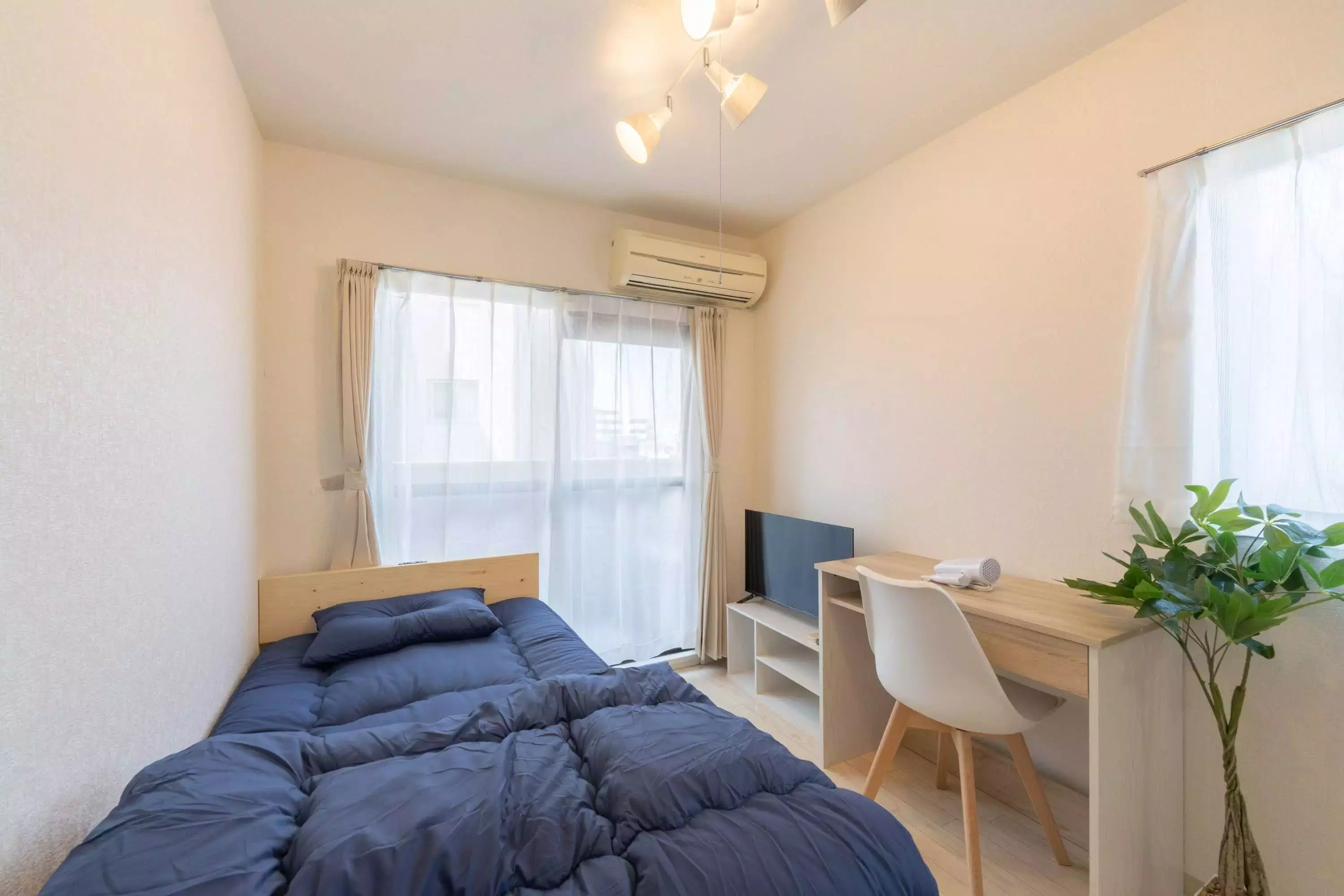
Because rent is the single largest expense for anyone living alone, the biggest wins come from lowering it. This is where a furnished share house or furnished apartment can change the math for someone on a 300,000 yen take-home salary. XROSS HOUSE is a property management company that operates furnished share houses and furnished apartments across 11 prefectures in Japan, with more than 50,000 residents housed to date and inventory growing each month, so it is worth understanding how the total monthly cost is built.
For a furnished share house, the monthly total is rent plus a common area fee that covers utilities, Wi-Fi, and shared supplies, plus an ansin support fee of 1,500 yen a month (approx. $10). Because utilities and internet are bundled into the common area fee, you avoid separate electricity, gas, water, and Wi-Fi bills, and there is no furniture to buy. That predictability is often what makes a tight budget feel workable.
| Cost item | Furnished share house | Furnished apartment |
|---|---|---|
| Initial cost | 30,000 yen (~$200) | Normally 50,000 yen (~$333); currently 30,000 yen (~$200) via campaign* |
| Utilities & Wi-Fi | Included in common area fee | Contracted separately by the resident (Wi-Fi not included) |
| Ansin support fee | 1,500 yen/mo (~$10) | 1,500 yen/mo (~$10) |
| Furniture & appliances | Included | Included |
| Deposit / key money / agency fee | None | None |
*The furnished apartment initial-cost campaign (50,000 yen reduced to 30,000 yen) is a limited offer and terms may change. A furnished apartment gives you a private unit with its own kitchen and bathroom, but utilities are contracted separately and it does not include free Wi-Fi. A furnished share house includes utilities and Wi-Fi in the common area fee. They are different products, so choose based on how much privacy and bundling you want. Exact rent and fees vary by property. You can check live prices on the room search page.
The full cost, start to finish: move-in, monthly, and move-out
Japan's rental market has a reputation for hidden costs, so here is the whole picture laid out honestly, not just the move-in headline. The move-out figures are set fees, but note that they apply when you leave, not up front. USD figures are approximate.
| Stage | What you pay | Furnished share house | Furnished apartment |
|---|---|---|---|
| Move-in (one-time) | Initial cost | 30,000 yen (~$200) | 30,000 yen (~$200) via campaign; normally 50,000 yen (~$333) |
| Deposit / key money / agency fee | None | None | |
| Monthly (recurring) | Rent | Varies by property | Varies by property |
| Utilities & Wi-Fi | Included in common area fee | Contracted separately (Wi-Fi not included) | |
| Ansin support fee | 1,500 yen/mo (~$10) | 1,500 yen/mo (~$10) | |
| Move-out (when you leave) | Cancellation admin fee | 16,500 yen (~$110), tax incl. | 55,000 yen (~$367), tax incl. |
| Re-contract admin fee (if you renew beyond the 1-year term) | 11,000 yen (~$73), tax incl. | 22,000 yen (~$147), tax incl. |
A few honest caveats. Individual contracts also require enrolment with a guarantor company, whose initial and monthly fees are set by the guarantor and quoted at application, so they are not fixed here. Contracts are one-year fixed-term leases; the re-contract admin fee above applies only if you renew. Notice for moving out is one month, with no early-termination penalty, though rent still runs for that final month. Exact move-out cleaning and restoration terms depend on the property and contract, so confirm the specifics for your room before you sign. Nothing here is charged after you leave without being spelled out in your contract first.
If it doesn't fit, you can move: free property transfers
One reassurance that matters most when you commit to a new city: with XROSS HOUSE, if a property does not suit you, you can transfer to another one for free. The transfer waives the cancellation admin fee on the property you leave and the initial cost of the property you move into, so you are not paying the move-in cost twice. Moves across prefectures are covered, and so is switching room type, for example from a share house room to a private furnished apartment.
This suits anyone whose plans are still flexible: a new job across town, a change of budget, or simply wanting a quieter building. One honest note for individual contracts: because a guarantor company is involved, a transfer can require re-screening, and the guarantor's initial fee may apply again. We flag this at the point of transfer so there are no surprises. For many residents, knowing you are not locked into one building is what makes signing the first lease feel safe.
For anyone weighing whether to rent or eventually buy in Japan, it also helps to see the bigger picture; our guide to house prices in Japan (2026) puts monthly rent in context against purchase costs.
Common reasons living alone feels tough, and how to fix them
There are recurring reasons why living alone can feel tight even on 300,000 yen a month:
- High fixed costs such as rent, insurance, and phone bills
- Loose control of variable spending like food and entertainment
- Unexpected one-off expenses
- Weak overall household management
With prices elevated in recent years, the point at which finances feel strained has dropped. Left unchecked, these habits create a monthly cycle of running short and never building savings. Below we go through each pitfall and a practical fix.
High fixed costs (rent, insurance, phone)
Fixed costs put the biggest steady strain on a single-person budget. Rent is the largest, and a common guideline is to keep it within a third of take-home pay, around 100,000 yen (approx. $665). In cities, many places exceed that line, which is how people end up "rent-poor."
Over-insuring and expensive phone or internet plans add up too. Because fixed costs recur every month, reviewing them once produces lasting savings: compromise a little on area or building age to lower rent, switch to a low-cost SIM, and trim insurance to what you actually need. Choosing a furnished share house that bundles utilities and Wi-Fi is one direct way to shrink this category.
Variable spending you cannot see (food, social, leisure)
Variable costs are the ones people rarely track. Food, social spending, and entertainment swing month to month and creep up unnoticed, especially with frequent eating out. The fix is to set a monthly budget in advance and adjust when you overspend. A budgeting app makes spending visible, and simple personal rules ("food under 30,000 yen this month," "one social event") cut waste without feeling restrictive.
Unexpected expenses
One-off costs are a common reason a budget suddenly feels tight: a broken appliance, a wedding or funeral, or medical bills can derail a plan. Living alone means fewer people to lean on, so preparing matters. Setting aside even 10,000 to 20,000 yen (approx. $67 to $133) a month in a separate emergency fund provides real peace of mind, and carrying basic medical insurance covers the rest. Plan with a little slack rather than to the last yen.
Poor spending control (cards and subscriptions)
Heavy credit card use and too many subscriptions quietly strain the budget. Card payments hit the following month, creating the illusion you have not spent. Video, music, and gym subscriptions look small individually but can total 10,000 to 20,000 yen (approx. $67 to $133) a month. Review every recurring charge the way you review fixed costs, keep card use to defined categories, and cancel anything you are not using. Drawing a clear line between "money I spend" and "money I do not" is the first step to a healthy budget.
Search for a room
Only furnished properties with appliances are listed!
Saving tips that make life easier on 300,000 yen a month
On paper, 300,000 yen a month looks like enough, but without control it can turn tight fast. With a few adjustments you can free up tens of thousands of yen a month. The techniques below fall into four areas, and the underlying idea is not willpower but systems: make spending visible and optimize it.
Keeping rent low (area, floor plan, and housing type)
Rent is the biggest line for a single person, so lowering it improves everything else. Start by reconsidering your area. Instead of insisting on the city center or a station-front address, look one stop out or a little further into the suburbs, and you may save 10,000 to 30,000 yen (approx. $67 to $200) a month. Being flexible on building age and floor widens your options further.
A furnished share house is another route to a lower total, since it bundles utilities and Wi-Fi and asks no deposit, key money, or agency fee. If you expect to move within Japan, note that XROSS HOUSE lets residents transfer between properties without paying the destination's initial cost again, which suits anyone whose plans are still flexible.
Cutting food costs (home cooking and smart shopping)
Food is a category where changes show up quickly. Eating out at 1,000 yen a meal for 30 days is over 30,000 yen a month; switching to home cooking can roughly halve that. Batch-cooking on weekends with frozen stock saves time and money. Shop once a week with a list, lean on long-lasting staples like rice, frozen vegetables, and canned goods, and use sale days and cashless points.
Reviewing utilities and phone bills
Utilities and communication respond well to review. Small daily habits, efficient air conditioning, LED lighting, and sensible hot-water settings, save thousands to tens of thousands of yen a year. Moving from a major carrier to a low-cost SIM can cut phone costs by more than 5,000 yen (approx. $33) a month, and revisiting your Wi-Fi can push total savings toward 10,000 yen (approx. $67). In a furnished share house these are bundled into the common area fee, so there is nothing separate to manage.
Balancing leisure, personal care, and hobbies
Leisure, personal care, and hobbies count as investing in yourself, but they balloon if ignored. Set a monthly cap for leisure and keep social events to the ones you truly want. Trim personal-care costs with a haircut-only salon or some self-care, and set a hobby budget in advance. The goal of frugal living is not to remove enjoyment but to define the range you can enjoy comfortably.
What separates people who save: habits for a 300,000 yen take-home salary
It is tempting to assume that 300,000 yen a month should make saving easy, yet many people save nothing. The difference is not income but money management. The core habits are paying yourself first, automating savings, and making spending visible.
Create "invisible money" with automatic savings
Pay-yourself-first is the most reliable way to build savings on this income. Set your account to move a fixed amount to a separate account the day your salary lands, then live on the rest. Automate 30,000 yen (approx. $200) a month and you save 360,000 yen (approx. $2,400) in a year, without relying on willpower. Time-deposit or sub-accounts at online banks make this easy.
Separate wallets and accounts to prevent waste
People who manage money well split it by purpose: living expenses, savings, leisure, and other. Cash users manage weekly with envelopes; card users separate bank accounts to prevent overspending. Because cards and cashless payments blur how much you have spent, a clear split, by "visualization" and physical separation, keeps the flow under control.
Use a budgeting app to see your spending
Many people who struggle to save simply do not know where their money goes. A household ledger or budgeting app fixes that by showing which categories run over and where you can improve. Modern apps classify receipts from a photo or sync with your bank and cards, so even a reluctant tracker can keep it up.
Search for a room
Only furnished properties with appliances are listed!
Consider increasing your income
There is a floor to how much you can cut. When you cannot trim further, the next lever is earning more. A 300,000 yen take-home salary is not low, but against city rents, everyday costs, and 2026's elevated prices, many people want a little more room. An extra 20,000 to 30,000 yen (approx. $133 to $200) a month from a side job eases the budget noticeably, and raising your base pay through skills or a job change is a realistic path.
Raising annual income through skills and a job change
To lift income at the root, upskilling or changing jobs is the most effective route. In IT and web roles, sales, and specialist positions, meaningful raises are possible even from a lower base. If your current job offers little prospect of a raise, a move is worth considering. More employers now accept people without prior experience and offer reskilling support, so a 500,000 to 1,000,000 yen (approx. $3,300 to $6,650) annual increase is realistic. Start by checking what income your current skills can target using a career assessment.
Earning 20,000 to 30,000 yen a month with a side job
A side job suits anyone who wants to cover the gap. Earning 20,000 to 30,000 yen (approx. $133 to $200) a month lightens the budget noticeably. Options range widely: freelance writing or design, video editing, data entry, delivery work you can start without special skills, point sites, and selling handmade goods. The key is sustainability, using 30 minutes to an hour a day consistently, and diversifying so you do not depend on one income source.
Using career-change support and qualification programs
If you plan to change jobs or upskill, support services and learning programs are the shortcut. Public employment offices and placement agencies offer free counseling, document review, and interview prep. Depending on eligibility, national programs may subsidize part of your tuition through vocational training or educational benefits. For qualifications, choose ones that help employment, such as bookkeeping or IT certifications; correspondence and online courses let you study while working.
Household simulations for a single person on 300,000 yen a month
Even on 300,000 yen a month, many people feel they have less room than expected, yet with disciplined budgeting, saving over 50,000 yen a month is achievable. The key is matching your budget to your lifestyle. Here are two patterns, one aggressive saver in a city and one frugal regional household with a car. Spending differs by values, but both share the ability to control it.
Saving 100,000 yen a month
To save 100,000 yen (approx. $665) a month on 300,000 yen take-home, keep living expenses under 200,000 yen. An example:
- Rent: 70,000 yen (approx. $465) — suburban studio
- Food: 25,000 yen (approx. $167) — mostly home-cooked, eating out once a week
- Utilities: 10,000 yen (approx. $67) — seasonal
- Phone and internet: 8,000 yen (approx. $53) — low-cost SIM plus Wi-Fi
- Daily necessities: 5,000 yen (approx. $33)
- Leisure and hobbies: 20,000 yen (approx. $133)
- Insurance: 5,000 yen (approx. $33) — minimum medical
- Miscellaneous: 20,000 yen (approx. $133)
By keeping fixed costs low and controlling variable spending, saving 100,000 yen a month is workable. Automating savings and visualizing spending are what make it last. A furnished share house that bundles utilities and Wi-Fi can help push the rent-plus-utilities block even lower.
A regional household with a car, focused on saving
Even with a car in a regional area, a comfortable single life on 300,000 yen is possible with attention to saving. An example:
- Rent: 55,000 yen (approx. $367) — two-room apartment in a regional city
- Food: 20,000 yen (approx. $133) — mainly home-cooked plus prepared meals
- Utilities: 12,000 yen (approx. $80)
- Phone and internet: 7,000 yen (approx. $47)
- Car (fuel, insurance, maintenance): 25,000 yen (approx. $167)
- Insurance: 5,000 yen (approx. $33) — auto plus medical
- Leisure and hobbies: 15,000 yen (approx. $100)
- Miscellaneous: 15,000 yen (approx. $100)
- Savings: 60,000 yen (approx. $400)
Regional rents are lower and many places include parking, so a car is easier to afford than in Tokyo. Steady habits, buying in bulk, saving on utilities, and cancelling unused subscriptions, keep costs down while keeping the convenience of a car.
Frequently asked questions
Can you live in Tokyo on 300,000 yen a month?
Yes. A take-home pay of 300,000 yen a month (approx. $2,000) is enough to live alone in Tokyo, but comfort depends on rent. If rent stays near a third of income, around 90,000 to 100,000 yen (approx. $600 to $665), you can cover food, utilities, and phone bills and still have room. Lower your rent, for example with a furnished share house, and saving becomes far easier.
How much is rent in Tokyo?
In central Tokyo, a studio typically runs about 80,000 to 120,000 yen a month (approx. $530 to $800). One or two stations out, or in the suburbs, you can often find 50,000 to 70,000 yen (approx. $333 to $465). A furnished share house lowers the total further by bundling utilities and Wi-Fi. Exact figures vary by area and property; see our average rent in Tokyo guide.
What annual salary does a 300,000 yen take-home pay equal?
A monthly take-home of 300,000 yen corresponds to a gross salary of about 380,000 to 390,000 yen a month, or roughly 4.2 to 4.8 million yen a year (approx. $28,000 to $32,000) depending on bonuses. Taxes and social insurance account for the gap between gross and take-home pay.
How much can you realistically save on 300,000 yen a month?
With disciplined budgeting, saving 50,000 to 100,000 yen (approx. $333 to $665) a month is realistic. The two biggest levers are keeping rent low and automating savings so you pay yourself first. Reducing your rent-plus-utilities block, for instance by choosing a furnished share house that bundles both, frees up the most room.
How much does it cost to move into a XROSS HOUSE furnished share house?
The initial cost for a furnished share house is 30,000 yen (approx. $200), with no deposit, key money, or agency fee. Your monthly total is rent plus a common area fee that covers utilities, Wi-Fi, and shared supplies, plus an ansin support fee of 1,500 yen a month (approx. $10). Rent varies by property; you can check current prices on the room search page.
What are the move-out and other costs beyond the initial fee?
Beyond the move-in cost, a furnished share house has a cancellation admin fee of 16,500 yen (approx. $110, tax included) when you leave, and a re-contract admin fee of 11,000 yen (approx. $73) only if you renew past the one-year term. For a furnished apartment these are 55,000 yen (approx. $367) and 22,000 yen (approx. $147). Notice to move out is one month with no early-termination penalty. Individual contracts also require a guarantor company, whose fees are quoted at application. Exact cleaning and restoration terms vary by property and contract, so confirm the details for your room before signing.
Can I move to a different XROSS HOUSE property later?
Yes. If a property does not suit you, you can transfer to another for free: the transfer waives the cancellation admin fee on the property you leave and the initial cost of the one you move into, including moves across prefectures and changes of room type. For individual contracts, a guarantor re-screening may be required and the guarantor's initial fee may apply again, which we flag at the point of transfer.
What is the difference between a furnished share house and a furnished apartment?
A furnished share house gives you a private room with shared kitchen and bathroom, and the common area fee bundles utilities, Wi-Fi, and supplies. A furnished apartment is a fully private unit with its own kitchen and bathroom, but you contract utilities separately and it does not include free Wi-Fi. Both come furnished with no deposit, key money, or agency fee. They are different products, so choose based on how much privacy and bundling you want.
How much are utilities in Tokyo for one person?
Utilities for a single person average about 10,000 to 15,000 yen a month (approx. $67 to $100), rising in summer and winter with heating and cooling. Phone and internet add roughly 7,000 to 10,000 yen (approx. $47 to $67). In a furnished share house these are included in the common area fee, so there are no separate bills to manage.
Is it cheaper to live in Tokyo or a regional area on the same salary?
Regional areas are generally cheaper on the same 300,000 yen take-home salary, mainly because rent runs 50,000 to 70,000 yen (approx. $333 to $465) versus 80,000 to 120,000 yen (approx. $530 to $800) in central Tokyo. The trade-off is that many regional areas require a car, adding fuel and maintenance, while cities rely on public transport.
Summary
Living alone on a take-home pay of 300,000 yen a month is entirely possible, in Tokyo or elsewhere, but many people feel they lack room or cannot save. The deciding factor is not income; it is how you manage fixed and variable costs, and rent above all. Watch your spending, control your budget, and a comfortable single life is within reach without sacrificing quality of life.
Start by reviewing your current fixed and variable expenses. If money still feels tight, consider changing where you live or lifting your income through a side job or job change. Lowering your biggest cost is the fastest win, and a furnished share house that bundles utilities and Wi-Fi is one practical way to do it. If you would like help figuring out what fits your budget, the XROSS HOUSE team is happy to talk it through, in Japanese, English, Chinese, or Korean, and contracts can be completed online, even from overseas.
This article is reviewed by the XROSS HOUSE team — a property management company established in 2007 that operates furnished share houses and apartments across 11 prefectures in Japan, with more than 50,000 residents housed to date and multilingual support in Japanese, English, Chinese, and Korean (as of July 2026).