
Can you rent a share house in Tokyo as a foreigner?
Yes — you can rent a share house in Tokyo as a foreigner, and your nationality has nothing to do with it. What actually decides whether XROSS HOUSE can house you is simpler: your age, valid identification, and the ability to sign and pay for a one-year contract. There's no Japanese personal guarantor to find, and the whole process can run online from outside Japan.
The starting numbers are fixed, too. A share house move-in fee is a flat ¥30,000, and rent starts from ¥24,800 a month for the least expensive room type. The rest of this guide breaks down exactly what you pay, when, and what nobody mentions until after you've moved in.
Renting as a foreigner in Tokyo raises a different worry than renting as a long-term resident does — not whether you'll be treated fairly, but whether the paperwork is built for someone in your situation at all. A standard Japanese lease assumes a guarantor who already lives here, a multi-year commitment, and in-person paperwork in Japanese. Removing those three assumptions is the main reason the question "can I actually do this" has a straightforward yes.
More than 50,000 people have lived with us to date, from a wide range of countries, so you won't be the first person going through this process in a second language.
- Check which age band fits you: 18–39 for a share house or shared apartment, 18–59 for a furnished apartment.
- Have a passport or residence card ready, along with an email address and a way to sign documents online.
- Budget for the move-in fee and any guarantee company fee as two separate numbers, not one.
- Decide whether you want to pay your stay in instalments or settle the whole thing in one payment upfront — the two routes are costed differently.
- If your actual question is about a visa, take it to the Ministry of Foreign Affairs of Japan or your nearest embassy before you contact us.
The requirements we apply are practical rather than bureaucratic. You need to fall inside the age range for the room type you want, hold valid identification, and be able to commit to and pay for a one-year contract. Support is available in Japanese, English, Chinese, Korean and more, so the process itself is rarely the hard part.
What we don't do is ask about your visa category, and we're not the right people to advise on one. If you need to know which visa lets you stay in Japan for however long you're planning, that question belongs with the Ministry of Foreign Affairs of Japan, the Immigration Services Agency of Japan, or your nearest Japanese embassy. Once that's settled, the housing side is the more straightforward half.
What you pay up front: share house vs a standard Japanese rental
A standard Japanese rental contract is built for someone who already has a life in Japan — a resident who can find a guarantor and plans to stay for years, not months. Move in that way and you're typically covering several separate costs before you even get the keys, most of them due in full and none of them refundable if your plans change a few months in.
| Cost item | Standard Japanese rental | Share house / shared apartment (XROSS HOUSE) | Furnished apartment (XROSS HOUSE) |
|---|---|---|---|
| Deposit | Typically required | None | None |
| Key money | Typically required, non-refundable | Move-in fee only (see below) | Move-in fee only (see below) |
| Agency fee | Typically required | None | None |
| Japanese personal guarantor | Typically required | Not required | Not required |
| Move-in fee | Varies by property | ¥30,000 | ¥30,000 (current campaign) / ¥50,000 (standard) |
With XROSS HOUSE, the deposit and agency fee are removed entirely, whether you choose a share house or a furnished apartment. The only figure due at signing is the move-in fee itself.
Two of those standard-market costs are worth understanding. A deposit is meant to be at least partly refundable, held against damage or unpaid rent. Key money works differently: it's paid to the landlord with nothing given back, historically treated as a thank-you for the tenancy rather than a cost tied to the room itself.
Add an agency fee on top of both, and a first-time renter can be asked to hand over a meaningful sum before ever unlocking the front door — which is exactly the barrier that keeps a question like this one near the top of search results for people planning a move to Tokyo.
No Japanese personal guarantor is needed — but for an individual contract, enrolling with a rent guarantee company is normally required instead, and its initial and monthly guarantee fees sit on top of the move-in fee shown above.
If you pay your entire stay in one lump sum upfront — from the move-in fee through to the move-out fee — that enrolment isn't needed at all. There's no minimum or maximum length of stay attached to this: what matters is the single payment, not how long you're staying. In practice, it's a route that a lot of one- to three-month residents end up taking.
Either way, we still run our own resident screening. What the lump-sum route removes is the guarantee company and its fees, not the application review itself.
The furnished apartment's ¥30,000 move-in fee reflects a current campaign price; the standard rate outside the campaign is ¥50,000. For the fuller breakdown of what that figure covers, see our explanation of the initial costs for a furnished apartment.
Whichever room type you're weighing up, the figure in the table above is the number you'll actually be asked for at signing — not a starting point that quietly grows once the paperwork is in front of you.
Search for a room
Only furnished properties with appliances are listed!
What you actually pay every month
Once you're settled in, the monthly bill depends on which room type you picked. Here's what's included at each level.
| Room type | Rent (from) | Common area fee | Support service fee |
|---|---|---|---|
| Dormitory | ¥24,800 | ¥15,000 | ¥1,500 |
| Semi-private room | ¥31,000 | ¥15,000 | ¥1,500 |
| Private room (share house) | ¥40,000 | ¥15,000 | ¥1,500 |
| Shared apartment (SA-XROSS series) | ¥40,000 | ¥15,000 | ¥1,500 |
| Furnished apartment | ¥50,000 | None | ¥1,500 |
The ¥15,000 common area fee in a share house or shared apartment bundles electricity, gas, water, Wi-Fi and shared household supplies into one predictable number. You won't see a separate utility bill for a share house or shared apartment room.
That figure also covers shared household basics — cleaning supplies and other consumables in the kitchen and bathroom — so day-to-day life doesn't come with a string of small purchases on top of rent.
A furnished apartment works differently. There's no common area fee, and electricity, gas and water are contracted in your own name. We can arrange those contracts for you at no charge, or you can take an all-inclusive utilities plan for ¥15,000 a month instead — either way, nobody expects you to navigate three separate Japanese utility sign-ups alone.
Setting up three separate utility accounts in a language you may not read yet is the kind of task that sounds small until you're the one doing it, which is why both options sit side by side rather than leaving you to work it out on your own.
Every room type, including the furnished apartment, also carries a flat ¥1,500 monthly support service fee, tax included. It's the one line that doesn't change no matter which of the five room types you choose, and it covers ongoing support from the team you'll actually be dealing with once you've moved in.
Five ways to live in Tokyo, from cheapest to most private
Price and privacy move together, and there are five steps on that ladder. Here they are in order, from the least expensive to the most independent.
There isn't a wrong choice among the five. Each is a trade-off between what you pay, how many people you share space with, and how self-contained you want daily life to be — and moving up or down the ladder later, as explained further down, doesn't cost you anything extra.
1. Dormitory — from ¥24,800
A shared room with bunk-style beds, plus a shared kitchen, bathroom and living room. It's the least expensive way in, and by default the most social. It suits residents who want the lowest possible rent and don't mind sharing a room with others.
2. Semi-private room — from ¥31,000
A partitioned personal space inside a shared room, with the same shared kitchen, bathroom and living room as the dormitory. You get a defined space of your own for a modest step up in rent. It suits residents who want some separation from roommates without paying share-house private-room rates.
3. Private room in a share house — from ¥40,000
Your own room with a door that locks, inside a house where the kitchen, bathroom and living room are shared with other residents. This is the setup most people picture when they hear "share house," and where most of the community comes from. It suits residents who want a locked door of their own, but still want a household to come home to.
4. Shared apartment (SA-XROSS series) — from ¥40,000
Your own furnished room inside a building run on the same shared-cost model as our share houses, but without a common living room to gather people together. It sits between a share house private room and a fully independent apartment — more privacy than the former, without the running costs of the latter. It suits residents who've outgrown a shared bedroom but aren't ready for the running costs of a fully independent flat.
5. Furnished apartment — from ¥50,000
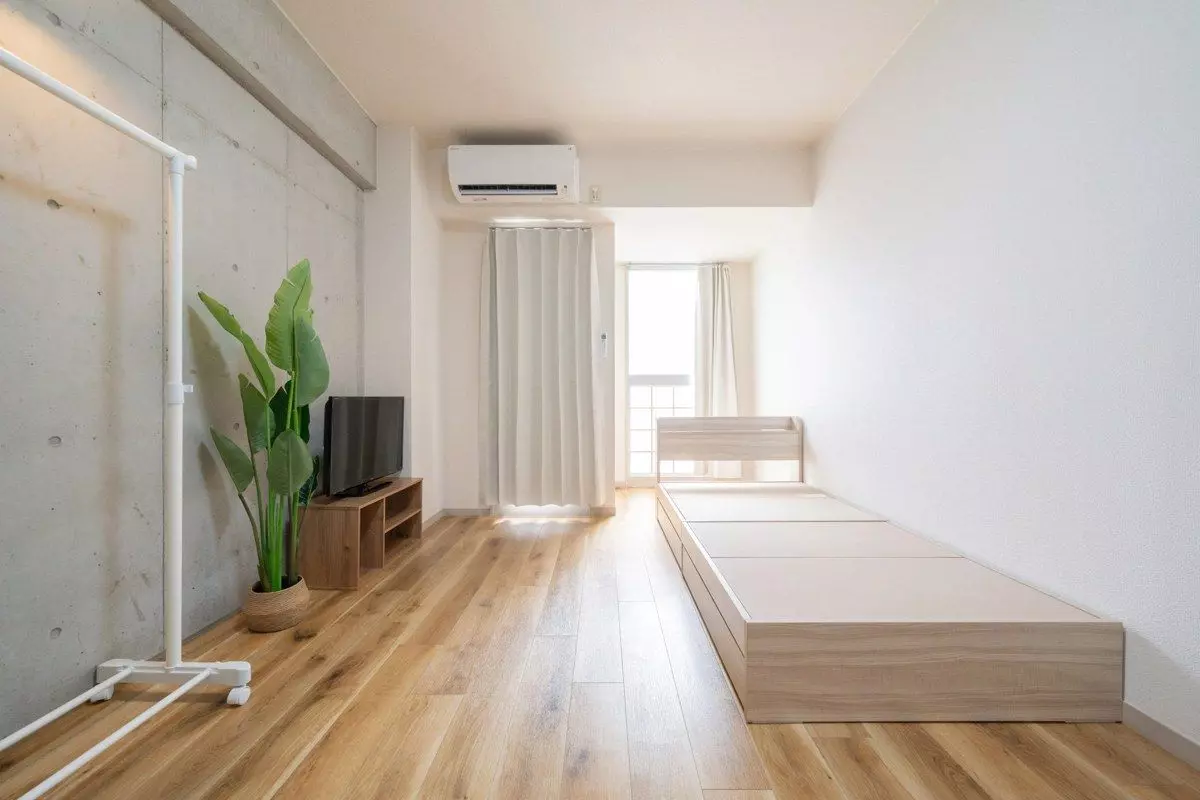
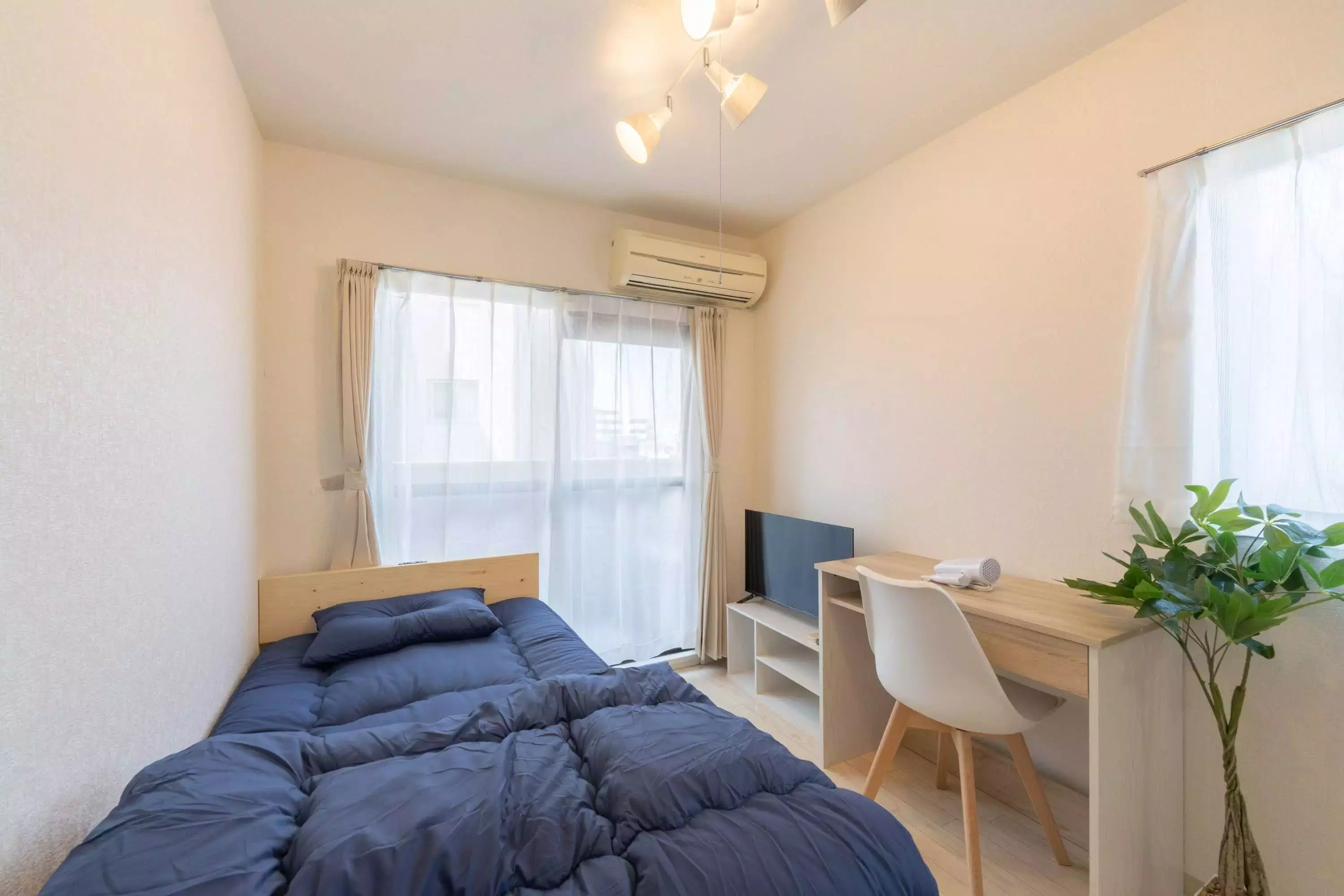
A self-contained unit with your own kitchen and bathroom, and nobody else's name on the door. It's the most expensive of the five, and the only one with no common area fee, because there's nothing to share. It suits residents who value full independence over communal living, and who are comfortable managing their own utility contracts, or using the support options described above. For a longer look at daily life in one, see our guide on how to choose and live in a furnished apartment as a foreigner.
Tokyo isn't the only place this ladder works. We operate the same five room types across 11 prefectures, from Hokkaido to Fukuoka, including affordable share houses in Kyoto if a Kansai plan ever makes more sense than a Tokyo one.
Search for a room
Only furnished properties with appliances are listed!
Signing from overseas: what the timeline really looks like
None of this requires you to be in Japan first. The application, the room viewing and the contract itself can all happen online, from wherever you currently are — a laptop and a stable internet connection are the only hard requirements.
| Milestone | Timing |
|---|---|
| Apply and view rooms | Online, from anywhere, including an online viewing |
| Reserve a room | Up to about a month before move-in, no rent charged for the empty period |
| Fastest possible move-in | 7 days after your application, if a room is free |
| Lease term | 1-year fixed-term contract |
| Minimum stay | 1 month |
| Notice before moving out | 1 month, no early-termination penalty |
That one-month reservation window matters more than it looks. It means you can lock in a room before a flight is even booked, without paying rent for days you're not living there yet.
Seven days is the fastest case, not the standard one, and it assumes a room that matches what you asked for is free when you apply. Having a passport or residence card ready, along with an email address you check regularly, is the part of the timeline you control.
The lease itself is a one-year fixed-term contract, but nothing forces you to stay a year: give one month's notice at any point and there's no early-termination penalty. At renewal, a re-contracting fee applies — ¥22,000 for a furnished apartment, ¥11,000 for a share house or shared apartment, tax included.
If your plans change and a different city or room type suits you better, moving between XROSS HOUSE properties is free, including across prefectures. It waives both the move-out fee at your old room and the move-in fee at the new one, so a decision made from overseas before you'd seen the country in person isn't one you're locked into. If you move out entirely and come back within a year, the move-in fee is waived that time too.
Five things that surprise people after they move in
Most of what surprises new residents isn't hidden — it's just easy to miss on a first read, buried in a contract clause or a page you skim past while comparing move-in fees. Here's what we'd want to know if we were moving in ourselves, in plain terms rather than contract language.
- The age limits are enforced, not a suggestion. A furnished apartment takes residents aged 18 to 59; a share house or shared apartment is 18 to 39. The band is tied to the room type, so it's worth checking before you settle on one.
- The furniture is already there, but your bed might not be. In Tokyo, Kanagawa, Saitama and Chiba, furnished apartments use futon or mattress rental rather than a fixed bed. Elsewhere, the mattress is built into the room.
| Plan | Bedding set | Futon only |
|---|---|---|
| Monthly (minimum 6 months) | ¥3,300 | ¥2,200 |
| Lump sum (no minimum period) | ¥22,000 | ¥14,300 |
Three details catch people out here: it's normally the full bedding set, not the futon alone — a futon-only rental only applies where a mattress is already fixed in the room. You also can't change plans once you've started renting, and you can't swap the item during the rental period.
- There's a fee when you leave, not just when you arrive. An administrative move-out fee applies: ¥16,500 for a share house or shared apartment, ¥55,000 for a furnished apartment. Neither is an early-termination penalty — that doesn't exist as long as you give a month's notice — and neither is connected to any guarantee company fee you may also be paying.
- In a furnished apartment, the utilities are yours to set up. Electricity, gas and water go in your own name, not ours. We'll arrange the contracts for you free of charge if you'd rather not do it in Japanese, or take the ¥15,000 all-inclusive plan and stop thinking about it.
- Wi-Fi is already paid for in a share house or shared apartment. It's folded into the ¥15,000 common area fee, so there's no router to buy and no separate bill to set up.
Residents keep the shared spaces tidy themselves, following simple house rules, and a cleaning support visit covers the common areas once a week. Some properties also offer women-only floors or entire buildings, and support is available in Japanese, English, Chinese, Korean and more if a question comes up after you've already settled in.
Search for a room
Only furnished properties with appliances are listed!
FAQ
A few more specific questions come up often enough from people applying from abroad to answer directly here.
What documents do I need to apply?
A valid passport or residence card, and a way to receive and sign documents by email, cover most of what's needed to start. We'll tell you at application stage whether anything else is needed for your particular contract.
Do I have to view the room in person before signing?
No. Rooms can be viewed remotely, and the contract itself is signed online — which is exactly how the process works for residents applying from outside Japan in the first place.
Do I need a specific visa to rent a share house in Tokyo?
We don't set visa or residence-status requirements ourselves; what we check is age, identification, and your ability to sign and pay for the contract. For anything about which visa lets you stay in Japan long enough, or whether you qualify for one, check with the Ministry of Foreign Affairs of Japan, the Immigration Services Agency of Japan, or your nearest Japanese embassy — they're the only accurate source.
Do I need a Japanese guarantor?
No personal guarantor is required. For an individual contract, you'll normally need to enrol with a rent guarantee company instead, and its fees sit on top of the move-in fee. If you pay your full stay — move-in fee through to move-out fee — in one payment upfront, that enrolment isn't needed at all.
How much does it cost to move in?
The move-in fee is ¥30,000 for a share house or shared apartment. For a furnished apartment it's ¥30,000 under the current campaign, or ¥50,000 outside the campaign. There's no deposit or agency fee either way.
Can I sign the contract before I arrive in Japan?
Yes. The application, the room viewing and the contract itself all run online, so you can complete the whole process from overseas. You can reserve a room up to about a month before your move-in date without being charged rent for the days you haven't moved in yet.
What's the minimum length of stay?
One month. The lease itself is a one-year fixed-term contract, but you can give one month's notice at any point with no early-termination penalty.
Is Wi-Fi included?
In a share house or shared apartment (SA-XROSS series), yes — it's part of the ¥15,000 common area fee along with utilities and shared supplies. A furnished apartment doesn't carry a common area fee, so Wi-Fi and other utilities are arranged separately.
What happens when I want to move out?
You give one month's notice, and an administrative move-out fee applies: ¥16,500 for a share house or shared apartment, ¥55,000 for a furnished apartment. There's no separate early-termination penalty on top of that.
Can I switch room types or cities after I move in?
Yes. Moving between XROSS HOUSE properties is free, even across prefectures, and it waives both your old move-out fee and your new move-in fee. We currently operate in 11 prefectures, including Tokyo, Osaka and Fukuoka.
Renting from outside Japan doesn't have to stay complicated. Check what's available, put a hold on a room for about a month before you land, and let the contract itself happen online — the same process whether you're heading for a dormitory bed or a self-contained furnished apartment.