- Renting an apartment in Japan usually means a screening, a written contract and initial costs that often reach four to six months' rent.
- Most landlords expect a rent guarantee company instead of a personal guarantor, and the guarantee fee is paid on top of the other initial costs.
- Share houses and furnished apartments skip most of these steps: they come with furniture and can start from one month.
- XROSS HOUSE offers both, with English support and no deposit or agency fee.
Understanding Housing Options in Japan
Housing in Japan comes in several types. The right one depends on your budget, your lifestyle and how long you plan to stay.
Apartments and Mansions
Japanese apartments fall into two main groups. A "mansion" is a reinforced concrete building, usually with better soundproofing and security. The word does not mean a luxury house. Low-rise wooden or light steel buildings cost less but have thinner walls. Both suit long-term residents who want an independent home.
Share Houses
Share houses have become popular among foreigners in Japan. You get a private bedroom and share the kitchen, bathrooms and living room with other residents. They usually cost less to move into, come furnished and make it easy to meet people from many countries. Our guide to share houses in Tokyo explains how they work in more detail.
XROSS HOUSE runs foreigner-friendly share houses, with English support, in 11 prefectures: Tokyo, Kanagawa, Saitama, Chiba, Osaka, Aichi, Hyogo, Kyoto, Nara, Fukuoka and Hokkaido.
Guest Houses and Short-Term Rentals
If you need a place while you search for permanent housing, guest houses and short-term rentals give you flexibility. They work well for the first few weeks or months, so you can explore neighborhoods before you commit to a longer lease. Furnished apartments on a monthly contract sit in between: you get a private home with a minimum stay of one month. See our guide to one-month furnished apartments for rent in Tokyo.
| Option | Private space | Furnished | Typical contract | Upfront cost level |
|---|---|---|---|---|
| Standard apartment | Whole home | Usually not | Two-year lease | Often four to six months' rent |
| Share house | Private bedroom, shared kitchen and bathrooms | Yes | From one month at XROSS HOUSE | Low |
| Furnished apartment | Whole home | Yes, with appliances | From one month at XROSS HOUSE | Low |
Japanese Rental Costs: What to Expect
The biggest surprise for many foreigners moving to Japan is the upfront cost of renting an apartment. Knowing the numbers in advance helps you budget. For a wider picture of daily expenses, see our guide to the cost of living in Japan.
Initial Move-In Costs
Traditional Japanese rentals ask for several fees upfront. Together they can total four to six months' rent. They typically include:
- Security deposit: usually one to two months' rent, refunded minus cleaning and repair costs when you move out.
- Key money: a non-refundable payment to the landlord, typically one to two months' rent. It is a Japanese custom with no real equivalent in most Western countries.
- Real estate agency fee: usually one month's rent plus tax, paid to the agency that found the property.
- Guarantor company fee: most landlords require a guarantor, so foreigners typically use a rent guarantee company. The fee is often 50 to 100 percent of one month's rent.
- Fire insurance: required by most landlords, around 15,000 to 20,000 yen per year.
Monthly Costs
Beyond rent, plan for these monthly expenses:
- Management fee: a monthly charge for building maintenance, typically 5,000 to 15,000 yen.
- Utilities: electricity, gas and water usually run 10,000 to 20,000 yen per month, depending on usage and season.
- Internet: expect 4,000 to 6,000 yen a month for a home connection.
At XROSS HOUSE, a share house has a monthly common-area fee that covers utilities and shared supplies, and Wi-Fi is included, so there are no separate utility bills to set up. Furnished apartments have no common-area fee; you pay utilities and internet yourself, as in a regular apartment. Every home also has a small monthly support fee, and all of it is shown in your written estimate.
How Share Houses Save Money
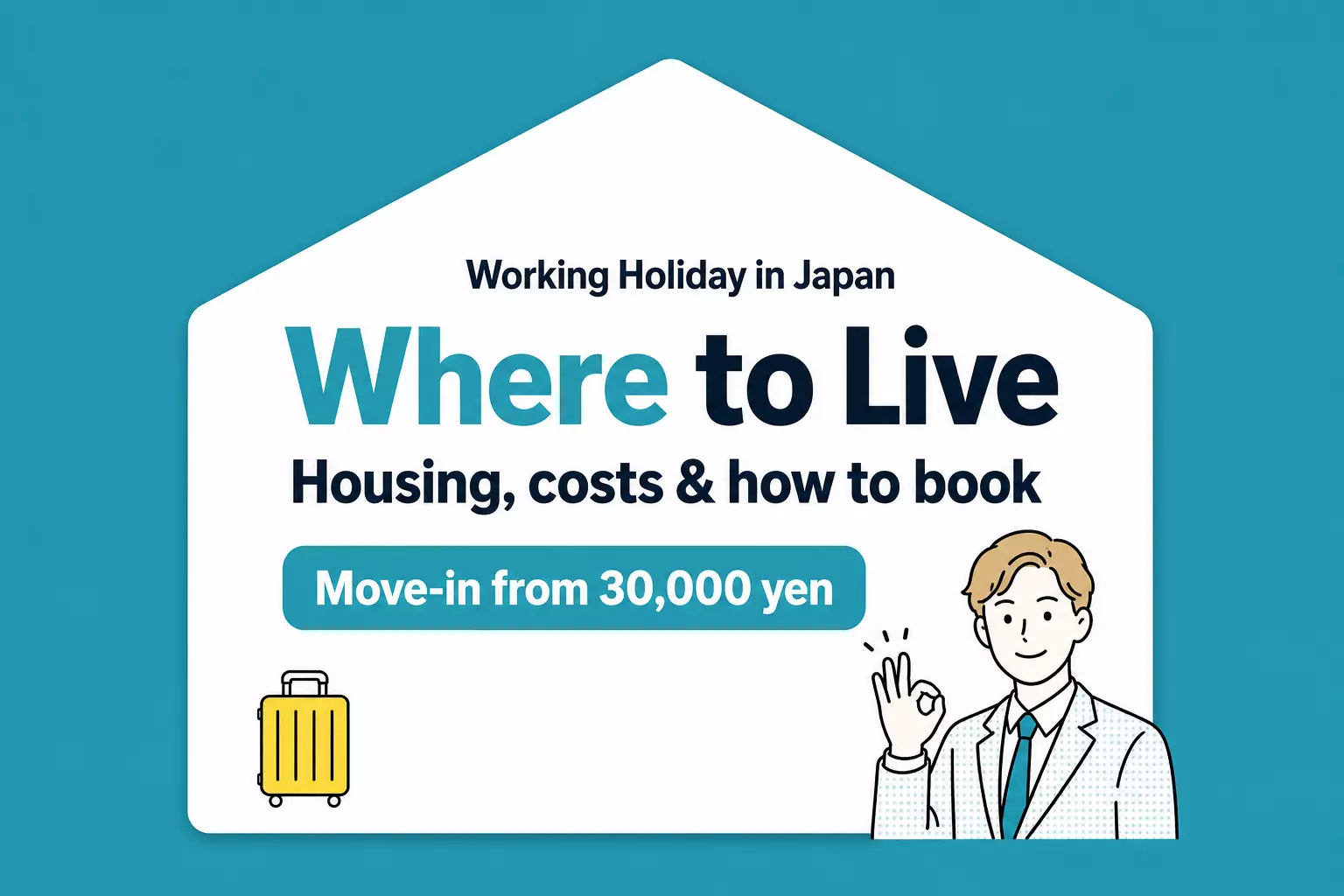
Share houses and furnished apartments cut many of these costs. Initial costs for a typical Japanese rental often reach four to six months' rent. XROSS HOUSE keeps them much lower: there is no deposit and no agency fee, and the initial cost is a registration fee — ¥30,000 for share houses, and ¥30,000 for furnished apartments under the current campaign (normally ¥50,000). When you move out, a fixed move-out fee applies, and every fee is listed in a written estimate before you apply.
Share houses usually bundle utilities and Wi-Fi into the monthly fee, and the rooms come furnished. That means you can skip the furniture shopping and the separate internet contract in your first weeks.
How guarantors work at XROSS HOUSE:
- You do not need a personal guarantor (a person).
- For an individual contract you normally join a rent guarantee company instead, and its initial and monthly guarantee fees are charged separately, on top of the registration fee.
- If you pay everything from the registration fee to the move-out costs in one lump sum when you move in, joining a guarantee company is not required.
Search for a room
Only furnished properties with appliances are listed!
How to Find an Apartment in Japan as a Foreigner
Finding housing as a foreigner comes with a few extra hurdles. Some landlords worry about language barriers or unfamiliar customs, and some listings do not accept foreign tenants. A clear plan makes the search much easier.
Working with Real Estate Agencies
Real estate agencies are the main route to a standard apartment. Some specialize in foreign residents and have English-speaking staff. Bring your residence card, your passport and proof of income, employment or school enrollment, and be ready to explain your situation clearly. Students can also read our guide to the Japan student visa before they start looking.
Many agencies work on a first-come, first-served basis. Properties in popular areas such as Shibuya, Shinjuku and Ikebukuro can be rented within days of listing, so be ready to decide quickly.
With XROSS HOUSE you apply directly to us, in English, so there is no agency in between and no agency fee.
Online Property Search
Several websites cater to people looking for housing in Japan. Popular ones include Suumo, Homes and Real Estate Japan. You can filter by location, price and amenities, then contact an agency about the rooms you like.
Foreigner-Friendly Housing Services
Services built for foreigners remove many barriers. XROSS HOUSE offers share houses and furnished apartments with English support and a clear fee structure. It has housed over 50,000 residents cumulatively and works with over 650 corporate clients. If you want to compare options for your own situation, our team can walk you through them.
Key Japanese Rental Terms You Need to Know
A few terms will help you read listings and talk to agents with more confidence.
Room Layout Terms
Japanese apartments use a short code for the layout. A 1R (one room) is a studio where the kitchen is part of the living space. A 1K has a separate kitchen, and a 1DK adds a dining area. A 1LDK adds a living room to the dining and kitchen space. The first number counts bedrooms, so a 2LDK has two bedrooms plus a living, dining and kitchen area.
Size Measurements
Room sizes are often given in tatami mats. One mat is about 1.62 square meters (17.4 square feet). A six-mat room is about 9.7 square meters, typical for a bedroom in a Japanese apartment.
Common Listing Terms
Listings use short labels for the rental type, the lease type and the entryway, and some mark whether pets or foreign tenants are accepted. Before you contact an agency, check that the listing says foreign tenants are welcome. Many sites let you filter for it, which saves time. A translation app helps with the rest.
Search for a room
Only furnished properties with appliances are listed!
The Japanese Rental Contract: What You Need to Know
Japanese rental contracts differ from those in many Western countries. Here is what to understand before you sign. For a full walkthrough, read our guide to the Japan rental contract explained.
Contract Types
Most rentals use either a standard two-year contract or a fixed-term lease. Standard contracts renew automatically, usually with a renewal fee of one month's rent. A fixed-term lease ends on a set date without renewal, though a new contract may be agreed. Many furnished rentals use fixed-term lease contracts, which suits stays of a few months to a year or two.
XROSS HOUSE uses a one-year fixed-term lease, and you can stay for as little as one month. To leave early, give one month's notice; there is no early-termination penalty. If you renew after the year, a re-contract fee applies.
The Guarantor Requirement
Traditional rentals require a guarantor: a Japanese citizen or permanent resident who agrees to cover your rent if you cannot pay. Most newcomers do not have anyone to ask, so rent guarantee companies are now common. They charge a fee and let you rent without a personal guarantor.
At XROSS HOUSE it works like this. You do not need a personal guarantor. For an individual contract you normally join a rent guarantee company instead, and its initial and monthly guarantee fees are charged separately, on top of the registration fee. If you pay everything from the registration fee to the move-out costs in one lump sum when you move in, joining a guarantee company is not required.
Move-Out Procedures
You usually need to give notice one to two months before you leave. The room must be returned in good condition, which may include professional cleaning. In a standard lease, the security deposit covers repairs and cleaning, and the rest is refunded to you.
XROSS HOUSE does not take a deposit, so nothing is deducted at the end. Instead, a fixed move-out fee is charged each time you move out, whether you leave early or at the end of your lease. Give one month's notice before your move-out date.
Popular Housing Areas in Tokyo
Tokyo has many neighborhoods, each with its own character and price range. These are popular with foreign residents.
Central Tokyo
Shibuya, Shinjuku and Ikebukuro are convenient and lively, and rents are higher. They suit young professionals who want to live close to work, shops and several train lines.
Residential Areas
Nakano, Koenji and Sangenjaya have a more local feel and lower rents, with good access to central Tokyo. They suit people who want a balance between convenience and cost.
Eastern Tokyo
Areas east of the Sumida River, such as Kinshicho, Ojima and Kasai, offer more affordable housing and good train and subway links. These neighborhoods have developed in recent years and offer good value for budget-conscious renters.
Outside Tokyo, XROSS HOUSE also has homes in Osaka, Nagoya, Fukuoka and other cities.
Search for a room
Only furnished properties with appliances are listed!
Moving In and Setting Up Utilities
After you secure a home, a few steps remain before and after moving day. If you are coming from abroad, our guide to moving to Japan from the US covers the arrival side.
Before Moving Day
Contact the electricity, gas and water companies at least one week before you move so services start on your move-in date. If you move from another address in Japan, also submit a change of address at your local ward office.
Moving Companies in Japan
Japanese moving companies are known for good service. Sakai, Art and Nittsu offer plans from budget single-person packages to full family moves, and many give online quotes and English support. Prices depend on distance, volume and season. March is the busiest and most expensive month.
Setting Up Internet and Other Services
Home internet installation in Japan typically takes two to four weeks to arrange. Common providers include NTT, SoftBank and au. Pocket Wi-Fi devices work as a quick fix while you wait. Share houses usually bundle Wi-Fi into the monthly fee, so there is nothing to set up.
XROSS HOUSE furnished apartments do not include Wi-Fi. You can bring your own line or rent the resident mobile Wi-Fi (see our Wi-Fi service for residents). For utilities, you either open the contracts in your name with free multilingual setup support from a partner company, or choose a flat-rate utility plan.
Why Share Houses Are the Smart Choice for Newcomers
For people just arriving in Japan, share houses have several advantages over a traditional apartment.
Lower Upfront Costs
At XROSS HOUSE there is no deposit and no agency fee. The initial cost is a registration fee of ¥30,000 for share houses, and your first month's rent is paid as usual. That leaves more cash for flights and settling-in costs. The guarantor points above apply here too: no personal guarantor, a rent guarantee company for an individual contract with separate guarantee fees, and no guarantee company needed if you pay everything in one lump sum at move-in.
Fully Furnished Living
Share house rooms come with a bed, desk and storage, and the shared areas have a washing machine, refrigerator and kitchenware. Buying all of that from scratch can easily cost several hundred thousand yen.
Community and Support
A share house gives you people to talk to from day one. Many residents are fellow foreigners or Japanese people interested in international exchange. Staff are on hand for questions, and English support is available.
Flexibility
Contracts at XROSS HOUSE start from one month, and you can move in as early as seven days after you apply. That helps if your plans in Japan are still taking shape or if you want to try a neighborhood before you commit for longer.
Furnished Apartments: A Private Alternative
If you prefer your own space, a furnished apartment is the other easy start. XROSS HOUSE furnished apartments are private and fully furnished with appliances, and they also start from one month. The registration fee is ¥30,000 under the current campaign (normally ¥50,000). Wi-Fi is not included, so choose your own line or the resident mobile Wi-Fi. Share houses and furnished apartments are different products: a share house has shared kitchens and bathrooms, while a furnished apartment is entirely yours.
XROSS HOUSE also has women-only properties, and the SA-XROSS series of shared apartments is another option.
XROSS HOUSE: Your Gateway to Japan
XROSS HOUSE is a Tokyo-based property management company with homes in 11 prefectures. It offers English support and a clear fee structure. If you would like help choosing between a share house and a furnished apartment, our team can answer your questions.
- Written by the XROSS HOUSE editorial team. XROSS HOUSE is a Tokyo-based property management company.
- XROSS HOUSE has housed over 50,000 residents cumulatively, works with over 650 corporate clients, and operates in 11 prefectures across Japan.
- Information as of October 2026.
FAQ: Renting an Apartment in Japan
Can foreigners rent an apartment in Japan?
Yes. Foreigners rent apartments in Japan every day. The usual requirements are a residence card or visa, proof of income or school enrollment, an emergency contact and a rent guarantee company. Some landlords decline foreign tenants, so look for listings that welcome them or use a service that supports foreign residents. XROSS HOUSE was built for this: it has housed over 50,000 residents from many countries, with English support from application to move-out.
How much money do I need to rent an apartment in Japan?
For a typical rental, plan for four to six months' rent in initial costs, plus the first month's rent and a guarantee fee. Share houses and furnished apartments need far less. At XROSS HOUSE there is no deposit and no agency fee, and the registration fee is ¥30,000 for share houses and ¥30,000 for furnished apartments under the current campaign (normally ¥50,000).
Do I need a guarantor to rent in Japan?
Most landlords require one, but it can be a company. At XROSS HOUSE you do not need a personal guarantor. For an individual contract you normally join a rent guarantee company instead, and its initial and monthly guarantee fees are charged separately, on top of the registration fee. If you pay everything from the registration fee to the move-out costs in one lump sum when you move in, joining a guarantee company is not required.
How long does it take to rent an apartment in Japan?
For a standard apartment, expect two to four weeks from viewing to move-in, including screening and the contract. Furnished providers are faster. At XROSS HOUSE you can move in as early as seven days after you apply.
Can I rent an apartment in Japan before I arrive?
It depends on the landlord. Many standard landlords want a residence card, a Japanese bank account and a local phone number, which are hard to get before you arrive. Furnished providers often accept applications from abroad with a passport. XROSS HOUSE does, and the application works the same for any residence status, including a tourist visa.
What documents do I need to rent an apartment in Japan?
For a standard apartment, bring your residence card, passport, proof of income or enrollment and an emergency contact. For XROSS HOUSE you need your passport, a photo, an emergency contact in your home country and your personal details. If you choose the lump-sum payment, no bank balance certificate is needed.
Is a share house or a furnished apartment better for a first stay?
Choose a share house if you want the lowest cost, a ready community and utilities bundled in. Choose a furnished apartment if you want full privacy and a space of your own. Both come furnished and start from one month, so you can move on easily if your plans change.
Conclusion
Finding housing in Japan as a foreigner is manageable once you know the rules. Learn the costs, understand the guarantor requirement and compare options such as share houses and furnished apartments.
Start your search early, keep your documents ready and work with services that support foreign residents. For more answers, see the XROSS HOUSE FAQ. If you would like help with your own move, XROSS HOUSE can help.