
Reviewed by the XROSS HOUSE team — a Tokyo-based operator of share houses and furnished apartments across 11 prefectures in Japan, with more than 50,000 residents housed to date.
To study in Japan, you need a school acceptance, a Certificate of Eligibility and a visa with the "Student" status of residence.
- The "Student" status covers universities, vocational schools and Japanese language schools, among others.
- The Certificate of Eligibility (COE) is valid for 3 months from issue, so plan your entry date around it.
- Part-time work needs separate permission; the limit is 28 hours a week during term.
- JASSO reports average monthly housing costs of 41,000 yen nationwide and 57,000 yen in Tokyo.
- Register your address within 14 days of settling, then join National Health Insurance.
Studying in Japan? Talk to our team about your first home
How the Japan student visa works
What people call the Japan student visa is a visa for the "Student" status of residence. The ISA Student page says it covers study at universities, vocational schools, Japanese language schools and similar institutions (as of October 2026).
Your period of stay is set individually, up to a maximum of 4 years and 3 months. The school you enrol in, and the course length, shape what you are granted. Rules differ by case, so treat the ISA page as the reference and confirm details with your school.
Student visa requirements depend on the school, the course and your own documents. Your school and the Japanese embassy or consulate can tell you what applies to you.
Step by step: from acceptance to arrival
The order below follows the Study in Japan immigration procedures page and the Study in Japan insurance page (as of October 2026). Documents vary by embassy, so check yours first.
- Get accepted by a school. University, vocational school or Japanese language school: the school comes first.
- Apply for a Certificate of Eligibility (COE). The student or a proxy, such as a family member or a school employee, applies at a regional immigration services bureau in Japan. The school prepares the required documents.
- Apply for the visa abroad. After the COE is issued, apply at the Japanese embassy or consulate in your country or region of residence. You normally bring your passport, the application form, a photo and the COE. Documents vary by embassy.
- Enter Japan within 3 months. The COE is valid for 3 months from the date of issue.
- Land at an airport. At major airports (New Chitose, Narita, Haneda, Chubu, Kansai, Kobe, Hiroshima and Fukuoka) you receive a residence card together with landing permission.
- Register your address. Within 14 days of settling at your address, go to the municipal office with your residence card.
- Join National Health Insurance. Foreign residents staying 3 months or more are required to join. It covers 70% of medical costs, and you pay the other 30%.
Requirements and processing times change, so confirm the latest details with the ISA, your school and your embassy. For questions about your own case, the government runs the Foreign Residents Support Center (FRESC).
Step 6 needs an address, so your housing plan matters from the first week.
Search for a room
Only furnished properties with appliances are listed!
Working part-time on a student visa
A student status does not automatically allow work. You need "permission to engage in activity other than that permitted", as the Study in Japan part-time jobs page explains. You can apply at the airport on first entry, when landing permission is granted, or later at a regional immigration services bureau.
Once you have permission, the limits are:
- Up to 28 hours a week during term.
- Up to 8 hours a day during the school's long holidays.
For the full scope of permitted work, read the Study in Japan part-time jobs page and the ISA page on permission to engage in other activities. Tracking your hours is your responsibility, so keep a record of your shifts if you have more than one job.
How much it costs to study in Japan
For living costs, JASSO publishes a survey. According to the Study in Japan cost of living page, the 2023 Lifestyle Survey of Privately-Financed International Students found:
- Average total monthly expenditure: 105,000 yen nationwide, excluding study and research costs.
- Average monthly housing: 41,000 yen nationwide and 57,000 yen in Tokyo.
- Rural areas: around 30,000 to 40,000 yen a month for housing.
Tuition varies by school and course, so check the Study in Japan tuition page and your school's own fee table. Schools and immigration will also ask you to show how you will pay tuition and living costs, so gather your funding documents early. Our cost of living in Japan guide breaks down a typical month in more detail.
Get an estimate for your first home in Japan
Search for a room
Only furnished properties with appliances are listed!
Where to live as an international student
According to the Study in Japan accommodation page, about 70% of international students live in private housing rather than in dormitories. A standard private rental usually asks for a security deposit, key money, agency fees and often a Japanese joint guarantor. Those costs arrive before you have met a single classmate.
That is why many students start in a furnished place with a simple contract. For more on this route, see our guides to furnished student apartments in Tokyo and students in Tokyo share houses.
XROSS HOUSE share houses: a low start-up cost for your first term
A share house gives you a private or shared room and shares the kitchen, bathroom and living room. Utilities, Wi-Fi and shared supplies are covered by one monthly common fee, so there are no separate contracts to set up. It is a natural first base: the start-up cost is low, and you meet other residents from day one.
Furnished apartments: your own space
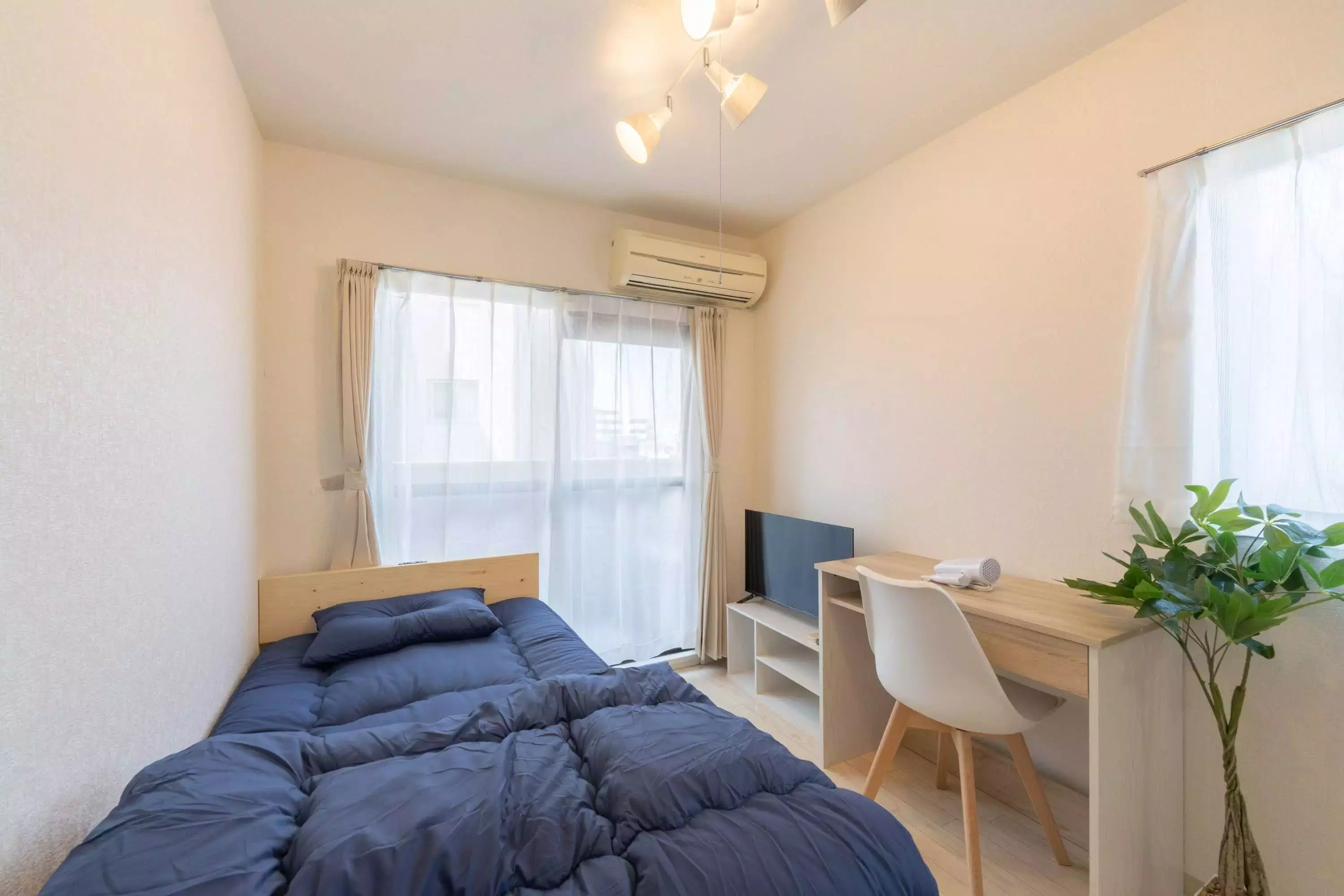
A furnished apartment is your own room with a private kitchen and bathroom. Furniture and appliances are already inside, so you can move in with your suitcase. It suits students who want their own space for study.
The table compares the two. See also our fees page for the current details.
| Item | Share house | Furnished apartment |
|---|---|---|
| Room | Private room types or shared rooms; shared kitchen, bathroom and living room | Own room with private kitchen and bathroom |
| Furniture and appliances | Furnished (varies by room type) | Included: bed, fridge, washing machine, microwave, air conditioner, desk, chair, curtains and more (varies by property) |
| Registration fee | ¥30,000 | ¥30,000 under a current campaign (normally ¥50,000) |
| Common fee | ¥15,000 a month, covering utilities (water, electricity, gas), Wi-Fi and shared supplies | None |
| Utilities | Included in the common fee | Contracted by the resident; a partner company arranges the contracts for free, or choose the utilities bundle plan at ¥15,000 a month |
| Internet | Wi-Fi included in the common fee | Not included |
| Anshin support fee (tax included) | ¥1,500 a month | ¥1,500 a month |
| Move-out fee | ¥16,500 (tax included) | ¥55,000 (tax included) |
| Deposit, key money, agency fee | None | None |
| Resident age | 18 to 39 | 18 to 59 |
The Anshin support fee covers support for any housing trouble or service request. If you are 40 or older, ask about our furnished apartments, which accept residents up to 59.
Ask about share houses and furnished apartments
Do you need a guarantor?
- No joint guarantor (personal guarantor) is needed.
- For individual contracts, joining a rent guarantee company is normally required. An initial guarantee fee and a monthly guarantee fee are charged separately from the registration fee, and the amounts are confirmed at application.
- If you pay everything from the registration fee to the move-out fee in one lump sum at move-in, you do not need to join a guarantee company at all.
Arranging it before you arrive
All statuses of residence are accepted. The application needs your passport, a photo, an emergency contact in your home country and your personal details. Online viewing and an online (web) contract are possible from abroad. You can apply about one month before move-in without paying rent for the empty days, and the earliest move-in is 7 days after application. The minimum stay is 1 month. To leave, you give one month's notice, with no early-termination penalty.
If your school or sponsor wants to arrange housing, XROSS HOUSE offers corporate contracts, used by more than 650 companies. Corporate contracts normally do not require a guarantee company. Our team supports you in Japanese, English, Chinese, Korean and more, and more than 50,000 residents have lived with XROSS HOUSE to date.
Settling in and planning ahead
Once you hold a residence card and a signed contract, steps 6 and 7 above become routine errands. Our residence card and moving into a share house guide covers what to bring to the municipal office.
If you plan to stay and work after graduation, the Study in Japan page on working after graduation explains changing your status of residence. Indian graduates can also read our guide to jobs in Japan for Indians.
FAQ: Japan student visa
Can I apply for a Japan student visa myself?
The student or a proxy, such as a family member or a school employee, applies for the Certificate of Eligibility at a regional immigration services bureau in Japan, and the school prepares the required documents. After the COE is issued, you apply for the visa at the Japanese embassy or consulate in your country or region of residence. See the Study in Japan immigration procedures page.
How long does a student visa let me stay in Japan?
The period of stay is set individually, up to a maximum of 4 years and 3 months, according to the ISA Student page. The exact period depends on your school and course.
Can I work part-time on a student visa?
Yes, with permission. You need permission to engage in activity other than that permitted, which you can request at the airport on first entry or later at a regional immigration services bureau. The limit is 28 hours a week during term and up to 8 hours a day during the school's long holidays. See the Study in Japan part-time jobs page.
Do I need to join health insurance as a student?
Foreign residents staying 3 months or more are required to join National Health Insurance at the municipal office. It covers 70% of medical costs, and you pay 30%. Register your address first, within 14 days of settling. See the Study in Japan insurance page.
Can I study at a Japanese language school on a student visa?
Yes. According to the ISA Student page, the Student status covers Japanese language schools as well as universities and vocational schools. Your school prepares the documents for your COE application.
Can I change from a student visa to a work visa after graduating?
It is possible to apply for a change of status of residence if you meet the requirements of the new status. We cannot judge individual cases, so read the Study in Japan page on working after graduation and ask the immigration bureau. If you are from India, our guide to jobs in Japan for Indians covers the job-hunting side.
Can I rent a room in Japan before I arrive as a student?
Yes, with XROSS HOUSE. You can view rooms online and sign an online contract from abroad, and all statuses of residence are accepted. Apply about one month before move-in; the earliest move-in is 7 days after application. More answers are on our FAQ page.
Ask our English-speaking team about your move
Studying in Japan takes months of preparation, and your first address matters as much as your visa. If you want to compare share houses and furnished apartments before you fly, our team can walk you through both in English.