Reviewed by the XROSS HOUSE team — a Tokyo-based operator of share houses and furnished apartments across 11 prefectures in Japan, with more than 50,000 residents housed to date.
- The MEXT Scholarship (Monbukagakusho) is the Japanese government's scholarship. It has 7 types, from undergraduate study to research.
- For the 2027 intake, the monthly allowance is ¥117,000 for undergraduates and ¥143,000 to ¥145,000 for research students.
- MEXT waives tuition and pays economy flights. Accommodation is not covered: grantees pay for housing themselves.
- University residence halls have limited rooms, so plan a backup home before you fly.
- Most applicants apply through the Japanese embassy in their own country, in April and May of the year before arrival.
Planning to study in Japan? Ask us about housing
What is the MEXT Scholarship?
The MEXT Scholarship is funded by the Ministry of Education, Culture, Sports, Science and Technology of Japan (MEXT, or "Monbukagakusho" in Japanese). It supports international students who want to study at Japanese universities and other institutions. The Study in Japan site lists 7 types:
- Research students
- Teacher training students
- Undergraduate students
- Japanese studies students
- College of technology students
- Specialized training college students
- Young Leaders Program
There are two ways to apply:
- Embassy recommendation: you apply through the Japanese embassy or consulate in your country. This is the route most readers of this guide will use.
- University recommendation: you apply through a Japanese university that has an exchange agreement with your own school. Not every university has a quota, and these students usually arrive in September or October.
Do not send your documents directly to MEXT in Japan. Application documents go to the embassy or consulate, and the schedule differs from country to country, so check the website of the Japanese embassy in your country.
Source: Study in Japan, MEXT Scholarships and Embassy recommendation, undergraduate students (as of October 2026)
MEXT scholarship eligibility and age limits for 2027
Age limits and study length depend on the type. The two types most readers ask about are below. Both tables use the 2027 application guidelines.
| Item | Undergraduate | Research |
|---|---|---|
| Age (2027 intake) | Born on or after April 2, 2002 | Born on or after April 2, 1992 |
| Schooling | 12 years of school education completed | See the research guidelines for your level |
| Scholarship period | 5 years, including 1 year of preparatory Japanese and other subjects (7 years for medicine, dentistry, pharmacy and veterinary medicine). April 2027 to March 2032 | Depends on your course, set in the guidelines |
| Written exams | Japanese, English and Mathematics. Natural science applicants also take Chemistry plus Physics or Biology. No calculators | Japanese and English (both required), then document screening and an interview |
| Arrival | April 1 to 7, 2027, or September/October 2027 for direct placement | April 2027 or September/October 2027 |
The Study in Japan overview also lists age limits for the other types: teacher training (under 35, with 5 years of teaching experience), Japanese studies (18 to 29), and college of technology and specialized training college (under 25). Students who already speak enough Japanese may be placed directly at a university, without the preparatory year.
These are general conditions. Whether you qualify depends on your own case, so read the full guidelines for your type and confirm details with the embassy.
Source: 2027 Guidelines, Undergraduate Students (English PDF), 2027 Research Students Guidelines (English PDF) and Study in Japan, MEXT Scholarships (as of October 2026)
Search for a room
Only furnished properties with appliances are listed!
What MEXT pays, and what it does not
The monthly allowance
| Level | Monthly allowance (2027) |
|---|---|
| Undergraduate | ¥117,000 |
| Research: preparatory / non-regular student | ¥143,000 |
| Research: master's / professional degree | ¥144,000 |
| Research: doctoral | ¥145,000 |
Students in designated regions receive an extra regional allowance of ¥2,000 or ¥3,000 a month. These amounts may change each fiscal year because of the government budget, so check the latest guidelines before you plan.
Covered and not covered
| Covered by MEXT | Not covered |
|---|---|
| Entrance exam fee, matriculation fee and tuition fees (waived) | Accommodation: grantees pay for their own housing |
| Economy airline ticket to Japan and for the return trip (MEXT sets the route) | Travel from your home to the airport, airport taxes, travel insurance and baggage costs |
| The monthly allowance | Daily living costs, which come out of the allowance |
You must also join National Health Insurance when you arrive, and MEXT recommends getting a My Number Card. See our National Health Insurance guide for how it works.
Source: 2027 Guidelines, Undergraduate Students and 2027 Research Students Guidelines (as of October 2026)
A rough monthly budget on the stipend
The allowance looks generous, but housing takes the biggest share. The numbers below are rough estimates for one person living in a large city. They vary by city, lifestyle and room type, so treat them as a starting point rather than a quote.
| Item | Rough monthly estimate |
|---|---|
| Rent and utilities | Around ¥45,000 to ¥70,000 in a share house; more for a private apartment |
| Food | Around ¥30,000 to ¥40,000 if you cook most meals |
| Phone | Around ¥3,000 to ¥5,000 |
| Transport | Around ¥5,000 to ¥10,000, depending on how far you live from campus |
| National Health Insurance | Set by your city office; ask when you register |
| Books, supplies and leisure | Whatever is left |
With an undergraduate allowance of ¥117,000, a room in a shared home leaves real room for savings and study materials. A private apartment with a separate internet contract can take a much larger bite. For city-by-city figures, read our cost of living in Japan guide.
Budgeting for a MEXT year? Ask for a written estimate
Application process and timeline
Embassy route
- Check your embassy's announcement. Recruitment runs between April and May of the year before you arrive. Dates differ by country.
- Submit your documents to the Japanese embassy or consulate in your country, not to MEXT in Japan.
- First screening by the embassy. For undergraduates this runs from May to August. For research students it runs from May to July.
- Written exams and interview. The subjects are listed in the table above.
- Research students: get a provisional acceptance. You obtain a letter of provisional acceptance from universities. In the 2026 cycle, the deadline was September 1, 2026, Japan time. You then submit a placement preference form.
- MEXT second screening and university placement. MEXT decides your university.
- Arrive in Japan. Undergraduates arrive between April 1 and 7, 2027, or in September/October 2027 for direct placement. Research students arrive in April or September/October 2027.
University route
If your own university has an exchange agreement with a Japanese university, ask your international office whether a MEXT quota exists. These students usually arrive in September or October.
After you arrive, you will need a residence card, a bank account and a registered address. Our guides cover the Japan student visa, the residence card and opening a bank account.
Source: Embassy recommendation, undergraduate, Embassy recommendation, research and Study in Japan, MEXT Scholarships (as of October 2026)
Search for a room
Only furnished properties with appliances are listed!
Housing for MEXT scholars: where will you live?
The guidelines say plainly that accommodation expenses are borne by the grantee. Here is what they say about your options:
- During preparatory education, grantees can stay in the preparatory institution's residence, at their own cost.
- Some universities have international student residence halls, but rooms are limited and may be unavailable. Some universities may also ask for accommodation payments before you arrive.
- Otherwise, grantees live in university dormitories or private boarding houses and apartments at their own expense.
- Grantees with a spouse or children are advised to come alone first and secure housing.
Source: 2027 Guidelines, Undergraduate Students and 2027 Research Students Guidelines (as of October 2026)
Your options compared
| Option | What to expect |
|---|---|
| University residence hall | Often the lowest cost, but rooms are limited and may be unavailable |
| Share house | Furnished room, shared kitchen and bathroom, utilities and Wi-Fi in one monthly fee. Easy to start from abroad |
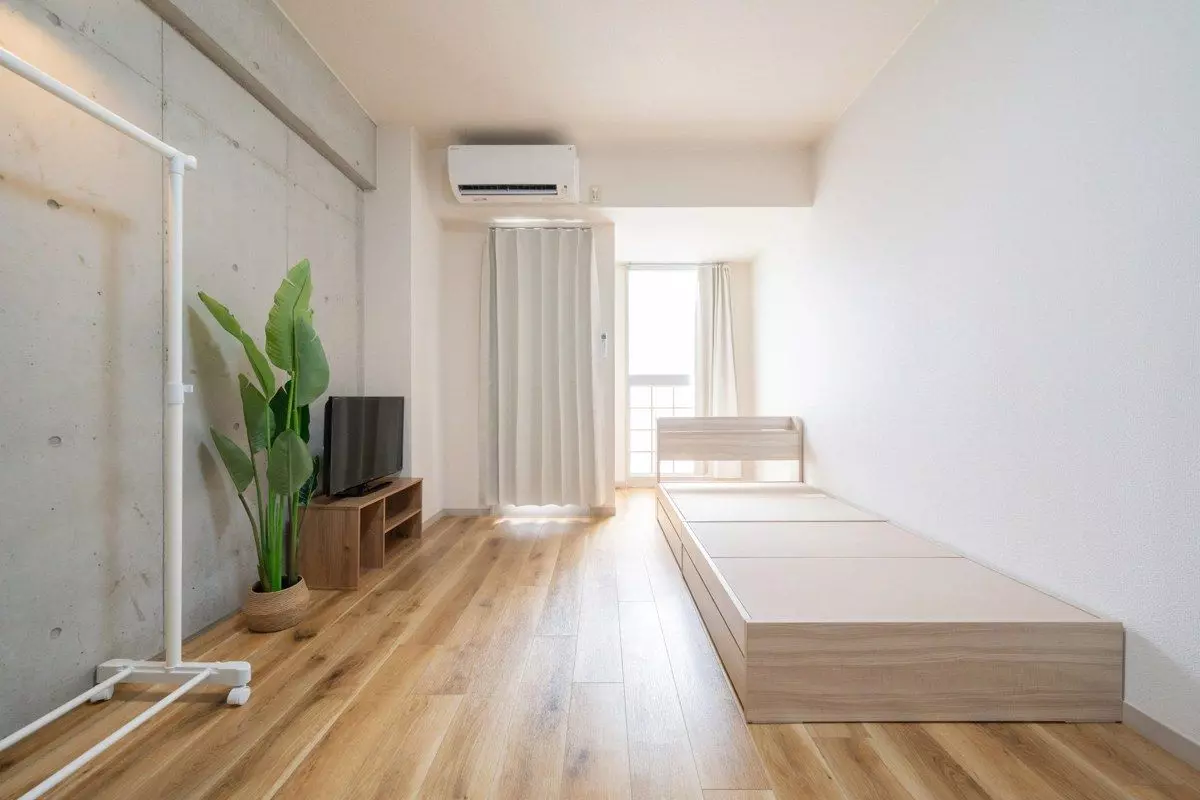
| Furnished apartment | Your own kitchen and bathroom, with furniture and appliances already in the room |
| Regular apartment | Usually needs a deposit, key money, an agency fee and a guarantor, and you must buy furniture. You often need to view empty rooms in person |
A regular apartment is hard to arrange from another country. You rarely see the room before you arrive, you pay several months of costs at once, and a guarantor in Japan is often expected. On a fixed monthly allowance, that is a heavy start.
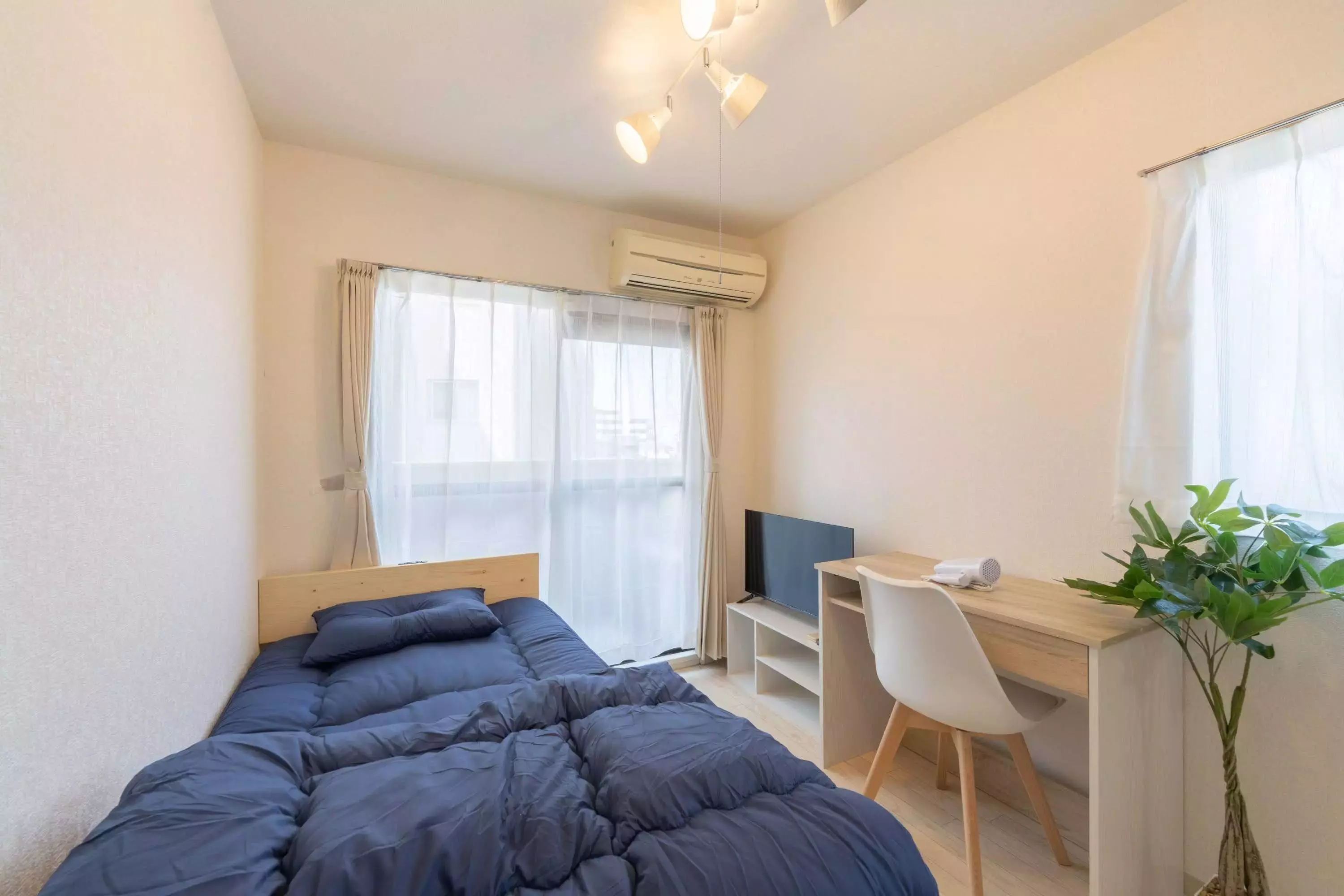
A share house solves most of this. The room is furnished, the monthly fee covers utilities, and other residents are nearby when everything is new. It is also a natural place to practice daily life in Japan. If you need privacy, a furnished apartment is the second choice.
Finding a home with XROSS HOUSE
XROSS HOUSE runs share houses and furnished apartments in 11 prefectures: Tokyo, Kanagawa, Saitama, Chiba, Osaka, Aichi, Hyogo, Kyoto, Nara, Fukuoka and Hokkaido. Many students choose a share house; furnished apartments suit those who want their own space.
- Share houses: a furnished private or shared room with a shared kitchen, bathroom and living room. Utilities and shared supplies are part of the monthly common service fee, and free shared Wi-Fi is included. Browse our share houses in Tokyo.
- Furnished apartments: your own home with a private kitchen and bathroom. Furniture and appliances are included. You set up your own internet.
Start-up costs compared with a typical rental
| Item | Typical Japanese rental | XROSS HOUSE |
|---|---|---|
| Deposit and agency fee | Often around one month's rent each, plus key money | No deposit, no agency fee |
| Initial fee | Not applicable | Share house: ¥30,000. Furnished apartment: ¥30,000 during the current campaign (normally ¥50,000) |
| Furniture and appliances | Usually you buy your own | Included |
The initial fee is the only one-time payment to XROSS HOUSE at move-in, but it is not your total. Rent and the guarantee company charges below are paid in addition. Ask for a written estimate that lists every cost from move-in to move-out. See our fees page for current details.
You can view rooms online, sign online and apply from abroad. Our team answers in English and other languages.
Guarantor and guarantee company
- No personal joint guarantor is needed.
- Individual contracts generally require joining a rent guarantee company. An initial guarantee fee and a monthly guarantee fee are charged separately, on top of the initial fee. The amounts are given in your estimate.
- If you pay everything from the initial costs through to the move-out costs in full at move-in, you do not need to join a guarantee company.
XROSS HOUSE also has women-only properties. If your scholarship starts in April, contact us early so we can talk through move-in timing with you.
Moving to Japan on a MEXT scholarship? Contact us
Many scholars also look for work in Japan later. If you are from India, see our guide for Indians living in Japan. If you want to learn Japanese first, read about Japanese language schools in Japan.
Search for a room
Only furnished properties with appliances are listed!
FAQ: MEXT scholarship
Does the MEXT scholarship cover rent?
No. The guidelines state that accommodation expenses are borne by the grantee. Rent is paid from your own monthly allowance (as of October 2026).
How much is the MEXT scholarship per month?
For the 2027 intake, undergraduates receive ¥117,000. Research students receive ¥143,000 (preparatory), ¥144,000 (master's) or ¥145,000 (doctoral). A regional allowance of ¥2,000 or ¥3,000 applies in designated regions. Amounts may change each fiscal year (as of October 2026).
What is the age limit for the MEXT scholarship?
For the 2027 intake, undergraduate applicants must be born on or after April 2, 2002, and research applicants on or after April 2, 1992. Other types have their own limits (as of October 2026).
Where do I send my MEXT scholarship application?
To the Japanese embassy or consulate in your country, not directly to MEXT in Japan. The schedule differs by country, so check your local embassy's announcement (as of October 2026).
When should I apply for the MEXT scholarship?
Recruitment runs between April and May of the year before you arrive. For the 2027 intake, embassies start first screening from May, which runs until August for undergraduates and July for research students (as of October 2026).
Do MEXT scholars get a university dormitory?
Some universities have international student residence halls, but rooms are limited and may be unavailable. Some also ask for accommodation payments before you arrive. Otherwise you live in a private boarding house or apartment at your own expense (as of October 2026).
Can I rent a share house in Japan before I arrive?
Yes. XROSS HOUSE accepts applications from abroad, with online viewings and online contracts. More answers are on our FAQ page.
Talk to our English-speaking team about your room
The MEXT Scholarship covers your studies, but your home is yours to find. If you have a place at a Japanese university and need a furnished room, XROSS HOUSE supports your search for a home, so please feel free to contact us.