Reviewed by the XROSS HOUSE team — a Tokyo-based operator of share houses and furnished apartments across 11 prefectures in Japan, with more than 50,000 residents housed to date.
- The residence card (zairyu card) is your ID if you live in Japan for the mid to long term.
- Seven major airports issue it on arrival. Elsewhere, it is mailed after you register your address.
- Register your address at the city or ward office within 14 days, and again after every move.
- From age 16, carry the card at all times. Replace a lost card within 14 days.
- Since June 14, 2026, an optional card also works as a My Number Card.
Need an address to register? Ask us about a furnished home
What is a residence card (zairyu card)?
A residence card is the ID card for foreign nationals who live in Japan for the mid to long term. Japan's Immigration Services Agency issues it when you land with a new status of residence, and again when you change status or extend your stay.
It shows your name, date of birth, sex, nationality or region, address in Japan, status of residence and whether you may work. From June 14, 2026, new-format cards show a face photo for holders aged one and over.
The card also proves that you are staying in Japan legally. Banks, phone companies, employers, schools and landlords ask to see it, so most of your first weeks depend on it.
Source: Immigration Services Agency of Japan, What is a residence card? (Japanese page) (as of October 2026)
Who does not get a residence card?
People on a short-term stay, such as tourists, do not receive one. Neither do people granted a period of stay of 3 months or less. If you are moving to Japan to work, study or join family, you will usually receive a card.
Where you receive the card on arrival
At seven airports, the card is issued at the immigration counter together with your landing permission:
- New Chitose (Sapporo)
- Narita and Haneda (Tokyo)
- Chubu Centrair (Nagoya)
- Kansai (Osaka)
- Hiroshima
- Fukuoka
If you land somewhere else, your passport is stamped to show that the card will be issued later. You then register your address at the city or ward office, showing your passport, and the card is mailed to that address.
This is one reason to arrange a home before you land. Without an address, the card cannot be sent to you.
Source: Immigration Services Agency of Japan, Procedures for residence cards (Japanese page) (as of October 2026)
Search for a room
Only furnished properties with appliances are listed!
Register your address within 14 days
Within 14 days of deciding on your place of residence, take your residence card to the municipal office for that address. This is the city hall or, in Tokyo's 23 wards, the ward office. The office records your address on the back of the card. Registration is free.
The same rule applies whenever you move. You file a move-out notice at your old office if you leave its area, then register at the new office within 14 days of moving in.
Source: Immigration Services Agency of Japan, Notification of change of address (mid to long-term residents) (as of October 2026)
What to bring to the city or ward office
- Your residence card, or your passport if the card will be mailed to you
- The exact address of your home, including the building name and room number
- Passports and residence cards of family members moving with you
Some offices also ask for documents on family relationships. Check your city's page for foreign residents before you go.
What else to do on the same visit
Once you are on the resident register, you are assigned an Individual Number (My Number), which employers and banks ask for. Most new residents can also join National Health Insurance at the same office if they are not covered by an employer's plan. See our National Health Insurance guide for how premiums work.
After that, a registered address opens the next steps: a Japanese bank account, a phone contract and your first salary payment.
Planning your first 14 days? Ask us about move-in timing
Rules for carrying and updating your card
| Situation | What you do | Where | Deadline |
|---|---|---|---|
| Everyday life | Carry the card at all times (age 16 and over) | — | Always |
| You decide on your first address | Register your address | City or ward office | Within 14 days |
| You move | Register your new address | City or ward office | Within 14 days of moving in |
| Your card is lost or stolen | Report to the police, then apply for reissue | Regional immigration bureau | Within 14 days of noticing |
| You extend or change your status | Apply before your period of stay ends; a new card is issued if granted | Regional immigration bureau | Before your period of stay ends |
Not carrying the card can lead to a fine of up to ¥200,000. Missing the 14-day deadline for a lost card can carry heavier penalties. Reissue after loss is free, but it cannot be done by mail. If you notice the loss while abroad, the 14 days start from the day you next enter Japan.
Source: Immigration Services Agency of Japan, Reissuance of a lost residence card (Japanese page) and ISA Q&A on the residency management system (as of October 2026)
Search for a room
Only furnished properties with appliances are listed!
The new card with My Number functions (from June 2026)
Since June 14, 2026, residents can apply for a "Tokutei Zairyu Card". It is a residence card that also works as a My Number Card, so you carry one card instead of two.
- It is optional. You can keep a separate residence card and My Number Card.
- Where to apply: mainly at a regional immigration bureau, at the same time as a residence procedure or a card switch. Some cases can be handled at the municipal office. Online applications are not accepted.
- Fees: ¥1,900 to immigration and ¥600 for the My Number function (¥800 with an electronic certificate). The first procedure on or after June 14, 2026 is generally free, with some exceptions.
- Timing: it takes about 10 days longer than a regular card, and at least about two weeks. Same-day issue is not available.
If you need your card quickly, for example to sign a phone contract in your first week, the regular card may suit you better at first.
Source: Immigration Services Agency of Japan, Application for the Tokutei Zairyu Card (Japanese page) and bilingual leaflet (PDF) (as of October 2026)
Travelling abroad with a residence card
With a valid passport and residence card, you can usually leave Japan and return within one year without a separate re-entry permit. This is called a special re-entry permit. If your period of stay ends sooner, you must return before it ends.
When you leave, tick the box on the embarkation card that says you will return. If you plan to stay abroad for more than a year, apply for a regular re-entry permit at a regional immigration bureau before you go.
Source: Immigration Services Agency of Japan, Special re-entry permit (Japanese page) (as of October 2026)
These rules are general. Your own case depends on your status and dates, so confirm with the Immigration Services Agency before you travel. For the visa itself, see our guides to the Japan work visa, the Japan student visa and the working holiday visa.
Search for a room
Only furnished properties with appliances are listed!
Why your home comes before your paperwork
Almost every step after landing needs a registered address: the address on your card, health insurance, a bank account and your salary. You can register only once you have a place to live.
Furnished housing on a flexible contract is a practical first step. You can move in with a suitcase and decide on a long-term area later. Our multilingual team can also explain how residents usually register their address.
XROSS HOUSE offers two options:
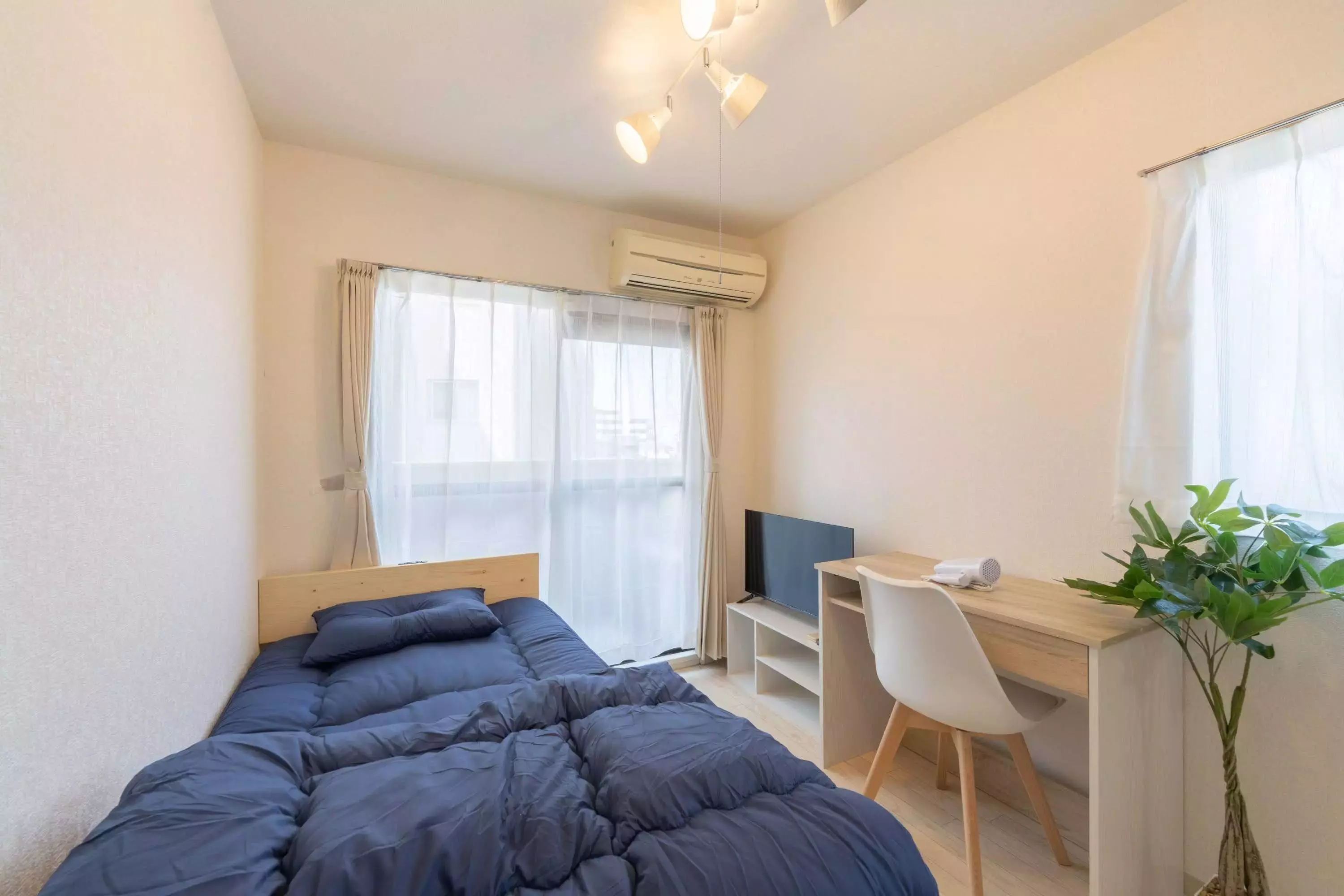
- Furnished apartments: your own home with a private kitchen and bathroom. Furniture and appliances are already in the room, and you set up your own internet. A support service fee of ¥1,500 a month is charged per resident.
- Share houses: a private room in a shared home, with free shared Wi-Fi.
Start-up costs compared with a typical rental
| Item | Typical Japanese rental | XROSS HOUSE |
|---|---|---|
| Deposit and key money | Often around one month's rent each | No deposit. The only one-time payment at move-in is the initial fee below |
| Agency fee | Typically charged | No agency fee |
| Initial fee | Not applicable | Furnished apartment: ¥30,000 during the current campaign (normally ¥50,000). Share house: ¥30,000 |
| Furniture and appliances | Usually you buy your own | Included in furnished apartments |
| Move-out fee | Cleaning and repair costs vary | Furnished apartment: ¥55,000. Share house: ¥16,500 |
In furnished apartments, you sign up for electricity, gas and water yourself. A free set-up service is available, or you can choose the all-in utilities plan at ¥15,000 a month, where XROSS HOUSE holds the contracts for you.
Individual contracts also involve a guarantee company, explained in the next section. Contracts are signed online, online viewings are available, and you can apply from abroad. The earliest move-in is 7 days after applying. See our fees page for current details, and our cost of living in Japan guide for a monthly budget.
Get an estimate for a furnished apartment or share house
Guarantor and guarantee company
- No personal joint guarantor is needed.
- Individual contracts generally require joining a rent guarantee company. An initial guarantee fee and a monthly guarantee fee are charged separately, on top of the initial fee. The amounts are given in your estimate.
- If you pay everything from the initial costs through to the move-out costs in full at move-in, you do not need to join a guarantee company.
Ask for a written estimate so you can see the total for your stay. It lists every cost from move-in to move-out before you sign.
FAQ: Residence card in Japan
What is a zairyu card?
"Zairyu card" is the Japanese name for the residence card. It is issued to foreign nationals staying in Japan for the mid to long term, and shows your status of residence, period of stay, address and work permission (as of October 2026).
How long does it take to get a residence card in Japan?
At New Chitose, Narita, Haneda, Chubu, Kansai, Hiroshima and Fukuoka airports, you receive it on arrival. At other ports of entry, it is mailed to you after you register your address at the municipal office. The card with My Number functions takes at least about two weeks (as of October 2026).
What happens if I do not register my address within 14 days?
Address registration within 14 days is a legal duty for mid to long-term residents, and late registration can lead to penalties. If you are already late, go to the municipal office as soon as you can and explain the situation (as of October 2026).
Do I have to carry my residence card all the time?
Yes, if you are 16 or older. Not carrying it can lead to a fine of up to ¥200,000. Holders under 16 are exempt (as of October 2026).
Is the residence card the same as a My Number Card?
No, they are separate cards. Since June 14, 2026, you can choose a Tokutei Zairyu Card that combines both functions. It is optional, and you can keep two separate cards (as of October 2026).
Can I rent an apartment in Japan before I have a residence card?
Yes. XROSS HOUSE accepts applications from abroad, with online viewings and online contracts, so you can arrange a home before you land and register that address after arrival. More answers are on our FAQ page.
Do I need a guarantor to rent from XROSS HOUSE?
No personal guarantor is needed. Individual contracts generally require a guarantee company, unless you pay everything from the initial costs to the move-out costs in full at move-in.
Talk to our English-speaking team about your first home in Japan
Your residence card and your address go together: you receive the card, register where you live within 14 days and keep both up to date. Once your move date is set, the next step is a home you can register. If you are looking for a furnished apartment or share house in Japan, XROSS HOUSE supports your search for a home, so please feel free to contact us.