Reviewed by the XROSS HOUSE team — a Tokyo-based operator of share houses and furnished apartments across 11 prefectures in Japan, with more than 50,000 residents housed to date.
Moving to Japan for more than 3 months? Here is how National Health Insurance works, what it costs and how to join.
- Foreign residents staying 3 months or more must be covered by health insurance in Japan. If your employer does not enroll you, that means National Health Insurance (NHI).
- NHI pays 70% of covered medical costs for most adults, so you pay 30% at the clinic or hospital.
- Enroll at your city or ward office within 14 days of moving in. You need a registered address first.
- Premiums are based on last year's income and vary by city, so check your own city's page. Coverage and premiums can be counted from the day you should have enrolled.
- Unpaid premiums are being taken more seriously: according to a government briefing document, they may affect visa renewals from June 2027.
Moving to Japan? Get a registered address from day one
What is Japan's National Health Insurance?
Japan National Health Insurance (often shortened to NHI) is the public health insurance run by cities and wards for people who are not covered through a workplace. Japan has universal coverage, and the Study in Japan insurance page (JASSO and MEXT) says foreign residents who stay 3 months or more must join NHI. The same page explains that NHI covers 70% of medical costs and you pay the other 30% (as of October 2026).
If you are searching for "health insurance Japan" because you just got your residence card, the short version is this: employees are usually enrolled by their company, and almost everyone else joins NHI at the municipal office. Both systems cover similar treatment. The difference is who signs you up and how premiums are set.
Who has to join, and who does not
The City of Shinjuku's English living guide gives a clear example of the rules. Residents who are registered in the city must join NHI unless they are covered by an employer's health insurance, or are a dependent of someone who is. People whose stay is 3 months or less are not covered either. The guide also lists exceptions such as certain Designated Activities for medical treatment or tourism, diplomats, people who have overstayed and people who receive public assistance. Rules are set nationally, but each city runs its own counter, so confirm the details with yours.
| Your situation | Usual health insurance | What to do |
|---|---|---|
| International student (stay of 3 months or more) | NHI | Enroll at the city or ward office after registering your address |
| Working holiday maker (stay of 3 months or more) | NHI, unless an employer enrolls you in Employees' Health Insurance | Ask your employer first; if not covered, enroll in NHI |
| Employee at a Japanese company | Employees' Health Insurance (through the employer) | Give HR your address and residence card details; you do not join NHI |
| Freelancer or self-employed | NHI | Enroll at the city or ward office |
| Dependent of an employee-insurance member | Covered as a dependent | Ask the member's employer about dependent enrollment |
| Short stay of 3 months or less | Not eligible for NHI | Buy private travel insurance before you fly |
This table is general information as of October 2026, not a ruling on your own case. Your city or ward office decides who is eligible at the counter.
How to enroll in NHI, step by step
The process is short, but the order matters. Everything starts with a registered address, which is why many newcomers sort out housing before anything else.
- Arrive and collect your residence card. At major airports you receive it together with landing permission.
- Move into a place with a registrable address. Hotels and short stays usually cannot be used for address registration.
- Register your address within 14 days. Go to the city or ward office with your residence card and passport.
- Enroll in NHI at the same office. The Shinjuku procedures page says you should apply within 14 days of moving in, of leaving employer insurance, or of a child's birth. Many offices let you do this at the same visit as address registration.
- Receive your coverage details. Show your My Number card registered for use as a health insurance card, or the certificate of eligibility you are given, at hospital reception.
- Check the National Pension requirement. The pension counter handles this at the same time; see the pension section below.
Late enrollment does not mean free coverage in the meantime. Coverage and premiums start from the day you should have enrolled, not the day you filed, so waiting can mean back-premiums. Source: City of Shinjuku procedures page.
If you are still planning your move, our Japan student visa guide and Japan work visa guide explain what comes before this step.
Search for a room
Only furnished properties with appliances are listed!
How much does National Health Insurance cost in Japan?
Many readers search for "Japan national health insurance cost" and hope for one number. There is none, because premiums are set by each municipality. We do not list yen amounts here. Use your own city's page or ask at the counter, and treat anything you read on a forum as a rough guide only.
How premiums are calculated
The City of Shinjuku guide describes a typical structure, and most cities follow a similar one. The premium is billed per household, and the head of the household pays. The yearly total is made up of these parts:
- Medical portion. Everyone enrolled in NHI.
- Elderly support portion. A share that supports health care for older residents.
- Nursing care portion. Added for members aged 40 to 64.
- Child and childcare support portion. A newer portion added to NHI premiums.
Each portion has two pieces: an amount based on income from the previous year, and a per-person amount that applies to every member. The Study in Japan page confirms that the income-based part comes from the previous year's income, including part-time jobs.
What this means in your first year
If you arrive without income in Japan, the income-based part is usually small, but the per-person part still applies. So your first-year bill is often modest, but it is not zero. After a year of work in Japan, that income feeds into the following year's premium.
Both official sources make one point clearly: declare your income at the municipal office even if it is low or zero. That is how the office decides whether you qualify for a reduction. Students who skip this step can end up paying more than they need to.
Billing and payment
In Shinjuku, bills go out around mid-June and are paid in 10 installments from June to March. You can pay at the city office, banks, post offices, convenience stores, by direct debit or with payment apps. Other cities use different schedules. If you have trouble paying, the guide advises you to talk to the office early. Overdue premiums must as a rule be paid in one lump sum.
New rule to know: advance payment of first-year premiums
According to a Ministry of Health, Labour and Welfare briefing document (PDF), from April 2026 municipalities may introduce a system that asks people who newly join NHI after entering Japan to pay their first year's premiums in advance, earlier than the normal due dates. The document says this applies equally to Japanese people returning from abroad. Whether your city uses it is up to the city, so ask when you enroll and keep some cash flow in mind for your first months.
For wider budgeting, see our cost of living in Japan guide.
Planning your budget? Ask us about move-in costs
What National Health Insurance covers
NHI covers most medical treatment at clinics, hospitals, dental offices and pharmacies that accept insurance. You show your card at reception and pay your share on the spot.
| Age | What you pay at the counter |
|---|---|
| Before compulsory education age | 20% |
| From compulsory education age to 69 | 30% |
| 70 to 74 | 20% (30% for those with higher income) |
Source: City of Shinjuku living guide 2026, insurance chapter (PDF), as of October 2026.
Protection against a very large bill
The High Medical Expense benefit reimburses the portion of your monthly out-of-pocket costs that goes above a ceiling. The ceiling depends on your age and income. NHI also offers benefits for childbirth and funerals, which you apply for at the office.
What is usually not covered
Treatment that is not medically necessary, such as cosmetic procedures, is generally outside insurance. Many preventive services, including routine checkups and some vaccinations, are also often paid in full by the patient. Ask the clinic before booking, and ask your city office about any local subsidies.
Before you are enrolled
The gap between landing and enrollment can be a few days or weeks. Keep your private travel or student insurance active until your NHI coverage is confirmed.
Search for a room
Only furnished properties with appliances are listed!
Do not skip payments: premiums and your visa
Unpaid NHI premiums have mostly been a money matter between you and the city. That is changing. The MHLW briefing document linked above says the government plans two steps:
- From June 2027, municipalities will share NHI premium payment records with the Immigration Services Agency, using My Number data linkage.
- For period-of-stay extensions and changes of status, applicants with unpaid premiums who cannot show proof of payment will in principle not be granted renewal.
These are plans described in a government briefing document, and details may change. The practical lesson does not: pay on time, keep your payment slips or receipts, and speak to the office early if you fall behind. Missing a payment now can matter later when you need to extend your stay.
National Pension: the other half of the paperwork
Health insurance and pension are separate systems that you usually deal with on the same day. According to the City of Shinjuku guide and the Japan Pension Service, all registered residents aged 20 to 59 must enroll in the National Pension. If you register your address after turning 20, you enroll at the municipal office. Employees join Employees' Pension Insurance through their employer instead, and this is also true for foreign employees. Details are on the Japan Pension Service employee enrollment page.
If payments are hard, exemption and postponement systems exist, and students can use a special payment exception. Ask the pension counter at your office.
Search for a room
Only furnished properties with appliances are listed!
Leaving Japan or changing jobs
NHI is tied to where you live and who employs you, so changes need paperwork.
- Leaving Japan, moving out of the city or joining employer insurance: withdraw from NHI within 14 days at your office, according to the Shinjuku guide.
- Changing jobs: if your new employer enrolls you in Employees' Health Insurance, cancel NHI. If you are between jobs and lose employer coverage, enroll in NHI within 14 days.
- Your premium is recalculated when you withdraw. The city counts premiums up to the month you leave. Premiums for months you were covered do not come back, because NHI is insurance, not savings. Settle any balance before you go.
- Pension is different. If you paid into the pension system for at least 6 months, you can claim a Lump-Sum Withdrawal Payment within 2 years of leaving Japan. See the Japan Pension Service lump-sum page. Japan also has social security agreements with several countries, including the US, UK, Germany, India, the Philippines, Australia and Canada (as of April 2026), which can affect how your pension record counts.
Where to live in your first weeks
NHI enrollment needs a registered address, and a registered address needs a place you can actually live in. A hotel or short Airbnb stay can make registration harder, because you will move again soon. Many new arrivals want a place that is ready for them to move into, with a short contract and a clear address from day one. Our moving to Japan housing guide compares the options, and our Japan rental contract guide explains how contracts work.
Hotel, regular rental or furnished apartment?
| Hotel or short-term rental | Regular Japanese rental | XROSS HOUSE furnished apartment | |
|---|---|---|---|
| Address registration | Usually not possible | Possible | Possible |
| Furniture and appliances | Included | You buy them | Included |
| Signing from abroad | Yes | Often difficult before you have a residence card and a Japanese phone number | Online contract from abroad |
| Upfront payments | Nightly or weekly rate | Deposit, key money and agency fee often add up to several months' rent | No deposit or agency fee; a flat registration fee plus guarantee fees and rent paid in advance (see below) |
| Minimum stay | None | Usually a 2-year contract | From 1 month |
Practical tips for your first two weeks
- Bring your residence card and passport to the city or ward office. March and April are the busiest months, so go early in the day.
- Register your address first, then enroll in NHI and the National Pension at the same visit if the office allows it.
- Ask the counter about your bill schedule and whether your city asks for first-year premiums in advance.
- Keep your payment slips. If you pick a place you can stay in for a few months, you avoid registering a second address and redoing paperwork soon after.
XROSS HOUSE furnished apartments: your own space, ready to move in
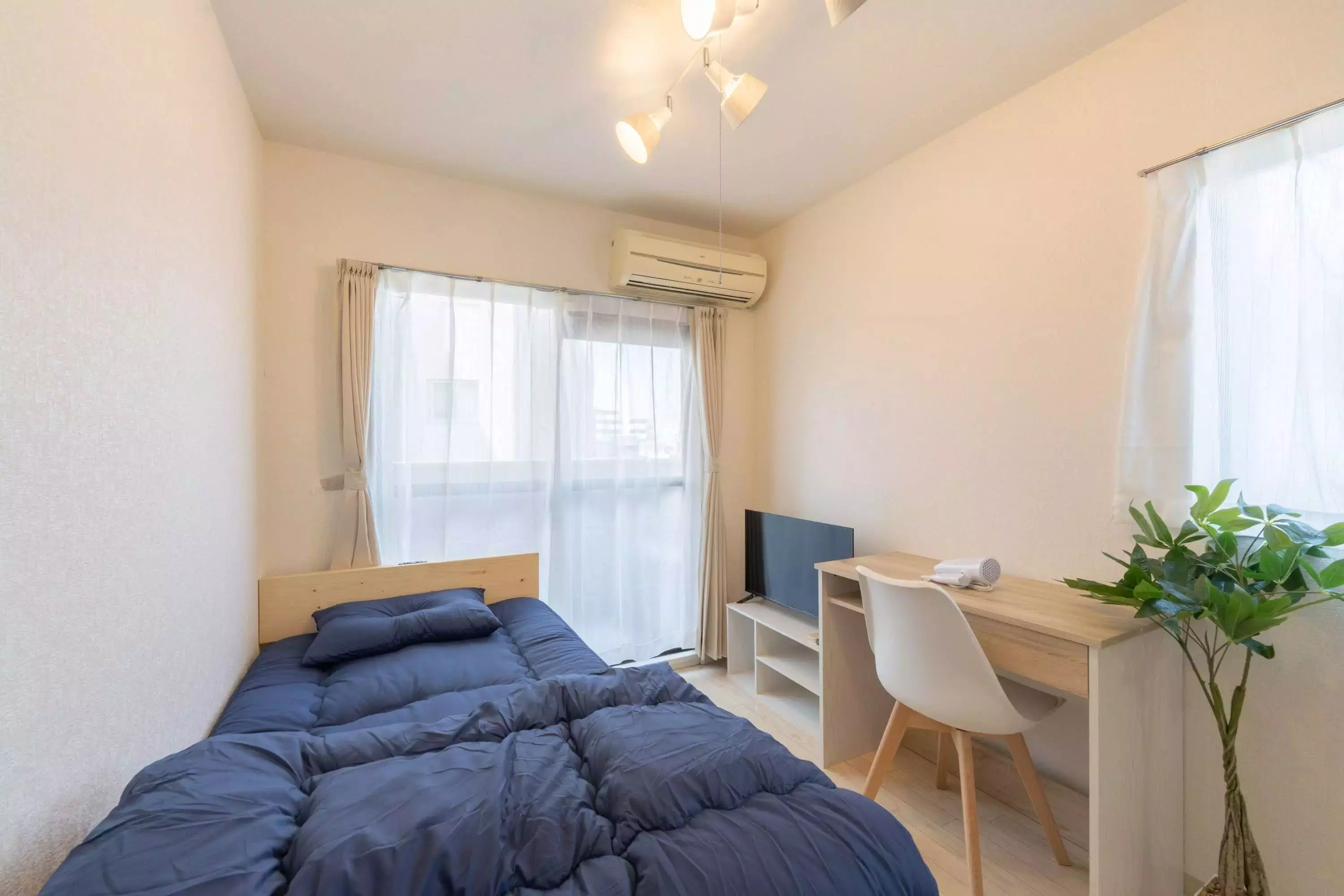
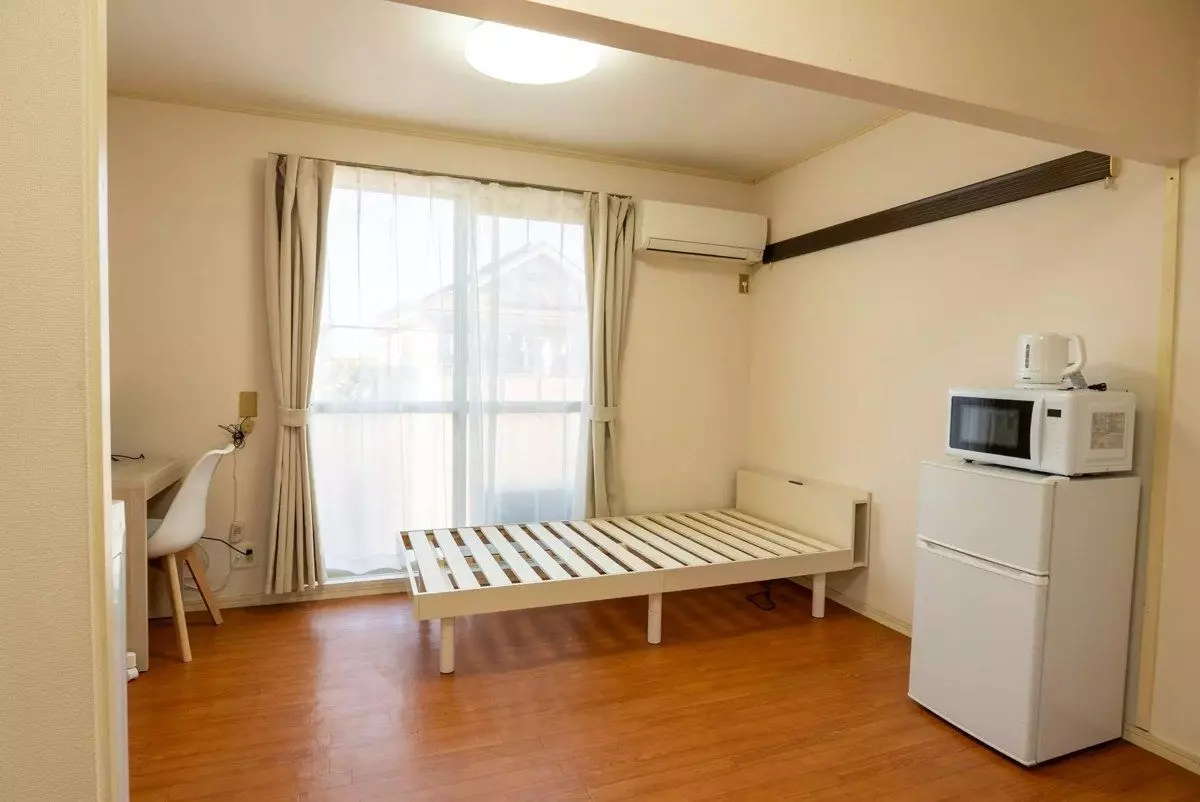
A furnished apartment is your own room with a private kitchen and bathroom. Furniture and appliances are already inside, so you can arrive with a suitcase and start your new job. Because you have a real address, you can register at the city office right away. Furnished apartments are an easy base while you find your feet, and they suit people who value privacy for work calls and focus.
Share houses: a lower-cost start
A share house gives you a private or shared room and shares the kitchen, bathroom and living room. It usually costs less to start, and you meet other residents from day one. It works well for newcomers who want a social first few months.
What you pay when you move in
Initial costs for a typical Japanese rental (deposit, key money and agency fee) often reach several months' rent. XROSS HOUSE keeps them lower and lists each item before you apply:
- Registration fee: ¥30,000 for share houses; ¥50,000 for furnished apartments (discount campaigns sometimes lower this).
- Rent in advance: the remaining days of your move-in month, plus the next month if you move in on or after the 20th.
- Guarantee company fees: for individual contracts, the initial guarantee fee and two months of the monthly guarantee fee (see below).
- When you leave: a move-out fee of ¥16,500 for share houses or ¥55,000 for furnished apartments. Give one month's notice; there is no early-termination penalty.
Do you need a guarantor?
- No individual joint guarantor is needed.
- For individual contracts, joining a rent guarantee company is generally required. An initial guarantee fee and a monthly guarantee fee are charged separately, on top of the registration fee, and the details are confirmed at application.
- If you pay everything from the initial costs through the move-out costs in one payment upfront, you do not need to join a guarantee company.
Arranging it before you arrive
All statuses of residence are accepted. You can view rooms online and sign an online contract from abroad, and the earliest move-in is 7 days after application. If your employer wants to arrange housing for you, XROSS HOUSE offers corporate contracts, used by more than 650 companies. Corporate contracts do not require a guarantee company. Our team supports you in English, Japanese, Chinese, Korean and more.
Ask about furnished apartments and share houses
FAQ: Japan National Health Insurance
Do foreigners have to pay national health insurance in Japan?
Foreign residents staying 3 months or more must be covered by health insurance. If your employer does not enroll you, you join NHI and pay premiums. Short stays of 3 months or less are not eligible. See the Study in Japan insurance page.
How much is national health insurance per month for a student?
It depends on your city. Premiums combine an income-based amount from the previous year and a per-person amount, and a student with little or no Japanese income usually pays less than a full-time worker. Declare your income at the office to qualify for any reduction, and ask for your exact monthly figure at the counter.
Can I use travel insurance instead of NHI?
Travel insurance is fine as a bridge before you enroll, or for stays of 3 months or less. It does not replace NHI for residents staying 3 months or more, who are required to enroll in public insurance if they are not covered through an employer.
What happens if I enroll in NHI late?
Coverage and premiums are counted from the day you should have enrolled, not the day you filed. A late filing can therefore mean back-premiums for the missed months. Apply within 14 days of moving in. See the City of Shinjuku procedures page.
Do I need NHI on a working holiday in Japan?
If you stay 3 months or more and your employer does not enroll you in Employees' Health Insurance, you generally join NHI at your city or ward office. If you take a job where the employer enrolls you, you are covered through the workplace instead. Ask HR which applies. Our working holiday housing guide covers the address side.
Can I get NHI without a registered address?
No. NHI is run by your city or ward, so you register your address first and then enroll. Hotels and short stays usually cannot be registered. With an XROSS HOUSE furnished apartment or share house, you have a real address from move-in, and all statuses of residence are accepted.
Do I get my NHI premiums back when I leave Japan?
Not the premiums for months you were covered. When you withdraw (within 14 days of leaving), the city recalculates your premium up to your departure month, and you settle any balance before you go. Pension is separate: if you paid at least 6 months, you can claim a Lump-Sum Withdrawal Payment within 2 years of leaving. See the Japan Pension Service. More answers are on our FAQ page.
Ask our English-speaking team about your move
Health insurance and pension paperwork both start with a registered address, and your first address is one you can settle early. If you want to compare furnished apartments and share houses before you fly, our team can walk you through both in English.