Reviewed by the XROSS HOUSE team — a Tokyo-based operator of share houses and furnished apartments in 10 prefectures across Japan, with more than 50,000 residents housed to date.
- 74 countries and regions need no visa for short stays.
- Most stay 90 days; Thailand and Indonesia 15, Brunei and Qatar 30.
- Others apply at an embassy, or for an eVISA in 9 countries.
- Work, study or long stays need a long-stay visa.
Visiting Japan? Ask us about a furnished room
Do you need a visa to visit Japan?
It depends on your passport. Japan has visa exemption arrangements with 74 countries and regions, so citizens of the United States, Canada, the United Kingdom, Australia, New Zealand, Singapore, South Korea, Taiwan and most European countries can enter for a short stay without applying for a visa first. Everyone else needs a visa before they fly, and anyone who plans to work, study or live in Japan needs a long-stay visa whatever their passport.
Check three things in order: 1) is your passport on the visa-exempt list, 2) does your trip fit a short stay (tourism, visiting, business meetings), and 3) if not, which visa matches your purpose.
Source: Ministry of Foreign Affairs of Japan, Exemption of Visa (Short-Term Stay) (page dated September 1, 2025; checked November 2026)
Visa-exempt countries: how long can you stay?
For most of the 74 countries and regions the period of stay granted on arrival is 90 days. The exceptions are in the table.
| Passport | Period of stay | Condition to check |
|---|---|---|
| Most of the 74 countries and regions, including the US, Canada, Australia, New Zealand, France, Italy, Spain, Portugal and the Netherlands | 90 days | Ordinary passport; short-stay activities only |
| Germany, UK, Ireland, Austria, Switzerland, Liechtenstein, Mexico | 90 days on arrival; their agreements permit up to 6 months | To stay beyond 90 days you must apply to the Immigration Services Agency for an extension before the 90 days end |
| Thailand, Indonesia | 15 days | Thailand: ICAO-compliant ePassport. Indonesia: ePassport registered with a Japanese mission |
| Brunei, Qatar | 30 days | Qatar: ePassport registered with a Japanese mission |
| Taiwan, Hong Kong, Macao | 90 days | Taiwan: passport with a personal ID number. Hong Kong and Macao: SAR passports (Hong Kong also BNO with right of residence) |
| Brazil, UAE, Panama, Paraguay, Peru, Serbia, Montenegro, Malaysia | 90 days | ICAO-compliant ePassport required |
The full list changes from time to time and every country has its own passport conditions, so read the official page for your nationality before you book. Citizens of countries that are not on it, such as India, China, the Philippines and Vietnam, need a visa for any visit.
Source: Ministry of Foreign Affairs of Japan, Exemption of Visa (Short-Term Stay) (page dated September 1, 2025; checked November 2026)
Search for a room
Only furnished properties with appliances are listed!
Japan eVISA: who can apply online?
If you do need a tourist visa, you may not have to visit an embassy. The JAPAN eVISA system issues an electronic single-entry tourism visa of up to 90 days. As of May 15, 2026, there are two routes:
- Apply directly on the eVISA website: nationals and residents of Australia, Brazil, Cambodia, Canada, Saudi Arabia, South Africa, Taiwan, the United Kingdom and the U.S.A. who are not visa-exempt.
- Apply through an accredited agency: people living in Hong Kong, India, Indonesia, Macau, Mongolia, the Republic of Korea, Singapore and the United Arab Emirates, plus Chinese nationals living in China. Filipino and Vietnamese nationals living in those countries can use it only on a packaged tour from a designated travel agency, and their stay is 15 days.
Only ordinary-passport holders can use eVISA, and it covers entry by air or by sea on the scheduled ferries from Busan or Shanghai. You may be asked to attend an interview. At the airport you must show the "Visa issuance notice" on a device with internet access, because a PDF, screenshot or printout is not accepted. Copycat sites exist, so apply only through the official site linked from the ministry page. For a country-specific walk-through, see our Japan visa for Indians guide.
Source: Ministry of Foreign Affairs of Japan, The JAPAN eVISA system (page dated May 15, 2026; checked November 2026)
What a short stay does not cover
A visa exemption or a tourist eVISA is for short-term activities such as sightseeing, visiting family or friends and attending meetings. It is not a way to start a job or enroll in a course. For other purposes, the Ministry of Foreign Affairs tells applicants to apply at the Japanese embassy or consulate that covers their place of residence. Several routes, such as study, work or a working holiday, usually start with a Certificate of Eligibility that your sponsor in Japan requests from the Immigration Services Agency, so build that time into your plans.
Search for a room
Only furnished properties with appliances are listed!
Long-stay visas: which one fits your plan?
The Ministry of Foreign Affairs groups long-stay and work visas into a few families. The main ones for people moving to Japan are below, with our guide for each.
| Your purpose | Visa or status | Read next |
|---|---|---|
| Work in a specialist, engineering or international role | Engineer/Specialist in Humanities/International Services and other working visas | Japan work visa guide |
| Work in a designated industry | Specified Skilled Worker | SSW visa guide |
| Study at a university or language school | Student | Japan student visa guide |
| Travel and work for up to a year (age and country limits apply) | Designated Activities (working holiday) | Working holiday guide |
| Work remotely for an overseas employer | Designated Activities (digital nomad) | Digital nomad visa guide |
| Join a spouse or parent living in Japan | Dependent, or spouse of a Japanese national | Spouse and dependent visa guide |
The ministry's list also covers highly skilled professionals, business managers, intra-company transferees, start-up visas and longer sightseeing stays under Designated Activities. Nationals of the Philippines, Viet Nam, Indonesia, Nepal, Myanmar and China are subject to pre-entry tuberculosis screening for long stays. This article explains the general system and is not legal advice. Whether your application is approved is decided by the Japanese authorities, so follow the official pages for your case.
Source: Ministry of Foreign Affairs of Japan, Work or Long-term stay (page dated January 22, 2026; checked November 2026)
Planning a longer stay? Get an estimate
After you arrive: residence card and address
If you receive a residence card at the airport, you must register your address at the city office within 14 days of moving in. You will also need a registered address for banking and health insurance. Our residence card guide and National Health Insurance guide cover the next steps, and the guide to moving to Japan from the U.S. puts the whole move in order.
Search for a room
Only furnished properties with appliances are listed!
Where to stay on a short or medium visit
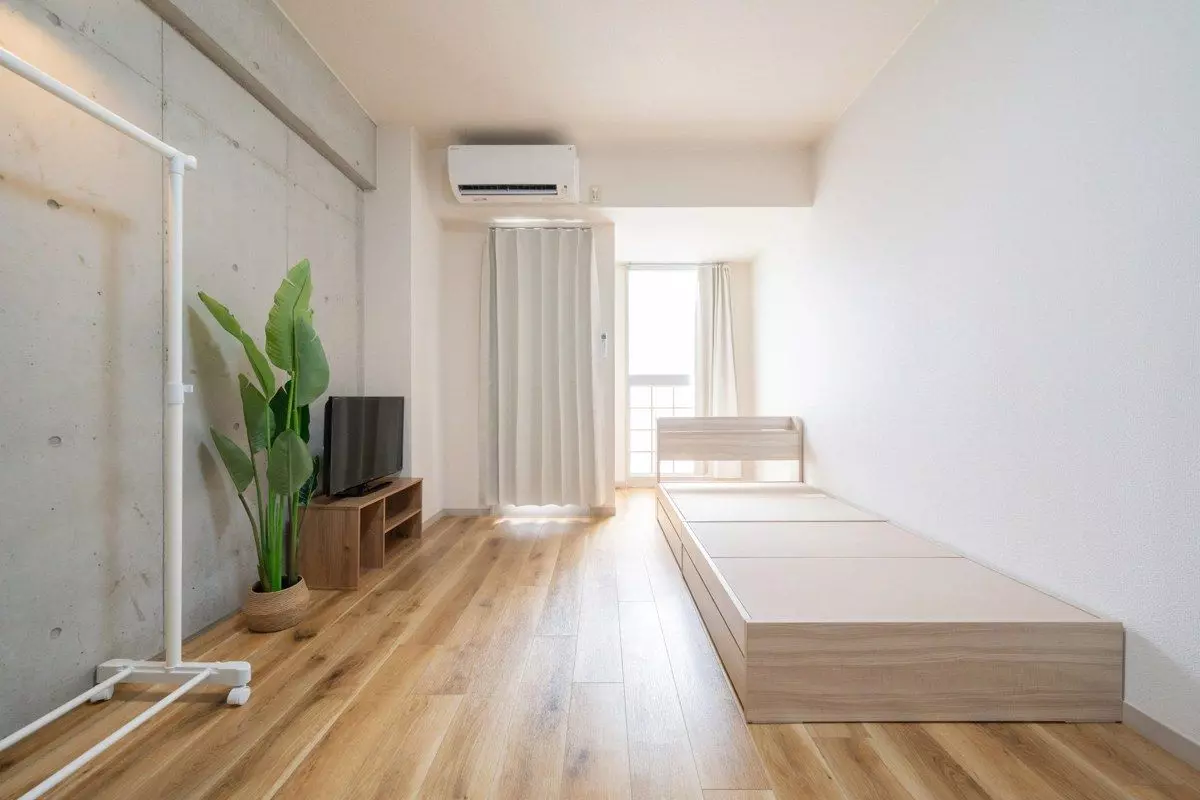
A typical Japanese rental is built for long stays: an unfurnished room, several months' rent upfront and a contract of about two years. That rarely fits a 90-day visit or a first few months in Japan. XROSS HOUSE offers two furnished options with contracts from one month:
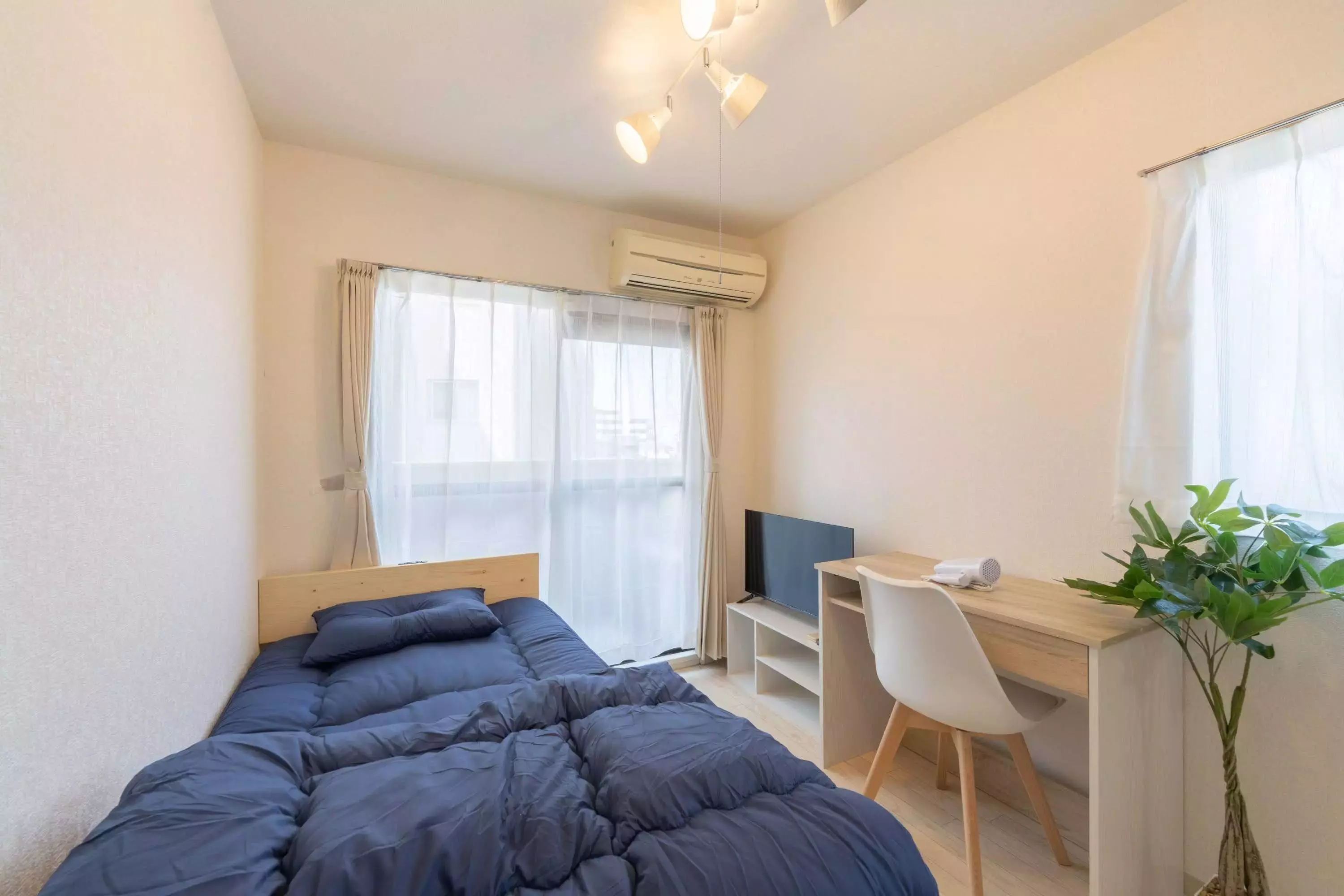
- Furnished apartments: your own home with a private kitchen and bathroom. Furniture and appliances are already in the room, which suits visitors who want privacy and a place to settle in.
- Share houses: a furnished private or shared room with a shared kitchen, bathroom and living room, and free shared Wi-Fi.
All statuses of residence are accepted, including Temporary Visitor. You can view rooms online, sign online and apply from abroad, and the earliest move-in is 7 days after applying. The one-time registration fee is ¥30,000 for share houses and ¥30,000 for furnished apartments during the current campaign (normally ¥50,000). Share house utilities and shared supplies are covered by a monthly common service fee, and in a furnished apartment utilities are in your name or on our plan that bundles electricity, gas and water into one monthly charge. A support service fee of ¥1,500 a month is charged per resident; it covers our support when something goes wrong in your home, from repairs to other trouble. Ask for a written estimate, which lists every cost from move-in to move-out before you sign. See our fees page for current details. For Tokyo, compare our guides to monthly furnished apartments and share houses.
On guarantors: no personal joint guarantor is needed. Individual contracts generally require joining a rent guarantee company, which charges an initial guarantee fee and a monthly guarantee fee on top of the registration fee; the amounts are in your estimate. If you pay everything from the registration fee through to the move-out fee in full at move-in, you do not need to join a guarantee company, a common choice for stays of one to three months.
FAQ: Japan visa requirements
Do I need a visa to visit Japan?
It depends on your passport. Citizens of 74 countries and regions, including the US, Canada, the UK, Australia and most of Europe, can enter for a short stay without a visa. Everyone else must obtain a visa before travelling. Check the Ministry of Foreign Affairs list for your nationality, as of November 2026.
How long can I stay in Japan without a visa?
Usually 90 days. Thailand and Indonesia get 15 days, and Brunei and Qatar 30 days. Citizens of Germany, the UK, Ireland, Austria, Switzerland, Liechtenstein and Mexico can ask the Immigration Services Agency for an extension to stay beyond 90 days, before the 90 days end.
Can I work in Japan on a visa-free entry or tourist eVISA?
No. These are for short-term activities such as tourism and visits, not for starting a job. If you want to work, study or live in Japan, a long-stay visa is the route, and the Ministry of Foreign Affairs lists the main categories.
What is the Japan eVISA and who can apply?
It is an electronic single-entry tourism visa of up to 90 days. As of May 15, 2026, people from nine countries and regions apply on the official website, while residents of places such as India, Hong Kong, Singapore and South Korea apply through accredited agencies.
Do I need a printed eVISA at the airport?
No, and a printout is not accepted. You must show the Visa issuance notice on a device connected to the internet when you arrive.
Which visa do I need to study or work in Japan?
Study uses the Student status and work uses a working visa that matches your job. Most long-stay applications start with a Certificate of Eligibility requested by the school or employer in Japan, then a visa application at a Japanese embassy or consulate.
Can I rent a furnished apartment in Japan on a Temporary Visitor status?
Yes. XROSS HOUSE accepts all statuses of residence, including Temporary Visitor, with contracts from one month. Ask for an estimate and the team will explain the guarantee company rules for your stay.
Talk to our English-speaking team
Once your visa route is clear, the next question is where to live. If you need a furnished room in Japan for a few weeks or a few months, XROSS HOUSE supports your search for a home, so please feel free to contact us.