Reviewed by the XROSS HOUSE team — a Tokyo-based operator of share houses and furnished apartments across 11 prefectures in Japan, with more than 50,000 residents housed to date.
- Most banks ask for a residence card with your current address registered at the city or ward office.
- Foreign residents who have been in Japan for under 6 months are often treated as "non-residents". Some banks limit accounts for them.
- Japan Post Bank, large national banks and online banks all accept foreign residents. Rules differ by bank and by branch.
- Japan Post Bank generally needs more than 3 months left on your period of stay.
- Check the bank's own page before you go, and close your account before you leave Japan.
Need a home address first? Ask us about a furnished apartment
Who can open a bank account in Japan?
People with a residence card can usually open an ordinary account. Tourists on a short stay generally cannot. Banks check your residence card for your status of residence and your period of stay.
Japan Post Bank, for example, asks you to show your residence card and may also ask for your passport. It generally does not accept applications when your period of stay ends within 3 months of the application date. If you hold a "Student" or "Technical Intern Training" status, it also asks for a student ID, an employee ID or a similar document.
Source: Japan Post Bank, For foreign customers opening an account (Japanese page) (as of October 2026)
The 6-month rule: resident or non-resident?
This is the point that surprises most new arrivals. Under the Foreign Exchange and Foreign Trade Act, a "resident" is a natural person with a domicile or residence in Japan. Everyone else is a "non-resident".
Source: Japanese Law Translation, Foreign Exchange and Foreign Trade Act, Article 6 (as of October 2026)
In practice, banks turn that definition into a simple test. MUFG Bank states that customers without Japanese nationality are treated as non-residents, except when working in Japan. It lists "having resided in Japan for 6 or more months" as a criterion, and says part-time and temporary work do not count as working in Japan. Non-residents face restrictions on some services, including internet banking, credit cards and debit cards.
Source: MUFG Bank, Clients wishing to open a personal bank account (page dated March 2020; check the current version) (as of October 2026)
Other banks set their own conditions. SBI Shinsei Bank lists three routes to eligibility:
- Permanent Resident, Spouse or Child of Japanese National, or Spouse or Child of Permanent Resident status.
- Residence in Japan for more than 6 months, or work at a company with an office in Japan.
- Under 6 months in Japan, but the application form shows a current or planned employer with a Japanese office, or a school where you are enrolled.
It does not accept people with diplomatic, official or short-term status, or people with under 6 months in Japan who are neither working nor studying.
Source: SBI Shinsei Bank FAQ, Am I eligible to open an account? (as of October 2026)
We cannot tell you which group you fall into. The bank decides based on your documents, and rules differ by bank and by branch. Check the bank's page for the latest wording.
Planning your arrival? Ask us how to get a registered address early
Search for a room
Only furnished properties with appliances are listed!
Documents you may need
Lists differ between banks, so treat this as a starting point.
- Residence card. The address on it should be your current one. Japan Post Bank asks you to update your information after you renew your card or change address, and says transactions may be restricted if you do not.
- Passport. Some banks ask for it along with the residence card.
- A personal seal or signature. MUFG's page lists a personal seal and says rubber stamps cannot be used.
- My Number documents. MUFG lists documents confirming your Individual Number (My Number).
- Proof of work or study. Students and technical interns bring a student ID or employee ID. Workers may be asked for proof of employment in Japan.
- An email address. Online banks use email to verify you. PayPay Bank, for example, sends a verification email, and you must re-register if 24 hours pass.
Source: PayPay Bank, Steps to opening an account (non-Japanese nationals) (as of October 2026)
Some banks may also ask for a Japanese phone number or a certificate of residence. Ask your bank which of these it needs before you book a visit.
How to open a bank account in Japan, step by step
- Find a home and get your residence card. You need a place to live before anything else.
- Register your address at the city or ward office. Mid- to long-term residents bring their residence card to the municipal office within 14 days of moving in. There is no fee.
- Check your card. Make sure the name and address are correct, and that your period of stay has more than 3 months left.
- Choose a bank. See the comparison below, and read its English page for foreign residents.
- Apply in a branch or by app. Japan Post Bank's procedures app supports English. Mizuho accepts online applications, but the online form is in Japanese only.
- Wait for the result. Banks confirm your application after you submit it, so allow some days.
- Receive your card and set it up. Many banks send the cash card or important notices by mail to the address you registered. Check how your bank delivers it.
Source: Immigration Services Agency of Japan, Notification of change of address (mid to long-term residents) (as of October 2026)
Some banks currently do not accept certain newly issued residence cards in their apps. PayPay Bank says holders of some newer cards must submit documents by mail. If an app rejects your card, ask about a branch application.
Search for a room
Only furnished properties with appliances are listed!
Bank types compared
This table uses only what the banks state on their own pages. It does not rank them.
| Bank | How to apply | Points stated by the bank |
|---|---|---|
| Japan Post Bank | Counter, or the procedures app in English and other languages | Residence card needed; applications generally not accepted with under 3 months of stay left; extra ID for students and technical interns |
| MUFG Bank | In person at a branch | Residence card, personal seal and My Number documents listed; non-residents face some service limits |
| Mizuho Bank | Online or branch, in Japanese only; an English guide for residence card holders is available | Non-residents cannot hold a consolidated account |
| PayPay Bank | App, with an English guide | Residence card or Special Permanent Resident Certificate; email verification; some newer cards go by mail |
| SBI Shinsei Bank | See the bank's FAQ | Three eligibility routes, including one for people under 6 months with an employer or school in Japan |
Source: pages from Japan Post Bank, MUFG Bank, Mizuho Bank, PayPay Bank and SBI Shinsei Bank (as of October 2026)
Fees, interest rates and ATM hours change often and differ by account, so we left them out. Compare them on each bank's site.
Practical tips before you apply
Match your name to your residence card
Write your name exactly as it appears on the card. For the phonetic reading, banks usually want the Japanese phonetic script (katakana). If your bank asks for it, copy the spelling from the card. A mismatch can send your application back.
Put your name on your mailbox
Because banks often mail cards and notices to your registered address, a missing name on the mailbox can lead to returned mail. Check this on move-in day, especially in a building with several rooms.
Keep your address and card details current
When you move or renew your residence card, tell your bank. Japan Post Bank warns that transactions may be temporarily restricted if you do not update your information.
Close the account before you leave Japan
Japan Post Bank asks customers to close their account when they leave Japan. Plan the closing before your last week, and keep a way to receive any final payments.
Setting up your salary
Give your employer the account details after your account is open. Rules for payment to your account depend on the employer and the bank, so ask both. For budgeting, see our cost of living in Japan guide and our guide to Japanese taxes for foreigners. New workers may also like our guides to the Japan work visa and National Health Insurance. Students can read the Japan student visa guide.
Search for a room
Only furnished properties with appliances are listed!
Why your address comes first
A bank account depends on a registered address. You register at the city or ward office once you have a home, and the bank then uses that address for your card and mail. The sooner you have a home, the sooner you can apply.
Furnished housing on a flexible contract is a practical first step. It lets you register your address soon after arrival and decide on a long-term area later.
XROSS HOUSE offers two options:
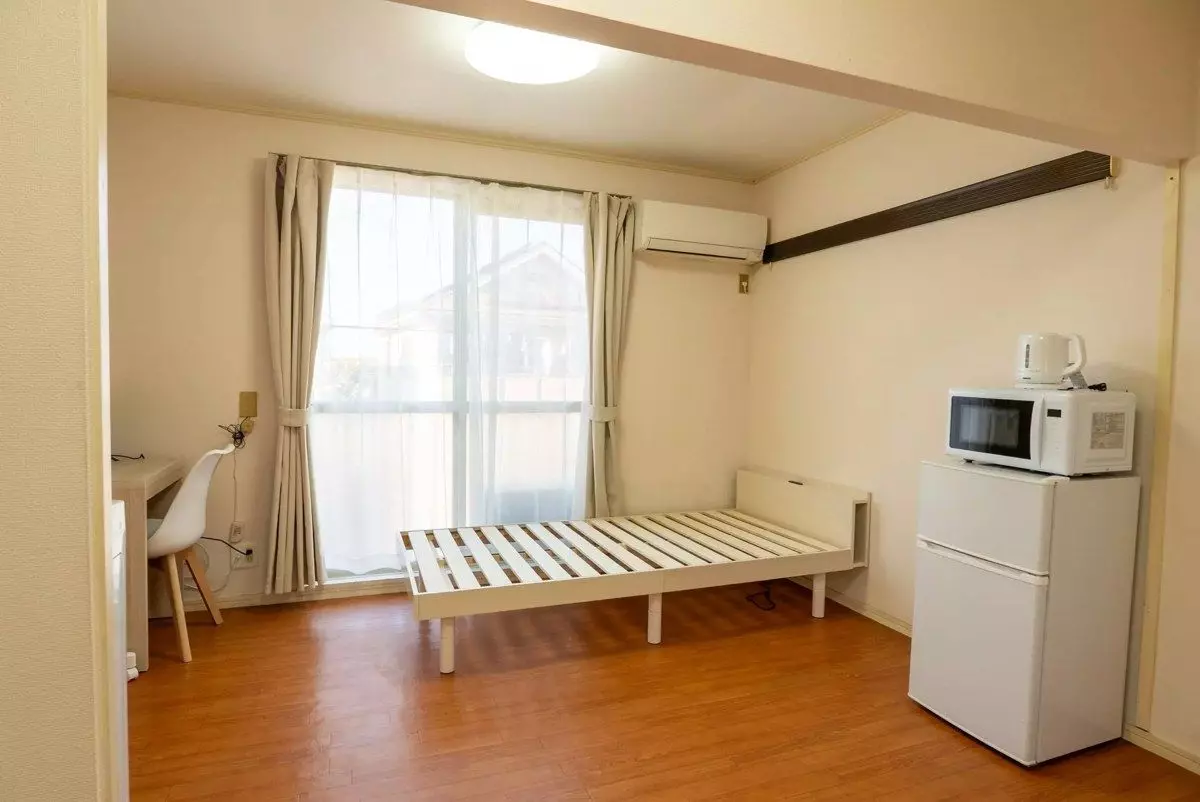
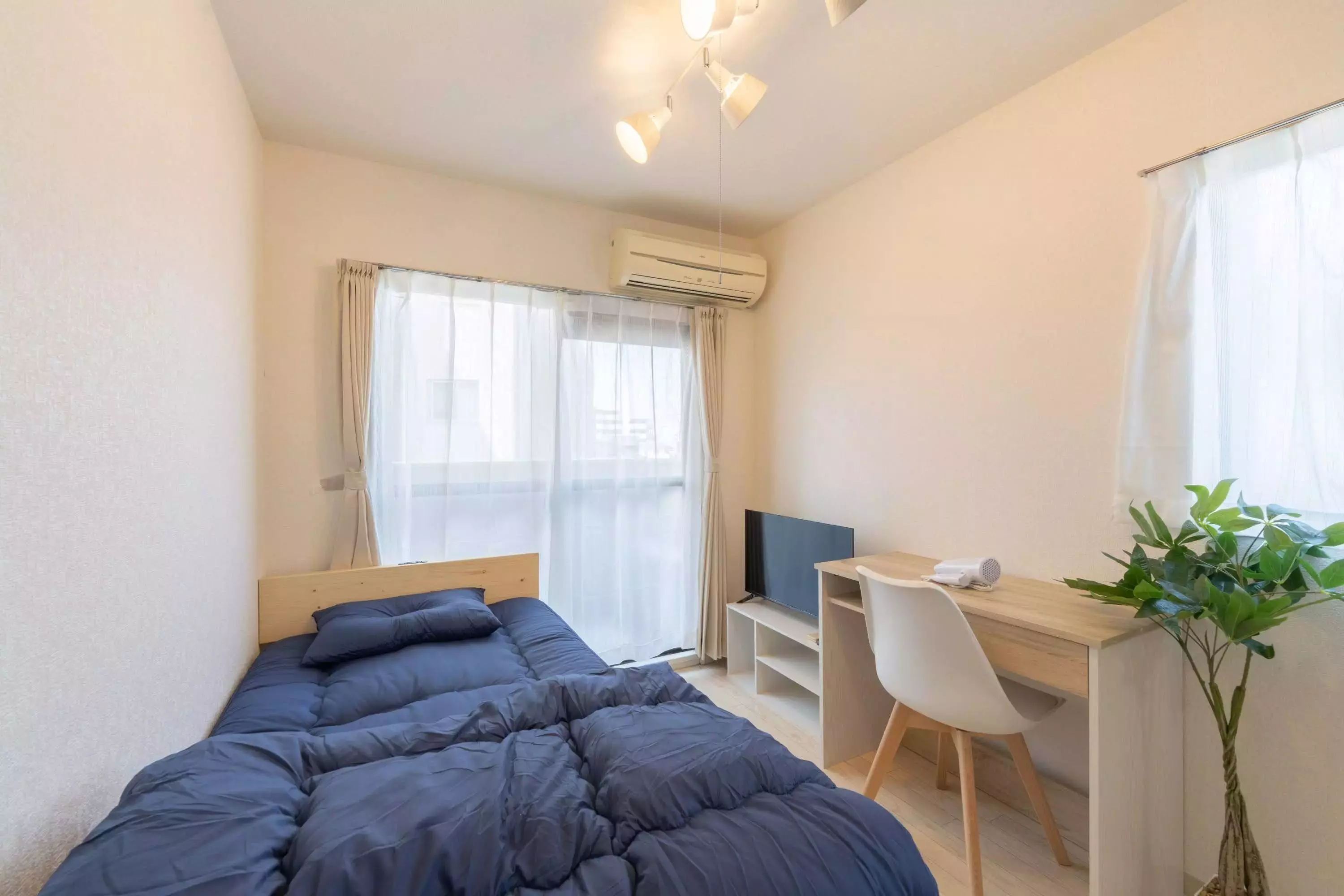
- Furnished apartments: your own home with a private kitchen and bathroom. Furniture and appliances are already in the room, and you set up your own internet. A support service fee of ¥1,500 a month is charged per resident.
- Share houses: a private room in a shared home, with free shared Wi-Fi.
Start-up costs compared with a typical rental
| Item | Typical Japanese rental | XROSS HOUSE |
|---|---|---|
| Deposit and key money | Often around one month's rent each | No deposit. The only one-time payment at move-in is the initial fee below |
| Agency fee | Typically charged | No agency fee |
| Initial fee | Not applicable | Furnished apartment: ¥30,000 during the current campaign (normally ¥50,000). Share house: ¥30,000 |
| Furniture and appliances | Usually you buy your own | Included in furnished apartments |
| Move-out fee | Cleaning and repair costs vary | Furnished apartment: ¥55,000. Share house: ¥16,500 |
In furnished apartments, you sign up for electricity, gas and water yourself. A free set-up service is available, or you can choose the all-in utilities plan at ¥15,000 a month, where XROSS HOUSE holds the contracts for you.
Individual contracts also involve a guarantee company, explained in the next section. Contracts are signed online, online viewings are available, and you can apply from abroad. The earliest move-in is 7 days after applying. See our fees page for current details. If you do not have a Japanese bank account yet when you apply, ask us about payment options.
Get an estimate for a furnished apartment or share house
Guarantor and guarantee company
- No personal joint guarantor is needed.
- Individual contracts generally require joining a rent guarantee company. An initial guarantee fee and a monthly guarantee fee are charged separately, on top of the initial fee. The amounts are given in your estimate.
- If you pay everything from the initial costs through to the move-out costs in full at move-in, you do not need to join a guarantee company.
Ask for a written estimate so you can see the total for your stay. It lists every cost from move-in to move-out before you sign.
FAQ: Opening a bank account in Japan
Can I open a bank account in Japan within my first 6 months?
Often yes, but with conditions. MUFG Bank treats people without Japanese nationality as non-residents unless they work in Japan, with some service limits. SBI Shinsei Bank accepts applicants under 6 months if the form shows an employer with a Japanese office or a school. Rules differ by bank and branch, so check the bank's page (as of October 2026).
Can I open a bank account in Japan without a My Number?
It depends on the bank. MUFG Bank lists documents confirming your Individual Number (My Number) among the items to bring. Other banks list different items, so ask yours before you apply (as of October 2026).
Which bank is easiest for foreigners in Japan?
We cannot rank banks, because the answer depends on your status and your length of stay. Japan Post Bank and PayPay Bank offer English app procedures, and Mizuho provides an English guide for residence card holders. Compare their pages and choose the one whose conditions you meet (as of October 2026).
Can I open a Japanese bank account before arriving in Japan?
The banks above ask for a residence card, and Japan Post Bank does not open an account when you have no residence card and your permitted stay is 3 months or less. Most newcomers therefore apply after arriving and registering their address (as of October 2026).
Do I need a personal seal to open a bank account in Japan?
MUFG Bank lists a personal seal and says rubber stamps cannot be used. Ask your bank whether a signature can be used instead (as of October 2026).
What happens to my bank account when I leave Japan?
Japan Post Bank asks customers to close their account when they leave Japan. Plan the closing before you go (as of October 2026).
Do I need a guarantor to rent from XROSS HOUSE?
No personal guarantor is needed. Individual contracts generally require a guarantee company, unless you pay everything from the initial costs to the move-out costs in full at move-in. More answers are on our FAQ page.
Talk to our English-speaking team about your first home in Japan
A bank account starts with a registered address, and every bank sets its own rules, so read its page before you go. Once your plans are set, the next step is a home you can register at the ward office. If you are looking for a furnished apartment or share house in Japan, XROSS HOUSE supports your search for a home, so please feel free to contact us.