
Reviewed by the XROSS HOUSE team — a Tokyo-based operator of share houses and furnished apartments across 11 prefectures in Japan, with more than 50,000 residents housed to date.
- Your tax status depends on how long you have lived in Japan, not on your passport. Under National Tax Agency (NTA) rules, short-stay workers can be "non-residents" with a flat 20.42% withheld, while longer-term residents are taxed under the normal progressive rates (as of October 2026).
- Resident tax (the local tax) is based on last year's income and on where you lived on January 1. If you arrived after January 1, you usually pay none in year one and get a first bill in year two.
- Tax treaties, relatives abroad, salary paid from your home country and leaving Japan each come with their own forms. Missing them can cost you money.
- If you leave Japan, appoint a tax agent (tax representative) or settle your return before you go. Your pension lump-sum withdrawal payment is withheld at 20.42%, and you may be able to claim that back through a tax agent.
- Plan your rent on take-home pay, and leave room for the second-year resident tax bill.
Planning a move? Talk to our English-speaking team
Do foreigners pay tax in Japan?
Yes. If you earn income from work in Japan, Japan taxes it, whatever your nationality. But foreign residents face questions that Japanese employees never do. Which of your income is taxed? Does a treaty between Japan and your country help? What happens to your tax and pension when you leave?
This article covers those foreigner-specific points first and keeps the general explanations short. It is general information as of October 2026, not tax advice. Rules change every year, and your own case may differ. Check with your tax office or a licensed tax accountant before you decide anything.
Your tax residency status decides what is taxed
The NTA's English income tax guide sorts every individual into one of three groups. Your group, not your visa or passport, decides how much of your income Japan can tax.
| Group | Who it generally covers | What is generally taxed |
|---|---|---|
| Resident | Has a domicile (home base) in Japan, or has lived here continuously for 1 year or more, and does not fall in the group below | Income from anywhere in the world |
| Resident (non-permanent) | Non-Japanese resident who has had a domicile or residence in Japan for 5 years or less in total within the past 10 years | Japan-source income, plus foreign income paid in or remitted to Japan |
| Non-resident | Anyone who is not a resident, for example someone who has been in Japan for under 1 year without a domicile | Japan-source income only. Salary for work done in Japan is generally withheld at a flat 20.42% |
Most foreign employees move from non-resident to resident during their first year or two. The change can come on arrival, if you have a home here, or after one year. Your exact start date is a question for your tax office.
Search for a room
Only furnished properties with appliances are listed!
Your first year versus your second year
This is the part most newcomers miss. Japan has two separate income-based taxes, and they do not start at the same time.
Income tax: withheld from day one
Your employer withholds national income tax from each payslip. In December, the employer runs a year-end adjustment that settles the difference. Most salaried people do not file a return themselves. You may need to file if you have side income, more than one employer, or you leave Japan or your job partway through the year. The usual filing period runs from February 16 to March 15 (NTA).
Resident tax: the second-year surprise
Resident tax is a local tax paid to your prefecture and your city or ward. Two rules matter for newcomers:
- It is charged to people registered in a municipality on January 1.
- It is based on last year's income.
The Ministry of Finance notes that the income-based part is a flat 10%, and there is also a small fixed amount per person. So if you arrived after January 1, you generally owe nothing in year one. The first bill arrives in year two, based on what you earned in Japan in year one. Your pay stays the same, but your take-home pay drops. For more on how this works for foreign residents, see the resident tax page for foreign residents from Shinjuku City, which says the notice arrives in early June.
| When | What happens |
|---|---|
| Year 1 (arrival) | You earn income in Japan. Income tax is withheld each month. Resident tax is usually not due yet. |
| January 1 of year 2 | The municipality where your address is registered on this date will bill you. |
| Around June of year 2 | You receive a notice with the amount. |
| After that | Employees usually pay through monthly payroll deductions. People who pay on their own pay in four installments. |
Income tax rates in brief
Once you are taxed under the normal system, the rates are progressive. Each rate applies only to the slice of taxable income inside its bracket. Taxable income is what is left after deductions, so it is lower than your salary. The Ministry of Finance publishes the rates in its income tax overview (PDF) (as of October 2026).
| Taxable income (per year) | Income tax rate |
|---|---|
| Up to ¥1,950,000 | 5% |
| ¥1,950,000 to ¥3,300,000 | 10% |
| ¥3,300,000 to ¥6,950,000 | 20% |
| ¥6,950,000 to ¥9,000,000 | 23% |
| ¥9,000,000 to ¥18,000,000 | 33% |
| ¥18,000,000 to ¥40,000,000 | 40% |
| Over ¥40,000,000 | 45% |
A Special Income Tax for Reconstruction adds 2.1% of the income tax amount, not of your pay. According to the Ministry of Finance's FY2026 tax reform outline (PDF), that rate falls to 1.1% from January 2027, when a new 1% special income tax for defence starts. The same reform raised the deductions for 2026 and 2027 income, so income tax for someone with only salary now starts above roughly ¥1.78 million a year. These numbers shift often, so treat them as a snapshot.
Search for a room
Only furnished properties with appliances are listed!
Do tax treaties help you?
Japan has signed income tax treaties with many countries to prevent double taxation. Depending on the treaty with your country, some students, business apprentices, professors and researchers can be exempt in Japan on certain income for a limited time. Many foreigners never hear about this, and treaties differ a lot from country to country.
Treaty relief is not automatic. According to the NTA, you must submit an "Application Form for Income Tax Convention" through the payer of the income, before the payment date. If you miss the deadline, you may be able to claim a refund afterwards. The NTA publishes the forms, including one for professors, students and business apprentices, and the Ministry of Finance keeps the list of Japan's tax conventions. Read the treaty for your country before you assume anything.
Family abroad: dependents and documents
If you support relatives who live outside Japan, you may be able to claim a dependent exemption. The NTA's page on relatives living outside Japan sets conditions that are stricter than for relatives living in Japan:
- Age. Relatives aged 16 to 29, or 70 and over, can qualify when the remittance conditions are met.
- Ages 30 to 69. Only if the relative is a student abroad, has a disability, or receives ¥380,000 or more a year from you for living or education costs.
- Documents (from 2023). You must submit a "Documents Concerning Relatives" file (such as a passport copy plus a family register or government document) and a "Document Concerning Remittances" (proof of bank transfers or similar payments). Foreign-language documents need a Japanese translation.
You hand these documents in during the year-end adjustment or attach them to your return. Start collecting the paperwork early, because official documents from your home country can take time to arrive.
Search for a room
Only furnished properties with appliances are listed!
Working holiday visa and short-term workers
If you stay in Japan for less than one year on a working holiday visa, the NTA treats you as a non-resident for income tax. Your employer withholds 20.42% from your salary, and according to the NTA's working holiday page, that withholding completes your tax. Non-residents cannot file a return to claim a refund.
Your status can change if you stay a year or more or take up a home in Japan. Ask your tax office to confirm which group you fall in. If you are treated as a resident and too much tax was withheld, filing a return may get you a refund. The multilingual living guide for foreign residents says this can happen for low-income earners.
Salary paid from your home country
Some foreign workers stay on the payroll of their home-country employer while working in Japan. The NTA explains that salary for work done in Japan counts as Japan-source income, even when the parent company pays it abroad. If no tax was withheld in Japan and you are leaving, the NTA says you must file a return before departure. For people treated as non-residents, it calculates the tax at 20.42% of the gross salary earned during the Japan assignment. If you have this setup, talk to your payroll team and the tax office early.
Not sure where to live? Ask us about furnished apartments
What happens to your taxes when you leave Japan
Leaving does not close your tax file. There are three things to sort out before your flight.
Income tax: appoint a tax agent or settle first
The NTA gives you two options:
- With a tax agent (tax representative). Appoint a person or company resident in Japan and submit the Notification of Tax Agent to the tax office before you leave. Your agent then files your return and pays the tax between February 16 and March 15 of the following year.
- Without a tax agent. File your return and pay all the tax before you leave Japan.
The NTA warns that missing the deadlines means additional tax and delinquent tax (procedures before departing Japan).
Resident tax: still due after you go
Resident tax does not stop when you leave. If you are taxed as a resident and plan to leave before the June notice arrives, you must either name someone to pay on your behalf or pay in advance. The Shinjuku City page for foreign residents explains this. Tell your city office before you move out.
Pension lump-sum withdrawal payment
If you are not a Japanese national and you paid into a Japanese public pension for at least six months, you can apply to the Japan Pension Service for a lump-sum withdrawal payment after you leave. You must apply within two years of leaving, and you must no longer be covered by the pension systems.
The payment is subject to 20.42% income tax withholding. According to the NTA, you can claim that amount back by filing a tax return. This requires a tax agent in Japan and a "Notice of the Lump-sum Withdrawal Payment (Entitlement)". So appoint your tax agent before you leave if you plan to claim a pension payment later.
Social insurance is on your payslip too
Employees also pay health insurance, pension and employment insurance. They are not taxes, but they come out of the same paycheck. We explain how health insurance works for foreign residents in our Japan National Health Insurance guide. If you are still sorting out your status of residence, our Japan work visa guide covers what comes first.
How much of your salary do you actually keep?
Here is a rough picture, clearly an estimate. For a single employee with a ¥250,000 monthly salary and no other income, the amount that lands in your bank account in your second year is often around 75% to 80% of the gross figure. That is after income tax, resident tax and social insurance. Your own figure depends on your age, dependents, employer and city, so use it only for planning.
| Deduction | Year 1 | Year 2 onward |
|---|---|---|
| Income tax | Withheld monthly | Withheld monthly |
| Resident tax | Usually none | Added from June |
| Social insurance | Deducted monthly | Deducted monthly |
| Typical take-home (estimate) | Higher | Around 75% to 80% of salary at ¥250,000 a month |
Wondering whether ¥250,000 a month is enough for a comfortable life? Our guide to a ¥250,000 monthly salary in Japan and our cost of living in Japan guide go through what that budget buys.
What this means for your rent budget
Rent is usually your biggest fixed cost, so taxes matter most when you choose a home. Three habits help.
- Base rent on take-home pay. A salary offer is a gross number. Work out your rent limit from the amount you keep after deductions.
- Plan for the second-year dip. Choose a rent you could still afford after the resident tax starts, not just the one you can afford in your first months.
- Keep move-in costs low. A large upfront payment plus a first tax bill in year two can stretch your savings. Look for a home that shows its move-in costs up front.
Planning your budget? Ask us about move-in costs
XROSS HOUSE furnished apartments: your own space, ready to move in
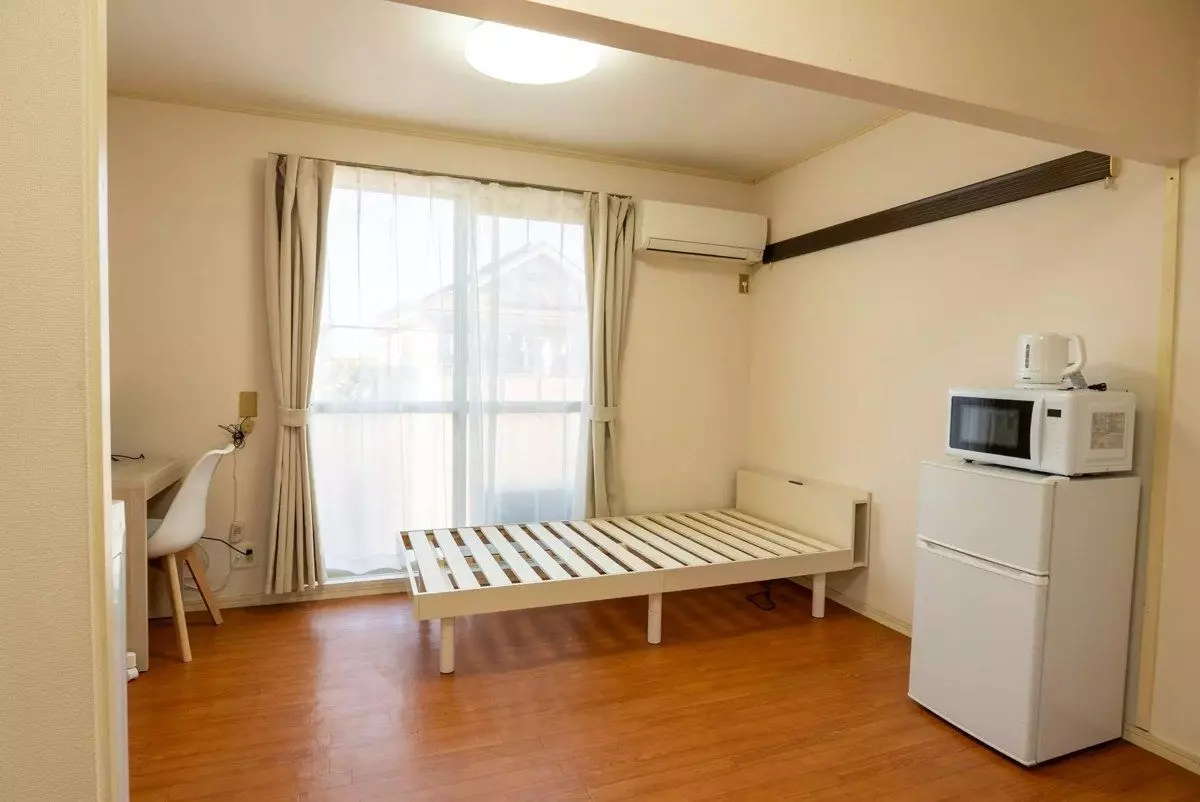
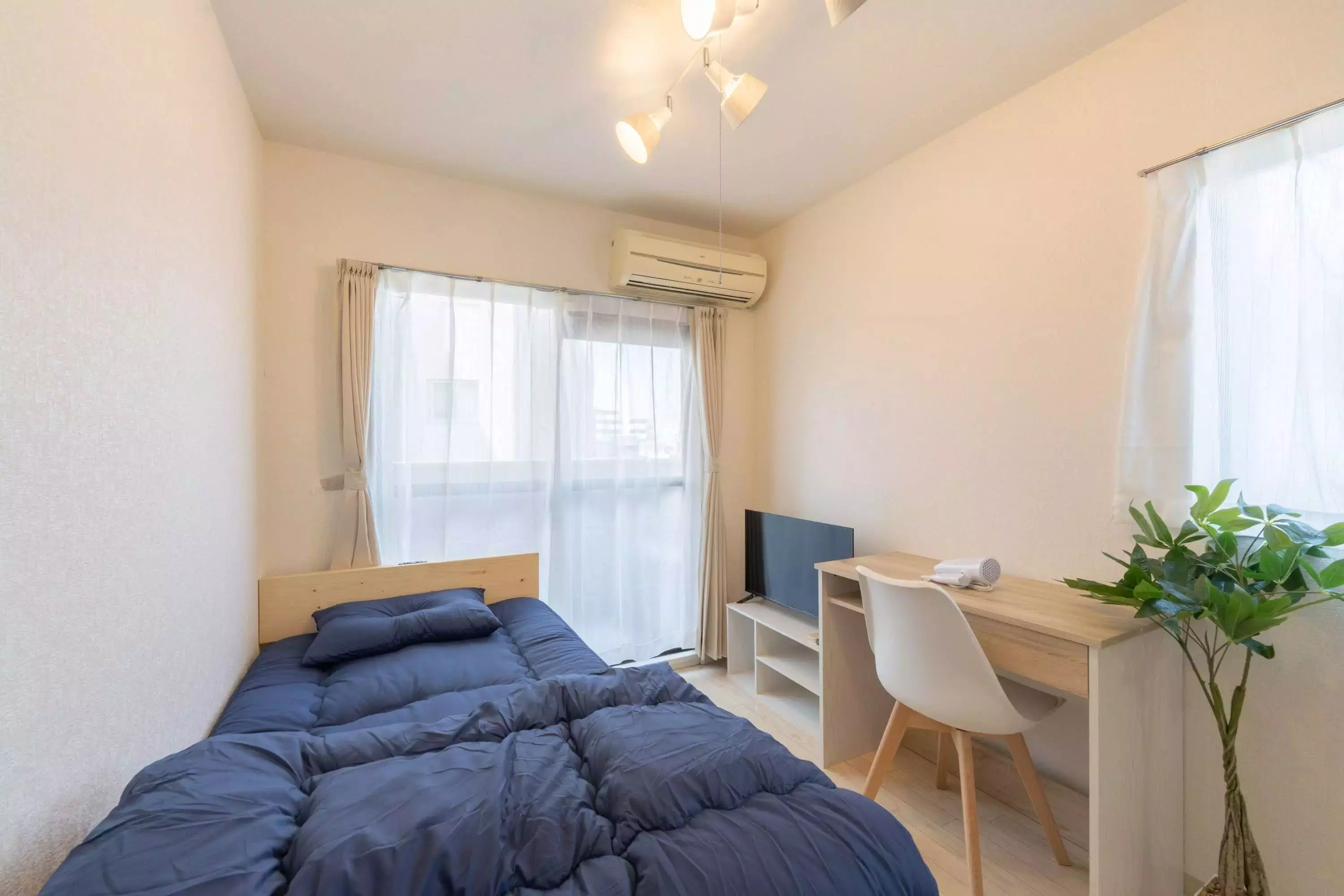
A furnished apartment is your own home with furniture and appliances already inside, so you can arrive with a suitcase and start work. You get a real registered address from the first day, which matters for tax and city paperwork. XROSS HOUSE has furnished apartments in Tokyo and other cities, flexible contracts and a team that supports you in English. Move-in costs are shown before you apply, so your first-year budget has fewer surprises.
Share houses: a lower-cost start
A share house gives you a private room or a shared room, and you share the kitchen, bathroom and living areas. It usually costs less each month, which helps if you are building savings for the second-year tax bill. You also meet other residents from day one.
Do you need a guarantor?
- No individual joint guarantor is needed.
- For individual contracts, joining a rent guarantee company is generally required. An initial guarantee fee and a monthly guarantee fee are charged separately, on top of the initial costs.
- If you pay everything from the initial costs through the move-out costs in one payment upfront at move-in, you do not need to join a guarantee company.
You can view rooms online and sign a contract online from abroad. If your employer wants to arrange housing for you, XROSS HOUSE also offers corporate contracts. For other housing questions, see our FAQ page.
Ask about furnished apartments and share houses
FAQ: Japanese taxes for foreigners
Do foreigners pay tax in Japan?
Yes. Japan taxes income from work done in Japan, whatever your nationality, and you also pay social insurance. How much of your income is taxed depends on whether you count as a resident, a non-permanent resident or a non-resident. See the NTA income tax guide.
What happens to my taxes when I leave Japan?
Before you leave, either appoint a tax agent (tax representative) in Japan and submit the notification, or file your return and pay all tax yourself. Resident tax is still due if you were registered here on January 1. See the NTA guidance for people leaving Japan.
Can I get the tax back on my pension lump-sum withdrawal?
The payment is withheld at 20.42%. You may be able to claim that tax back by filing a return through a tax agent in Japan, with a notice of the lump-sum withdrawal payment. See the NTA page on lump-sum withdrawal payments, and apply for the payment itself within two years of leaving.
Does my country's tax treaty exempt me from Japanese tax?
It depends on the treaty. Some treaties exempt certain income of students, business apprentices, professors or researchers. You must submit an Application Form for Income Tax Convention through the payer before payment. Check the Ministry of Finance treaty list and ask your tax office.
Can I claim my family abroad as dependents in Japan?
Possibly. For relatives living outside Japan, you must submit relationship documents and proof of remittances. Relatives aged 30 to 69 generally qualify only if they are students abroad, have a disability, or receive ¥380,000 or more a year from you. See the NTA page on relatives living outside Japan.
Why did my take-home pay drop in my second year in Japan?
Most likely resident tax. It is based on last year's income, so you usually pay none in your first year. The first notice arrives around June of your second year, and payroll deductions follow. Your salary has not changed, but the deduction is new.
Do working holiday visa holders pay tax in Japan?
Yes. If you stay under one year, the NTA treats you as a non-resident and your employer withholds 20.42% from your salary. That withholding completes your tax, and non-residents cannot file a return for a refund. See the NTA working holiday page.
Can I rent a home in Japan if I am new and do not have a guarantor?
With XROSS HOUSE, no individual joint guarantor is needed. For individual contracts, joining a rent guarantee company is generally required, with an initial and a monthly guarantee fee charged separately. If you pay everything from the initial costs through the move-out costs upfront, joining is not required.
Ask our English-speaking team about your move
Tax rules look complicated, but the habits are simple: know your status, collect your documents early, appoint a tax agent before you leave, and plan your budget on take-home pay. If you want to compare furnished apartments and share houses before you move, our team can walk you through both in English.