Reviewed by the XROSS HOUSE team — a Tokyo-based operator of share houses and furnished apartments across 11 prefectures in Japan, with more than 50,000 residents housed to date.
Most English teachers in Japan need a degree, a job offer and a work visa. The main routes are JET, ALT dispatch companies, eikaiwa and international schools.
- A bachelor's degree is the usual starting point for both the JET Programme and the work visa.
- JET lists a first-year annual remuneration of 4.02 million yen; private employers set their own pay.
- Your employer normally applies for the Certificate of Eligibility before you travel.
- Within 14 days of settling at a new home, you register your address at the municipal office.
- JET advises new participants to be ready to cover initial housing costs, which can reach 4 to 7 months' rent, before the first paycheck.
Moving to Japan to teach? Talk to our team about your first home
Ways to teach English in Japan
Four routes cover most jobs. The table summarises how they differ (as of October 2026). Check the details with each employer, because contracts vary.
| Route | Who employs you | Typical work | Status of residence | Housing |
|---|---|---|---|---|
| JET Programme (ALT) | A local board of education or other contracting organisation, through a national programme | Assistant Language Teacher in public schools | Instructor | In principle you arrange your own; some contracting organisations suggest options |
| ALT dispatch company | A private company that sends teachers to public schools | Assistant teaching in classrooms | Depends on the contract; the ISA page lists the options | Varies by company; ask before you sign |
| Eikaiwa (conversation school) | A private school chain or independent school | Lessons for children and adults, often with evening and weekend hours | Engineer/Specialist in Humanities/International Services is common | Varies by employer; ask before you sign |
| International school or university | The school itself | Subject or language teaching | Depends on the institution and role | Varies by employer |
JET Programme
The JET Programme is run by local authorities with the Ministry of Internal Affairs and Communications, the Ministry of Foreign Affairs and the Ministry of Education, Culture, Sports, Science and Technology, with CLAIR as the coordinating body. Most participants work as ALTs. Details are on the official JET Programme website.
Timing follows an annual cycle: you apply through the Embassy of Japan in your country, and new participants arrive in Japan together in the summer. Application windows and deadlines differ by country, so check your local embassy early, as the JET Programme FAQ advises.
Dispatch companies, eikaiwa and international schools
Private employers hire throughout the year, so timing is more flexible than JET. Contracts, hours, pay and support differ a lot between employers. Ask three things before you accept: the hours you will actually work, whether the employer sponsors your visa, and who pays for your housing set-up.
Requirements to teach English in Japan
Degree and visa status
Public school teaching generally falls under the "Instructor" status. The ISA Instructor page sets out the qualification routes, which include a university degree or equivalent. For private schools and companies, the Engineer/Specialist in Humanities/International Services page lists a university degree or equivalent, or relevant work experience, as the education or experience requirement. The full list of statuses is on the Immigration Services Agency (ISA) website.
JET applicants need at least a bachelor's degree, or an equivalent qualification by the arrival date, plus citizenship of a participating country, as the JET eligibility page explains.
TEFL, TESOL and language ability
The ISA criteria above cite degrees and experience, not TEFL certificates. Some employers still prefer a TEFL or TESOL qualification, so treat it as an advantage with certain schools rather than a legal rule. JET asks for clear, standard pronunciation, rhythm and intonation in the language you teach, and an interest in working with children.
Working holiday as a part-time option
If your country has a working holiday agreement with Japan, you may be able to teach part time or on short contracts while you travel. The current country list is on the Ministry of Foreign Affairs website. Eligibility depends on your situation, so confirm it with the embassy.
Search for a room
Only furnished properties with appliances are listed!
How much do English teachers earn in Japan?
The JET Programme publishes its figures. According to the JET Programme FAQ, annual remuneration is 4.02 million yen in the first year, 4.14 million yen in the second, 4.26 million yen in the third, and 4.32 million yen in the fourth and fifth years (as of October 2026). Tax and insurance are deducted from this.
For dispatch companies, eikaiwa and international schools, pay is set by each employer, and we have not found an official figure to quote. Compare the monthly salary, paid holidays and commuting support in each offer, and use our cost of living in Japan guide to see what a month actually costs.
How to get hired and the visa steps
The order is similar for most routes (as of October 2026).
- Choose a route and apply. Apply to JET through your Embassy of Japan, or to private employers directly.
- Get a job offer. Sign a contract with your employer.
- Your employer applies for a Certificate of Eligibility (CoE). The employer files with the regional immigration bureau in Japan.
- Apply for the visa. Take the CoE to the Japanese embassy or consulate in your country.
- Land in Japan. At major airports you receive your residence card on arrival.
- Register your address. Go to your municipal office within 14 days of settling at your new home.
Requirements and processing times change. Always confirm the latest details with the ISA, the JET Programme or your embassy. We are a housing provider and cannot judge whether an individual qualifies for a status of residence. For advice on your own case, contact the government's Foreign Residents Support Center (FRESC) or a licensed immigration specialist.
Step 6 needs an address, so your housing plan matters from day one.
Line up your home before you land
Search for a room
Only furnished properties with appliances are listed!
Where to live when you start teaching in Japan
Housing is the practical gap in most teaching plans. The JET Programme FAQ says that, in principle, JET participants arrange their own accommodation, although a contracting organisation may suggest housing or offer choices. It also says initial costs can reach 4 to 7 months' rent and that newcomers should be ready to pay them before the first paycheck. With dispatch companies and eikaiwa, support varies, so ask early.
A standard rental adds two more hurdles: apartments are usually unfurnished, and landlords often ask for a Japanese guarantor. That is why many new teachers start in a furnished place with a simple contract. For wider options, see our guides to furnished monthly apartments in Tokyo, short-term rentals in Japan and moving to Japan from the US.
XROSS HOUSE share houses: a low start-up cost for your first months
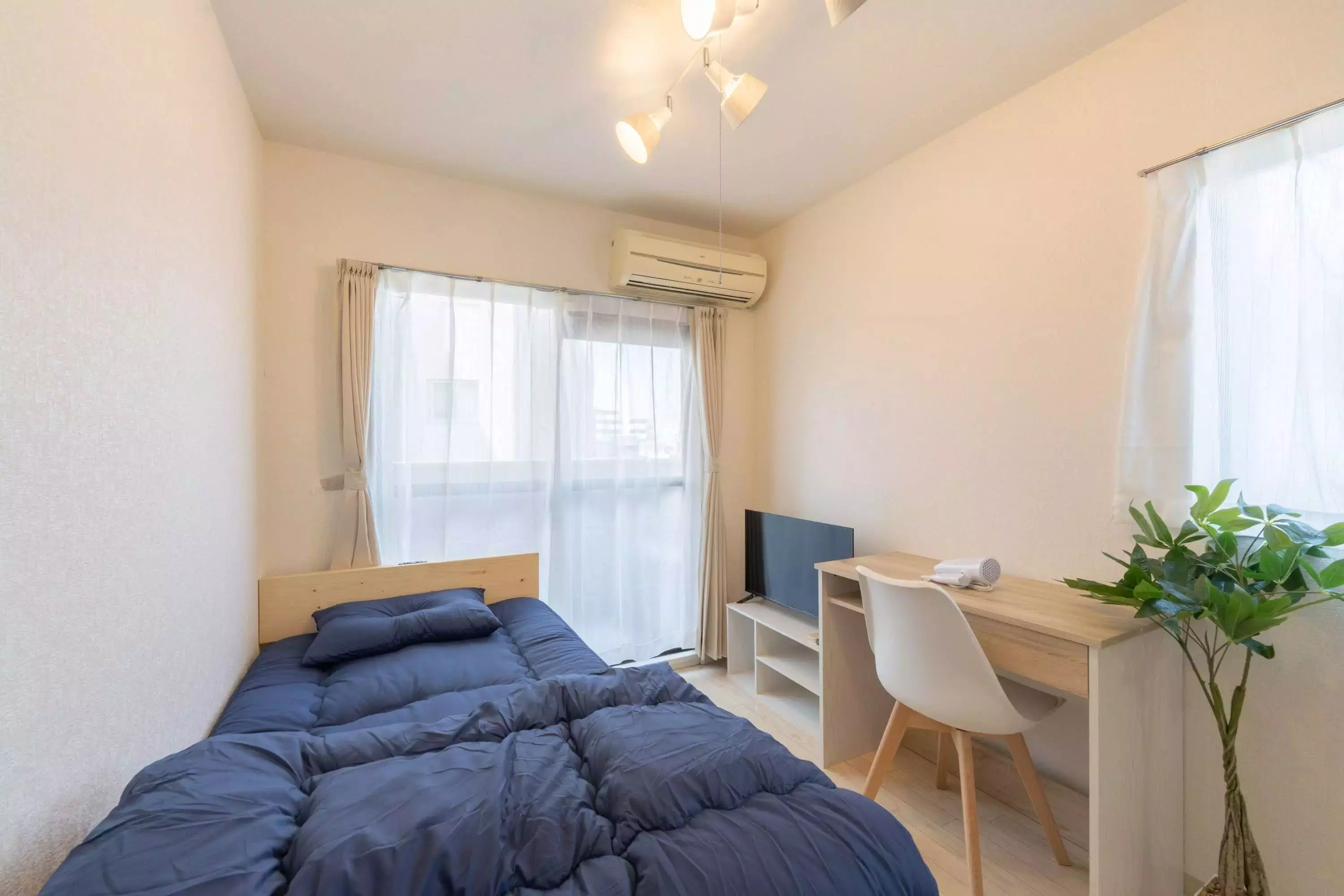
A share house gives you a private or shared room and shares the kitchen, bathroom and living room. Utilities, Wi-Fi and shared supplies are covered by one monthly common fee, so there are no separate contracts to set up. It is a practical base while you learn your commute, meet other residents and decide where to settle.
Furnished apartments: your own place once you settle in
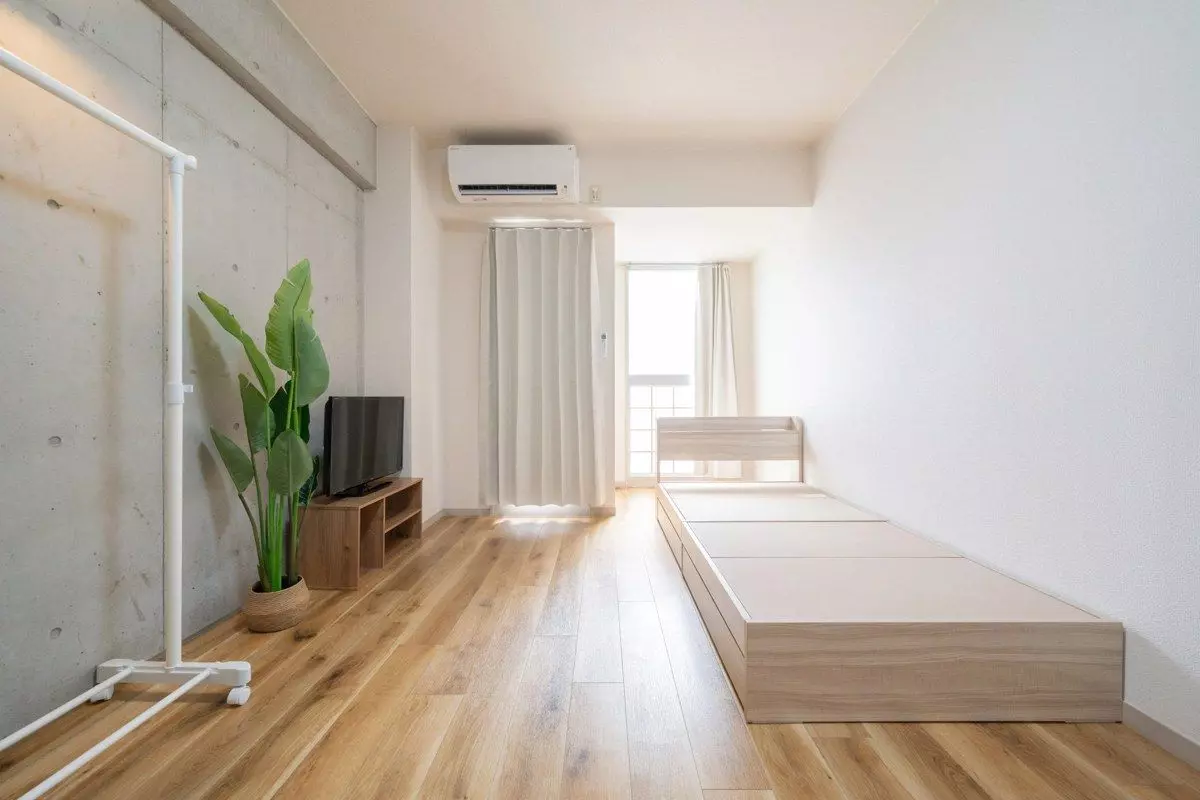
A furnished apartment is your own room with a private kitchen and bathroom. Furniture and appliances are already inside, so you can move in with your suitcase. Many people start in a share house and move to a furnished apartment once their routine is set.
The table compares the two. See also our fees page for the current details.
| Item | Share house | Furnished apartment |
|---|---|---|
| Room | Private room types or shared rooms; shared kitchen, bathroom and living room | Own room with private kitchen and bathroom |
| Furniture and appliances | Furnished (varies by room type) | Included: bed, fridge, washing machine, microwave, air conditioner, desk, chair, curtains and more (varies by property) |
| Registration fee | ¥30,000 | ¥30,000 under a current campaign (normally ¥50,000) |
| Common fee | ¥15,000 a month, covering utilities (water, electricity, gas), Wi-Fi and shared supplies | None |
| Utilities | Included in the common fee | Contracted by the resident; a partner company arranges the contracts for free, or choose the utilities bundle plan at ¥15,000 a month |
| Internet | Wi-Fi included in the common fee | Not included |
| Anshin support fee (tax included) | ¥1,500 a month | ¥1,500 a month |
| Move-out fee | ¥16,500 (tax included) | ¥55,000 (tax included) |
| Deposit, agency fee | None | None |
| Resident age | 18 to 39 | 18 to 59 |
The Anshin support fee covers support for any housing trouble or service request. If you are 40 or older, ask about our furnished apartments, which accept residents up to 59.
Get an estimate for your first home in Japan
Do you need a guarantor?
- No joint guarantor (personal guarantor) is needed.
- For individual contracts, joining a rent guarantee company is normally required. An initial guarantee fee and a monthly guarantee fee are charged separately from the registration fee, and the amounts are confirmed at application.
- If you pay everything from the registration fee to the move-out fee in one lump sum at move-in, you do not need to join a guarantee company at all.
Arranging it before you arrive
All statuses of residence are accepted. The application needs your passport, a photo, an emergency contact in your home country and your personal details. Online viewing and an online (web) contract are possible from abroad. You can apply about one month before move-in without paying rent for the empty days, and the earliest move-in is 7 days after application. The minimum stay is 1 month. To leave, you give one month's notice, with no early-termination penalty.
If your employer wants to provide housing, XROSS HOUSE offers corporate contracts, used by more than 650 companies. Corporate contracts normally do not require a guarantee company. Our team supports you in Japanese, English, Chinese, Korean and more, and more than 50,000 residents have lived with XROSS HOUSE to date.
FAQ: Teaching English in Japan
Can I teach English in Japan without a degree?
It is difficult. JET asks for at least a bachelor's degree or an equivalent qualification, and the ISA lists a university degree or equivalent among the criteria for the Instructor and Engineer/Specialist statuses. Some routes allow relevant work experience instead, so read the criteria on the ISA page for your status.
Do I need to speak Japanese to teach English in Japan?
Not always. JET's ALT criteria focus on your English pronunciation and an interest in education, not on Japanese ability. Some roles do ask for Japanese, and basic Japanese makes daily life, school staff rooms and housing much easier.
Does the JET Programme provide housing?
In principle, participants arrange their own accommodation. According to the JET Programme FAQ, a contracting organisation may suggest housing or offer choices, so ask yours well before you travel. Initial costs can reach 4 to 7 months' rent.
Can I teach English in Japan on a working holiday visa?
Yes, if you are from a country with a working holiday agreement and meet its conditions. The programme is mainly for spending holidays, with work as a way to support your travel funds. Check the Ministry of Foreign Affairs list and your embassy for current rules.
Do I need a TEFL certificate to teach English in Japan?
The ISA criteria for the relevant statuses cite a degree or experience, not a TEFL certificate. Some schools prefer one, so it can strengthen an application, but it is not a substitute for the degree route.
Can I rent a room in Japan before I arrive?
Yes, with XROSS HOUSE. You can view rooms online and sign an online contract from abroad, and all statuses of residence are accepted. The earliest move-in is 7 days after application. More answers are on our FAQ page.
Do I need a Japanese guarantor to rent as a foreign teacher?
At XROSS HOUSE, no joint guarantor is needed. For individual contracts you normally join a rent guarantee company, with an initial guarantee fee and a monthly guarantee fee charged separately; the amounts are confirmed at application. If you pay everything from the registration fee to the move-out fee in one lump sum at move-in, you do not need to join a guarantee company.
Ask our English-speaking team about your move
Teaching in Japan takes a few months of preparation, and your first address matters as much as your visa. If you want to compare share houses and furnished apartments before you fly, our team can walk you through both in English.