
Reviewed by the XROSS HOUSE team — a Tokyo-based operator of share houses and furnished apartments across 11 prefectures in Japan, with more than 50,000 residents housed to date.
To work in Japan from India, you need a job offer from a Japanese employer and a work visa (a status of residence). Most IT and engineering hires use the Engineer/Specialist in Humanities/International Services status, while hands-on sectors use Specified Skilled Worker (as of October 2026).
Below: which fields are hiring, whether freshers can apply, the visa steps, and how to arrange your first home. For a full budget, see our cost of living in Japan guide.
- A job offer comes first. Your employer applies for a Certificate of Eligibility on your behalf.
- A relevant university degree, or 10 years of practical experience, is the usual entry point for IT and engineering roles.
- India is not on Japan's working holiday list, so a work status of residence is the route.
- After arrival you register your address at the municipal office within 14 days.
- Standard rentals often ask for four to six months' rent up front, so plan your housing before you fly.
Moving to Japan for work? Talk to our team about your first home
Which jobs in Japan can you apply for from India?
Japan grants work permission through "statuses of residence", each tied to a type of work. The full list is on the Immigration Services Agency (ISA) website. The table below matches common fields with the status they usually use (as of October 2026).
| Field | Typical status of residence | Main requirement |
|---|---|---|
| IT, software and engineering | Engineer/Specialist in Humanities/International Services | Degree or 10 years' experience in a related field; pay equal to or higher than a Japanese employee |
| Business, marketing, translation, overseas sales | Engineer/Specialist in Humanities/International Services | Same as above |
| English teaching at private language schools or companies | Engineer/Specialist in Humanities/International Services | Degree and a role that fits the status; teaching at public schools uses the separate Instructor status |
| Indian restaurant chef | Skilled Labor | Generally 10 or more years of practical experience |
| Caregiving, food service, manufacturing, construction, hospitality, logistics and similar | Specified Skilled Worker (i) | Skills test and Japanese-language test |
| Senior professionals and researchers | Highly Skilled Professional | Points-based assessment |
| Staff transferred by an Indian company to its Japan branch | Intra-company Transferee | Transfer within the same group of companies |
IT and engineering jobs
Most Indian professionals who move for IT roles use the Engineer/Specialist in Humanities/International Services status. It covers software development, systems engineering, mechanical and electrical engineering, and office roles such as marketing, accounting and translation.
Periods of stay are granted as 5 years, 3 years, 1 year or 3 months, and can be renewed. The employer must pay you at least what a Japanese employee in the same role would receive.
Specified Skilled Worker jobs
The Specified Skilled Worker (i) status is for sectors facing labour shortages. It covers 19 fields: Nursing Care, Building Cleaning Management, Construction, Industrial Product Manufacturing, Shipbuilding and Ship Machinery, Automobile Repair and Maintenance, Aviation, Accommodation, Automobile Transportation, Railway, Agriculture, Fishery and Aquaculture, Food and Beverage Manufacturing, Food Service, Forestry, Wood Industry, Resource Recycling, Linen Services and Logistics Warehouse.
You qualify by passing a skills test for your field and a Japanese-language test. Exam details are on the official exam page. Under (i) you can stay for a total of up to five years, and your family cannot accompany you.
Indian chefs
Cooks of foreign cuisine can use the Skilled Labor status. In general it asks for 10 or more years of practical experience, which can include time spent studying cooking at a school. The employer is usually a restaurant that serves the cuisine you cook.
Can Indian freshers get a job in Japan?
Yes, if you hold a relevant degree. The Engineer/Specialist status asks for a university degree in a subject related to the job, or equivalent education. The alternative is 10 years of practical experience, and study in the related subject counts toward those years.
Certain IT certifications designated by the Minister of Justice can also stand in for the degree or experience requirement. Check the current list on the ISA website before you rely on one.
Pay matters too. The salary must be equal to or higher than what a Japanese employee earns in the same role, so a fresher offer is judged against Japanese graduate pay.
Other routes exist. Some graduates study in Japan first and job-hunt from there. Japanese ability widens your options, because many postings outside IT ask for business-level Japanese, while some IT teams work mainly in English.
Search for a room
Only furnished properties with appliances are listed!
How the work visa process works, step by step
The order is the same for most work statuses (as of October 2026).
- Get a job offer. Sign a contract with a Japanese employer.
- Your employer applies for a Certificate of Eligibility (CoE). The employer or its agent files with the regional immigration bureau in Japan.
- Receive the CoE. It is sent to you, often by email or post.
- Apply for the visa in India. You apply at the Japan Visa Application Centre run by VFS Global. Check the Embassy of Japan in India website for current documents and fees.
- Land in Japan. At major airports you receive your residence card on arrival.
- Register your address. Go to your local municipal office within 14 days of settling at your new home.
Processing times and required documents change. Always confirm the latest details with the ISA or the embassy. We are a housing provider and cannot judge whether an individual qualifies for a status of residence. For advice on your own case, contact the government's Foreign Residents Support Center (FRESC) or a licensed immigration specialist.
Step 6 is where housing becomes urgent. The municipal office needs an address, so having a home ready on arrival keeps your first two weeks simple.
Line up your home before you land
Where to live when you start work in Japan
The usual rental route is hard for new arrivals. Initial costs for a typical rental, namely the deposit, key money (a non-refundable payment to the landlord) and the agency fee, often reach four to six months' rent. Landlords often ask for a Japanese guarantor, and apartments are usually unfurnished.
Three options suit most newcomers: company housing or a dormitory if your employer offers it, a share house, or a furnished apartment. Nishi-Kasai in Edogawa, Tokyo, has long been known for its Indian community and has direct Tokyo Metro Tozai Line access to business districts such as Otemachi, which is why many newcomers research it.
For a wider look at short-term options, see our guide to short-term rentals in Japan.
XROSS HOUSE share houses: a low start-up cost for your first months
A share house gives you a private or shared room and shares the kitchen, bathroom and living room. Utilities, Wi-Fi and shared supplies are covered by one monthly common fee, so there are no separate contracts to set up. It is a practical base while you learn the city and decide where to settle.
Furnished apartments: your own place once you settle in
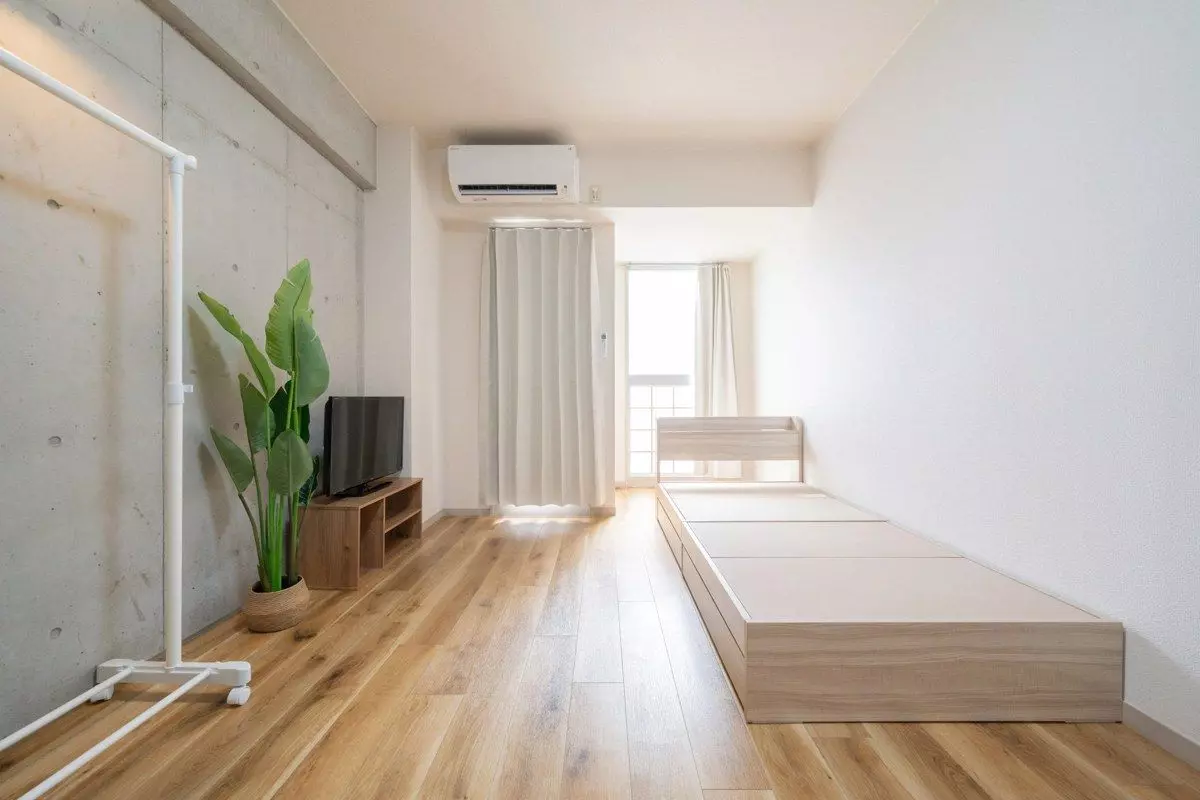
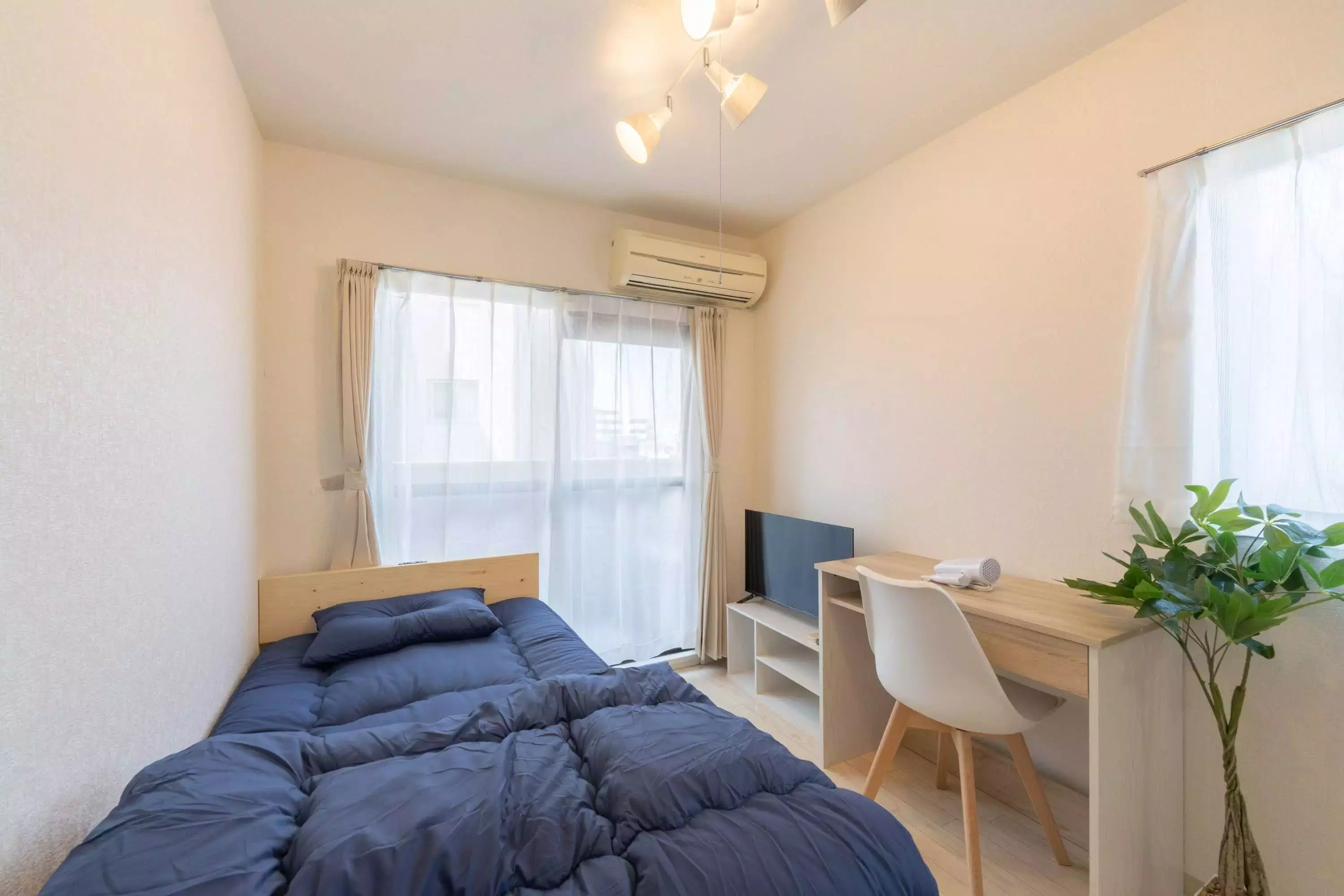
A furnished apartment is your own room with a private kitchen and bathroom. Furniture and appliances are already inside, so you can move in with your suitcase. Many people start in a share house and move to a furnished apartment once their routine is set.
The table compares the two. See also our fees page for the current details.
| Item | Share house | Furnished apartment |
|---|---|---|
| Room | Private room types or shared rooms; shared kitchen, bathroom and living room | Own room with private kitchen and bathroom |
| Furniture and appliances | Furnished (varies by room type) | Included: bed, fridge, washing machine, microwave, air conditioner, desk, chair, curtains and more (varies by property) |
| Registration fee | ¥30,000 | ¥30,000 under a current campaign (normally ¥50,000) |
| Common fee | ¥15,000 a month, covering utilities (water, electricity, gas), Wi-Fi and shared supplies | None |
| Utilities | Included in the common fee | Contracted by the resident; a partner company arranges the contracts for free, or choose the utilities bundle plan at ¥15,000 a month |
| Internet | Wi-Fi included in the common fee | Not included |
| Anshin support fee (tax included) | ¥1,500 a month | ¥1,500 a month |
| Move-out fee | ¥16,500 (tax included) | ¥55,000 (tax included) |
| Deposit, agency fee | None | None |
| Resident age | 18 to 39 | 18 to 59 |
The Anshin support fee covers support for any housing trouble or service request. For internet in a furnished apartment, see our mobile Wi-Fi rental for residents.
Get an estimate for your first home in Japan
Do you need a guarantor?
- No joint guarantor (personal guarantor) is needed.
- For individual contracts, joining a rent guarantee company is normally required. An initial guarantee fee and a monthly guarantee fee are charged separately from the registration fee, and the amounts are confirmed at application.
- If you pay everything from the registration fee to the move-out fee in one lump sum at move-in, you do not need to join a guarantee company at all.
Arranging it from India
All statuses of residence are accepted, including work statuses such as Specified Skilled Worker and Highly Skilled Professional. The application needs your passport, a photo, an emergency contact in your home country and your personal details.
Online viewing and an online (web) contract are possible from abroad. You can apply about one month before move-in without paying rent for the empty days, and the earliest move-in is 7 days after application. The minimum stay is 1 month. To leave, you give one month's notice, with no early-termination penalty.
If your employer wants to provide housing, XROSS HOUSE offers corporate contracts, used by more than 650 companies. Corporate contracts normally do not require a guarantee company. Our team supports you in Japanese, English, Chinese, Korean and more, and more than 50,000 residents have lived with XROSS HOUSE to date.
Search for a room
Only furnished properties with appliances are listed!
FAQ: Working in Japan as an Indian
Can Indian citizens get a working holiday visa for Japan?
No. As of 1 April 2026, Japan runs working holiday programmes with 32 countries and regions, and India is not one of them. You therefore need a work status of residence tied to a job offer. The current country list is on the Ministry of Foreign Affairs website.
Can an Indian fresher get a job in Japan?
Yes, if you have a university degree in a subject related to the job, or equivalent education. Without a degree, 10 years of practical experience is the alternative, and study in the related subject counts. Some IT certifications designated by the Minister of Justice can also substitute. The pay must be equal to or higher than a Japanese employee in the same role.
Do I need to speak Japanese to work in Japan?
It depends on the role. Some IT teams work in English, so Japanese is not always required for the job itself. The Specified Skilled Worker status requires passing a Japanese-language test in addition to a skills test. For other roles, Japanese widens the number of employers you can approach and helps in daily life.
Can I bring my family to Japan on a work visa?
Engineer/Specialist holders can bring a spouse and children under the Dependent status. Holders of Specified Skilled Worker (i) cannot bring family; see the official Specified Skilled Worker page for the rules.
Can Indian chefs work in Japan?
Yes, under the Skilled Labor status. It generally requires 10 or more years of practical experience as a cook. That period can include time spent studying cooking at a school abroad. The employer is usually a restaurant serving that cuisine.
Can I rent a room in Japan before I arrive?
Yes, with XROSS HOUSE. You can view rooms online and sign an online contract from abroad, and all statuses of residence are accepted. You need your passport, a photo, an emergency contact in your home country and your personal details. The earliest move-in is 7 days after application. More answers are on our FAQ page.
Do I need a Japanese guarantor to rent as a foreign resident?
At XROSS HOUSE, no joint guarantor is needed. For individual contracts you normally join a rent guarantee company, with an initial guarantee fee and a monthly guarantee fee charged separately; the amounts are confirmed at application. If you pay everything from the registration fee to the move-out fee in one lump sum at move-in, you do not need to join a guarantee company.
Ask our English-speaking team about your move
Getting a job in Japan takes a few months of preparation, and your first address matters as much as your visa. If you want to compare share houses and furnished apartments before you fly, our team can walk you through both in English.