What is a share house?
A share house is a type of housing where multiple residents share a single home. Generally, each resident has their own private bedroom, while they share common spaces such as the living room, kitchen, and bathroom. In recent years, share houses have become increasingly popular, especially in urban areas, for reasons such as cost savings and community building.
Differences between room sharing and guesthouses
Share houses are often confused with "room shares" and "guest houses." The differences between them are summarized below.
Room sharing
- Entering into a rental agreement with a friend or acquaintance to jointly rent a room or residence.
- Rent and utilities are split equally, but contracts and management are the responsibility of each individual.
- The rules for shared spaces must be decided by the residents themselves.
guest house
- Generally, these are accommodations intended for short-term stays.
- They are often rented out by the bed, and dormitories (shared rooms) are the norm.
- It operates in a manner similar to a hotel, resulting in a high turnover of residents.
Share house
- The operating company manages the contracts, and each contract is on an individual basis.
- The shared spaces and facilities are extensive, and the property is designed with long-term residency in mind.
- It is easy for residents to form a community among themselves.
What kind of people live here? (Introduced by lifestyle)
Share houses are home to people with diverse lifestyles. The type of share house you should choose will vary depending on your purpose and lifestyle.
Interactive (community-focused)
This type of shared house places a strong emphasis on interaction among residents.
- Residents regularly hold events and parties.
- The shared spaces are large, and interaction naturally occurs in the living room and kitchen.
- There are many residents from overseas, and cross-cultural exchange is thriving.
Cost-effective
This is a shared house for people who want to keep their rent and living expenses down.
- The private rooms are small and have minimal amenities, but the rent is cheap.
- The shared facilities are simple, keeping management costs down.
- In many cases, utilities and Wi-Fi fees are included.
Purpose-oriented (e.g., with a co-working space)
This is a shared house for residents with specific purposes.
- Workspace included: Fully equipped workspaces for teleworking and freelancers.
- For creators: Music studios and studios are available, making it easy to engage in creative activities.
- For entrepreneurs: A shared house that functions as a place for business networking.
Women only / Men only
This is a shared house for people who prioritize security.
- Women-only share house: Enhanced security, only available for female residents.
- Male-only share houses: These are for male residents only and some types do not prioritize social interaction.
This article provides a detailed explanation of the advantages and disadvantages of women-only share houses.
What are the advantages and disadvantages of women-only share houses?
Senior-friendly and pet-friendly properties
This is a special share house designed to suit different life stages.
- For seniors: A shared house where people aged 60 and over can gather, offering a new lifestyle after retirement.
- Pet-friendly properties: Share houses where you can live with your pets, such as dogs and cats.
The following article provides a detailed explanation of the points to consider, as well as the advantages and disadvantages, when choosing a pet-friendly share house.
"Can you keep pets in a shared house? We'll also discuss the advantages and disadvantages."
Since there are various types of shared houses, it's important to choose one that suits your lifestyle.
Advantages of a shared house
A share house is a housing style that combines the freedom of living alone with the convenience of communal living. It offers significant advantages, especially for those who want to enjoy a comfortable life while keeping rents down, particularly in urban areas where rents are soaring. Here, we'll explain the appeal of share houses in detail.
You can reduce rent and initial costs.
The biggest advantage of living in a shared house is that you can significantly reduce housing costs. With regular rental properties, you need to pay initial fees such as security deposits, key money, and brokerage fees, but with shared houses, these are often unnecessary or very low, making it easier to move in.
Furthermore, compared to single-person apartments in the same area, monthly rent tends to be lower. Especially in urban areas, where the rent for a studio apartment tends to be expensive, a share house allows you to use a larger space and better facilities for the same budget.
point
- No security deposit, key money, or brokerage fees required or at a low cost.
- Rent is cheaper compared to living alone.
- Even in areas with high rents, it's easy to live in.
Moving is easy with furniture and appliances included.
Share houses often come furnished with essential furniture and appliances, significantly reducing the burden of moving in.
In typical shared houses, appliances such as refrigerators, washing machines, microwaves, and rice cookers are provided in the common areas, and private rooms often come furnished with beds and desks. Therefore, you don't need to make any major purchases when starting a new life, and you can move in right away.
Furthermore, it minimizes the need to pack and dispose of belongings and appliances/furniture when moving out, making it suitable for people who move frequently.
point
- It comes furnished with essential furniture and appliances.
- Moving is possible with minimal belongings.
- No disposal costs or hassle when moving out.
No utility contract required, making the process easy.
In typical rental properties, you need to individually contract for utilities such as electricity, gas, water, and internet, but these procedures are unnecessary in a share house. In many share houses, utilities are already connected, so you can start living comfortably from the day you move in.
In particular, many properties come with internet access already installed, saving you the hassle and cost of setting up a new contract. Since there's no need to cancel the contract when you move out, this is a significant advantage for busy people.
point
- No need to contract or activate utilities.
- In many cases, a stable internet connection is available.
- No cancellation procedures are required when moving out, making the process smooth.
Excellent shared spaces (spacious living room and kitchen)
One of the attractions of a share house is the well-equipped common spaces. In a typical studio apartment, you only have access to a small kitchen and living room, but in a share house, you can use spacious common areas.
The living room is often furnished with a sofa and a large TV, allowing you to relax comfortably. The kitchen is also equipped with multiple burners and cooking appliances, making it possible to enjoy serious cooking.
point
- Larger shared spaces than typical rental properties
- Enjoy cooking in a well-equipped kitchen.
- You can relax in the living room with a sofa and a TV.
Increased interaction with people (network building)
Living in a shared house naturally fosters interaction with other residents. You'll have many opportunities to meet people from different industries and foreigners, which can be a great way to build new connections.
Especially when moving to a new place, you might feel lonely if you don't know anyone, but in a share house, conversations tend to happen more easily on a daily basis, providing a sense of security. Also, residents of a share house often plan events together, which can help expand your social circle.
Furthermore, it can lead to building business connections, and it's not uncommon for new job opportunities to arise.
point
- Interaction among residents arises naturally.
- I don't feel lonely even in unfamiliar places.
- You can meet people from different industries and cultures.
- It can sometimes lead to business opportunities.
Short-term contracts may be available, offering flexible living options.
While typical rental properties often have long-term contracts of two years or more, share houses sometimes offer shorter-term contracts. Therefore, they can accommodate needs such as "I only want to live there for a short period before a job transfer" or "I want to try living there."
Furthermore, because the contract period is short, you have the flexibility to move out quickly if the living environment doesn't suit you.
point
- Many properties offer short-term contracts.
- Easy to move if the living environment is unsuitable.
- Ideal for temporary housing, such as for job transfers or studying abroad.
Search for a room
Only furnished properties with appliances are listed!
Disadvantages of shared housing
Share houses offer many advantages, such as lower rent and opportunities for interaction among residents, but they also have disadvantages inherent to communal living. To live comfortably, it's necessary to understand these drawbacks beforehand and take steps to avoid problems. Here, we'll explain the main disadvantages of share houses in detail.
Difficult to ensure privacy
Although shared houses offer private rooms, residents share common spaces such as the living room, kitchen, and bathroom with other residents, making it more difficult to maintain privacy compared to living alone.
In particular, in properties with thin walls, noise from the next room can be bothersome, and if the layout requires you to pass through the living room to get to your own room, you'll constantly be in contact with other residents. Also, in properties where individual rooms don't have locks, you might feel uneasy about security.
point
- Because living spaces are shared, it is difficult to ensure complete privacy.
- If the walls are thin, you may be bothered by noise from the next room.
- In properties where individual rooms do not have locks, there are security concerns.
There's a possibility that your lifestyles won't match.
Share houses are home to people with diverse lifestyles, including students, working professionals, and freelancers. Therefore, it's possible that your own daily routine might not align with that of other residents, leading to stress.
For example, someone who has to work early in the morning might find it difficult to get enough sleep if they live with a noisy neighbor who stays up late. Also, people who are night owls might be bothered by the noise from neighbors who are active early in the morning.
point
- Because each resident has a different daily routine, it can sometimes be stressful.
- You might be bothered by everyday noises in the early morning or late at night.
- This can create an environment where it's difficult to concentrate on work or studies.
Noise and disturbances are likely to occur.
When living together, the issue of noise and sounds from daily life is unavoidable. In particular, shared houses often have thinner walls than typical rental properties, making it easier for sounds from adjacent rooms and common areas to carry.
For example, if there are residents who are on the phone or playing games late into the night, or who play loud music, it can be difficult to live comfortably. Also, if conversations in common areas continue late into the night, it can be a major source of stress for residents who are trying to sleep.
point
- If the walls are thin, everyday noises tend to be more noticeable.
- Nighttime conversations or music can sometimes lead to problems.
- You may need earphones or noise-canceling devices.
It's difficult to invite friends and family over casually.
In a shared house, it's often difficult to invite friends or family over casually because you're living with multiple other residents. In particular, some properties have strict rules regarding visitors in order to respect the privacy of the residents.
Another major difference from living alone is that you can't freely invite people over, as there are restrictions on holding large meals or parties in shared spaces.
point
- In consideration of residents' privacy, there are often restrictions on the number of visitors.
- When inviting friends or family over, you need to get their permission beforehand.
- Large gatherings and parties may also be restricted.
Risk of disputes between residents
In a shared house, people with diverse values and lifestyles live together, which can sometimes lead to conflicts between residents. Disagreements often arise regarding the use of shared spaces, noise levels, and cleaning rules.
Furthermore, if the residents' personalities and ways of thinking don't match, relationships can become strained. A shared house should be a relaxing space after returning from work or school, but if relationships between residents deteriorate, it can become a source of mental stress.
point
- Problems are likely to occur due to differences in lifestyle habits.
- Conflicts can also arise over rules regarding cleaning and garbage disposal.
- Poor relationships with other residents can easily lead to stress.
Room types in shared houses (differences in private space)
Share house rooms can be broadly divided into three types: "dormitory (shared room)," "semi-private (with partitions)," and "private room (private room with lock)." Understand the characteristics of each and choose the one that suits your lifestyle.
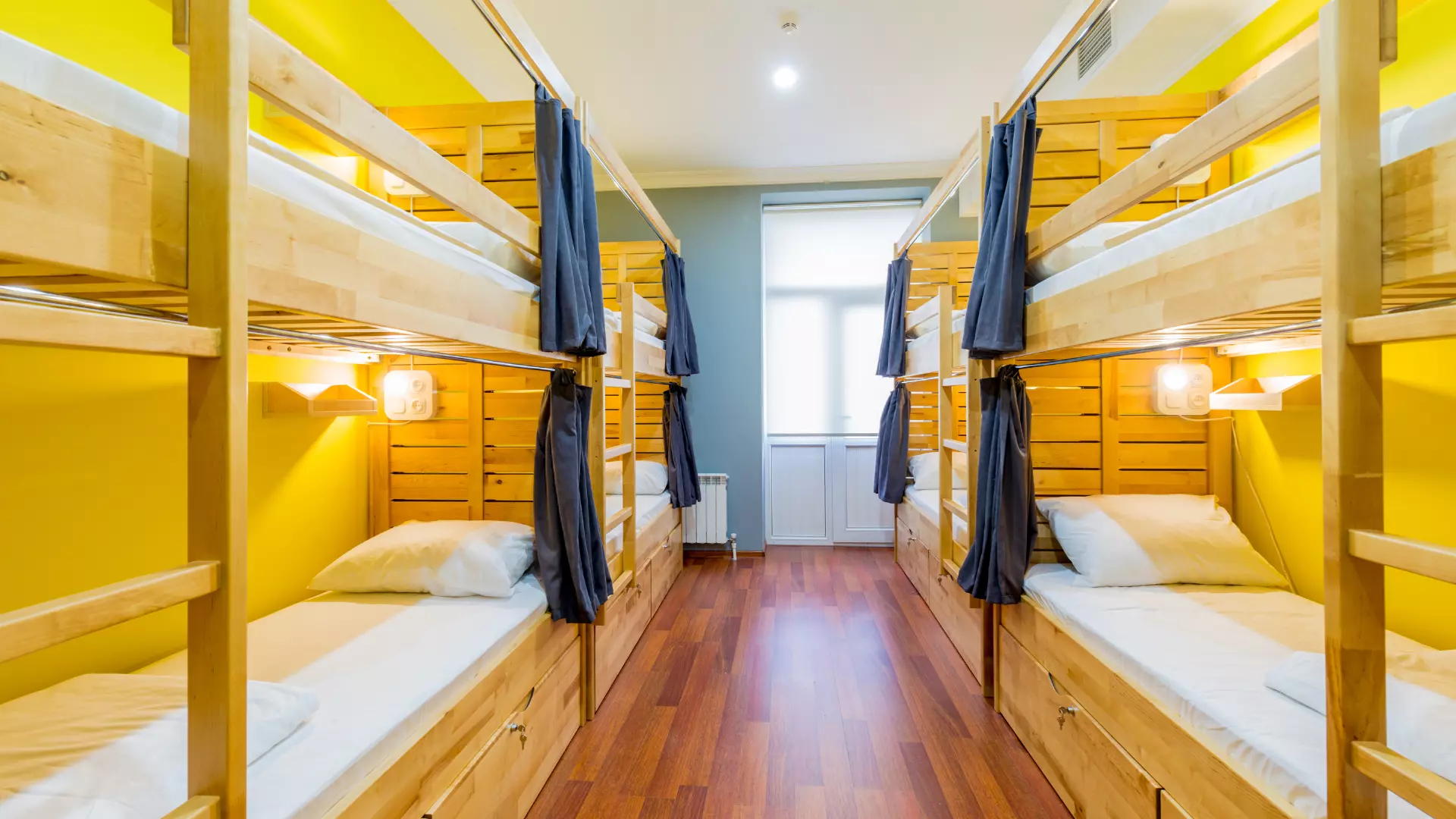
① Dormitory (shared room)
A dormitory is a type of shared housing where multiple people share one room. Typically, 2 to 6 people live in one room, sharing bed space and storage space.
merit
- It has the lowest rent, making it ideal for those who want to keep their budget down.
- It's easy for residents to interact with each other and make friends.
- It's harder to feel lonely when living alone.
Disadvantages
- Difficult to ensure privacy
- I sometimes find the sounds of other residents' daily lives bothersome.
- Storage space is limited.
Recommended for
- People who want to keep costs down, international students, and people who value communication.
② Semi-private (with partition)
Semi-private accommodations are spaces partitioned by dividers or curtains and used as individual rooms. They offer more privacy than dormitories, but they are not completely private rooms as they lack walls or doors.
merit
- It offers more privacy than a dormitory.
- Rent is relatively cheap
- There is less noise and physical interference compared to shared rooms.
Disadvantages
- Since it's not a completely private room, noise and smells can be a concern.
- Due to the use of curtains and partitions, there are still concerns regarding security.
- Storage space is limited.
Recommended for
- People who want to keep costs down while maintaining a certain level of privacy.
If you'd like to learn more about the advantages and disadvantages of semi-private shared housing, please also check out this article.
"What is a semi-private type of shared house? We'll introduce the advantages and disadvantages."
③ Private room type (private room with lock)
The private room type offers a completely independent room with a lock, allowing you to live in a shared house with a feeling similar to living alone. Its key feature is that you can maintain your privacy while still utilizing the shared spaces.
merit
- Your privacy will be fully protected.
- Even if your daily routine is different, you are less likely to be influenced by other residents.
- ample storage space is available.
- It provides a sense of security.
Disadvantages
- Rent will be on the higher side
- Interaction among residents tends to decrease.
Recommended for
- People who want to concentrate on work or studies, people who value privacy, and people who plan to live there long-term.
Search for a room
Only furnished properties with appliances are listed!
How to choose a shared house based on your purpose
Share houses offer more than just a way to save on rent; they allow you to choose an environment that suits your lifestyle and values, leading to a more fulfilling life. In particular, recently there has been an increase in "concept-based share houses" that cater to specific purposes, providing optimal environments for work, study, socializing, creative activities, and more.
Here, we will explain in detail the features and benefits of typical "share houses with co-working spaces," "share houses for interacting with foreigners," and "share houses for creators."
① Share house with coworking space
In recent years, with the rise of remote work and freelance work styles, shared housing with co-working spaces that provide an environment conducive to focused work has been gaining attention. Its defining feature is the provision of a comfortable workspace, serving as a hybrid between home and the workplace.
Features
- Dedicated workspace available (high-speed Wi-Fi, desk, chair, monitor, etc.)
- There are meeting rooms and spaces for online meetings.
- There are many freelancers and entrepreneurs, making it easy to build business connections.
- Since housing costs and workspace can be secured together, it leads to cost savings.
merit
- The work environment is well-equipped: Wi-Fi and power outlets are available, and there is a desk space where you can concentrate, saving you the trouble of searching for a cafe or co-working space.
- Business connections are formed: You can exchange business information with other residents of the same shared house, increasing opportunities for collaboration.
- It's easier to achieve a work-life balance: Because you can live and work in the same place, you eliminate the stress of commuting and can use your time more efficiently.
Recommended for people like this
- People who primarily work remotely
- People who are thinking about becoming a freelancer or starting their own business
- People who want an environment where they can concentrate on their work
② Share house for foreigners
Foreigner-friendly share houses are a type of share house that provides an environment where Japanese and foreigners can live together and engage in cross-cultural exchange. This increases opportunities to use English and other languages on a daily basis, fostering a global perspective.
This article provides a detailed explanation of the advantages and disadvantages of living with foreigners in a shared house.
The advantages and disadvantages of living with foreigners in a shared house.
Features
- You can live with residents from various nationalities and experience different cultures.
- Opportunities to learn English and other languages are increasing.
- Regular international exchange events and parties are held.
- You can experience the feeling of studying abroad while staying in Japan.
merit
- Learn English or other foreign languages naturally: Unlike language schools, you'll be in an environment where you naturally use a foreign language in your daily life, allowing you to develop practical conversational skills.
- Learn about diverse values: By living with residents who have different cultures and ways of thinking, you can gain new perspectives.
- Making friends from overseas: This is a valuable way to build connections, especially for those preparing for studying abroad or a working holiday, or those considering moving overseas.
Recommended for people like this
- People who want to learn a language or improve their English conversation skills
- People who are considering studying abroad or moving overseas
- People who are interested in intercultural exchange
③ Shared housing for creators
A share house for creators is a creative-oriented share house where designers, artists, engineers, video creators, musicians, and others can gather. The share house is equipped with workspaces, studios, soundproofing, and other amenities, allowing residents to live while pursuing their creative activities.
Living in a shared house can create connections with other creators and freelancers, sometimes leading to new jobs and projects. This network expansion is a particularly significant benefit for those working as freelancers. We also have an article that explains in detail about shared houses for freelancers, titled "What is a Shared House for Freelancers? Benefits and Points to Note Explained!" , so please check it out if you're interested.
Features
- The studio is equipped with a creative environment including an atelier, studio, and soundproof room.
- Creators share ideas with each other, leading to collaboration.
- Events and exhibitions are held regularly.
- There is a high possibility that new projects will be born.
Furthermore, living in a shared house while working as an engineer not only provides an environment conducive to focusing on work, but also offers the significant opportunity to improve skills through interaction with other engineers. For more information on the benefits of living in a shared house for engineers, please refer to this article , "Benefits of Shared Housing for Engineers and a Guide to Choosing One."
merit
- An environment conducive to focused creative work: We offer an environment where you can not only work individually but also collaborate and be inspired by other creators.
- Collaboration is more likely to occur: Residents will have more opportunities to start new projects together or create works of art collaboratively.
- Access to specialized facilities: You can use facilities that are not available in typical rental properties (such as music studios, art studios, and editing rooms), which expands the scope of your activities.
Recommended for people like this
- Designer, artist, video creator, musician
- People who want to live in an environment dedicated to music and art
- People who want to interact with other creators and be inspired while engaging in creative activities.
How to find a share house without making mistakes
Share houses are an attractive option for those looking to save on rent while still enjoying a comfortable living environment. However, if you don't choose wisely, you might end up regretting it later. To ensure a comfortable shared living experience, let's go over some important points to consider when selecting a share house.
① Clarify the objective.
There are various types of shared houses, and it's important to choose one that suits your lifestyle and purpose. Choose a shared house that fits your needs, as outlined below.
Recommended share houses based on purpose
- Want to keep rent down? → Dormitory (shared room) type
- Prioritizing privacy → Private room (with lock) type
- Want a remote work environment? → Share house with co-working space.
- Want to enjoy cross-cultural exchange? → Share house for foreigners
- Want to engage in creative activities? → Shared housing for creators
The first step in choosing a share house is to clearly define what kind of environment you are looking for.
② Check the location and surrounding environment.
The location of a shared house greatly affects its livability. If the property is in an inconvenient location, commuting and daily life can become stressful.
Points to check
- Distance to the nearest station (is it within walking distance?)
- Access to major areas (convenient transportation to work or school)
- Availability of supermarkets and convenience stores (whether daily necessities can be purchased easily)
- The availability of restaurants and cafes (a must-check for those who eat out frequently)
- Safety and security (especially whether it's safe to walk around at night)
To check the surrounding environment, we recommend actually walking around the property. The atmosphere can differ between day and night, so visiting at different times of the day will allow you to make a more accurate judgment.
③ Check the details of the rent and expenses.
While rent for a shared house is often cheaper than for a regular rental property, it's important to understand the total cost, as management fees and utilities may be charged separately.
Costs to check
- Monthly rent (whether it includes common area fees and management fees)
- Utilities and internet charges (included or separate)
- Amount of security deposit, key money, and guarantee deposit
- Whether or not there are management fees or common area maintenance fees
- Costs incurred upon moving out (cleaning fees, etc.)
Even if the rent seems cheap, the total cost can end up being high if there are many additional charges. It is important to always check the total amount before signing the contract.
④ Check the facilities and floor plan.
Since the level of amenities varies from property to property in a shared house, it's necessary to check whether it will be suitable for your daily life.
Points to check
- The size of the private room and the storage space
- Availability of built-in furniture such as beds and desks
- Size of shared spaces (living room, kitchen, bathroom)
- Number of washing machines and dryers
- Internet environment (speed and connection stability)
- Cleaning rules (residents taking turns cleaning, or a professional cleaning service)
The condition of common areas, in particular, is a key factor in determining how comfortable a place is to live. It's reassuring to actually view the property and check if it's kept clean.
⑤ Check the atmosphere among the residents and the management system.
In a shared house, the compatibility with other residents and the management system greatly affect the comfort of your life. Some properties encourage lively interaction among residents, while others prioritize individual living.
Points to check
- Age range and occupation of residents
- Rules and management systems (such as rules for cleaning and garbage disposal)
- Support from the management company or operator (support in case of trouble)
- Whether or not there is interaction among residents (are there events?)
Things to ask during the viewing
"What kind of people live here?"
"Is there any interaction between residents?"
"How do you handle problems when they arise?"
Since a lack of compatibility with the residents' atmosphere or management system can be a source of stress, be sure to check these things thoroughly beforehand.
⑥ Carefully review the contract details.
Share house contracts often differ from regular rental agreements, so it's important to check them carefully beforehand.
Contract details to check
- Contract period (Is a short-term contract possible?)
- Whether or not there is a penalty fee for early termination
- Costs incurred upon moving out (cleaning fees, etc.)
- The necessity of a guarantor
- Response to rule violations (conditions for eviction, etc.)
If the contract details are unclear or include unfavorable terms, it can lead to problems, so be sure to check them until you are satisfied.
⑦ Check the actual atmosphere during the viewing.
If you find a property you're interested in, be sure to view it in person to check the actual environment.
Points to check during a viewing
- The atmosphere among the residents (whether they greet you, how easy it is to talk to them)
- Cleanliness of common areas
- Number of bathrooms and toilets and cleaning frequency
- Soundproofing of private rooms (wall thickness and degree of sound leakage)
- Storage space size
When you actually see a property, you may notice aspects of its atmosphere and potential problems that weren't apparent from the photos. We recommend comparing as many properties as possible.
Search for a room
Only furnished properties with appliances are listed!
summary
Share houses offer a comfortable living environment while keeping rent costs down. They often come furnished with furniture and appliances, reducing the burden of moving, and the simplification of procedures, such as not needing to contract for utilities, are major advantages. Furthermore, residents can utilize large shared spaces, potentially expanding their social network through interaction with other residents.
On the other hand, it can be difficult to ensure privacy, and differences in daily routines can cause stress. Troubles can also arise regarding noise levels and rules for using shared spaces, so it's important to understand the disadvantages unique to shared housing.
To avoid making a mistake, it's important to carefully check the type of share house and the contract details, and to check the atmosphere of the residents and the condition of the facilities through viewings. By choosing a property that suits your lifestyle and purpose, you can enjoy a comfortable and fulfilling share house life.