Main reasons why people say "Don't live in a shared house"
If you search for "avoid share houses," you'll find concerns about noise, privacy, and shared rules. However, the important point here is that many of these issues can be avoided by choosing the right property and management company . It's not that share houses themselves are bad, but rather that these problems are more likely to occur if you choose the wrong one. Let's start by looking at three common reasons, along with how to avoid them.
Concerns about noise
We often hear complaints about being bothered by everyday noises. However, how easily sound travels varies greatly depending on the building structure and room type. Choosing a property with solid walls for private rooms or a layout where the living room and bedrooms are separated can significantly reduce concerns about noise. Conversely, properties where many people share one floor tend to be noisier, so if quietness is a priority, the key is to choose a property with fewer people and private rooms.
Concerns about privacy
The more shared areas there are, the less privacy you'll have compared to living alone. This is something you can adjust by choosing the right room type. Choosing a completely private room or a private room with a lock where only the bathroom and kitchen are shared will allow you to live with a sense of closeness to that of living alone. If you want to learn more about privacy measures, please also see our article "What are the privacy issues in share houses? We also explain how to deal with them ."
Concerns about rules and problems in common areas
Problems in shared areas such as kitchens and bathrooms largely depend on whether the management company has established rules and conducts regular cleaning. In other words, choosing a property with a solid management system is the best preventative measure. Laundry rules are a common source of trouble, so the article "What are the rules for laundry in a share house? Points to be aware of" is also helpful.
The disadvantages of shared housing should be understood in conjunction with countermeasures.
There are certainly disadvantages. However, most of them can be avoided. If you understand both the "disadvantages" and "how to deal with them," you won't need to worry unnecessarily.
Commonly cited disadvantages and how to avoid them
- If privacy is limited , choose either a completely private room or a private room with a lock and shared bathroom facilities.
- If you're concerned about noise from other residents , choose a property with solid walls or one with a small number of residents.
- Problems in common areas → Choose a management company with regular cleaning and clear rules.
- Restrictions on freedom of lifestyle → Check rules regarding visitors, usage times, etc., before signing a contract.
- Compatibility with residents → Check the age range and atmosphere of the residents with the management company in advance.
The key point is that not all share houses are like this; it varies depending on the property's design, type, and management system . That's why, if you know how to choose wisely, it's entirely possible to live comfortably while keeping costs down. If you want to get a better overview of share houses, please also check out "What is a Share House? An Explanation of its Advantages and Disadvantages ."
Search for a room
Only furnished properties with appliances are listed!
If you feel that a shared house might not be right for you, you can choose a different way of living.
However, some people simply want to live quietly and at their own pace. In that case, there's no need to give up on the idea of living in a shared house. By choosing a type without a shared living room or one with completely private rooms, you can avoid the disadvantages of communal living while still enjoying the benefits of lower initial costs and furnished apartments.
For people like this, this type of living arrangement
- Want to maintain social distancing but keep costs down? → Shared apartments (SA-XROSS series) with lockable private rooms and shared bathrooms.
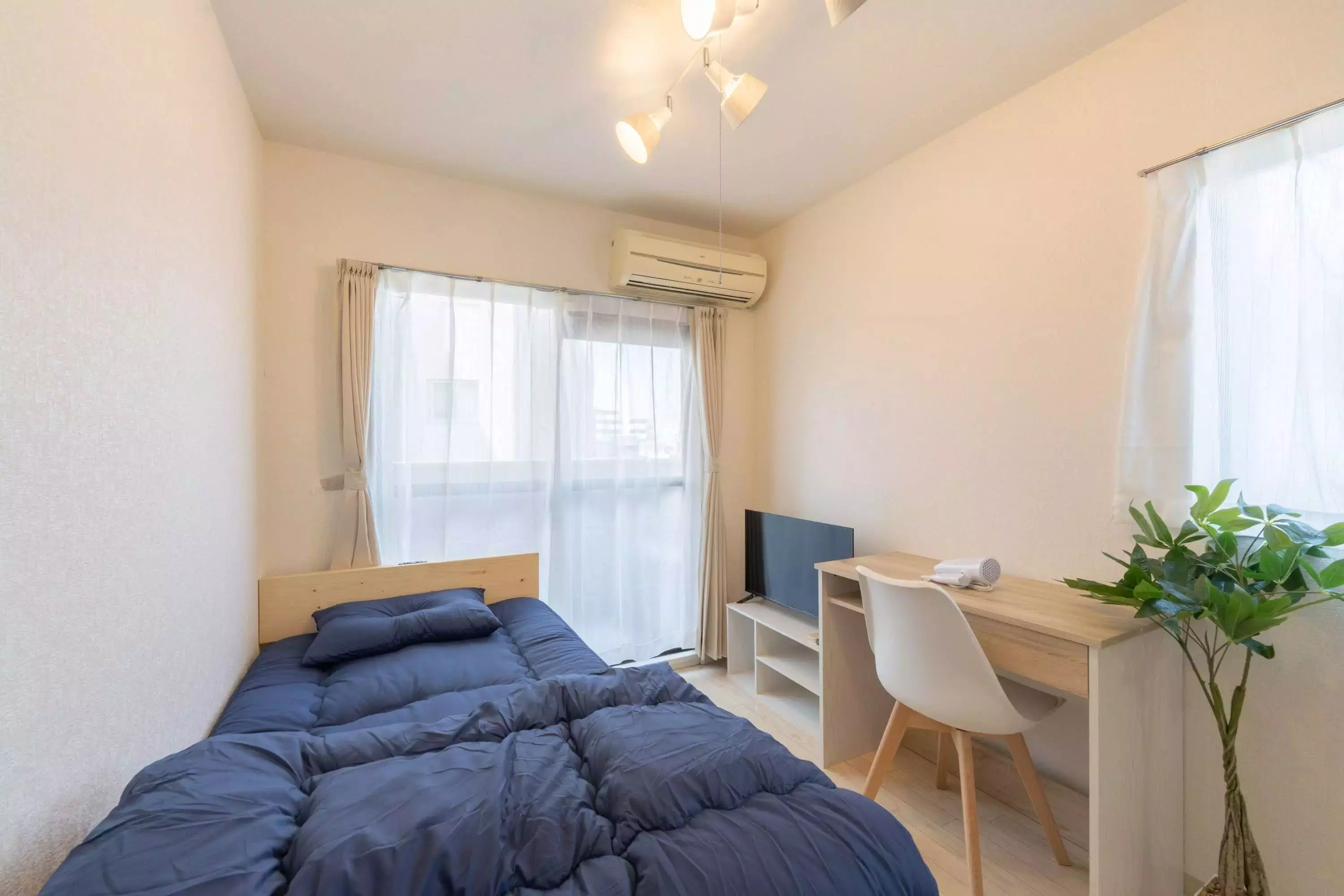
- Want a completely private space? → A furnished apartment with private bathroom and kitchen facilities.
- Want to enjoy socializing too? → A "share house" with a communal living room.
Even if you feel that communal living might not suit you, many problems can be solved by choosing the right type of housing.
How to choose a share house you won't regret
Based on the above, let's summarize how to choose a share house you won't regret. For more detailed information, please see "How to Choose a Share House You Won't Regret! 5 Key Points to Keep in Mind ."
1. Check the room type and property type.
There are various types of share houses, including those exclusively for women, those for working professionals, and those focused on international exchange. The first step is to decide whether you prioritize social interaction or privacy, and then choose a room type that suits your needs (shared living room, private room with lock, or completely private room).
2. Check the management system of the operating company.
Choosing a management company that has a good system in place for things like cleaning frequency, quick response to equipment breakdowns, and a clear communication route in case of problems will give you a completely different level of peace of mind after moving in. Whether they respond to inquiries promptly and courteously is also a good indicator to consider.
3. Check the costs, including the total monthly amount and the cost upon moving out.
Before signing a contract, make sure you understand the total monthly cost, including not only the rent but also common area fees and safety support fees, as well as any costs incurred upon moving out. Knowing the total cost upfront will prevent you from ending up with a higher-than-expected bill.
4. Make your decision based on online information (visiting the store is not required).
Previously, "visiting in person first" was the norm, but now, with photos, 360-degree panoramas, and online tours (video calls), you can check things like cleanliness, size, and the atmosphere of the common areas in considerable detail. If you have any concerns, you can ask the management company, and you can make a thorough assessment without even visiting the property.
Search for a room
Only furnished properties with appliances are listed!
The Cross House system eliminates the anxiety of "don't do it."
Since its establishment in 2007, Cross House has been operating share houses, share apartments, and furnished apartments, serving over 50,000 people to date. We operate primarily in Tokyo, but also in 11 other prefectures (Kanagawa, Saitama, Chiba, Osaka, Aichi, Hyogo, Kyoto, Nara, Fukuoka, and Hokkaido). As an operating company, we address the anxieties that people often tell them to avoid.
Cross House's system to alleviate anxiety
- Privacy : We offer three types of accommodations to choose from, including completely private rooms and private rooms with locks plus shared bathrooms.
- Cleanliness and Maintenance : A cleaning company comes to the common areas once a week, and an emergency contact number is also provided in case of trouble.
- Language concerns : Support available in Japanese, English, Chinese, and Korean. Many foreign nationals also use our services.
- If it doesn't suit you : Free transfer between properties. Transfers across prefectures and changes in room type are also OK.
Three types of housing and estimated costs
| item | Share house | Shared Apartments (SA-XROSS Series) | Furnished apartment |
|---|---|---|---|
| Room configuration | Private room + shared living room + shared bathroom | Private room with lock + shared bathroom facilities (no living room) | A fully private studio apartment/1K with a private bathroom/kitchen area. |
| Rent range | From 24,800 yen | From 40,000 yen | From 50,000 yen |
| Initial cost | 30,000 yen | 30,000 yen | 30,000 yen (with campaign discount; normally 50,000 yen) |
| For people like this | People who want to enjoy interacting with others | For those who want to balance their private life and budget | People who prefer to live completely alone |
All three types of accommodations offer the following benefits: no security deposit, no key money, no brokerage fees , furnished with appliances , move-in as short as 7 days , and free transfers between properties . Minimum rental period is one month, and there are no penalties for early termination.
Let's break down the costs first. In addition to rent, there is a monthly safety support fee (1,500 yen per month, tax included), and for share houses and shared apartments, there is a common area fee of 15,000 yen (including utilities and shared amenities). For example, the cheapest share house would cost approximately 24,800 yen rent + 15,000 yen common area fee + 1,500 yen safety support fee = 41,300 yen per month. A cancellation fee will be charged upon moving out (16,500 yen for share houses / 55,000 yen for furnished apartments, both tax included). When moving between properties, the cancellation fee for the previous property and the initial costs for the new property will be waived (in the case of individual contracts, the initial guarantee fee may be charged again due to a re-screening by the guarantee company).
We offer online viewings and web-based contracts, so you can find an apartment without visiting our office, even if you're overseas. Even if you just want to "hear more about it," that's perfectly fine.
FAQ
Why do people say, "Don't live in a shared house"?
The main reasons are concerns about noise, privacy, and rules regarding common areas. However, these are not problems common to all share houses; they vary depending on the structure of the property, the type of room, and the management system of the operating company. Many of these issues can be avoided by choosing a private room with solid walls and a well-managed property.
Can the downsides of living in a shared house be avoided?
Many problems can be avoided with careful selection. If privacy is a concern, choose a fully private room or a private room with a lock. If you're worried about trouble, choose a management company with regular cleaning and clear rules. There are always ways to mitigate the disadvantages. Checking the type of property and the management system is key.
Are there any shared houses where I can live quietly and at my own pace?
Yes, there are options. If you choose a type of apartment without a shared living room (a shared apartment with a private room with a lock and shared bathroom facilities) or a fully furnished apartment with a private room that includes exclusive use of the bathroom facilities, you can live in a quiet environment similar to living alone, while keeping costs down.
Are there any women-only share houses?
Some properties have female-only areas, floors, or rooms. Availability varies by area and property, so please let us know when you inquire if you have any specific requirements so we can find a property that suits you.
Can I decide on a share house without visiting it in person?
With Cross House, you can check the interior and common areas through photos, 360-degree panoramas, and online viewings (video calls), and you can sign a contract online without having to visit our office. You can even sign a contract from overseas. If the property doesn't meet your expectations, transfers between properties are free, so you can make a decision with peace of mind even without visiting our office.
How much does it cost to live in a shared house each month?
In the case of Cross House, rent for a shared house starts at 24,800 yen. This is in addition to a common area fee of 15,000 yen (including utilities and shared amenities) and a safety support fee (1,500 yen per month, tax included). The cheapest option is approximately 41,300 yen per month. Initial costs are 30,000 yen, and there are no security deposits, key money, or brokerage fees. Knowing the total cost upfront will help you choose a place that fits your budget.
Search for a room
Only furnished properties with appliances are listed!
summary
The reason people often say "stay away from share houses" is due to concerns about noise, privacy, and shared rules. However, many of these issues vary depending on the type of property and the management system of the operating company , and can be avoided if you choose wisely. Share houses themselves are not inherently bad.
You can choose your living style: fully private rooms or private rooms with locks for those who want to live in peace, or rooms with a shared living room for those who want to enjoy socializing. Cross House offers three types of accommodations and addresses the anxieties that people often hear about when choosing a place to live by providing weekly cleaning, multilingual support, and free transfers between properties. You can also choose with peace of mind without visiting our office, thanks to online viewings and web contracts.
First, try searching for a room that suits you based on the area and rent you're interested in.