
Search "Koganecho" in English and you will find posts from ten or fifteen years ago describing a red-light district. Search "is Yokohama safe" and you will find people asking whether the whole city is a problem. Neither picture matches what you will see if you walk out of Koganecho Station today. This guide explains what the reputation is based on, what actually changed, what it costs to live here now, and what renting in this part of Yokohama really involves if you are not Japanese.
Short answer: Koganecho is a normal residential area now
Koganecho sits in Naka Ward, Yokohama, three stops from Yokohama Station on the Keikyu Main Line. Yokohama as a whole is not a dangerous city by any international measure, and Koganecho specifically has spent close to two decades being deliberately rebuilt after a police crackdown ended the illegal businesses that gave the name its reputation.
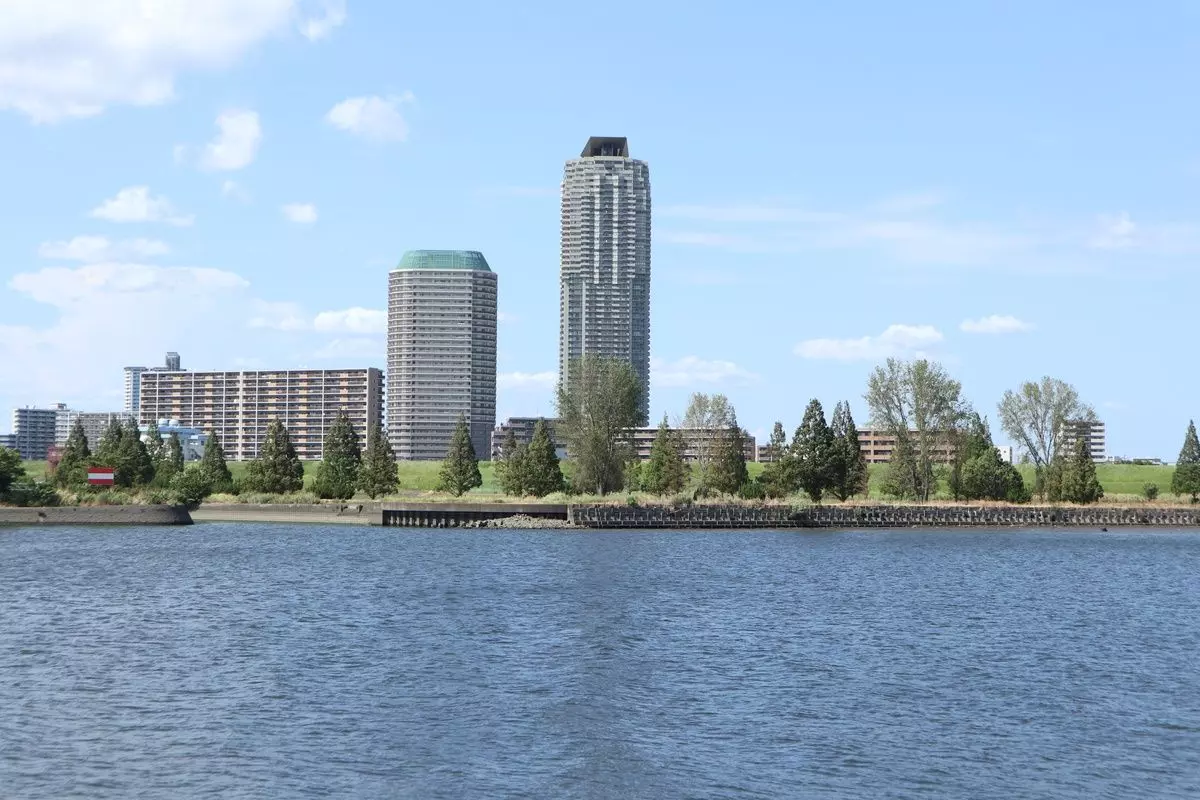
What you get today is a low-rise neighbourhood along a river, with galleries and small studios under the railway viaduct, an annual art festival, and rents roughly ¥20,000 a month below Yokohama Station for the same size of room. The honest caveat is that it is not a polished area. It is working-class, a little rough around the edges, and quiet at night. Whether that reads as "authentic" or "uncomfortable" depends entirely on what you are used to.
Why the name still comes up
Until 2005, the arches under the Keikyu viaduct between Koganecho and Hinodecho housed around 250 tiny unlicensed bars that operated as brothels. It was one of the best-known such districts in the Kanto region, and it was written about extensively — which is exactly why English-language search results about it are so persistent. Text published in 2008 does not disappear because the street changed in 2010.
What actually changed
In January 2005, Kanagawa Prefectural Police launched a sustained crackdown — locally known as the "Bye-Bye Operation" — that closed the businesses. Rather than leave the arches empty, the city, the railway operator Keikyu and a residents' association that had formed two years earlier turned them into studios and galleries, and started an art festival, Koganecho Bazaar, in 2008. It has run every year since. Artists moved in, cafés followed, and the street lighting and pavements were rebuilt. The change was not accidental — it was a twenty-year urban policy, and it is still running.
Where Koganecho is and how far things are
Getting around
Koganecho Station is on the Keikyu Main Line, which is the fast private line running between Yokohama and Shinagawa in Tokyo. From the platform:
- Yokohama Station — about 5 minutes, no transfer
- Sakuragicho and Minato Mirai — about 10 minutes
- Shinagawa (Tokyo) — about 25 minutes
- Tokyo Station — about 35 minutes
- Haneda Airport — about 30 minutes, one transfer
That last one matters more than people expect. If you fly in and out of Japan often, Keikyu access to Haneda is one of the genuine practical advantages of living on this side of Yokohama.
What is within walking distance
Hinodecho is one stop away and walkable in about eight minutes. Kannai — the administrative and business centre of Yokohama, and the closest thing the city has to a downtown — is about 15 minutes on foot. Chinatown and the waterfront at Motomachi are 25 to 30 minutes on foot, or a short ride. In practice you rarely need the train for anything except commuting.
If you want to compare the surrounding stations directly, we operate rooms near Yokohama Station, Sakuragicho, Minami-ota (one stop from Koganecho) and Kawasaki.
Search for a room
Only furnished properties with appliances are listed!
What the neighbourhood is actually like
The arches: Koganecho Bazaar and the studios
The stretch under the viaduct is the thing visitors notice first. Roughly a kilometre of former bar units now holds artist studios, small galleries, a bookshop or two and a handful of bars and coffee places. During Koganecho Bazaar, usually held in autumn, the whole strip becomes an exhibition and international artists take short residencies here. Outside festival season it is quieter, but the studios are still occupied and most are open to the street.
The Ooka River
The Ooka River runs directly past the station, and the cherry trees along it are one of the better-known hanami spots in Yokohama — the Ooka River Cherry Blossom Festival in late March or early April draws crowds from across the city. The rest of the year the riverside path is simply where people run, walk dogs and cycle. Having a continuous green corridor through a dense city is not a small thing when you live in a small room.
Shops and eating
This is not a shopping district. What you get is practical: supermarkets, a covered shopping street, an unusually high density of cheap and genuinely good izakaya and small restaurants, and — because Naka Ward has Yokohama's largest foreign population — Thai, Vietnamese, Chinese and Korean food that is cooked for people who grew up eating it. For groceries and anything larger, Yokohama Station is five minutes away.
Browse share houses in Kanagawa
Koganecho compared with the areas around it
Average rent for a 1K unit within a ten-minute walk of each station, using LIFULL HOME'S 2026 market data:
| Station | 1K average | Character | Suits |
|---|---|---|---|
| Koganecho | ¥84,900 | Riverside, low-rise, art district | Cost-conscious, doesn't need polish |
| Hinodecho | ¥93,300 | Old shopping streets, very local | Wants Kannai on foot |
| Kannai | ¥93,000 | Offices, stadium, nightlife | Works in central Yokohama |
| Yokohama Station | ¥108,700 | Major transport hub, department stores | Commutes in several directions |
| Minato Mirai | Very limited 1K stock | Waterfront towers, mostly family units | High budget, wants the view |
Two things stand out. First, Koganecho is roughly ¥24,000 a month cheaper than Yokohama Station for a comparable room — close to ¥290,000 a year — while still being five minutes from it. Second, Minato Mirai barely competes at this size: it is built around family apartments in towers, and the few studios there average over ¥180,000. If you were picturing Minato Mirai as your Yokohama base on a single income, that number is the reality check.
Search for a room
Only furnished properties with appliances are listed!
What it costs to actually move in
The part that catches people out
The monthly rent is not the number that decides whether you can move. On a conventional Japanese lease you are typically asked for, up front:
- Deposit (shikikin) — one to two months
- Key money (reikin) — one to two months, non-refundable
- Agency fee — around one month
- Guarantor company fee — around half to one month
- Fire insurance and a lock change — ¥20,000 to ¥40,000
- First month's rent in advance
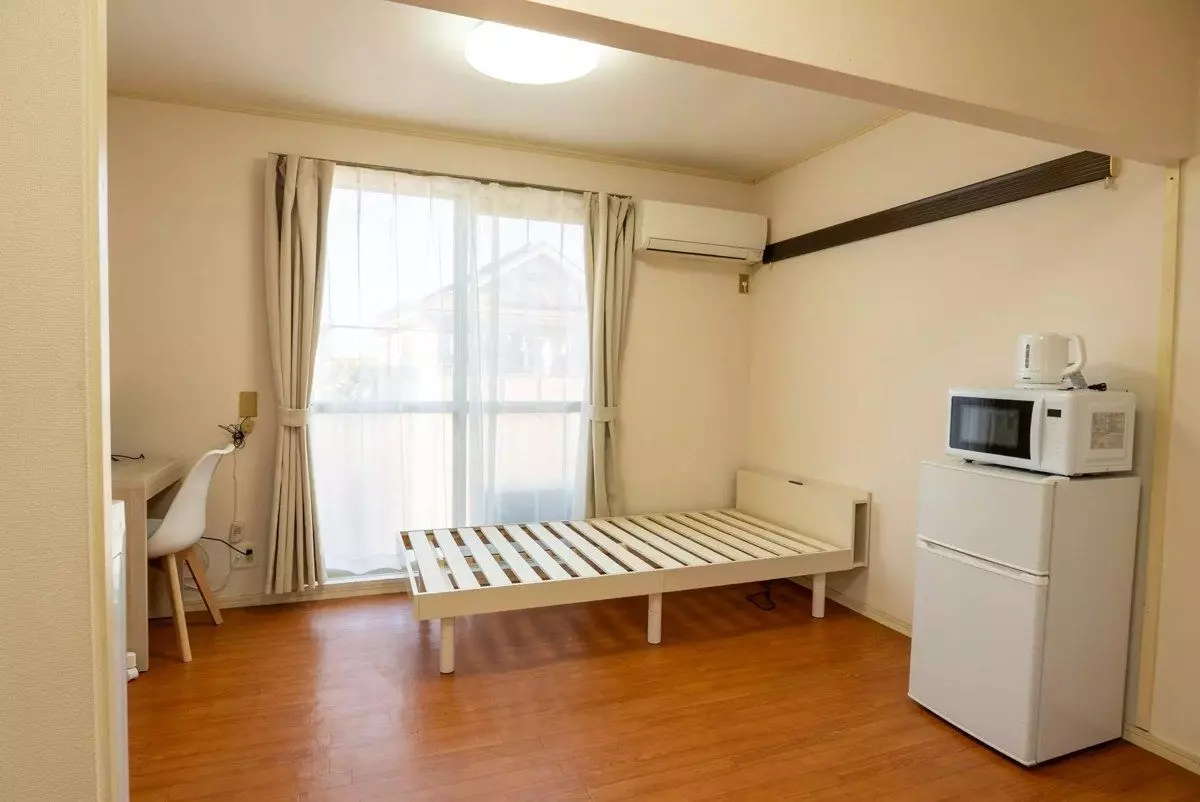
For an ¥85,000 room in Koganecho, that lands somewhere between ¥380,000 and ¥520,000 before you have bought a fridge. Then there is furniture: a bed, a fridge, a washing machine and a microwave for a single room is realistically another ¥150,000 to ¥250,000 new.
On top of the money, there is the screening. Many landlords will not accept an applicant without a Japanese guarantor, and some will not accept foreign residents at all — legally grey, widely practised, and difficult to argue with when you need somewhere to live next month.
The alternative
XROSS HOUSE operates share houses and furnished apartments across eleven prefectures, including Kanagawa, and the model is built around exactly this problem:
- No deposit, no key money, no agency fee
- Initial cost of ¥30,000 for a share house room, and ¥30,000 for a furnished apartment under the current campaign (normally ¥50,000)
- Furniture and appliances already in the room
- No Japanese guarantor to find — a guarantee company is arranged for you. Its initial and monthly fees are charged separately and are quoted to you before you sign
- A support fee of ¥1,500 a month on every property. Share houses and shared apartments add a common-area fee of ¥15,000 that covers water, electricity, gas, Wi-Fi and shared supplies; in a furnished apartment you contract utilities yourself, or take an optional all-in plan at ¥15,000 a month
- Contracts from one month, one month's notice to leave, and no early-termination penalty
- Moving to another of our rooms waives both the leaving fee on the old room and the initial cost on the new one. On a personal contract the guarantee company re-screens you, so its initial fee can apply again
Put together, a share house room costs rent plus ¥15,000 plus ¥1,500 plus the guarantee company's monthly fee, with ¥30,000 once at move-in. There is no separate bill later for utilities or internet. Current rents by area are on the pricing page, since they move with the market rather than staying fixed.
When you compare, compare what actually leaves your account each month rather than the headline rent. The ¥84,900 in the table above does not include utilities — realistically ¥10,000 to ¥15,000 a month for one person — or internet at another ¥4,000 to ¥5,000, and it comes with that ¥380,000 to ¥520,000 due on signing. In a share house both of those are already inside the common-area fee, and the money due at move-in is ¥30,000. The guarantee company's fees depend on your contract, so they are quoted to you individually when you apply. What actually leaves your account on move-in day is the ¥30,000 plus your first month's rent, common-area fee, support fee and the guarantee company's initial fee — not nothing, but roughly the low hundreds of thousands rather than the ¥380,000 to ¥520,000 above.
One honest caveat about that comparison: a share house private room has a lock on the door, but the kitchen, bathroom and toilet are shared. In a 1K they are all inside your unit. You are not buying the same thing more cheaply — you are trading shared water-using space for a much lower entry cost and a fixed monthly bill. If you want the whole unit to yourself, the furnished apartments are the closer equivalent.
Who Koganecho suits, and who it doesn't
It works well if
You want central Yokohama access without central Yokohama rent. You are interested in the art and music scene, or you simply want to live somewhere with a bit of texture. You value being near a river and being able to walk to most of what you need. You fly often and want Haneda within half an hour.
It works less well if
You want a quiet, uniform residential street with new buildings and a supermarket at the corner — the area west of Yokohama Station or the Denen-toshi Line suburbs will suit you better. You will be uncomfortable walking past groups of people drinking outside small bars at night. Or you have children and want a large park and modern schools within a few minutes' walk.
The honest summary is that Koganecho rewards people who are curious about where they live and frustrates people who want everything predictable.
See furnished apartments in Kanagawa
Search for a room
Only furnished properties with appliances are listed!
Frequently asked questions
Is Koganecho dangerous at night?
No, in the sense that violent crime against strangers is rare across Japan and Yokohama is no exception. The streets under and around the viaduct are quiet after about ten, and there are fewer people about than near Yokohama Station, so use the same judgement you would in any low-traffic area. The riverside path is well used in the evening.
Is Yokohama safe compared with Tokyo?
Broadly the same. Yokohama is Japan's second-largest city and its crime rate per capita is comparable to Tokyo's — meaning low by international standards. Differences between neighbourhoods within either city are larger than the difference between the two cities.
How long is the commute from Koganecho to Tokyo?
About 25 minutes to Shinagawa and about 35 to Tokyo Station, with the Keikyu Main Line doing most of the work. It is a realistic daily commute if you work in southern or central Tokyo, and a long one if you work in Shinjuku or Ikebukuro.
Can I rent in Koganecho without a Japanese guarantor?
On a conventional lease, usually not — most landlords require either a Japanese guarantor or an approved guarantor company, and some require both. Share houses and furnished-apartment operators generally handle this internally, which is the main reason people in their first year in Japan start there.
Is Koganecho good for a woman living alone?
Plenty of women live in the area. The practical advice is the same as anywhere: prioritise a room on the second floor or above, look for an auto-locking entrance, and walk the route from the station to the building once at night before you sign anything. That last step tells you more than any online rating.
Does XROSS HOUSE have rooms near Koganecho?
We operate across Kanagawa, including central Yokohama and the stations either side of Koganecho. Availability changes weekly, so the area page is the place to check what is open right now.
In short
Koganecho's reputation is a piece of history that the internet has kept alive past its expiry date. The district that produced it was closed by police two decades ago and deliberately rebuilt as an arts quarter. What remains is an unpolished, well-connected, genuinely affordable part of central Yokohama — about ¥24,000 a month below Yokohama Station for the same room, five minutes from it, and half an hour from Haneda.
If the barrier is the move-in cost rather than the neighbourhood, that is the part we can help with. Tell us your budget and your nearest station and we will tell you what is actually available.