
What's the actual standard of living like on a net income of 230,000 yen?
A net income of 230,000 yen is considered "average to slightly above average" in Japan as a whole. Among working adults in their 20s, it's on the higher side, and living alone is certainly possible if you don't live extravagantly. However, the reality is that living standards are greatly influenced by factors such as rent, location, and lifestyle.
For example, in urban areas, rent is high, and if you allocate 60,000 to 80,000 yen to rent, there's not much money left over. You then need to cover utilities, communication costs, food, daily necessities, and social expenses, which often leaves you with little financial leeway.
Conversely, if you can keep your rent low or receive a housing allowance from your company, you'll have more money left over for savings or hobbies. In other words, a comfortable standard of living on a net income of 230,000 yen depends on how you manage your spending. By reviewing your fixed expenses and managing your spending prudently, a comfortable life living alone is entirely possible.
What is the gross monthly income if the take-home pay is 230,000 yen?
For someone with a net monthly income of 230,000 yen, their gross monthly income (total pay) is approximately 290,000 to 300,000 yen.
From that amount, various social insurance premiums and taxes such as health insurance, employee pension, employment insurance, income tax, and resident tax are deducted, and the amount actually deposited into your bank account is your "take-home pay."
If your take-home pay, including overtime and allowances, is 230,000 yen, it's not uncommon for your base salary to be around 250,000 yen. The amount deducted varies slightly depending on the region and company, but generally, you can expect your take-home pay to be about 75-80% of your gross pay. Note that factors such as whether or not you receive a bonus, year-end tax adjustments, and whether or not you have dependents will also affect your take-home pay.
Is a net income of 230,000 yen a lot or a little for someone in their 20s?
The average take-home pay for people in their early twenties (new graduates to those in their third year of employment) is generally considered to be around 180,000 to 210,000 yen. Therefore, a take-home pay of 230,000 yen can be considered "slightly higher" or "above average" compared to their peers.
If you're consistently earning 230,000 yen per month, especially without bonuses, you could say you've had a good start financially.
However, in urban areas, rent and living expenses are high, so even with a high income, expenses tend to be high, and some people feel that they have "less money to spend freely than they expected." Also, when you take into account expenses for socializing, hobbies, beauty treatments, and self-investment, the amount of disposable income you have varies greatly depending on where you live and your lifestyle.
Why do some people find it difficult to live alone on a net income of 230,000 yen?
Many people find it difficult to live alone even with a net income of 230,000 yen. One reason for this is that fixed expenses such as rent make up a large portion of their income.
When rent is around 60,000 to 80,000 yen, it takes up more than a third of your take-home pay, and you have to manage to cover utilities, communication costs, food, insurance, and daily necessities with the remaining amount. Also, unexpected expenses (hospital bills, appliance breakdowns, weddings and funerals, etc.) can make saving money difficult or even lead to a deficit.
Furthermore, rising prices and electricity costs are also impacting household finances. The feeling that "I can get by, but I don't have any extra money" and "I can't shake off my anxieties about the future" directly translates to the feeling that "living alone is tough."
Setting the right rent is key! The gap between your ideal rent and reality.
The largest expense for someone living alone is "rent."
Setting your rent is a crucial factor in living comfortably on a net income of 230,000 yen. While the general guideline for rent is "one-third of your net income," in actual living costs and savings goals, it may be better to keep it even lower. How you set your rent can make a big difference in the amount of money you have available for discretionary spending and your future savings, so careful consideration is necessary.
Here, we will explain in detail, using simulations, the gap between ideal rent amounts and reality, and the impact of company housing and rent subsidies.
Is it true that the general guideline for rent is "one-third of your take-home pay"?
A common guideline is that rent should be kept to within one-third of your take-home pay.
If your take-home pay is 230,000 yen, a rough guideline would be up to approximately 76,000 yen. However, this is just a guideline, and the appropriate amount will vary depending on other fixed expenses and your lifestyle.
For example, if your fixed expenses such as smartphone bills, insurance premiums, and student loan repayments are high, keeping your rent to around 25% (approximately 57,000 yen) will give you more financial flexibility. Conversely, if your rent is too high, it will put a strain on your daily living expenses and savings. Determining the "right rent percentage for you" is key to a stable life living alone.
Is rent of 70,000 to 80,000 yen expensive? Actual simulation
A net income of 230,000 yen with rent of 70,000 to 80,000 yen is a bit on the high side.
If the rent is 80,000 yen, that leaves 150,000 yen. From this, you'll need to cover utilities (10,000 to 15,000 yen), communication costs (smartphone and internet for about 10,000 yen), food (around 30,000 yen), and then another 30,000 to 50,000 yen for daily necessities, socializing, insurance, etc.
As a result, I'm left with just enough money—around 10,000 to 20,000 yen—to spend on savings or hobbies. If the rent were in the 60,000 yen range, I could live a more comfortable life. Of course, rent tends to be higher in urban areas if you want a good living environment and are close to a train station, but setting a manageable rent can make a big difference in your peace of mind.
What are the differences when company housing or rent subsidies are provided?
If you have company housing or a housing allowance, living expenses become much easier even with a net income of 230,000 yen.
For example, if you have a 30,000 yen subsidy for an apartment with a rent of 80,000 yen, your actual burden will be 50,000 yen. This comes out to about 22% of your take-home pay, leaving you with more leeway for food and utilities, and making it easier to save money. In addition, company housing often has very low rents (20,000 to 30,000 yen), which directly contributes to financial stability.
Whether or not a company offers a rent subsidy program is an important factor to consider when choosing a job or changing jobs. Having a subsidy also has the advantage of making it easier to choose a room that is slightly more expensive than the market rate.
Search for a room
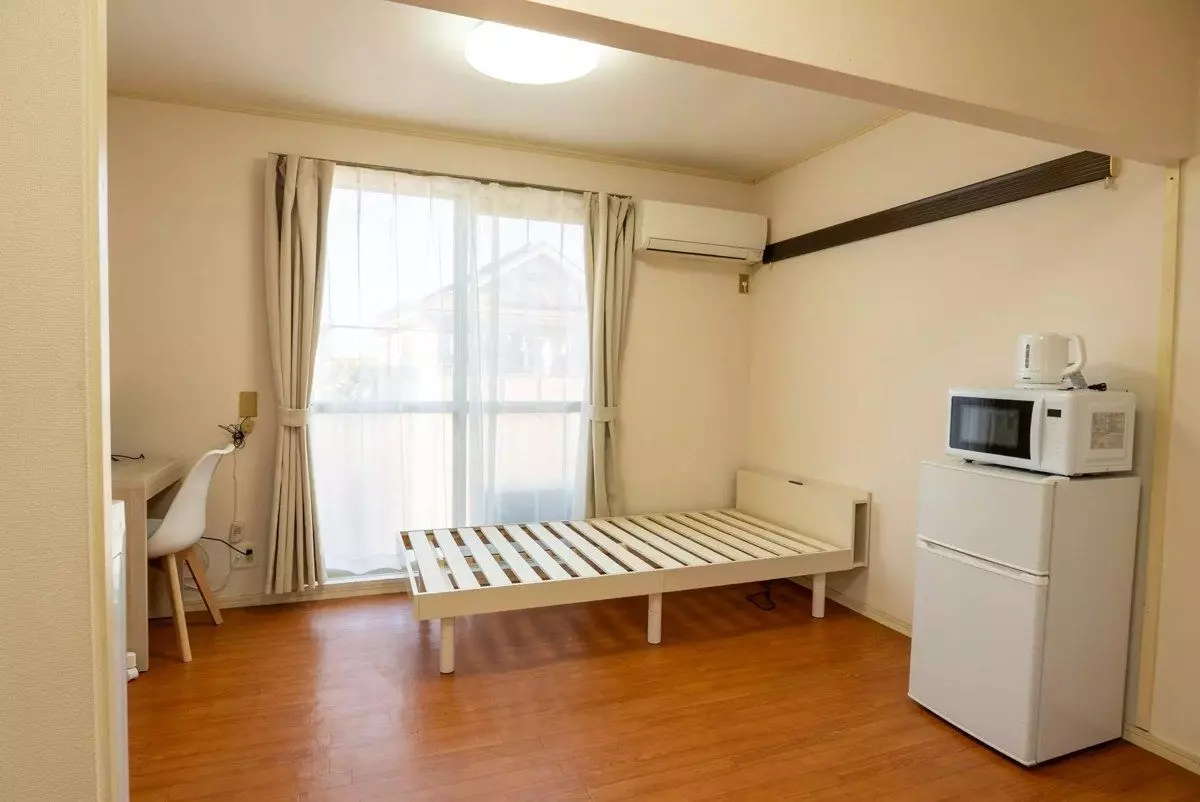
Only furnished properties with appliances are listed!
A realistic breakdown of living expenses and budgeting tips for a net income of 230,000 yen.
For someone living alone on a net income of 230,000 yen, various expenses such as rent, utilities, communication costs, food, daily necessities, and social expenses add up. To stabilize your life, it's important to understand the balance of spending in each category and manage your finances within reasonable limits.
The amount of money you have left over for other expenses varies greatly depending on how you set your rent, so understanding the overall breakdown and identifying areas where you can save money is crucial for financial stability. Here, we will introduce the average breakdown of living expenses and specific saving techniques for each category where expenses tend to pile up.
Examples of average fixed and variable cost breakdowns (cases by rent)
Let's look at an example of living expenses for a single person with a net income of 230,000 yen, broken down by rent.
[If the rent is 60,000 yen]
- Rent: 60,000 yen
- Utilities (water, electricity, gas): 12,000 yen
- Communication expenses (smartphone and internet): 10,000 yen
- Food expenses: 30,000 yen
- Daily necessities, entertainment, and social expenses: 25,000 yen
- Insurance/Savings: 10,000 yen
- Savings: 20,000 yen
- Total: 167,000 yen
[In the case of a rent of 80,000 yen]
- Rent: 80,000 yen
- Utilities (water, electricity, gas): 12,000 yen
- Communication expenses (smartphone and internet): 10,000 yen
- Food expenses: 30,000 yen
- Daily necessities, entertainment, and social expenses: 25,000 yen
- Insurance/Savings: 10,000 yen
- Savings: 20,000 yen
- Total: 187,000 yen
Assuming other expenses remain the same, this would necessitate cutting back on savings and entertainment expenses. Thus, rent has a significant impact on monthly income, and setting reasonable fixed expenses is key to financial stability.
Points where expenses tend to be high and ways to save money
For those living alone, the four main categories of expenses tend to be high: food, communication, utilities, and socializing.
Food expenses, in particular, can easily exceed 30,000 to 40,000 yen per month if you eat out frequently. The key to saving money is "cooking at home." By utilizing meal prep and freezing, it's possible to keep monthly expenses down to around 20,000 yen. Communication costs can also be reduced by more than 5,000 yen per month by switching to a low-cost SIM card.
You can effectively reduce utility costs by simply adjusting your air conditioner's temperature settings or switching to LED lighting. Similarly, setting a monthly budget for entertainment expenses in advance can prevent unnecessary spending.
These small adjustments add up to the key to transforming something that feels "too difficult" into something that feels "just right."
5 tips for living comfortably while saving money on a net income of 230,000 yen
To live comfortably on a net income of 230,000 yen while living alone, you need to think of "saving money" not as "enduring hardship," but as "finding ways to use money wisely."
By reviewing fixed expenses, learning tips for everyday shopping, and adopting manageable saving habits, you can create a more comfortable and stress-free lifestyle.
Here are five practical money-saving tips that will help you reduce your expenses without lowering your quality of life. These are all things you can start doing today, so please try incorporating them into your daily life.

Make cooking at home a habit
Among all the ways to save money, "cooking at home" is the most effective. Eating out five times a week at 1,000 yen per meal would cost over 20,000 yen a month, but if you mainly cook at home, you can keep it down to around 15,000 yen a month.
In particular, utilizing "make-ahead" and "freezing" methods can significantly reduce both the effort involved and the cost of food. By making large batches of curry, soup, pasta, etc., and storing them, you can shorten meal preparation time and reduce the temptation to eat out or buy convenience store food. It's also very good for your health, so it's a recommended habit that saves money while improving your quality of life.
Utility costs can be reduced through clever planning.
Utility costs can vary by 1,000 to several thousand yen depending on how you manage them.
The key is to set your air conditioner to "automatic mode" and avoid raising or lowering the temperature more than necessary. Also, simply switching to LED lighting or adjusting the refrigerator's temperature setting according to the season can help save energy.
If you want to reduce your gas bill in winter, using the shower is more effective than reheating the bathwater. You can also save money by reviewing your electricity and gas company's rate plans. These are expenses that can be reduced simply by being mindful, so the difference each month can be significant.
Reviewing budget smartphones and internet services
You can save over 5,000 yen per month just by reviewing your smartphone and internet communication costs. Switching from a major carrier to a low-cost SIM can reduce your monthly smartphone bill from 8,000 yen to around 1,500 yen in some cases.
When it comes to Wi-Fi, if you live alone, it's important to choose a plan that suits your needs, such as a pocket Wi-Fi device or a mini fiber optic plan. Also, if you have any unnecessary options in your contract (voicemail, video services, etc.), cancel them immediately. Fixed expenses accumulate every month, so reviewing them early will directly lead to long-term savings.
Shopping is all about "buying in bulk and using points."
You can prevent unnecessary spending by simply being mindful of "buying in bulk" when shopping for daily necessities and groceries. By taking advantage of sale days and bulk supermarkets, and buying a week's worth of goods at once, you can reduce unnecessary "impulse purchases."
Furthermore, by using cashless payment methods and point apps (such as Rakuten, PayPay, and d-points), you can achieve a de facto discount effect. By regularly keeping track of "where and what to buy to get the best deal," you can save money efficiently. The key to shopping is to "do it strategically."
Savings should be done "first," not "what's left over."
If you only save what's left over, you won't accumulate much money, and saving will be difficult. A good approach is to "save first," which involves transferring a portion of your savings to a separate account immediately after payday.
For example, if you decide to save 20,000 yen each month, manage that amount separately from your living expenses. Setting up automatic transfers will help you continue saving without even realizing it. Also, using systems that automatically save money, such as NISA (Nippon Individual Savings Account) or fixed deposits, is one way to save effectively. It's perfectly fine to start with small amounts. Making it a habit will lead to peace of mind in the future.
Search for a room
Only furnished properties with appliances are listed!
How can I save money while living alone on a net income of 230,000 yen?
Living alone on a net income of 230,000 yen can easily feel like "I'm barely making ends meet...saving money is impossible." But actually, by reviewing fixed expenses and being a little more mindful of spending, it's entirely possible to save 10,000 to 30,000 yen per month, although this varies from person to person.
The important thing is not to "save whatever's left over," but to "secure savings first." Create rules that suit your household budget and find a style that you can maintain without difficulty.
For future security and achieving your goals, even small amounts of consistent saving are key. Here, we'll discuss ideal savings amounts, ways to maintain motivation, and how to balance your spending.
How much should you ideally save each month?
If your take-home pay is 230,000 yen, the ideal amount to save is approximately 20,000 to 30,000 yen per month (10% to 15%).
Some people save around 50,000 yen if they have some financial leeway, but it becomes difficult to continue if you push yourself too hard. It depends on your savings goals, but setting a goal of "300,000 yen per year" is a realistic one.
Furthermore, if you work in a company that provides bonuses, you can save over 500,000 yen per year just by putting your entire bonus into savings. The key to success is to start with "at least 10,000 yen" and gradually increase the amount as you get used to it.
How to maintain motivation through rewards and investments
Saving money and cutting back on expenses can easily lead to stress.
In such cases, it's a good idea to set aside a "reward day" once a month. By incorporating small pleasures such as eating out, enjoying your favorite sweets, or taking a short trip, you can reset your mood.
Furthermore, by combining it with investments that can be started with small amounts, such as Tsumitate NISA or point-based investing, you can also experience the joy of watching your money "grow." By balancing saving, investing, and rewarding yourself, you can maintain motivation while having a positive relationship with money.
How to use money in line with your life plan
It's important to consider the balance between savings and expenses in line with your future plans—your life plan.
For example, if you are planning to change jobs, get married, move, or buy a car within the next few years, you will need a financial plan for those events. Separating and managing short-term goals (travel, moving expenses) from long-term goals (retirement funds, asset building) will eliminate vague anxieties and bring consistency to your actions.
Furthermore, spending money on experiences that you can only have now is also an important investment in yourself. It's not just about saving money, but also about having the perspective to identify "valuable spending."
How to cope and think about things when someone with a net income of 230,000 yen feels that "living alone is tough."
Even with a net income of 230,000 yen, many people feel that they are "barely making ends meet," "unable to save money," and "lack peace of mind." In such cases, the first step is to clearly identify "what is making things difficult."
For example, the reasons vary from person to person, such as rent being too high, fixed expenses being a burden, or feelings of loneliness being unbearable. The important thing is that "there are surprisingly many options for changing your lifestyle." Instead of stubbornly clinging to your current lifestyle, sometimes just slightly changing your environment can make a big difference.
Here, we'll introduce two practical and easy-to-implement solutions: "lowering your rent" and "considering living in a shared house."
The option of lowering rent by moving
When you feel like you're struggling financially, the first thing you should review is your rent. Rent is a fixed expense that makes up the largest portion of your spending, and simply reviewing this can create a lot of breathing room in your household budget.
For example, if your current rent is 75,000 yen, lowering it by just 10,000 yen would save you 120,000 yen per year. If you are flexible with your requirements, such as being a little further from the station, being in an older building, or having a combined bathroom and toilet, you can definitely find properties with lower rent.
Reviewing your rent can often improve your quality of life, allowing you to save money or have more financial flexibility in other areas.
The option of living in a shared house
For people who find living alone mentally and financially challenging, a shared house is a viable option.
Many shared houses offer rent, utilities, and internet included for around 50,000 yen, significantly reducing living costs. Furthermore, many come furnished with appliances, further lowering initial expenses.
Furthermore, it's recommended for those who want to foster connections with others and reduce feelings of loneliness. While it may not be suitable for those who value their private space, it's definitely worth considering as a flexible option, especially now when many people find living alone difficult.
Search for a room
Only furnished properties with appliances are listed!
summary
While a net income of 230,000 yen might seem sufficient for living alone, many people find it difficult due to rent, fixed expenses, and rising prices. However, it is possible to maintain a comfortable lifestyle without sacrificing quality of life through daily efforts such as reviewing rent, optimizing spending, cooking at home, and utilizing affordable smartphones.
Furthermore, incorporating automatic savings and small-scale investments can alleviate anxieties about the future. The key to household budget management is not "increasing income," but rather "managing spending and saving consistently."
Making choices that suit your lifestyle and managing your money wisely is the shortest path to a comfortable life living alone.