Can Foreigners Rent an Apartment in Tokyo?
Foreigners can and do rent apartments in Tokyo every day. There is no law against it, and a foreign residence status (visa) plus a residence card is enough to qualify for most rentals. What trips people up is not eligibility but the process: guarantor rules, upfront money, and a small number of landlords who prefer Japanese tenants. Understanding the system removes most of the friction.
In 2026, two things are working in your favour. Professional guarantor companies have largely replaced the old "find a Japanese friend to co-sign" model, and a growing segment of furnished, foreigner-friendly housing is built specifically for international residents. If you want the legal detail on signing a lease as a non-resident or new arrival, see our dedicated guide on whether foreigners can sign a lease in Japan.
Why It Can Be Harder for Foreigners to Rent in Tokyo
The difficulty is real but specific. Knowing where it comes from tells you exactly what to prepare for.
Language and paperwork
Most listings, contracts, and landlord communications are in Japanese, and real estate terms are specialised even for fluent speakers. Miscommunication is a landlord's main worry, so English-speaking support removes a large part of the objection.
The guarantor requirement
Renting in Japan traditionally required a personal guarantor — a Japanese national who co-signs and takes financial responsibility if rent goes unpaid. Few foreigners have that network. Professional guarantor companies now fill this role in most of the market.
Landlord reluctance and short residence history
Some landlords still prefer Japanese tenants, often out of unfamiliarity rather than anything else. A short stay in Japan, a new visa, or self-employment can also draw extra scrutiny. We cover the specific reasons applications get declined, and how to avoid them, in why apartments reject foreigners in Japan.
Search for a room
Only furnished properties with appliances are listed!
The Fast Path: Foreigner-Friendly and Furnished Housing
The simplest way to skip most of the friction is to rent housing designed for international residents. "Foreigner-friendly" (外国人歓迎, gaikokujin kangei) in practice means English-speaking support, flexibility on the guarantor, plainer contracts, and often no key money.
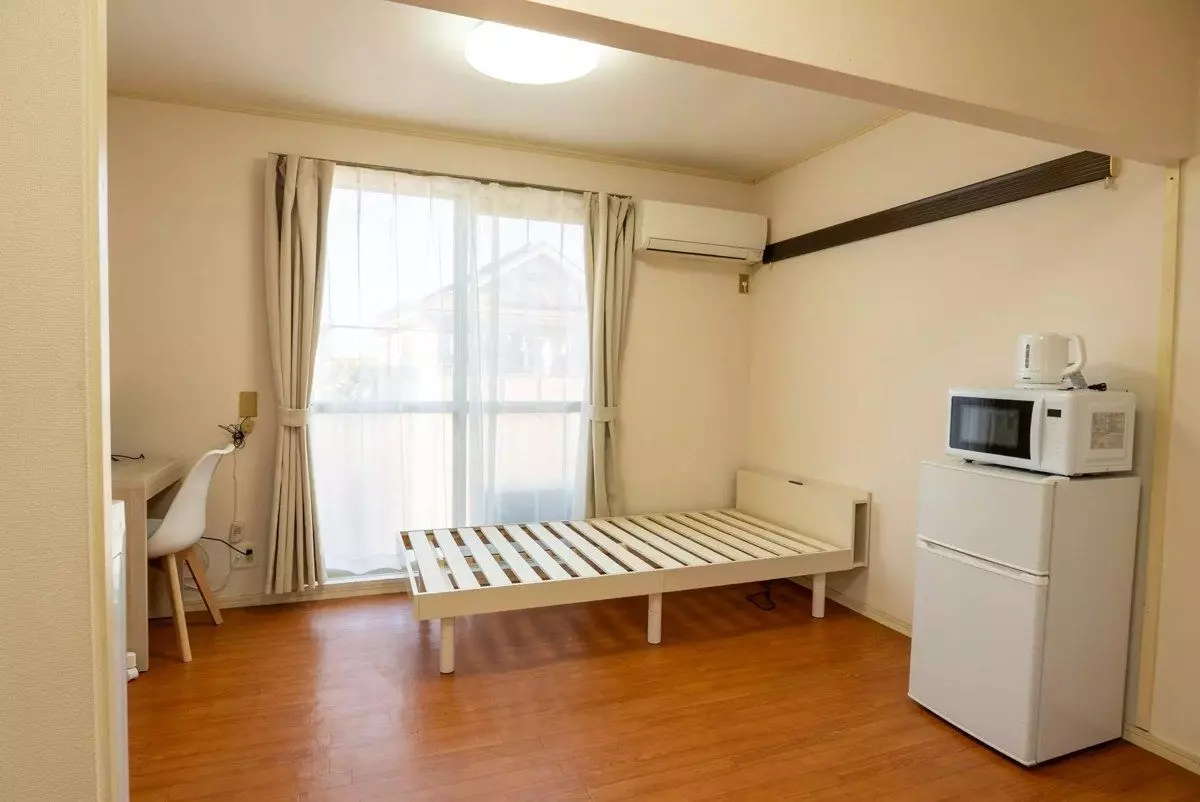
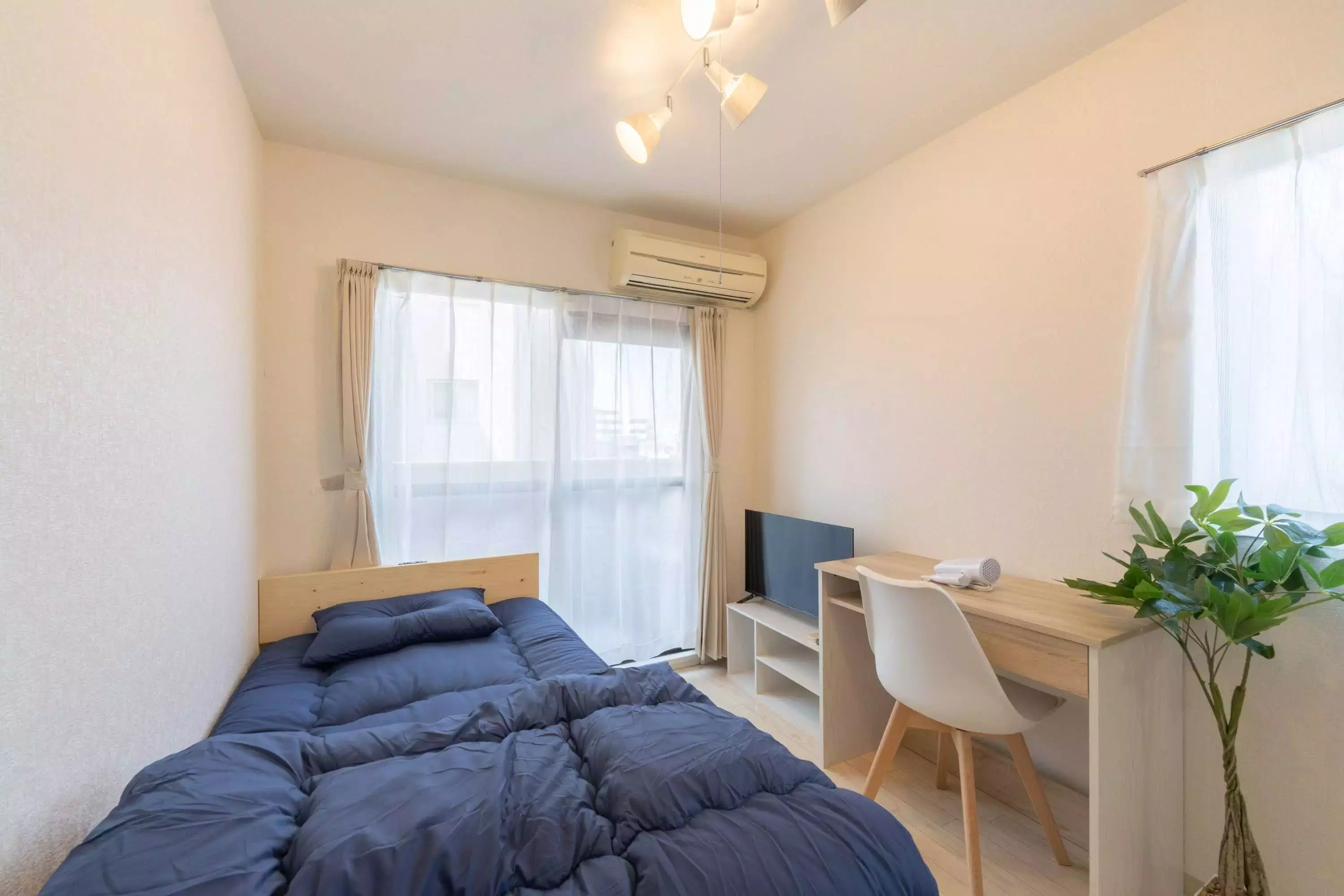
Furnished housing solves a second problem: a standard Tokyo apartment comes empty, and furnishing it can cost ¥200,000–¥400,000 (roughly $1,300–$2,700 USD) before you sleep there. Furnished options remove that outlay and the hassle of disposing of everything when you leave — which matters most for stays under two or three years.
This is the model XROSS HOUSE operates. Furnished share houses and furnished private apartments come with appliances and furniture included, English-language support, and low, transparent move-in costs. For the full breakdown of layouts and how furnished units differ, see costs, areas, and foreign-friendly housing.
Share House vs Private Apartment: Which Suits You?
One of the first decisions is whether to take a private apartment or a room in a share house. Both are valid; the right answer depends on budget, length of stay, and how much privacy you need.
Share houses
In a share house each resident has a private bedroom and shares the kitchen, bathroom, and living area. Move-in costs are far lower — often no deposit and no key money — utilities are usually bundled, and it is the quickest way to build a social circle when you arrive. The trade-off is shared space and less control over your environment. Our full walkthrough is in the Tokyo share houses guide.
Private apartments
A private apartment gives you your own kitchen, bathroom, and rules. It suits people with stable income who are settling in for the long term. The cost is higher upfront and the application is stricter.
A practical rule: if you are new to Tokyo, staying under a year, or on a tight budget, a share house or a furnished share apartment is usually the smarter start. If you are settled and want independence, a private furnished apartment is worth the extra effort. For a deeper comparison of renting private units, see renting an apartment in Japan as a foreigner.
Search for a room
Only furnished properties with appliances are listed!
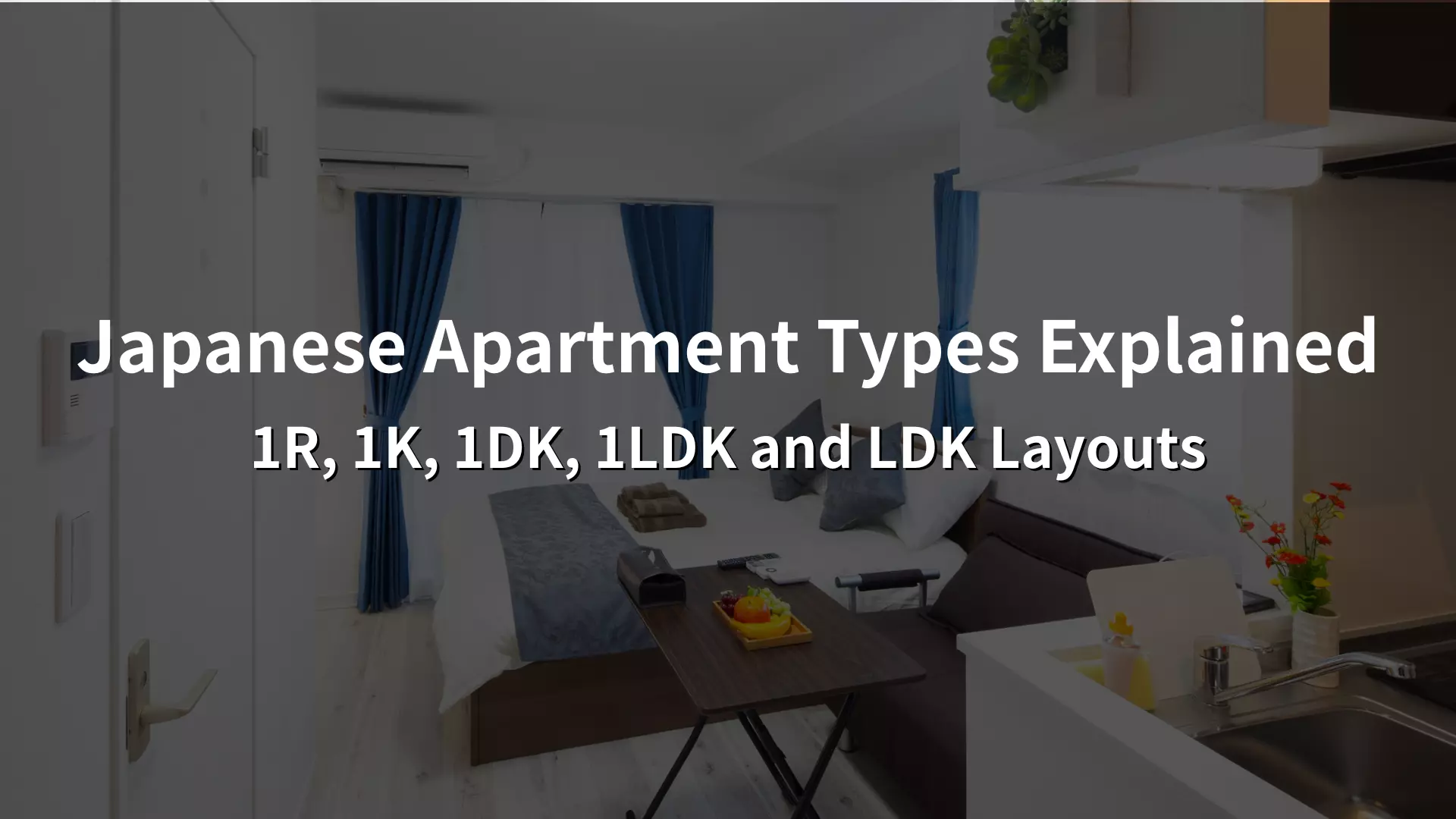
Japanese Apartment Types (1R, 1K, 1LDK) at a Glance
Japanese listings describe layout with a number (bedrooms) plus letters (what else is included).
| Notation | Meaning | Typical size |
|---|---|---|
| 1R | One room; kitchen is part of the living space | ~20–30 m² |
| 1K | One room plus a separate small kitchen | ~20–35 m² |
| 1DK | One room plus a dining-kitchen area | ~30–40 m² |
| 1LDK | One bedroom plus living-dining-kitchen | ~35–55 m² |
| 2LDK+ | Two or more bedrooms plus LDK (family size) | ~50–70 m²+ |
You will also see "mansion" (a reinforced-concrete, better-insulated building) and "apaato" (a smaller, usually older wood-frame building with lower rent). Both simply mean apartment building.
Average Rent Prices in Tokyo (2026)
Rent varies by ward, size, building age, and amenities. The ranges below are typical 2026 monthly figures for the 23 special wards, with rough USD conversions at approximately ¥150 = $1 USD (rates fluctuate; treat USD as indicative only).
| Type | Central wards (¥/month) | Outer wards (¥/month) | Approx. USD (central) |
|---|---|---|---|
| 1R / 1K | ¥80,000–¥130,000 | ¥55,000–¥85,000 | ~$530–$870 |
| 1LDK | ¥120,000–¥200,000 | ¥85,000–¥130,000 | ~$800–$1,330 |
| 2LDK+ | ¥180,000–¥300,000+ | ¥120,000–¥180,000 | ~$1,200–$2,000+ |
| Share house (private room) | ¥50,000–¥120,000 | — | ~$330–$800 |
For a ward-by-ward breakdown and how apartment type shifts the numbers, see our detailed average rent in Tokyo guide.
Search for a room
Only furnished properties with appliances are listed!
The Real Upfront Cost of Renting in Tokyo (with USD)
The biggest surprise for newcomers is that move-in costs go well beyond the first month's rent. A traditional Tokyo lease can require three to six months' rent before your first night.
| Fee | Typical amount | Refundable? |
|---|---|---|
| Security deposit (shikikin) | 1–2 months' rent | Partly (restoration costs deducted) |
| Key money (reikin) | 1–2 months' rent | No |
| Agency fee (chukai tesuryo) | ~1 month's rent + tax | No |
| Guarantor company fee | ~0.5–1 month's rent + annual renewal | No |
| Fire insurance | ¥15,000–¥20,000 / 2 yrs | No |
| Lock exchange | ¥15,000–¥30,000 | No |
On a ¥100,000/month ($670 USD) traditional apartment, initial costs can reach ¥300,000–¥600,000 (roughly $2,000–$4,000 USD). This is precisely why foreigner-friendly, no-deposit housing is so popular with new arrivals.
How XROSS HOUSE Keeps Move-In Costs Transparent
XROSS HOUSE is a property management company that operates furnished share houses and furnished private apartments, not a traditional agency stacking fees. Costs are flat and stated up front. Amounts below are current as of July 2026; terms can change, and details vary by property.
Furnished share house
- Initial cost: ¥30,000 (about $200 USD). No deposit, no agent fee.
- Monthly: rent + a common-area fee of ¥15,000 that includes utilities and Wi-Fi + an ansin (peace-of-mind) support fee of ¥1,500/month.
- Furniture, appliances, and internet are included.
Furnished private apartment
- Initial cost: ¥30,000 during the current campaign (normally ¥50,000; roughly $200 vs $330 USD). Terms may change.
- Monthly: rent + the ansin support fee of ¥1,500/month. A furnished private apartment has no common-area fee, and utilities (electricity, gas, water) are contracted by the resident — an optional all-inclusive utility plan is available.
- Note: a furnished private apartment does not include free Wi-Fi; internet is arranged separately.
Because move-in cost is a flat ¥30,000 rather than several months' rent, the gap versus a traditional lease is large. To browse live rooms and current prices, see the room search page.
Documents Foreigners Need to Rent in Japan
Having paperwork ready is the single biggest factor in a smooth application. Requirements vary by landlord and guarantor company, but the common list is short.
- Residence card (zairyu card) — confirms your visa status, address, and permitted length of stay.
- Passport — usually a copy alongside the residence card.
- Resident certificate (juminhyo) — proof of your registered address, from your ward office.
- Proof of income — pay slips, a salary certificate, a tax return, or bank statements. Especially important if self-employed.
- Employment or enrolment certificate — from your employer, or a school enrolment certificate for students.
- Guarantor information — the guarantor company's application form, or a personal guarantor's details and consent.
- Japanese bank account — rent is usually paid by automatic transfer, so opening an account early helps.
For the full document-by-document explanation, see documents needed to rent an apartment in Japan.
No Guarantor and No Deposit Apartments in Tokyo
The guarantor and deposit hurdles have eased. Most landlords now accept professional guarantor companies (hosho gaisha): you pay a fee, and the company guarantees your rent. Some properties go further and are marketed as "no guarantor required" (hoshonin fuyo), usually because the management company self-guarantees or the fee structure already covers it.
No-deposit housing works the same way — the share house and short-stay model builds costs into a flat move-in fee instead of a multi-month deposit. When you search, filter specifically for properties that accept guarantor companies or are guarantor-free and deposit-free. That single filter dramatically widens your options.
Step-by-Step: Renting an Apartment in Tokyo
The process is manageable once you know the order of steps.
1. Set your budget and must-haves
Decide your monthly ceiling and non-negotiables: commute, minimum size, furnished or not, and total move-in budget (not just first month).
2. Choose neighbourhoods
Shortlist two or three areas. Central wards (Minato, Shibuya, Shinjuku) cost more; eastern and western wards (Koto, Edogawa, Nakano, Koenji) offer better value with strong transport links.
3. Search and filter for foreigner-friendly listings
Use services that accept foreign tenants and offer English support. Furnished, no-deposit options remove the biggest upfront barriers.
4. View, apply, and sign
Request viewings (online viewing is common in 2026), submit your application with the documents above, then read the lease carefully — check the term, notice period, renewal fee, and deposit conditions before signing.
5. Pay and move in
Pay the move-in fees, receive the keys, and register your address at your local ward office within 14 days of moving in.
Short-Term vs Long-Term Rentals
Your stay length changes what makes sense. Short-term rentals (a week to six months) — furnished, utilities often included — cost more per month but have low upfront costs and high flexibility, ideal as a bridge while you settle. Long-term standard leases run two years with lower monthly rent but higher upfront costs and a renewal fee at the end. Furnished share housing sits usefully between the two: flexible terms with month-to-month options and no multi-month deposit.
Common Mistakes Foreigners Make When Renting
- Signing without reading the contract. Clauses on modifications, noise, guests, and deposit refunds cause most disputes.
- Budgeting only for the first month. Calculate the full move-in total including deposit, key money, agency and guarantor fees, and insurance.
- Forgetting the renewal fee. Two-year leases usually add one to two months' rent at renewal.
- Not registering your address within 14 days. This affects your visa, banking, and admin.
- Assuming the deposit is fully refundable. Restoration expectations in Japan are high; document the unit's condition on move-in.
- Choosing an area without visiting. A central address can sit on a loud nightlife street — check in person or via a live online viewing.
Frequently Asked Questions
Can foreigners rent an apartment in Tokyo?
Yes. A valid residence status and residence card qualify you for most rentals. The practical hurdles are the guarantor requirement, upfront costs, and Japanese paperwork — all of which foreigner-friendly, furnished housing is designed to reduce.
Do I need a guarantor to rent in Japan?
Usually, but rarely a personal one. Most landlords accept a professional guarantor company for a fee. Some properties are marketed as "no guarantor required," where the management company self-guarantees.
What documents do I need to rent an apartment as a foreigner?
Commonly: your residence card, passport, resident certificate (juminhyo), proof of income, an employment or school enrolment certificate, guarantor details, and a Japanese bank account for rent transfers.
How much are the upfront costs of renting in Tokyo?
A traditional lease can total three to six months' rent — deposit, key money, agency fee, guarantor fee, insurance, and lock exchange. On a ¥100,000/month apartment that is roughly ¥300,000–¥600,000 (about $2,000–$4,000 USD). Foreigner-friendly share housing can be a flat move-in fee instead.
Are there no-deposit or no-key-money apartments in Tokyo?
Yes. Foreigner-friendly share houses and furnished apartments often waive the deposit and key money, replacing them with a low flat move-in fee. XROSS HOUSE furnished share houses have an initial cost of ¥30,000 with no deposit (details vary by property).
Is a share house cheaper than a private apartment?
Generally yes, especially on move-in costs. Share houses typically have no deposit, bundle utilities, and offer flexible terms. Private apartments cost more upfront but give you full privacy and your own facilities.
Do furnished apartments include Wi-Fi?
It depends on the type. A furnished share house usually includes utilities and Wi-Fi in the common-area fee. A furnished private apartment does not include free Wi-Fi, and utilities are contracted by the resident, so budget for internet separately.
Can I rent in Tokyo before I have a Japanese bank account?
It is easier with one, since rent is usually paid by automatic transfer. Some foreigner-friendly services offer alternative payment methods early on, but opening a bank account should be a first priority after arriving.
Start Your Tokyo Apartment Search
Renting in Tokyo has a steeper learning curve than most cities, but with your documents ready, a clear budget, and foreigner-friendly housing, it is entirely doable. As a property management company operating across 11 prefectures in Japan, XROSS HOUSE can help you find a furnished home with English-language support and transparent, flat move-in costs.
When you are ready, our English-speaking team is here to answer questions and walk you through the process.
Reviewed by the XROSS HOUSE team — a property management company operating across 11 prefectures in Japan (as of July 2026).