
What is a reasonable rent for someone with a net income of 210,000 yen?
For someone living alone on a net income of 210,000 yen, rent is the most crucial factor affecting their financial well-being. If the rent is too high, it becomes difficult to save money and cope with unexpected expenses. On the other hand, if it's too low, they may become dissatisfied with their living environment.
Here, we will organize the generally accepted guidelines for rent and provide a detailed explanation of realistic rent levels and points to consider for someone with a net income of 210,000 yen.
Why rent is said to be "one-third of your take-home pay"
It's often said that "ideally, rent should be no more than one-third of your take-home pay," and this is because it's a good guideline for maintaining a balance in your overall living expenses. If you allocate about one-third of your take-home pay to rent, the remaining approximately 140,000 yen will cover food, utilities, communication costs, daily necessities, social expenses, savings, etc. With this allocation, it becomes easier to secure a minimum amount of savings without having to cut back excessively.
Furthermore, in real estate tenant screening, "rent should be around 30% of your take-home pay" is often used as a guideline, which has the practical advantage of making it easier to pass the screening. However, this standard is merely an average, and those with high fixed expenses or those who prioritize saving money will need to consider lowering their rent even further.
For someone with a net income of 210,000 yen, the appropriate rent is 60,000 to 70,000 yen.
If your take-home pay is 210,000 yen, a realistic rent budget would be around 60,000 to 70,000 yen. 70,000 yen is about one-third of your take-home pay, which is the upper limit for living without significantly lowering your standard of living. On the other hand, if you can keep it in the 60,000 yen range, you'll have more room for monthly savings or entertainment expenses.
With a rent of 70,000 yen, you can find studio apartments or 1K apartments in the Tokyo metropolitan area by adjusting the age of the building and distance from the station. However, if you have many other fixed expenses (communication fees, insurance, subscriptions, etc.), it's safer to keep your rent around 60,000 yen. When setting your rent, it's important to consider not only your current lifestyle but also future moving expenses and life events.
How to think about situations where housing allowance/rent subsidy is provided.
When housing allowances or rent subsidies are provided, the way you consider setting your rent changes slightly. For example, if you receive a rent subsidy of 20,000 yen per month, even if your actual burden is 70,000 yen, it will feel like rent in the 50,000 yen range. Therefore, you can choose to slightly increase your rent to take the subsidy amount into consideration.
However, it's important to note that housing allowances are not guaranteed to continue in the future. If the allowance is discontinued due to a job change, transfer, or system change, there is a risk that the burden of rent will suddenly become much heavier. Therefore, even with the housing allowance included, it's important to consider whether you can afford the rent even if the subsidy is discontinued. This will lead to a more secure choice of housing in the long term.
Risks that are likely to occur if rent is raised too high
If your take-home pay is 210,000 yen and your rent is set at 80,000 yen or more, you'll likely find yourself with less financial leeway. A high proportion of your income going towards rent means you'll have to cut back on food and entertainment expenses, which can easily lead to a decrease in overall life satisfaction. Furthermore, if you continue to be unable to save money, you risk being unable to cope with unexpected expenses or the need to move.
One pattern to be particularly wary of is the one where you can pay at first, but then things get difficult later on. Immediately after moving, you tend to be more frugal due to the rebound effect of the initial expenses, but as time goes on, spending tends to increase. If your take-home pay is 210,000 yen, it's important to keep your rent within a reasonable range and prioritize making decisions that will allow you to live stably in the long term.
[Living expenses simulation for a net income of 210,000 yen, excluding rent]
If you're living alone on a net income of 210,000 yen, the amount of rent you pay will greatly affect your financial stability. Even with the same income, the amount you can save and your daily stress levels will be completely different depending on whether your rent is 50,000 yen or 90,000 yen.
Here, we simulate living expenses based on rent levels and provide a realistic and concrete explanation of what level of rent is comfortable to live at.
If your rent is 50,000 yen | You can save money and live comfortably.
If you can keep your rent down to 50,000 yen, a single person with a net income of 210,000 yen can live a relatively comfortable life. Rent accounts for about 24% of your net income, leaving you with around 160,000 yen for living expenses and savings. Even if you spend on food, utilities, and communication at a standard level, it's a big advantage that you can easily save 20,000 to 30,000 yen each month.
This rent range makes it easier to spend money on things like eating out and hobbies, and also allows you to handle unexpected expenses. You may have to compromise on the age of the building or distance from the station, but for people who prioritize financial stability or are considering moving or changing jobs in the future, it is a very well-balanced option.
A typical single person's life with a focus on balance, assuming a rent of 70,000 yen.
A rent of 70,000 yen is the most common amount for someone with a net income of 210,000 yen. Rent accounts for approximately 33% of net income, leaving around 140,000 yen for living expenses. If you can properly manage food, utilities, and communication costs, saving around 10,000 yen per month is realistic.
At this level, you have a wider range of choices in terms of location and building age, making it easier to maintain satisfaction with your living environment. However, it's easy to fall into the red if entertainment and social expenses increase too much, so managing your spending is essential. This is the most realistic rent setting for people who aim for a lifestyle that is "not overly extravagant, but also not excessively luxurious."
If your rent is 80,000 yen | A lifestyle based on saving money
If your rent is 80,000 yen, rent will account for about 38% of your net income of 210,000 yen, so you will need to be very mindful of saving money. After deducting rent, you will have about 130,000 yen left, and you will hardly be able to save anything unless you cut back on food and utility expenses.
This lifestyle is feasible for those who can maintain a home-cooked lifestyle while refraining from eating out and making impulse purchases, but it will leave little room for flexibility. Furthermore, unexpected expenses can easily lead to a deficit, and some may even have to rely on bonuses or savings. An 80,000 yen rent is probably best suited for those who absolutely prioritize location and other conditions.
Cases where living expenses tend to be tight, such as when rent is 90,000 yen.
A rent of 90,000 yen represents about 43% of a net income of 210,000 yen, making it a rent range where life tends to become difficult. After paying rent, the remaining amount is around 120,000 yen, and after paying for food, utilities, and communication expenses, there is almost nothing left. Saving money becomes difficult, and one tends to live on a shoestring budget every month.
If this situation continues, it will become difficult to cope with health problems or the need to move. There is also the psychological issue that "once you get used to high rent, it's hard to lower it." While paying 90,000 yen in rent on a net income of 210,000 yen may be possible in the short term, it is a high-risk choice in the long term.
Search for a room
Only furnished properties with appliances are listed!
Breakdown of living expenses and savings target for a net income of 210,000 yen
If you're living alone on a net income of 210,000 yen, how you allocate your monthly living expenses will greatly affect how easy it is to save money and how stable your life is. It's especially important to understand your expenses other than rent and set a realistic savings goal.
Here, we will explain realistic savings targets and spending balance considerations based on the breakdown of average living expenses.

Average breakdown of living expenses for a single person
For someone living alone with a net income of 210,000 yen, the estimated monthly living expenses, excluding rent, are around 120,000 to 140,000 yen. Typical breakdowns include 30,000 to 40,000 yen for food, around 10,000 yen for utilities, 8,000 to 10,000 yen for communication, 5,000 to 10,000 yen for daily necessities and miscellaneous expenses, and 20,000 to 30,000 yen for socializing and entertainment.
In addition, if you pay insurance premiums or use subscription services, you'll need to add several thousand to ten thousand yen per month to your fixed expenses. If your rent is 70,000 yen, these expenses will add up to roughly the same amount as your income, and whether you can save money will depend on how you manage your spending. First, it's important to understand whether your spending is above or below average.
How much can you save each month? A realistic savings amount.
With a net income of 210,000 yen, a realistic amount to save comfortably is around 10,000 to 30,000 yen per month. If your rent is 50,000 to 60,000 yen, you can save more than 30,000 yen per month while keeping living expenses down, but if your rent is around 70,000 yen, saving around 10,000 yen per month becomes more realistic.
The important thing is to decide in advance how much you will definitely save. If you try to save whatever is left over, you often end up spending it all. By creating a system that automatically saves money on payday, it becomes easier to continue saving without difficulty. With a net income of 210,000 yen, even saving a small amount consistently is better than having no savings at all, and it will lead to peace of mind in the future.
The concept of balancing fixed costs and variable costs
To stabilize your living expenses, it's important to be mindful of the balance between fixed and variable expenses. Fixed expenses are those that are roughly the same each month, such as rent, communication fees, and insurance premiums, while variable expenses are those that change from month to month, such as food expenses, social expenses, and entertainment expenses.
If your take-home pay is 210,000 yen, having too many fixed expenses can leave little room for saving, making household finances difficult. Rent and communication costs, in particular, are areas where adjustments can have a significant impact, and reducing these can stabilize your overall lifestyle. Instead of completely cutting variable expenses, setting limits and managing them accordingly makes household finances less stressful.
What are the conditions for an apartment you can live in on a net income of 210,000 yen?
To live comfortably on a net income of 210,000 yen, it's important to prioritize not only rent but also other conditions such as "area," "floor plan," "age of the building," and "distance from the station." Since properties that meet all conditions are limited, thinking in advance about how much you can compromise will allow you to choose a home that is satisfying while keeping rent down.
Here, we will explain in detail the conditions for a room that you can realistically choose with a net income of 210,000 yen.
Average rent prices by area (Tokyo, Greater Tokyo Area, and other regions)
If your take-home pay is 210,000 yen, the range of properties you can choose from will vary greatly depending on the area you live in. Within Tokyo's 23 wards, properties available for 60,000 to 70,000 yen in rent are mainly older studio apartments or properties located more than a 10-minute walk from the station. On the other hand, outside the 23 wards or in suburban areas of the Tokyo metropolitan area such as Kanagawa, Chiba, and Saitama, newer buildings and 1K type apartments become available for the same rent.
In regional cities, it's not uncommon to find 1DK or 1LDK apartments for 50,000 to 60,000 yen a month. When your take-home pay is 210,000 yen, it's especially important to consider not just the rent, but the "overall cost of living," taking into account factors like commuting time and transportation costs.
Floor plan guidelines (studio apartment, 1K, 1DK)
With a net income of 210,000 yen, the most realistic and popular floor plans are studio apartments or 1K apartments. Studio apartments have the advantage of lower rent and a relatively large number of properties available, even in urban areas. On the other hand, 1K apartments have a separate kitchen and living area, making them suitable for people who want to separate their living spaces.
Rent for a 1DK apartment tends to be a bit higher, typically starting at 70,000 yen or more in the Tokyo metropolitan area. While it's attractive if you prioritize space and comfort, considering the balance with other living expenses, a "studio apartment or 1K" is a more reasonable choice for someone with a net income of 210,000 yen.
How much can you compromise on the age of the building and distance from the station?
The most effective way to reduce rent is to adjust the age of the building and its distance from the station. Properties older than 20 years tend to have older facilities, but the rent is often lower, and they can sometimes be in a good location. Also, if you can tolerate being a 10-15 minute walk from the station, you can sometimes reduce the rent by more than 10,000 yen in the same area.
The key is to determine a "compromise line that doesn't disrupt your daily life." Even if a property is a bit old, if it's been renovated, or if the walking distance is long but the route is flat, you can often live comfortably. Being flexible with your requirements greatly expands your options.
Characteristics of properties that make it easy to keep rent low
Properties with lower rents tend to have several things in common. Typical examples include being older buildings, being a little far from the station, or being located near stations where only local trains stop. Also, properties with minimal amenities such as automatic locks and parcel lockers tend to have lower rents.
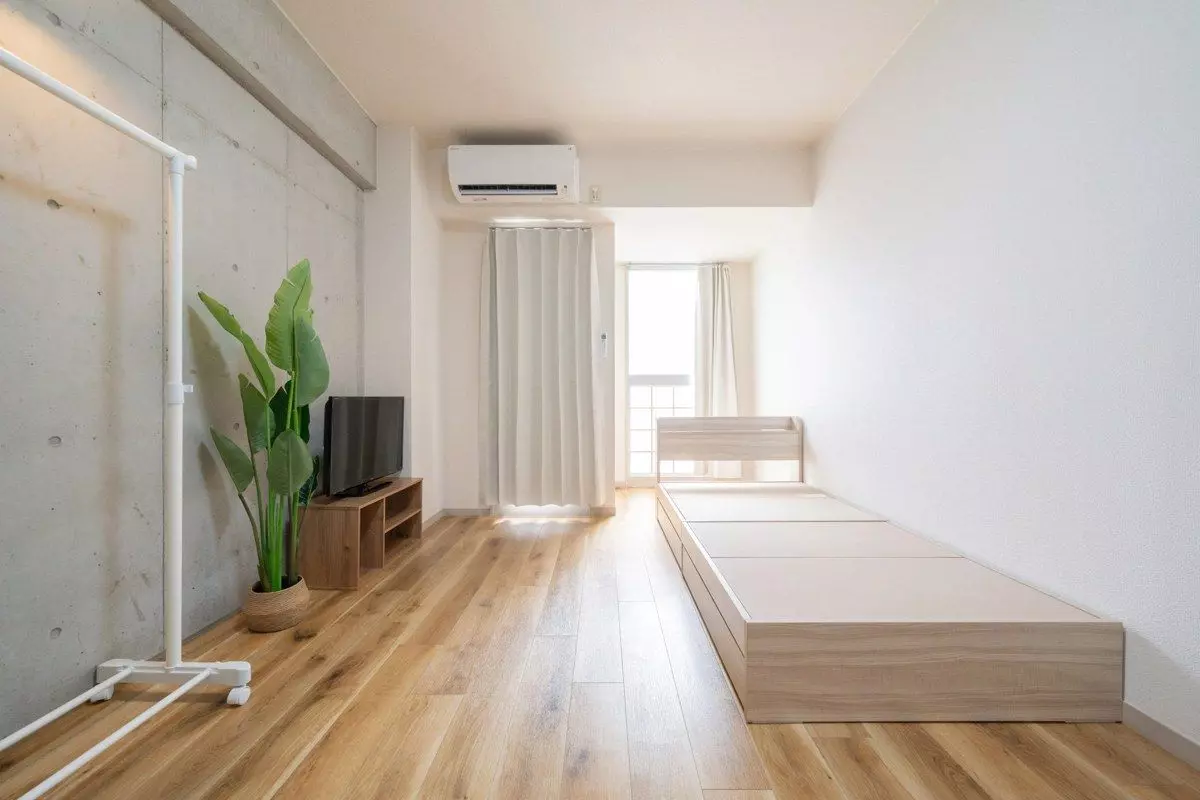
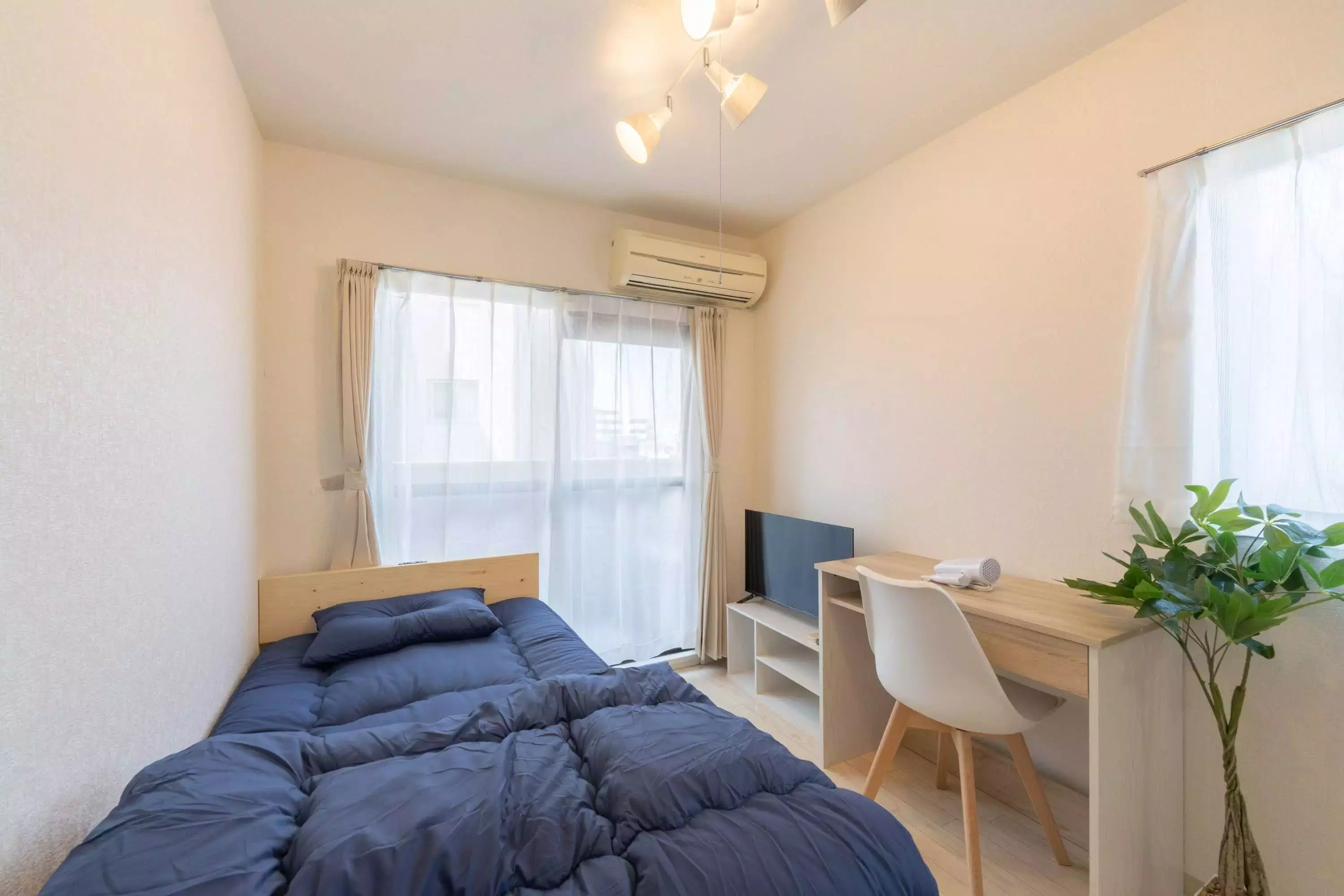
Furthermore, properties that come furnished with furniture and appliances, or those with low initial costs, offer the advantage of reducing the burden of moving. With a net income of 210,000 yen, prioritizing "low rent + low initial costs" makes it easier to achieve a comfortable lifestyle living alone.
Search for a room
Only furnished properties with appliances are listed!
Tips for finding an apartment to save on rent
To comfortably live alone on a net income of 210,000 yen, keeping rent down is crucial. By making small adjustments to your criteria, it's entirely possible to lower your rent even in the same area and with the same size apartment.
This article introduces specific tips for finding an apartment that makes it easier to keep rent down, and explains how to balance cost and livability.
We will also consider stations that are served by local trains and within a 15-minute walk from the station.
An effective way to keep rent down is to consider properties near stations where only local trains stop, or properties located about a 15-minute walk from the station. Properties near express train stations or close to the station are in high demand, and consequently, rent tends to be higher. On the other hand, simply looking at neighboring stations or local train stations can often lower rent by 5,000 to 10,000 yen.
While a 15-minute walk from the station might seem inconvenient, if the area is flat or accessible by bicycle, the actual burden on daily life isn't that significant. By considering the balance between commute time and transportation costs, and slightly broadening your search criteria, you'll have a better chance of finding a property with lower rent.
Target older or renovated properties.
Older properties tend to be avoided, but they are a viable option for those looking to keep rent down. Properties that are 20 years old or older often have lower rents than the market average, and there's a chance you can live in a desirable location within the same area.
Renovated properties are particularly noteworthy. Despite having new interiors and facilities, some have lower rents due to their age. By checking aspects directly related to daily life, such as plumbing and insulation, before making a choice, you can more easily balance cost and comfort.
Choose a property with low initial costs.
When searching for an apartment, it's important to pay attention not only to the monthly rent but also to the initial costs. Choosing properties with no security deposit or key money, or those with a rent-free period, can significantly reduce moving expenses. This is especially true if your take-home pay is 210,000 yen; high initial costs can quickly deplete your savings.
Properties with low initial costs tend to have lighter burdens when renewing or moving out. For people who plan to move frequently or are considering future job changes or relocations, low initial costs are a significant advantage.
The option of choosing a property that comes furnished with furniture and appliances.
While furnished apartments may seem to have slightly higher rent, they often end up being more affordable in terms of total cost. It's not uncommon for initial costs alone to exceed 100,000 yen when furnishing an apartment with a complete set of appliances including a refrigerator, washing machine, and microwave.
Another advantage is that you don't have to dispose of or replace furniture and appliances every time you move. For people living alone for a short period or who want to keep initial costs as low as possible, furnished apartments are a realistic and efficient option.
I'm considering a shared house or a property with rent included.
If you want to significantly reduce your rent, consider shared housing or properties that include utilities. In some cases, you can find private rooms in shared housing that offer privacy while costing around 50,000 yen per month.
Furthermore, properties where utilities and internet costs are included in the rent are attractive because monthly expenses remain constant, making household budget management easier. For those who want to live a stable life on a net income of 210,000 yen, housing that allows you to keep fixed costs down is a strong option.
Reasons why a net income of 210,000 yen makes life difficult
A net income of 210,000 yen is not an impossible amount for someone to live alone, but it's true that many people find it "more difficult to live on than they expected." In most cases, the reason for this is not the income itself, but rather the balance of expenses and the choice of housing and lifestyle.
This section outlines some of the common reasons why a net income of 210,000 yen can make life difficult, and provides tips for improvement.
The proportion of rent is too high.
The biggest reason why life becomes difficult is that rent is too high relative to income. If your take-home pay is 210,000 yen and your rent is 80,000 to 90,000 yen, housing costs will account for about 40% of your income, significantly reducing the amount of money you have left for living expenses and savings. Another problem is that rent is a fixed expense that cannot be easily reduced once decided, so the burden tends to become long-term.
One thing to be particularly careful about is the case where prioritizing living environment too much results in financial strain. If you focus too much on location or how new the building is, you may have to cut back on daily expenses like food and socializing, which can easily lower your overall satisfaction with life. With a net income of 210,000 yen, keeping rent within a reasonable range is key to financial stability.
Fixed costs (communication fees and insurance premiums) have not been reviewed.
Besides rent, fixed expenses such as communication fees and insurance premiums are often the biggest burden on people's finances. Many people spend over 10,000 yen a month on communication fees alone if they're still subscribed to major carriers' smartphone plans and unnecessary options. Furthermore, insurance policies that people don't fully understand can also be a significant strain on their household budget.
A key feature of fixed expenses is that a single review can lead to a continuous reduction in monthly spending. Simply switching to a low-cost SIM plan or streamlining your insurance can save you several thousand to ten thousand yen per month. With a net income of 210,000 yen, reviewing fixed expenses in this way can lead to greater financial freedom.
The initial costs and moving expenses are a heavy burden.
Many people find that the initial costs of moving, including the purchase of furniture and appliances, weigh heavily on them, making their lives difficult afterward. Including security deposits, key money, and brokerage fees, it's not uncommon for initial moving expenses to exceed 300,000 yen.
If you can't cover the initial costs with your savings and it impacts your living expenses, you'll be forced to be frugal for a while. Especially with a net income of 210,000 yen, the burden of initial costs can easily become a hindrance to rebuilding your life, so financial planning before moving and choosing a property that keeps initial costs down are crucial.
Cases where income and lifestyle do not match.
One reason why people feel financially strained is that their lifestyle doesn't match their income. If you frequently eat out or use convenience stores, or spend too much on hobbies and social activities, your expenses will easily exceed your income if your take-home pay is 210,000 yen.
The important thing is not to give up everything, but to create a spending balance that matches your income. By making small adjustments, such as distinguishing between cooking at home and eating out, and setting a limit on entertainment expenses, you can stabilize your life. Even with a net income of 210,000 yen, it is entirely possible to live comfortably if you optimize your lifestyle.
Search for a room
Only furnished properties with appliances are listed!
Money-saving tips for living comfortably on a net income of 210,000 yen
To maintain a stable life living alone on a net income of 210,000 yen, it's important to adopt "manageable strategies" rather than extreme saving. A life of constant self-denial is unsustainable and can lead to increased spending due to stress.
Here, we introduce practical and highly effective money-saving techniques that will help you reduce expenses without lowering your quality of life.
Visualize your spending with a household budgeting app.
The first step to saving money is to accurately understand how much you're spending on what. Using a household budget app allows you to automatically record and categorize your expenses, making household budget management effortless. In particular, linking it with credit cards and e-money allows you to get an overall picture of your spending while saving the trouble of manual input.
Visualizing your spending can reveal things like, "I'm spending more on eating out than I thought," or "I'm accumulating unnecessary subscriptions." With a net income of 210,000 yen, these small wastes can easily add up and strain your finances, so first understanding your current situation is the key to sustainable saving.
Rules for cooking at home and eating out to reduce food expenses
Food expenses are one of the easiest variable expenses to adjust and are relatively easy to save money on. For someone with a net income of 210,000 yen, a realistic guideline for food expenses is around 30,000 to 40,000 yen per month. You don't need to cook at home every day, but you can easily reduce spending by setting rules such as "cook at home on weekdays and eat out on weekends."
Furthermore, incorporating bulk buying and meal prepping can reduce eating out and convenience store purchases. Rather than aiming for complete savings, pre-determining days for enjoying meals out makes food expense management less stressful and easier to maintain in the long run.
Points to review regarding communication and utility costs
Communication and utility bills are fixed expenses that can be continuously reduced by simply reviewing them once. If you're using a major carrier's smartphone plan, switching to a low-cost SIM can save you several thousand yen per month. Canceling unused options and subscriptions is also effective.
Regarding utility costs, you can expect improvements simply by reviewing how you use your air conditioner and your electricity provider's rate plan. With a net income of 210,000 yen, reducing these fixed costs will create more financial flexibility and make it easier to save money.
Tips for making the most of cashless payment points
By effectively utilizing cashless payment methods, you can reduce your spending while earning points. By primarily using credit cards and QR code payments and consolidating your daily expenses, you can efficiently accumulate points.
However, it would be counterproductive to waste money just to earn points. By limiting your payment methods to one or two and linking them with a household budgeting app, you can maximize the benefits while preventing overspending. With a net income of 210,000 yen, these small efforts add up to a stable life.
Is a net income of 210,000 yen low? Relationship to annual income and gross income
A net income of 210,000 yen is a level where many people feel they can live alone, but with little room for comfort. However, net income alone cannot determine whether an income is high or low; the perception changes greatly depending on gross monthly income, annual income, whether or not there is a bonus, age, and household composition.
Below, we will break down a net income of 210,000 yen using objective figures and explain where it stands in the economy.
Estimated gross monthly and annual income for a net income of 210,000 yen.
A gross monthly income of approximately 260,000 to 270,000 yen corresponds to a net monthly income of 210,000 yen. This is the amount remaining after deductions for social insurance, income tax, and resident tax. In this case, without bonuses, the annual income would be approximately 3.1 to 3.3 million yen.
While it's slightly lower than the average annual income across Japan, it's certainly not an uncommon level for a single person in their early to mid-twenties. Whether you can live comfortably depends more on the balance between your income and expenses like rent and fixed costs than on the absolute amount of income itself. Even with a net income of 210,000 yen, living alone is perfectly possible if you manage your expenses properly.
The difference between having a bonus and not having one.
Even with a net income of 210,000 yen, your annual income and financial security can vary greatly depending on whether or not you receive a bonus.
If you receive a bonus twice a year, totaling 2-3 months' worth of your monthly salary, your annual income could reach around 3.7 to 4 million yen. In this case, even if your monthly living expenses remain the same, your ability to save money and handle large expenses will increase.
On the other hand, if you don't receive a bonus, your monthly take-home pay becomes your entire living expense, making planned saving even more crucial. Those who receive bonuses should use them as "savings that are not touched by living expenses," while those who don't should prepare for risks through monthly savings. In short, financial management that suits your salary structure is essential.
The position of a net income of 210,000 yen, broken down by age and household type.
The perception of a net income of 210,000 yen varies greatly depending on age and household composition. For a single person in their 20s, it's an average level and not an amount that would make life extremely difficult. However, for those in their late 30s and older, it often feels somewhat low compared to the average for their age group.
Furthermore, for married households or families with children, living on only a net income of 210,000 yen is realistically difficult. Considering housing and education expenses, dual-income households or additional income are often necessary. If we consider a net income of 210,000 yen as the "minimum to standard amount needed for a single person to make ends meet," then it can be said to be closer to reality.
Frequently asked questions about a net income of 210,000 yen
Many people considering living alone on a net income of 210,000 yen have anxieties such as, "Will I be able to make ends meet?", "How much rent can I afford without feeling unsafe?", and "Can I continue living like this in the future?".
Below, we will address some typical questions and explain realistic answers based on actual life scenarios.
Is it difficult to live alone on a net income of 210,000 yen?
In conclusion, whether you can live comfortably or comfortably depends on the balance between rent and fixed expenses. If your rent is around 60,000 to 70,000 yen, you can live alone without difficulty if you manage your living expenses. On the other hand, if your rent exceeds 80,000 yen, you are more likely to live a life based on saving money, and you will have less financial leeway.
Many people who feel that a net income of 210,000 yen is "tough" tend to have high rent and fixed expenses. Conversely, those who keep their housing costs down are often able to allocate money to savings and hobbies. It's not the amount of income itself, but rather how you plan your spending that determines your quality of life.
Is rent of 70,000 or 80,000 yen expensive?
A rent of 70,000 yen is close to the upper limit for a net income of 210,000 yen, but it's a realistic figure. It's manageable if you properly manage your living expenses, but your savings will be relatively small. On the other hand, if the rent is 80,000 yen, rent will account for about 40% of your net income, making it easier to live a life based on frugality.
Particular attention should be paid to "hidden housing costs" such as initial fees and renewal fees. It's important to consider not only the monthly rent but also long-term expenses when making your decision. If you prioritize financial security, keeping your rent in the 60,000 yen range would be a safe bet.
Is it possible to save money on a net income of 210,000 yen?
Even with a net income of 210,000 yen, saving 10,000 to 30,000 yen per month is quite possible. However, saving becomes difficult if rent is too high or if fixed expenses are not reviewed. In particular, if rent is 70,000 yen or more, creating a conscious savings system is essential.
A recommended method is "saving first," where you automatically transfer your payday to a savings account. Even small amounts, when done consistently, can help prepare for moving expenses or unexpected expenses. With a net income of 210,000 yen, the key to successful saving is to "continue without overdoing it" rather than aiming for perfection.
Would it be okay to raise the rent in the future?
While it's possible to raise rent in the future, this is contingent on whether an increase in income is expected. If you raise rent without increasing your take-home pay through a raise, job change, or side income, you risk your life becoming suddenly difficult.
It's also important to note that lowering rent once it's been raised can be psychologically and financially difficult. If you're looking to the future, it's safer to set a rent that's manageable now and move once your income stabilizes. At the stage where your take-home pay is 210,000 yen, it's crucial to leave yourself some room for flexibility.
summary
Living alone on a net income of 210,000 yen can result in either a "tough life" or a "stable life," depending on rent and spending balance. A realistic guideline for rent is 60,000 to 70,000 yen; anything over 80,000 yen requires careful saving, and 90,000 yen tends to become a significant long-term burden. Also, reviewing fixed costs such as communication fees and insurance premiums, and incorporating proactive saving and reasonable frugality can greatly improve your financial situation.
Rather than focusing on the amount of income itself, optimizing "how you choose your housing" and "how you spend your money" is the most important factor in living comfortably on a net income of 210,000 yen.