
What are the initial costs of a rental agreement? Essential information you should know.
When renting an apartment, one unavoidable aspect is the "initial costs" incurred at the time of signing the contract. Those who thought they could move in simply by paying the rent are often surprised by the amount, which can be higher than expected. So, what is included in these initial costs, and when do they need to be paid?
This chapter will begin by outlining the breakdown and typical costs of initial rental expenses, providing essential knowledge to avoid feeling that the costs are "too high." This information will be helpful even for those choosing a rental apartment or condominium for the first time.
Main items included in the initial fee and payment timing
Initial rental costs include various fees that are paid in a lump sum at the time of signing the contract, in addition to the monthly rent.
The main items are as follows:
- Security deposit: A deposit held to cover the cost of restoring the property to its original condition upon vacating (typically 1 to 2 months' rent).
- Key money: A gratuity paid to the property owner (landlord). Non-refundable (0-2 months' rent).
- Brokerage fee: A fee paid to the real estate company (typically one month's rent plus tax).
- Advance rent/prorated rent: Rent for the number of days in the contract month or the rent for the following month.
- Fire insurance premiums: Often paid in advance for two years at the time of contract (approximately 15,000 to 20,000 yen).
- Key replacement fee: Optional for security reasons (¥10,000 to ¥30,000)
- Guarantee company fee: The initial fee is typically 50% to 100% of the rent.
These fees generally need to be paid in a lump sum at the time the contract is signed. Since payment is often made "at the same time as the contract is signed" or "at the time of application before the contract is signed," it is important to prepare the funds in advance. For newer properties or newly built properties, additional costs such as key replacement and disinfection may be incurred.
What is the average initial cost, equivalent to how many months' rent? National average and regional differences.
Generally, the initial costs for a rental agreement are said to be around 4 to 6 months' worth of rent. However, this is just a guideline and varies greatly depending on the area and the property's conditions. For example, in popular areas within walking distance of train stations or in newly built apartments, many contracts still require a security deposit and key money, which can total nearly 6 months' worth of rent. On the other hand, in regional cities, key money is often not required, and the number of properties that can be rented with around 4 months' worth of rent is increasing.
| region | Average initial costs (equivalent to rent) |
| Central Tokyo | Approximately 5-6 months' supply |
Osaka city | Approximately 4-5 months' supply |
| local city | Approximately 3.5 to 4.5 months' worth |
When searching for properties, you can significantly reduce initial costs by adding conditions such as "no security deposit or key money" and "no brokerage fee." Many real estate portals and magazines now offer easy search options based on specific criteria, so be sure to utilize them.
Breakdown of initial costs varies depending on whether you live alone or with a family.
Initial costs vary depending on the type and size of the property you rent, as well as the number of occupants. In particular, there are the following differences:
If you live alone
- The rent is often set between 50,000 and 70,000 yen, and the total initial costs are around 200,000 to 400,000 yen.
- In many cases, single-person apartments have no security deposit or key money required.
- Fire insurance and guarantee company fees tend to be lower.
- Smaller floor plans such as 1LDK and studio apartments are the mainstream.
For family households
- Because the rent is higher, the security deposit, key money, and brokerage fees will also be higher.
- For larger floor plans such as 3LDK, the fees charged by the guarantee company tend to be higher.
- Many properties have high management and common area fees, making monthly payments often a burden.
- Some people choose detached houses or used condominiums, and the contract terms vary from property to property.
In short, there is a strong tendency for higher rent to result in higher initial costs. Choosing a rent that is manageable for your lifestyle and household composition is the first step in keeping initial costs down.
Check the breakdown of initial costs in detail.
The initial costs associated with a rental agreement cannot be fully grasped by simply stating that it's "a few months' worth of rent." In reality, there are various fees, and these can vary significantly depending on the property and the real estate company.
This chapter will organize the details of typical initial costs, payment timing, and points to consider when determining their necessity. Understanding the breakdown of costs will help you determine which payments are mandatory and which are optional or included as services. It's also important to confirm these details before moving in, as they affect cancellation procedures and refunds after the contract is signed.
Security deposit and key money system and refund rules
Security deposit and key money are two of the most common fees that come up when signing a lease agreement for a rental property.
- Security deposit: This is like a guarantee deposit that you pay to the landlord to cover unpaid rent or the cost of restoring the property to its original condition upon moving out. In most cases, it is refunded after deducting repair costs etc. after the contract ends, but additional costs may be incurred in the case of pet-friendly properties, etc.
- Key money: As the name suggests, this is paid as a "thank you" and is non-refundable. It may not be required depending on the region and property.
Recently, there has been an increase in properties with "no security deposit or key money," but the costs upon moving out can be high, so be sure to get a detailed explanation and a list of cost items when signing the contract.
Real estate company-related expenses such as brokerage fees and guarantee company fees.
Real estate companies that introduce properties charge a commission fee. This fee is legally capped at "one month's rent plus tax," and most real estate companies set their fees within that range. However, some stores and websites offer "no commission" or "half-price campaigns," and if you search carefully, you can save tens of thousands of yen.
Furthermore, the use of guarantee companies is also becoming more widespread, with initial fees typically ranging from 50% to 100% of the rent. Some guarantee companies offer specialized services, such as those for students, foreigners, or pet-friendly housing, so be aware that the partner company may differ depending on the property. It's also a good idea to always check the renewal fees, payment procedures, and settlement rules in case of contract termination.
Other initial costs such as fire insurance, key replacement fees, and disinfection fees.
Initial costs include service fees set by the real estate company or property management company. The main ones are as follows:
- Fire insurance premiums: These are mandatory to cover fire and water damage, and cost approximately 15,000 to 20,000 yen for two years. Be sure to check the details of the plan to ensure that the insurance coverage is comprehensive.
- Key replacement fee: This fee is charged to replace the previous tenant's keys for enhanced security. It typically costs between 10,000 and 30,000 yen. It may be even more expensive for properties with automatic locks or newer apartment buildings.
- Indoor disinfection and sterilization service fees: These are optional fees and not mandatory, but they are often automatically added to estimates, so you may end up paying more if you sign a contract without checking.
Furthermore, some real estate companies may include paid options such as "move-in support" and "24-hour trouble support" as part of the booking package. In addition to these extra services, be sure to get an explanation and carefully check before signing the contract to ensure that there are no unclear charges included in the estimate.
Search for a room
Only furnished properties with appliances are listed!
7 ways to keep initial rental costs low
The initial costs incurred when signing a rental agreement can vary greatly depending on the property's conditions and the contract terms. A little ingenuity can sometimes lead to savings of tens of thousands to over a hundred thousand yen.
Here, we introduce seven practical money-saving tips for those who want to keep initial costs as low as possible. We also explain key points to check before signing a contract when searching for a rental apartment or condominium.
Search for properties with no security deposit or key money.
One of the most effective ways to minimize initial costs is to choose a property with no security deposit or key money. These typically amount to two to three months' rent, so properties with no security deposit or key money can significantly reduce expenses. Recently, the number of properties with no security deposit or key money is increasing, not only for rental apartments and houses, but also for newly built properties and pet-friendly housing. Property listing websites often have filtering functions such as "no security deposit or key money" or "low initial costs" to make it easier to find a room that meets your desired conditions.
Take advantage of properties offering free rent campaigns.
To reduce initial costs, consider properties with free rent or ongoing promotions. Offers like "one month free rent" or "50,000 yen initial cost package" are especially common in the off-season or older apartment buildings. Also, take advantage of real estate companies' official websites and in-store exclusive campaigns. They may even show you unlisted properties not available online, so be sure to clearly communicate your requirements when scheduling a viewing.
Choose a real estate company that offers free or half-price brokerage fees.
While the maximum brokerage fee is one month's rent plus tax, you can reduce costs by using real estate agencies that offer half-price or no brokerage fees. Recently, there are also portal sites that specialize in properties with "zero brokerage fees," so it's effective to compare agencies in each area when searching.
Also, be sure to check the property page beforehand to see if detailed information is available and determine if it meets your desired conditions.
Reduce moving costs by choosing a furnished apartment.
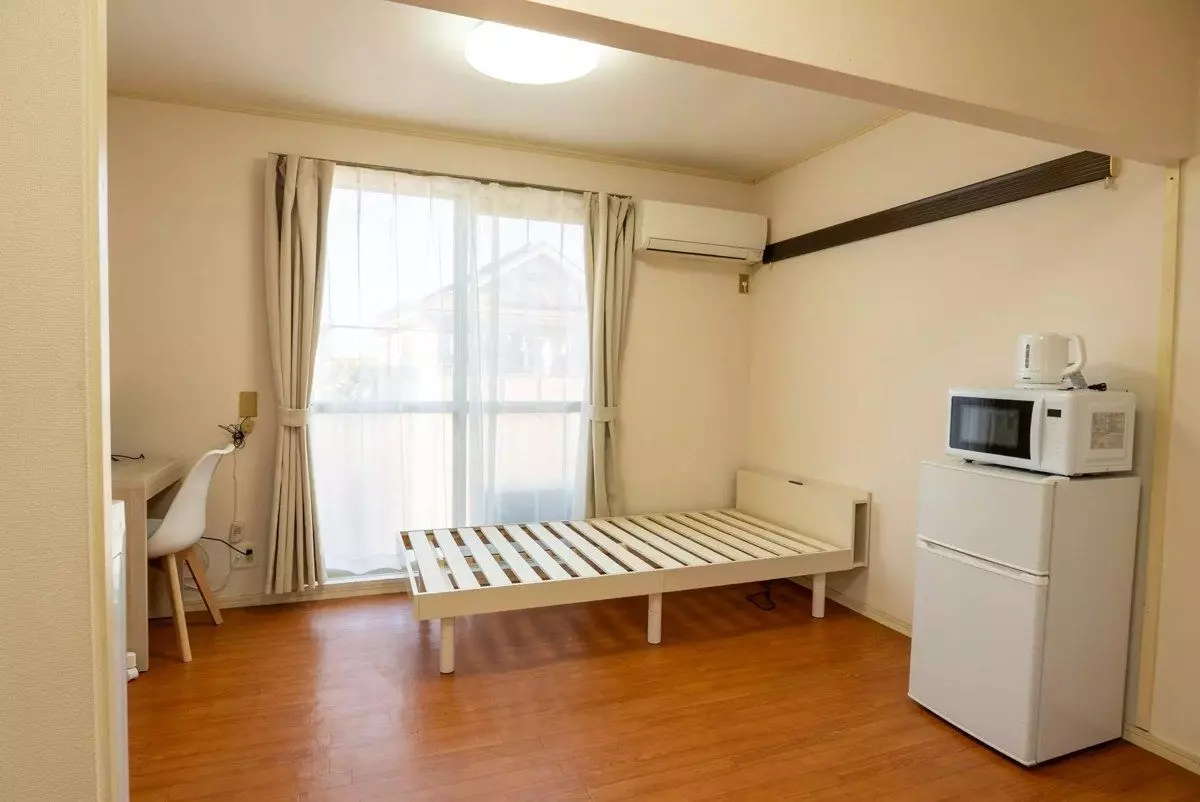
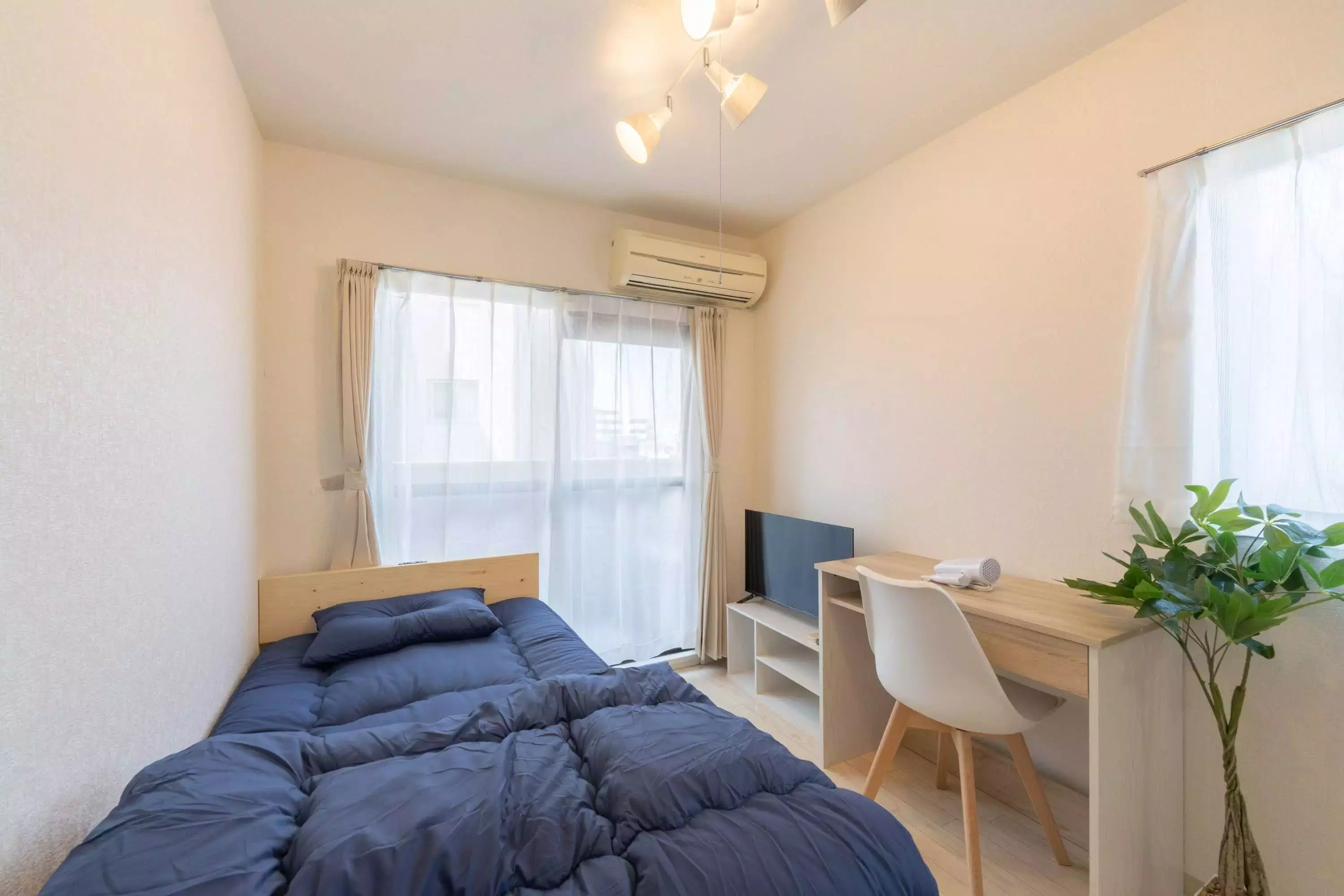
Buying essential household items like a refrigerator, washing machine, and bed can cost over 100,000 yen. Choosing a rental apartment that comes furnished with appliances can significantly reduce moving expenses. Furthermore, it's reassuring to check what amenities are included and how old they are when viewing the property. Some properties offer model room tours or pages with photos, so be sure to check those beforehand.
By carefully timing the contract, you can move in during the off-season.
The rental market has a busy season (February to April) and an off-season (May to August, etc.), and initial costs can vary significantly depending on when you sign a contract. During the off-season, there tends to be an increase in properties with no security deposit or key money, or properties with free rent periods, making it a good opportunity to find a bargain that meets your desired conditions. High rent does not necessarily equal high initial costs, so it's a good idea to pay attention to the trends in your desired area and around the station when signing a contract.
If you can choose your own guarantee company and fire insurance, compare them.
Some real estate companies allow you to choose your own guarantee company and fire insurance instead of specifying them. In such cases, compare multiple companies and check the "details" including coverage, fees, contract procedures, and cancellation conditions. Fire insurance, in particular, tends to be cheaper with online or mail-order companies, so it's recommended to get quotes and compare them before making a reservation.
We will also consider offering installment payment plans for rent and credit card options.
Recently, there has been an increase in rental properties that allow rent and initial costs to be paid in installments, as well as real estate services that accept credit cards. Even if it is difficult to come up with a large sum of money upfront, dividing it into monthly payments makes financial management easier and lowers the hurdle to moving. However, there may be fees or interest charges, so be sure to check the details beforehand.
What causes high initial costs? Points you might be unaware of that could lead to losses.
When signing a lease for an apartment or condominium, have you ever felt that the initial costs were excessively high despite the low rent? This can be due to often overlooked fees and the unique contract terms of each real estate company.
This chapter will explain in detail why initial costs tend to be high and how to avoid them. Having the right knowledge before signing a contract should help you avoid unnecessary expenses and ensure a smooth move-in process.

Cases where unnecessary option fees are included.
One factor that contributes to higher initial costs is the inclusion of optional service fees automatically.
Common items include the following:
- Indoor disinfection cost/sterilization construction cost
- 24-hour support service fee
- Air conditioner cleaning fee
- Pest control treatment costs
These are often considered "essential," but in reality, they can sometimes be removed as optional extras. It's important to carefully check the details in the real estate agent's guide and estimate to determine whether they are necessary or not. Be especially careful with older condominiums and properties with extensive services, as they tend to have more options.
If you don't check the move-out fees in advance, you might end up losing money.
While it may not seem directly related to the initial costs, the "costs incurred upon moving out" are actually something that shouldn't be overlooked. Especially with properties that require no security deposit, restoration costs and cleaning fees are often included as special clauses in the contract, which can result in hefty bills upon moving out.
Please note the following points:
- The contract clearly states things like "Cleaning fee upon moving out: XX yen."
- Even if it wasn't intentional or negligent, you may be charged for the cost of replacing wallpaper or flooring due to "damage."
- Air conditioner cleaning and lock replacement fees are set as mandatory items upon contract termination.
To avoid these problems, it's important to check whether the move-out fees are explained during the pre-contract viewing. Be sure to ask for clarification on the website or at the real estate office if anything is unclear.
Be wary of properties with low rent but high initial costs.
Even if you think "it's a good deal because the rent is cheap," there's a catch: the initial costs can actually be quite high.
The following patterns, in particular, require special attention.
- The security deposit and key money are set at two months' rent each.
- Brokerage fees and guarantee company fees are higher than the market rate.
- Properties with common area maintenance and management fees of 10,000 yen or more.
- The contract period is short, and the cancellation penalty is set high.
Furthermore, extremely cheap second-hand apartments and properties may have hidden drawbacks such as being very old, having high renewal fees, or being inconveniently located along a train line. Therefore, when choosing a property, it is important to compare not only the monthly rent, but also the breakdown of initial costs, contract period, cancellation conditions, and the level of amenities. Understanding the total cost will help you make a choice that won't result in a loss.
Search for a room
Only furnished properties with appliances are listed!
Let's try a simulation! An example of estimated initial costs.
When signing a lease for a rental apartment or condominium, one of the things people are most concerned about is "how much the initial costs will actually be."
Here, we'll use three typical scenarios as examples to provide a concrete breakdown of initial costs and their average prices. By simulating a rough budget before moving or searching for an apartment, you can more easily create a realistic plan.
In the case of a single person living alone with a rent of 60,000 yen
[Assumed conditions]
- Security deposit: 1 month's rent (60,000 yen)
- Key money: 1 month's rent (60,000 yen)
- Brokerage fee: 1 month's rent + tax (66,000 yen)
- Advance rent: 1 month's rent (60,000 yen)
- Guarantor company fee: 50% of the rent (30,000 yen)
- Fire insurance premium: 18,000 yen
- Lock replacement fee: 16,000 yen
[Total initial costs] 265,000 yen
When considering a 1LDK apartment in an urban area within a 10-minute walk of a train station, the amount you pay will vary significantly depending on whether or not you pay a security deposit and key money. In addition, if you also consider moving expenses and the purchase of furniture and appliances, the total cost can reach nearly 400,000 yen. For those who want to keep costs down or start living alone without hassle, it is recommended to consider furnished apartments or apartments with no deposit or key money.
Case of rent of 80,000 yen, with security deposit and key money, and a brokerage fee of one month's rent.
[Assumed conditions]
- Security deposit: 2 months' rent (160,000 yen)
- Key money: 1 month's rent (80,000 yen)
- Brokerage fee: 1 month's rent + tax (88,000 yen)
- Advance rent: 1 month's rent (80,000 yen)
- Guarantor company fee: 80% of the rent (64,000 yen)
- Fire insurance premium: 20,000 yen
- Lock replacement fee: 22,000 yen
[Total initial costs] 382,000 yen
In well-equipped, newly built rental apartments or properties near train stations in popular areas, the security deposit and key money are often set at several months' rent, significantly increasing costs. Also, there may be contract terms regarding the length of the contract or special conditions for termination, so be sure to check the details. Even if the rent is slightly higher, long-term tenancy can reduce the total cost, so it's important to compare and consider the overall cost balance, not just the rent alone.
Case of a campaign offering free rent and zero initial costs.
[Assumed conditions]
- Security deposit/Key money: None
- Brokerage fee: None
- One month free rent
- Guarantor company fee: 50% of the rent (30,000 yen)
- Fire insurance premium: 15,000 yen
- Key replacement fee: 0 yen (campaign)
- First month's rent: Free (free rent)
- Payment at time of contract: Guarantee fee + insurance only
[Total initial costs] 45,000 yen
By taking advantage of zero-initial-fee campaigns and free rent offers, you can find properties available for under 50,000 yen per month. In particular, properties exclusive to specific websites or agencies may come with discounts or cashback conditions. However, some properties have strict termination conditions, such as a minimum one-year contract or penalties for early termination, so it is important to carefully check these conditions during viewings and tours.
Furthermore, older properties with outdated facilities may incur repair costs later on, so caution is advised when considering used apartments or inexpensive older properties.
How to deal with difficulties in paying initial costs
"I found a room I like, but the initial costs are too high and I can't afford them..." Even in such situations, there's no need to give up. Recently, housing options and payment methods have become more diverse, and there are more services that allow you to move in even if you have financial concerns.
Here are three measures you should take if you find it difficult to pay the initial costs.
Find a real estate company that accepts installment payments and credit cards.
If you cannot pay the initial costs in a lump sum, it is effective to look for a real estate company that offers installment payments or credit card payments. In particular, these options are becoming more common at offices that offer online contracts and real estate websites that cater to younger generations.
[Common examples of responses]
- Initial payment installments: Available in 3 to 12 installments (via credit company)
- Credit card payment: VISA/Master/JCB and other cards are accepted.
- Partial payment by card is accepted (e.g., only the brokerage fee).
The flexibility of payment methods and the smooth application process are attractive features. However, interest and fees are added when paying in installments, so it is essential to check the detailed terms and conditions and informational materials.
Check the terms and conditions of the rent guarantee company.
Currently, using a rent guarantee company instead of a co-signer is the norm, but the screening process and fees vary greatly depending on the guarantee company.
[Comparison Points]
- Initial guarantee fee: 50% or 100% of the rent, etc.
- Whether or not there is an annual renewal fee and how much it is (often around 10,000 yen)
- Availability of installment payments or deferred payments
Also, some companies may have different affiliated guarantee companies depending on the area or railway line, so it's a good idea to check this when making a viewing reservation or during the contract explanation. To reduce your payment burden, choose your guarantee company carefully.
Take advantage of housing services that help keep costs down.
There are also services that significantly reduce costs, such as "zero initial fees" and "no security deposit, key money, or brokerage fees."
[Examples of typical services]
- Furnished apartments and shared housing with no initial costs.
- Subscription-based properties with the freedom to move to a different property on a monthly basis.
- Cross House and other management companies with a strong presence in urban areas
These services often feature newer properties, and in many cases, the entire process, from booking viewings to completing contracts, can be done online without the need for in-person visits. They are especially recommended for those experiencing uncertain times, such as sudden moves or immediately after changing jobs.
Search for a room
Only furnished properties with appliances are listed!
Summary | Understand the average initial costs and tips for keeping them down
The initial costs incurred when signing a rental agreement can amount to 4 to 6 months' worth of rent, which can be a significant burden for many people considering moving. However, by understanding the breakdown of these costs, their average values, and tips for reducing them, it's possible to save money wisely.
By carefully selecting properties and considering contract details, you can achieve a cost-effective apartment search.
Make it a habit to compare and confirm necessary information before signing a contract.
To keep initial costs down, it's essential to develop the habit of "comparison" and "information gathering." Even properties with similar floor plans, age, and walking distance from the station can have vastly different payment amounts depending on the contract terms.
[Key points to compare]
- Whether or not a security deposit/key money is required, and the amount.
- Brokerage fee is either free, half price, or one month's fee.
- Fire insurance and guarantee company options and coverage
- Optional costs such as key replacement fees and disinfection fees.
- Availability of free rent and promotional properties.
It's important to carefully read the contents of the contract and the important matters explanation document, and to focus not on "the process that was explained," but on "whether you understood and agreed to the contract." Make it a habit to check the conditions not only on the information written on the property page, but also during the actual viewing.
Let's make a plan to move in and settle in without any hassle.
To prevent situations where you overpay for initial moving expenses and end up with insufficient funds for living expenses, "financial planning before moving in" is extremely important.
[Expenses to include in the plan]
- Initial costs (security deposit, key money, brokerage fee, fire insurance, etc.)
- Moving company fees, transportation fees, and travel expenses
- Cost of purchasing furniture and home appliances such as refrigerators, washing machines, and lighting.
- One to two months' worth of living expenses after moving in (electricity, gas, water, and food)
Furthermore, checking the timing of contract delivery, termination conditions, and renewal fee structure in advance will help you prepare for long-term payments with peace of mind. For example, considering properties that are close to the station and older but have lower initial costs, rather than just newer properties with high rent, can sometimes create a better balance of total costs. Being aware of the overall contract, not just the rent, is the first step to starting your new life with confidence.