
The main reasons why people often advise against furnished apartments are that the rent tends to be higher, the cost of repairs is unpredictable, and disputes over move-out fees are common. However, this varies depending on the property and contract terms, and doesn't apply to all furnished apartments. For people who are only looking to live there for a short period or want to start living there immediately, it can actually be a sensible choice.
This article neutrally examines the reasons why people say "don't do it" or "it's risky," explains the differences between those who are likely to regret it and those who are likely to be satisfied, and outlines how to choose a furnished apartment without losing money in the long run. By the time you finish reading, you should be able to decide for yourself whether a furnished apartment is right for you.
Main reasons why people say "avoid furnished apartments"
First, let me list the factual reasons why so many people are saying "don't do it." The complaints commonly seen online can be summarized into the following four points.
- In some cases, the rent is set higher than the market rate in the surrounding area.
- The cost of repairing or replacing a broken home appliance is difficult to predict depending on the contract.
- You may be charged for restoration costs upon moving out, which can result in unexpected expenses.
- I can't choose the furniture and appliances myself, making it difficult to reflect my preferences.
These are all about the costs that lie "behind convenience." In exchange for convenience, you may incur burdens in the form of monthly rent or fees upon moving out. If you sign a contract without understanding this, you may end up regretting that it "cost more than you expected."
The reason it's called "bad" is due to information asymmetry.
The reason why there are so many searches for "furnished rental apartments are terrible" is because it's difficult to see the overall picture of costs before signing a contract. If the breakdown of rent, the responsibility for repairs, and the conditions for moving out are clear in advance, many anxieties will disappear. Conversely, if you choose a property where these things are clearly stated, you can avoid most of the risks that lead to it being called "terrible."
Are there really any downsides? A case-by-case examination of "reasons to avoid it"
We will examine each reason why you should "don't do it," going into detail about the actual situation and how to address it. Please check the table below to see the overall picture first.
| Reasons why you should stop | as a matter of fact | Measures to avoid regrets |
|---|---|---|
| Rent tends to be higher. | Some properties include the cost of furniture and appliances in the rent. However, there are also properties with rents set lower than the market rate. | Compare the total cost of buying furniture and appliances yourself with the cost multiplied by the number of months you'll be living there to make your decision. |
| The cost in case of a malfunction is unpredictable. | Who pays for repairs is determined by the contract. Some properties require tenants to bear the cost of minor repairs. | Before signing a contract, be sure to confirm in writing who will be responsible for the costs of repairs and replacements. |
| Disputes are likely to arise over move-out costs. | There are cases where tenants are charged for the cost of restoring built-in furniture and appliances to their original condition due to scratches or dents. | Record the condition of the property upon move-in with photographs and confirm the scope of restoration to its original condition in the contract. |
| I can't choose the layout myself. | Large furniture may be fixed in place and cannot be moved. | During the viewing, check the floor plan and furniture arrangement to see if it suits your lifestyle. |
The profit or loss of the higher rent depends on the length of time you live there.
If you furnish an apartment from scratch, it typically costs around 200,000 yen for items like a bed, refrigerator, washing machine, microwave, TV, curtains, and lighting. If a furnished apartment costs 20,000 yen more per month, the difference over 10 months would be approximately 200,000 yen. This reveals a break-even point: furnished apartments are often more cost-effective for stays of less than a year, while buying your own furniture and appliances becomes more advantageous for stays of two years or more.
In other words, "don't do it" isn't a universal conclusion; it depends on how long you plan to stay. For stays of a few months to a year, furnished apartments are a reasonable choice.
The background behind the increasing number of people looking for apartments other than Leopalace
Many people are searching for furnished apartments other than Leopalace, which reflects a desire to broaden their options. Furnished rentals are not limited to just one company; pricing structures and amenities vary depending on the management company. Instead of judging based on just one company, comparing initial costs, total monthly expenses, repair costs, and contract flexibility will make it easier to find conditions that suit you.
Search for a room
Only furnished properties with appliances are listed!
People who are likely to regret or be satisfied with furnished apartments
Even with the same property, satisfaction levels can vary greatly depending on the resident. Many of those who regret buying a furnished apartment are simply using it in a way that wasn't suited to it. Consider which category you fall into when making your decision.
People who are prone to regret
- People who plan to live in the same room for more than two years
- People who are particular about the brands and designs of interiors and home appliances
- For those who want to minimize the total cost (for long-term use, it's often cheaper to buy everything yourself).
- People who sign a contract without checking the costs and conditions upon moving out beforehand.
People who are easily satisfied
- People planning to stay for a few months to a year
- People who want to start living in Japan immediately due to job transfers, further education, or coming to Japan
- People who want to avoid the hassle of moving and disposing of furniture and appliances every time they move.
- For people who don't have strong preferences, furniture and appliances are fine as long as they function.
For those living alone for the first time, or those who have just arrived in Japan and cannot bring furniture from their home country, the provided furniture and appliances serve as the foundation of their life. The fact that there are no disposal fees is also a significant advantage for those on short-term stays.
How to choose a furnished apartment without making a mistake
The key to avoiding regrets lies in checking before signing a contract. Many regrets stem from signing a contract without understanding the overall cost. Be sure to check the following checklist before signing a contract.
Five points to check before signing a contract
- To what extent are furniture and appliance costs included in the rent? (Compare with the going rate in the surrounding area.)
- When an appliance breaks down, who pays for the repair or replacement costs?
- Scope of restoration to original condition upon vacating the property and rules for cost sharing.
- Minimum contract period and whether there are penalties for early termination.
- Whether furniture and appliances are new or used, and whether the necessary equipment suits your lifestyle.
The idea of comparing by total cost
Choosing a place solely based on low rent can result in a loss when you factor in initial costs, security fees, and move-out fees. Conversely, even if the rent is slightly higher, if the initial and move-out fees are kept low, the total cost may end up being cheaper. What you should compare is not the monthly rent, but the total amount you will pay over the duration of your stay. If you are curious about the breakdown of initial costs, checking out "How Much Do Initial Moving Costs Cost? Average Costs, Breakdown, and Ways to Keep Them Down" will give you a better overall picture.
Overlooked additional costs
Depending on the property and contract, there may be additional costs besides rent and initial fees. The amounts vary depending on the property and contract, so please be sure to check individually before signing a contract.
- Initial guarantee fee and monthly guarantee fee to the guarantee company (for individual contracts. Amounts vary depending on the guarantee company)
- Cleaning and restoration costs upon vacating the property (varies depending on the property and contract)
- Key replacement fee, fire insurance premium, etc. (varies depending on the property and contract)
- Water, electricity, and gas contracts and fees (for properties where you handle the contracts yourself)
In 2026, utility costs are expected to remain high, and older appliances with low energy efficiency will significantly impact your monthly electricity bill. It's important to check the age and energy efficiency of any built-in appliances. Comparing these costs in total before signing a contract, rather than afterward, is the best way to avoid regrets.
Search for a room
Only furnished properties with appliances are listed!
The option of a furnished apartment from Crosshouse.
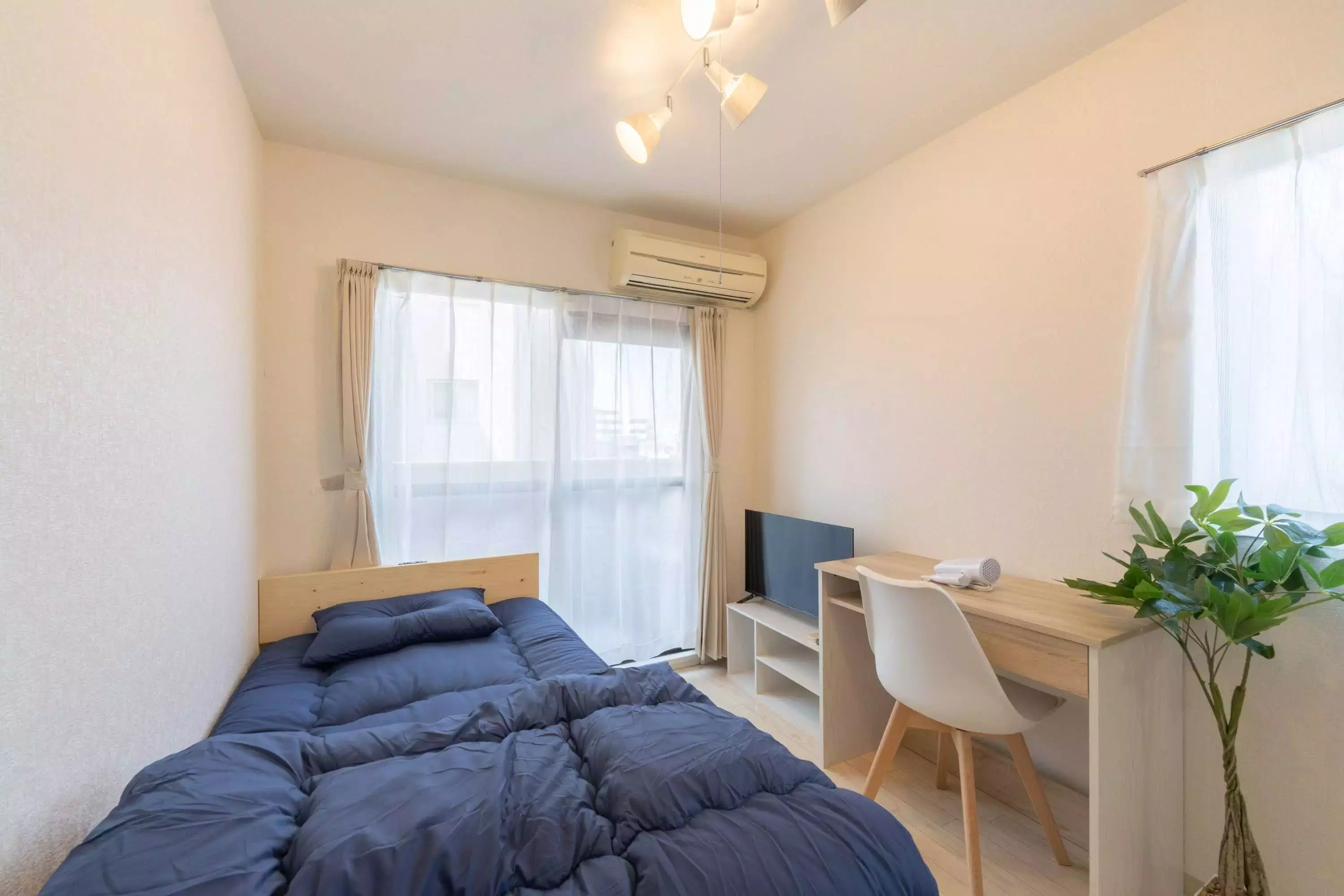
Cross House's furnished apartments address concerns such as "rent tends to be expensive" and "unpredictable costs upon moving out" through their pricing structure. They offer completely private studio and 1K apartments with private bathrooms and kitchens. Amenities include a TV, bed, refrigerator, air conditioner, microwave, and washing machine (amenities may vary slightly depending on the property).
The approach to costs is clearly defined.
Rent starts from around 50,000 yen. Initial costs are currently 30,000 yen (normally 50,000 yen) as part of a campaign, and there is no security deposit, key money, or brokerage fee. Monthly costs include a 1,500 yen (tax included) "peace of mind support" fee to cover housing troubles. There are no common area or management fees. While water, electricity, and gas are contracted by the tenant, a free utility contract assistance service is available, or a utility-inclusive plan of 15,000 yen per month is also offered. Please note that campaign details, conditions, and duration may change. Please inquire for the latest initial costs.
If it doesn't suit you, you can move on. Short-term use is also available.
Cross House operates rental properties in 11 prefectures, and the number of properties is increasing every month. If you try a property and it doesn't suit you, you can move between properties free of charge, even across prefectures. Contracts are available from one month, and cancellation requires one month's notice. Contracts can be completed online, and applications from overseas are accepted. You can move in as early as 7 days after applying, so it can meet the short-term needs of those who "want to start living immediately."
If you're interested in furnished apartments but are worried about the high cost or move-out fees, try comparing the total cost and contract terms. Unlike typical rentals where the burden increases the longer you stay, Cross House's furnished apartments offer the practical advantage of being flexible even for short-term stays. Please feel free to contact us if you have any questions about contracts or fees.
Summary | When choosing a furnished apartment, consider the "rental period" and "total cost".
Furnished apartments are often discouraged because of the lack of clarity regarding rent, repair costs, and move-out fees. However, many of these issues can be avoided depending on the property and contract terms, making them a reasonable choice for short-term stays or those who want to start living there immediately.
The criteria for making decisions to avoid regrets are simple. If you plan to stay for a short period, furnished apartments are often advantageous, while if you plan to stay for a long period, furnishing your apartment yourself is often cheaper overall. And, be sure to check the cost burden and move-out conditions before signing the contract. If you keep these two points in mind, you can almost certainly avoid the mistake of thinking, "This wasn't what I expected." Related to this, reading about whether you should avoid rental properties with no security deposit or key money, the disadvantages , advantages and disadvantages of living alone, the differences from living with family, who it's suitable for , and how much it costs for a university student to live alone, including initial costs, living expenses, and ways to save money , will give you more information to consider when choosing a place to live.
If you're looking for a furnished apartment and want to see the total cost and contract terms before making a decision, Cross House can help.
Search for a room
Only furnished properties with appliances are listed!
Frequently Asked Questions (FAQ)
Why is it often said that you should avoid furnished apartments?
There are three main reasons: rent tends to be set higher than the surrounding market rate; the cost of repairs when appliances break down is difficult to predict depending on the contract; and disputes often arise when tenants are charged for restoration costs upon moving out. All of these vary depending on the property and contract terms, and many can be avoided by checking the overall cost beforehand.
How to choose a furnished apartment without regrets?
Before signing a contract, be sure to check these four points: the cost of furniture and appliances included in the rent, who is responsible for repairs, the rules for restoring the property to its original condition upon moving out, and the minimum contract period. Then, instead of just looking at the monthly rent, compare the total amount you will pay over the entire period you live there to avoid losing money.
Who is a furnished apartment suitable for?
This is suitable for people planning short-term stays of a few months to a year, those who want to start living in Japan immediately due to job transfers, school enrollment, or arrival in Japan, and those who want to avoid the hassle of transporting and disposing of furniture and appliances each time they move. Conversely, those planning to live for two years or more, or those who are particular about interior design, tend to be more satisfied if they furnish their home themselves.
How can I find furnished apartments other than Leopalace?
Furnished apartments aren't limited to just one company; pricing, amenities, and contract flexibility vary depending on the management company. Instead of settling on just one company, comparing initial costs, total monthly expenses, repair costs, and contract terms will make it easier to find a property that suits you. Cross House's furnished apartments are one option to consider.
Are furnished apartments really ridiculously expensive?
It's true that some properties are overpriced, but not all of them are. There are also properties with rates lower than the market average. The reason you might feel uneasy is when the overall cost is unclear, but if you choose a property where the breakdown of rent, repair costs, and move-out conditions are clearly stated, many of your worries will be alleviated.
How much does a furnished apartment from Crosshouse cost?
Rent starts from around 50,000 yen, and initial costs are 30,000 yen (normally 50,000 yen) as part of a campaign. There is no security deposit, key money, or brokerage fee. Monthly fees include a 1,500 yen (tax included) safety support fee, and there are no common area or management fees. Water, electricity, and gas are contracted by the tenant, but you can choose from a free contract assistance service or a utility-inclusive plan for 15,000 yen per month. Prices and conditions may change, so please inquire for the latest information.
This article is supervised by the operations team of Cross House, a real estate management company that operates rental properties in 11 prefectures (as of July 2026). Prices and campaign details are subject to change. Please contact us for the latest information.