
The average initial cost of moving is "a certain number of months' rent + moving expenses + furniture and appliance costs".
When moving, the initial costs involved should include not only the rental contract fee, but also moving expenses and the cost of furniture and appliances needed for your new life. A general guideline is that it's roughly equivalent to 4 to 5 months' rent, with moving expenses and furniture/appliance purchase costs added on top of that.
Here, we'll organize the elements that make up initial costs and the key points that determine whether your budget is sufficient or insufficient.
Three categories included in the initial cost
Initial moving expenses can be broadly divided into three categories: "fees related to the rental agreement," "fees related to moving," and "fees for preparing for a new life, such as furniture and appliances."
Rental contract fees include security deposit, key money, brokerage fees, advance rent, guarantee fee, and fire insurance, totaling approximately 4 to 5 months' rent. In addition, there will be a payment of 10,000 to 100,000 yen to the moving company, and several tens of thousands to over a hundred thousand yen for purchasing basic furniture and appliances such as a refrigerator, washing machine, and bed. The sum of these amounts is the total initial cost you will actually need.
"Is 300,000 yen enough?" - A typical pattern where opinions differ.
Whether 300,000 yen is enough for initial moving expenses depends greatly on the circumstances.
For example, if you choose a property with no key money or a discount on brokerage fees, and utilize furnished apartments or shared housing, it may be possible to keep the cost under 300,000 yen. On the other hand, if you choose a property in a more expensive urban area, move during peak season (February to April), or purchase all new furniture and appliances, 300,000 yen will likely be insufficient.
To keep initial costs down, it's important to prioritize property requirements, moving dates, and items to purchase.
What are "initial costs"? These are the expenses that are always incurred when signing a rental agreement.
"Initial costs" when moving into a rental property refer to the total amount of expenses paid at the time of signing the contract. Typical examples include security deposit, key money, advance rent, and brokerage fees, which generally need to be paid in cash or in a lump sum before or after moving in. Since the nature and refundability of each item differ, understanding the details correctly will help prevent unnecessary payments.
Security deposit: Money that may be returned
A security deposit is money you pay to your landlord to cover unpaid rent and the cost of restoring the property to its original condition upon moving out. The general rule is that it is equivalent to one month's rent, but depending on the area and property, it may be set at two months' rent or more. In principle, if there are no unpaid rent or repair costs upon moving out, the remaining amount will be returned.
However, in many cases, cleaning and repair costs are deducted, so you may not get the full amount back. While properties with no security deposit are becoming more common, be aware that you may be charged a large sum upon moving out.
Key money: Money that is not refundable
Key money is a payment made to the landlord as a "gratitude" for renting out the property, and it is not refunded upon moving out. The going rate is around one month's rent, but in recent years, the number of properties with no key money has been increasing. Especially in urban areas and highly competitive areas, it is not uncommon for landlords to not set key money in order to secure tenants.
If you want to keep initial costs down, whether or not there is a key money payment is a major factor. However, properties without key money may have slightly higher rent, so it's important to compare the total cost.
Advance rent/prorated rent: The amount will vary depending on the month of move-in.
Advance rent is the fee paid in advance at the time of signing the contract, covering the rent for the month of move-in or the following month. If the move-in date is in the middle of the month, it is common to pay a lump sum of prorated rent plus the rent for the following month. Therefore, the initial costs may appear higher if you move in at the end of the month than if you move in at the beginning of the month.
Management fees and common area maintenance fees are also paid in advance, so be sure to check the total amount on the estimate. You may be able to save tens of thousands of yen on initial costs simply by adjusting your move-in date.
Brokerage fees: Differences between upper limits, discounts, and free services.
Brokerage fees are success fees paid to real estate companies, and the legal limit is set at "one month's rent plus consumption tax." However, you are not required to pay the full amount, and there are properties where you can pay half or even no fee.
In recent years, with more real estate companies handling properties with no brokerage fees or with the landlord bearing the cost, it's become common to see companies offering commission-free services. If you want to keep initial costs down, it's important to check not only the property conditions but also how much the brokerage fee will be in advance.
Fire insurance premiums: A cost item that is often mandatory.
Fire insurance is a type of insurance that covers problems such as fire and water leaks, and is often required in rental agreements. The typical cost is around 15,000 to 20,000 yen for two years.
While real estate companies often recommend specific insurance policies, in some cases you may be able to choose your own. If there isn't a significant difference in coverage, you may be able to reduce your initial costs by reviewing your insurance premiums.
Rental guarantee fee: Be careful not to overlook the initial guarantee fee + renewal fee.
Rental guarantee fees are charges paid when using a rent guarantee company, and are almost always required if you do not have a co-signer. The average initial guarantee fee is around 30-50% of the rent, and in some cases, renewal fees are charged every one or two years.
It's important to understand not only the initial costs but also the future running costs. Since the terms and conditions vary depending on the guarantee company and plan, be sure to check them before signing a contract.
Key replacement fee, disinfection fee, 24-hour support: Optional / Expenses that are often negotiable.
Key replacement fees, disinfection fees, and 24-hour support fees are additional charges set by the property and management company. The going rate is around 10,000 to 30,000 yen, but they are often not mandatory and can sometimes be negotiated or removed.
In particular, "disinfection fees" and "support fees" are often optional, so be sure to check the details if they are included in the estimate. For those who want to keep initial costs down, it is important to check each of these items carefully.
Search for a room
Only furnished properties with appliances are listed!
Average cost of moving
When moving, in addition to the initial costs of the rental agreement, there are also costs associated with the moving process itself. Moving costs vary greatly depending on the time of year, distance, and amount of belongings, and when cleaning fees and miscellaneous expenses are added upon vacating the property, expenses often exceed expectations.
This section explains the average costs and important points to consider when moving.
Moving costs: There is a big difference between the normal season and the peak season.
The average cost of moving is around 30,000 to 60,000 yen for a single person during the off-season (May to January), and around 80,000 to 150,000 yen for a family move. However, during the peak season from February to April, demand is concentrated, and prices can jump to 1.5 to 2 times or more for the same conditions. In particular, it is difficult to make a reservation in late March, and additional charges may apply if you specify a desired date.
If you want to keep moving costs down, it's effective to avoid peak seasons, choose weekdays or flexible time slots, and get quotes from multiple companies.
Move-out costs: How to determine cleaning and restoration costs
Move-out fees cover the costs of restoring the room to a condition suitable for the next tenant. Generally, this includes a cleaning fee, which typically ranges from 20,000 to 40,000 yen for a studio apartment. In addition, if there is damage such as stained wallpaper or scratches on the floor, repair costs may be charged as part of the restoration fee.
However, as a general rule, tenants are not responsible for wear and tear due to normal use. To avoid problems when moving out, it is important to check the condition of the property and take photos when you move in.
Unexpectedly increasing expenses: cardboard boxes / bulky waste / parking fees / gifts for greetings, etc.
Moving involves many small expenses in addition to moving costs and eviction fees. Buying extra cardboard boxes and packing materials can cost several thousand yen, and there may also be fees for collecting bulky waste to dispose of unwanted items.
Additionally, you may have to pay for truck parking or coin-operated parking fees on moving day yourself. Furthermore, if you prepare gifts to introduce yourself to your neighbors, you can expect to spend several thousand yen. It is important to include these "small expenses" in your budget.
Costs of purchasing furniture, home appliances, and household goods: Points where the budget tends to increase when preparing for a new life.
Among the initial costs of moving, the expenses for purchasing furniture, appliances, and household goods are often overlooked. While rental contract fees and moving expenses are relatively easy to estimate in advance, the cost of acquiring everything needed for a new life all at once can easily balloon.
Especially when starting to live alone, the key to keeping initial costs down is to organize what you absolutely need and what you can put off until later.
A guideline for the minimum home appliances you should have
The essential home appliances needed for a new life are a refrigerator, washing machine, microwave, and lighting. If you buy these new, the total cost will be around 80,000 to 150,000 yen. While many properties come with an air conditioner, if one is not installed, it will cost several tens of thousands of yen or more.
You don't need to buy high-performance models for everything from the start; by keeping prices down to a level that doesn't disrupt your daily life, you can more easily control your overall initial costs.
Furniture, bedding, curtains, and other items you'll need from day one.
Among furniture and household items, bedding, curtains, tables, and storage items are essential from the first day of moving in. Curtains, in particular, are a must for security and privacy reasons, and you should prepare ones that fit your windows in advance. Since living without a bed, futon, and lighting will be difficult, these are high-priority items.
On the other hand, items like sofas and TV stands can be purchased later without any problem. The important thing is to determine how much you need them before making a purchase.
The way you buy it makes a difference.
The cost of purchasing furniture and home appliances can vary greatly depending on how you buy them. Instead of insisting on buying new, utilizing secondhand items, recycling shops, and flea market apps can sometimes cut costs by more than half.
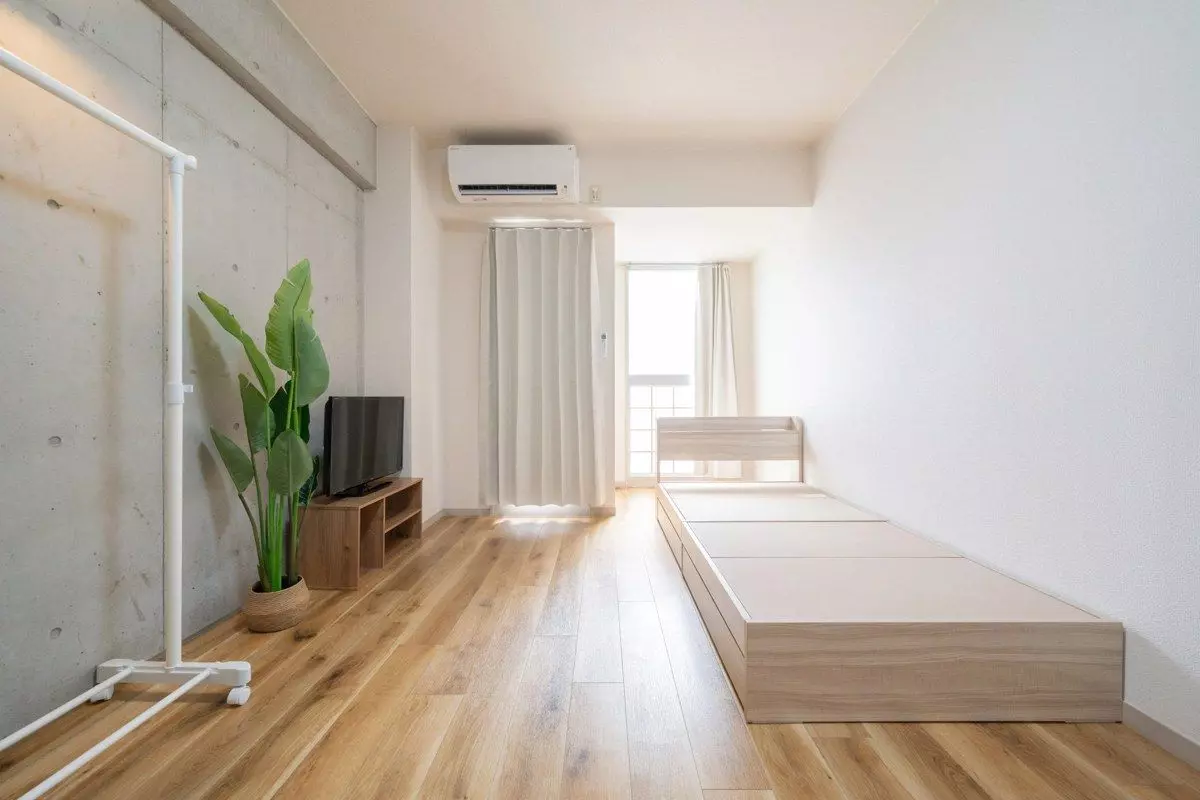
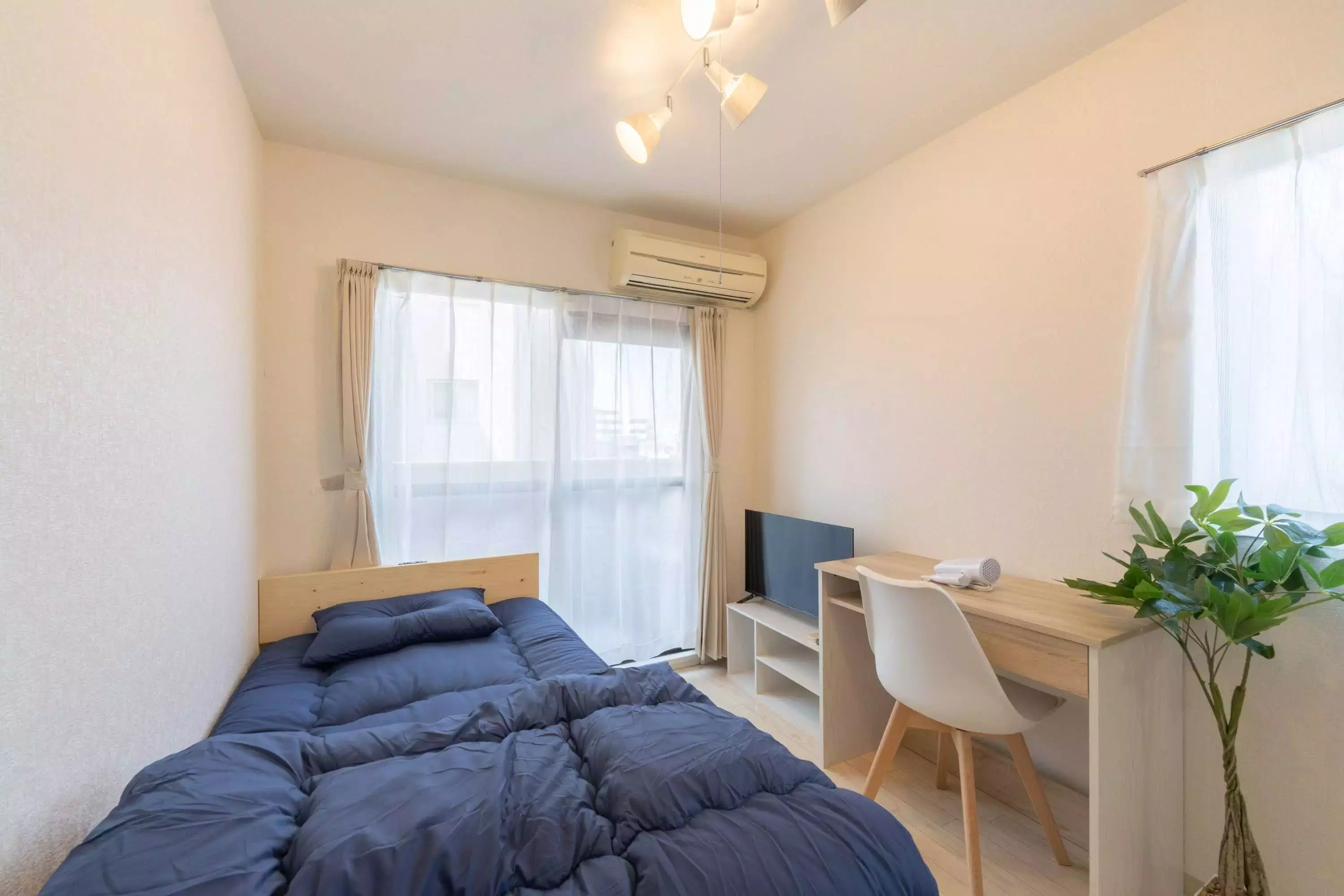
Furthermore, you can significantly reduce initial costs by using furnished apartments or rental services. When moving, having the mindset of "using what you need first" rather than "buying everything" will lead to a more manageable new life.
Search for a room
Only furnished properties with appliances are listed!
How to calculate initial costs
To accurately understand the initial costs of moving, it's crucial to organize them using a "calculation formula" rather than relying on intuition. Breaking down the costs into rental contract fees, moving expenses, and furniture/appliance costs makes it easier to avoid going over budget. Also, if you don't correctly interpret the contents of the estimate, you may end up paying unnecessary fees.
This section explains the basic methods for calculating initial costs and points to keep in mind.
Rental contract calculation formula
The initial costs associated with a rental agreement can be easily understood using the following formula.
- Initial costs = Security deposit + Key money + Brokerage fee + First month's rent (including management fee) + Guarantee fee + Fire insurance premium + Other expenses
Generally, this total often amounts to 4 to 5 months' worth of rent. It's important to include not only the rent but also management fees and common area charges in the calculation; overlooking these can result in a discrepancy of tens of thousands of yen. The amount of advance rent varies depending on the move-in date and contract start date, so be sure to check whether pro-rata calculation is applied.
Common pitfalls in quotations
Initial cost estimates sometimes include items that are difficult to understand. Typical examples include "disinfection fees," "24-hour support fees," and "administrative fees," which are automatically included even though they are not mandatory.
Additionally, fire insurance premiums and guarantee fees may be set higher than the market rate. Instead of just looking at the total amount, checking the necessity and reasonableness of each item could potentially reduce initial costs by tens of thousands of yen.
When is the payment due?
In most cases, the initial costs of renting an apartment are paid in a lump sum between the time of application and before the contract is signed. In most cases, the payment is requested after the application is approved, and the contract cannot proceed unless the payment is made by the specified deadline.
Since moving expenses and furniture/appliance costs are incurred before and after moving in, it's important to organize the overall payment schedule. If you're worried about not having enough funds prepared, discuss payment methods and deadlines as soon as possible.
[Rent-based] Initial Cost Simulation
A key characteristic of initial moving expenses is that they "vary greatly depending on the rent." Many items, such as security deposits, key money, and brokerage fees, are calculated based on the rent, so the higher the rent, the higher the total initial costs will be.
Here, we will simulate the actual initial costs required, using examples of rents of 30,000 yen, 50,000 yen, and 70,000 yen.
Rent of 30,000 yen: A guideline for keeping costs to a minimum.
For a property with a monthly rent of 30,000 yen, with no security deposit or key money, and utilizing a brokerage fee discount, the initial costs for signing a rental agreement are approximately 100,000 to 150,000 yen.
Even including advance rent, security deposit, and fire insurance, the total cost is relatively low, and if you keep moving expenses down during off-peak seasons, it can sometimes come down to around 200,000 to 250,000 yen. A key feature is that by minimizing furniture and appliances, or by choosing a furnished apartment, it's easy to aim for initial costs under 300,000 yen.
Rent of 50,000 yen: A rough estimate for an average case.
For a property with a monthly rent of 50,000 yen, under typical conditions such as a one-month security deposit, one-month key money, and one-month brokerage fee, the rental contract costs alone will amount to approximately 200,000 to 250,000 yen. Adding moving expenses of 50,000 to 70,000 yen and furniture and appliance purchase costs of 50,000 to 100,000 yen, the total initial costs will be approximately 300,000 to 400,000 yen.
If you don't adjust the conditions, the rent is likely to exceed 300,000 yen, so it's effective to take advantage of properties with no key money or free rent periods.
Rent of 70,000 yen: Estimated based on urban areas
For urban properties with a monthly rent of 70,000 yen, initial costs can be quite high. With a security deposit, key money, and brokerage fee each amounting to one month's rent, it's not uncommon for rental contract costs alone to reach around 300,000 yen. Furthermore, if you include moving expenses and furniture and appliance costs, the total can sometimes exceed 400,000 to 500,000 yen.
If you want to keep initial costs down, it's important to consider properties with no key money, furnished apartments, and adjusting the move-in date.
Search for a room
Only furnished properties with appliances are listed!
How do initial costs vary depending on the number of people living alone, as a couple, or as a family?
The initial costs of moving vary greatly depending on the number of people living in the property. While rental contract fees are influenced by the floor plan and rent, moving expenses and furniture/appliance purchase costs tend to increase with the number of people.
Here, we will explain the characteristics and points to note regarding initial costs for single people, couples, and families of three or more.
Living alone: Furniture and appliances are a bigger expense than contract fees.
For those living alone, it's common to choose relatively low-rent properties such as studio apartments or 1K apartments, so the overall cost of the rental agreement tends to be lower.
On the other hand, you'll need to buy appliances like a refrigerator, washing machine, microwave, and bed from scratch, and the cost of furniture and appliances will make up a large portion of your initial expenses. Especially for new graduates and students moving for the first time, the burden of preparing for living expenses tends to be heavier than the contract fees, so utilizing furnished apartments or rental services is a good idea.
Living as a couple: Moving costs tend to be higher.
When two people start living together, they often choose larger apartments such as 1LDK or 2DK, which means that the rent increases, as do the security deposit, key money, and brokerage fees. In addition, the amount of belongings increases significantly compared to living alone, so moving costs tend to be higher.
Sharing furniture and appliances is an advantage, but it can increase the overall cost of moving due to the need for larger trucks and more workers from the moving company. Getting quotes from multiple companies is essential.
For three or more people: The cost will vary depending on the floor plan, initial purchases, and the number of moving services.
For families of three or more, a 2LDK or larger apartment is usually required, which significantly increases rent levels. As a result, initial costs tend to be higher, especially when calculated based on rent.
Furthermore, the increasing size of beds, storage furniture, and home appliances will also increase initial purchase costs. Moving can sometimes require multiple trucks, leading to significant cost differences. For family moves, timing and disposing of unwanted items are key to reducing costs.
How to reduce initial costs
Initial moving expenses include both "mandatory payments" and "items that can be reduced with some effort." If you blindly accept and pay everything, it's not uncommon for the cost to be tens of thousands to over a hundred thousand yen higher than the market rate.
This section provides specific examples of how to reduce initial costs by identifying easily reducible expense categories, negotiating points, and changing your selection criteria.

Find properties with no security deposit or key money.
Properties with no security deposit or key money are a prime example of a way to significantly reduce initial costs when signing a rental agreement. Compared to cases where a security deposit and key money are each equivalent to one month's rent, the difference can be more than 100,000 yen.
On the other hand, since there is no security deposit, it is important to be aware that you may be charged for the actual cost of restoring the property to its original condition upon moving out. Properties with no key money may also have rent set higher than the market rate. It is important to compare not only the initial costs, but also the total cost after moving in and moving out.
Reduce brokerage fees
Legally, the maximum brokerage fee is "one month's rent plus tax," but you don't necessarily have to pay the full amount. Recently, more and more real estate companies are advertising half-price or even free brokerage fees. By choosing a company that handles properties they manage themselves or properties where the landlord covers the fee, you can naturally reduce your brokerage fees.
Furthermore, if multiple companies are handling the same property, the commission fee may be reduced through negotiation. Be sure to check the commission conditions in the early stages of your property search.
Make the "advance rent" easier with free rent.
Free rent refers to a contract condition where the rent is waived for a certain period.
In many cases, the first month's rent is waived after moving in, significantly reducing the amount of rent you have to pay in advance. Especially if you move in at the end of the month, you won't have to pay prorated rent plus the rent for the following month, which can reduce initial costs by tens of thousands of yen. However, there may be penalties for early termination, so be sure to check the contract terms carefully.
Check if optional fees (disinfection, support, etc.) can be waived.
Items such as "disinfection fee," "24-hour support fee," and "peace of mind support" included in the estimate are typical examples of expenses that are often not mandatory. These can cost around 10,000 to 30,000 yen, and removing them can significantly reduce initial costs.
Some real estate companies automatically include these charges, so check if they can be removed if you don't need them. Asking for an explanation for each item is key to avoiding unnecessary payments.
Lower moving costs by getting multiple quotes and adjusting the schedule.
Moving costs vary greatly depending on the moving company, date, and time of day. Getting quotes from multiple companies can often result in differences of tens of thousands of yen.
You can also reduce costs by avoiding weekends, holidays, and morning appointments, and choosing weekdays with no specific time slot. If you have a small amount of luggage, using a shared shipping service or a single-person moving package is also effective. Moving costs are one of the expenses that are "easy to negotiate."
When it comes to furniture and home appliances, there's also the option of "not buying" them.
Buying all new furniture and appliances can significantly increase initial costs. Therefore, choosing not to buy them from the start is a viable option. Choosing a furnished apartment eliminates the need for purchases and makes moving much easier.
Furthermore, for short-term stays, using a rental service can help prevent unnecessary expenses. This is especially suitable for people living alone or those planning to relocate for work.
Those who want to keep initial costs down should also compare shared housing and furnished apartments.
For those who want to minimize initial costs, it's worth comparing not only typical rental properties but also shared houses and furnished rentals.
In many cases, security deposits, key money, and brokerage fees are not required or are significantly reduced, potentially keeping initial moving costs down to tens of thousands to over a hundred thousand yen. This is a viable option for short-term stays or for those living alone for the first time.
Are installment payments or advance payments possible? What are the realistic payment options?
Since the initial costs of moving can be a large sum, many people worry about whether they can pay in installments or have the money advanced to them. In reality, payment methods vary depending on the real estate company and the services used.
Since not everything can be split into installments, it's important to understand realistic payment options and potential pitfalls, and to create a manageable financial plan.
The way initial costs are paid in installments differs depending on whether you use a real estate company, a credit card company, or a guarantee company.
Whether or not initial costs can be paid in installments depends on the payment recipient. Payments to real estate companies are generally made in a lump sum, and installments are usually not permitted. However, if the company accepts credit card payments, you can use the installment or revolving payment options offered by your credit card company later.
Additionally, some guarantee companies offer plans that allow you to pay the initial guarantee fee in installments. However, not all costs are covered, so it is essential to check in advance how much can be paid in installments.
Points to note when paying by credit card installments
While credit card installment payments are convenient, there are some points to be aware of. The biggest issue is the installment fee; the more installments you make, the higher the total amount you pay. Also, if you exceed your credit limit, the payment may not go through, and the contract may not proceed.
Moving expenses can be high, so it's important to check your available credit limit beforehand. Avoid unreasonable installment plans, as they can strain your finances; create a repayment plan before using the service.
Prioritizing when you absolutely need more
If you're short on funds, it's crucial to prioritize your payments. The top priority should be the fees required for the rental agreement; you won't be able to move in without paying these. Next is moving expenses, and finally, the cost of purchasing furniture and appliances. Furniture and appliances can often be substituted with secondhand or rental items, making them easier to postpone.
Setting priorities will help you create a realistic moving plan.
FAQ
Many questions arise regarding initial moving expenses, especially for those signing a rental agreement for the first time. Particular concerns include "By when do I need to have the money ready?" and "Are the costs listed in the estimate really necessary?"
Here, we address frequently asked questions to help you resolve any concerns you may have regarding initial costs.
By when do I need to have the initial funds ready?
The initial costs of renting an apartment generally need to be paid between the time the tenant screening process is completed and the signing of the lease agreement.
In many cases, payment deadlines are set shortly, ranging from a few days to a week, and the contract may not proceed if payment is not made by the deadline. Therefore, it is important to secure a certain budget when you start looking for a property.
Moving expenses and furniture/appliance costs are spread out before and after moving in, but rental contract fees are generally paid in a lump sum.
Are these costs on the estimate mandatory? (e.g., lock replacement, disinfection, support)
The "key replacement fee," "disinfection fee," and "24-hour support fee" listed on the estimate are often not mandatory.
In particular, disinfection fees and support fees are often optional and may be waived. On the other hand, key replacement fees are sometimes mandatory for security reasons.
The important thing is not to accept everything at face value, but to verify the necessity of each item. Sometimes, simply verifying and negotiating can reduce initial costs.
I'm worried about move-out fees, but is it a bad deal to rent without a security deposit?
While properties without a security deposit offer the advantage of lower initial costs at the time of signing a contract, many people express concerns about the costs they will incur when moving out.
In reality, even with a security deposit, cleaning and restoration costs are typically deducted, meaning you won't get the full amount back. For properties without a security deposit, you'll be charged for actual expenses upon moving out, so the total amount paid may end up being the same.
The important thing is to check the contract details and the scope of restoration in advance.
If you absolutely have to move during peak season, what should you cut back on?
The busy season from February to April tends to see higher rent and moving costs, making it difficult to keep initial expenses down. In such cases, it's important to prioritize reviewing and cutting costs wherever possible.
The first things to consider are reducing brokerage fees and optional expenses, and then minimizing the purchase of furniture and appliances. Moving costs can potentially be reduced by choosing weekdays and no time restrictions. The key is to prioritize rather than trying to cut costs from everything.
summary
When considering initial moving expenses, it's important to include not only the rental contract fee, but also moving expenses and the cost of purchasing furniture and appliances. A general guideline is "4-5 months' rent + moving expenses + living preparation expenses," and depending on the circumstances, it may be possible to keep it under 300,000 yen. To achieve this, it's essential to look for properties with no security deposit or key money, review brokerage fees, reduce optional expenses, and be creative with the timing and method of your move.
Additionally, choosing furnished apartments or shared housing can significantly reduce initial costs. Understanding the breakdown of expenses beforehand and prioritizing them will lead to a smoother move.