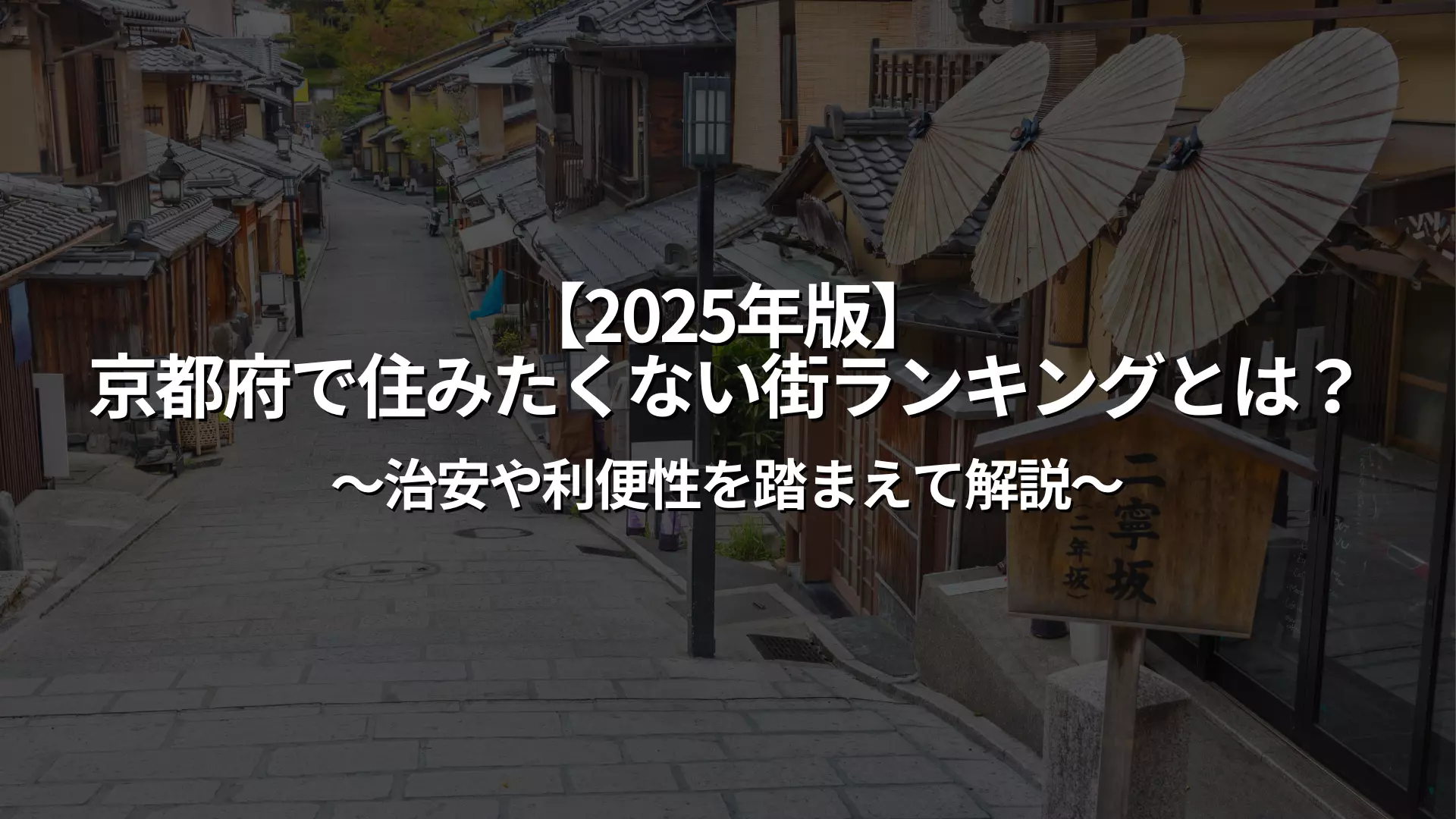
Kyoto Prefecture's Top 5 "Cities You Won't Want to Live In" Ranking (2025 Edition)
We are announcing the 2025 ranking of "Cities in Kyoto Prefecture Where People Don't Want to Live." Kyoto is a popular tourist destination, but there are areas where people feel uneasy about safety, transportation access, and the living environment when it comes to actually living there.
This article introduces areas that have been rated as "difficult to live in" based on multiple factors, including resident reviews, the local government's crime rate, accessibility, and the surrounding environment. This information is especially useful for those living in Kyoto for the first time or those considering moving with their families, as it provides information on points to avoid and things to be aware of.

No. 1: Fushimi Ward, Kyoto City (Mukojima area)
The Mukojima area of Kyoto City's Fushimi Ward has relatively low rent, but concerns about public safety have been raised and it is often cited as a "place you don't want to live in." In particular, issues such as late-night noise, the roar of motorcycles, and street trouble are considered problems.
Additionally, many residential areas are far from the station, making commuting to work or school inconvenient. While there have been moves toward redevelopment in recent years, it is taking time to improve the surrounding environment. This is an area where you may regret choosing based solely on price.

2nd place: Minami Ward, Kyoto City (Higashikujo and Sujin areas)
The Higashikujo and Sujin districts of Minami Ward, Kyoto City, have been viewed as less safe than other areas due to their historical background and slow urban development. Many people have expressed concerns about walking alone at night and the safety of school routes.
Another reason why the area is considered "difficult to live in" is that, despite its proximity to tourist destinations, it lacks commercial facilities and infrastructure. While some local residents hope for improvements, at present, careful consideration is needed for raising children and women living alone.

3rd place: Yamashina Ward, Kyoto City
Yamashina Ward is located on the east side of Kyoto City and is a commuter town, but there are many negative comments about its safety and convenience. Many people tend to be concerned about security, especially since there is little traffic at night and many dark streets.
Additionally, there are many slopes and elevation changes, and some people say that it is difficult for elderly people and families with small children to get around. Although the construction of apartment buildings has progressed in recent years, there are still issues with the livability of the area as a whole.
No. 4: Shimogyo Ward, Kyoto City (Shijo Kawaramachi area)
The Shijo Kawaramachi area in Shimogyo Ward is known as one of Kyoto's most bustling downtown areas, and is a center of tourism and commerce. However, when viewed as a living environment, many people feel that they "do not want to live there" due to the noise, large crowds, and poor security at night.
Even though there are many apartment buildings lined up here, the high number of pedestrians makes it difficult to maintain privacy, making it unsuitable for people seeking a quiet lifestyle. While it is highly convenient, it is not an area suitable for those seeking a peaceful lifestyle.
No. 5: Uji City (Makishima/Utoro area)
Makishima and the Utoro area of Uji City are located in the suburbs, some distance from central Kyoto, and are often considered "difficult to live in" due to transportation accessibility and the local image. The Utoro area in particular has been criticized for its historical background, making it difficult for people from outside to settle in.
There are also complaints that the area lacks convenience for daily life, with few shopping facilities or medical facilities nearby. While the area is rich in nature and quiet, careful consideration is required regarding the living environment.
Why is it said to be difficult to live in? What are the common characteristics of the area?
The reason why people search for "Kyoto, a difficult city to live in" is because there are common problems in certain areas.
The typical features are:
- Public safety concerns
- Poor transportation access
- Examples include the lack of infrastructure for daily life.
Due to the complex interplay of these factors, areas are often deemed "unsuitable for living," so careful area selection is required, especially for single people and families with children.
In this chapter, we will explain in detail how each issue affects the quality of life.
Background to concerns about public safety
Areas in Kyoto Prefecture that are considered "undesirable to live in" include areas with high crime rates and areas that have been the subject of frequent trouble in the past. These areas tend to be home to factors that undermine residents' sense of security, such as nighttime noise, the appearance of motorcycle gangs, and poor pedestrian manners.
In addition, long-standing regional issues and the concentration of poor people are also considered to be factors in the deterioration of public safety. In order to live safely, it is important to pay attention not only to the rent and location of the property, but also to the crime information and past reputation of the area.
Problems with transportation convenience and access
A common feature of areas that are considered difficult to live in is the lack of public transportation such as trains and buses. Particularly for those who plan to commute to work or school, factors such as the distance to the nearest station, the limited number of trains, and the inconvenience of transfers have a significant impact on the quality of life.
Additionally, traffic congestion on major roads and poor sidewalk maintenance can hinder bicycle and walking. Areas with low convenience can lead to lost time and stress in daily life, so it's important to check in advance.
Issues regarding infrastructure and the surrounding environment
When it comes to the living environment, the availability of infrastructure such as supermarkets, hospitals, schools, and government offices is also an important point. In areas that are considered difficult to live in, there may be few of these facilities within walking distance, or the quality of services may be insufficient.
Additionally, weak local community functions, such as a lack of parks and daycare centers, complicated rules for disposing of trash, and deteriorating relationships between residents, are also factors that reduce the comfort of living in an area. To lead a comfortable daily life, the convenience and security of the surrounding environment cannot be overlooked.
Search for a room
Only furnished properties with appliances are listed!
Compare Kyoto's Living Environments by Area
Within Kyoto Prefecture, there is a clear division between areas that are easy to live in and areas that are not. Each area has its own characteristics, such as public safety, convenience, and natural environment, and there are big differences in how comfortable it is to live there.
For example, the closer you are to the city center, the better the transportation options, but there is a lot of foot traffic and noise and congestion can be a concern, while suburban residential areas offer the appeal of quietness and abundant nature.
Here, we will introduce Kyoto's major areas, comparing them from the perspectives of safety, convenience, and quietness.
A popular residential area with good security
If you are looking for a safe place to live in Kyoto, parts of Sakyo Ward, Kita Ward, and Nakagyo Ward in Kyoto City are particularly popular. The Kitashirakawa and Shimogamo areas of Sakyo Ward, and the Kitayama area of Kita Ward are known as quiet residential areas, and are popular with families and seniors alike.
Additionally, areas along Oike-dori in Nakagyo Ward are home to many police stations and public facilities, providing a sense of security even at night. Both areas offer high convenience for daily life and have excellent educational environments, making them popular with families raising children. If you're looking for a safe and comfortable life in Kyoto, these areas are a great choice.
Things to be aware of around tourist spots before moving in
You need to be careful when living in areas adjacent to tourist spots such as around Kyoto Station, Gion, Arashiyama, and Kiyomizu-dera Temple. The large number of tourists can cause noise, traffic congestion, garbage problems, and other issues that can interfere with daily life.
Buses and trains are especially crowded during the tourist season, making commuting to work or school very stressful. Furthermore, the small percentage of local residents leads to a weak sense of community, and some people are concerned about crime. While convenient, it tends to be unsuitable for those seeking a quiet lifestyle.
Do you want to live in a quiet and peaceful city?
For those seeking a quiet living environment, suburban areas such as Nishikyo Ward in Kyoto City, Nagaokakyo City, and Joyo City are popular.
The Katsura and Arashiyama areas of Nishikyo Ward are rich in nature and have a calm atmosphere, while Nagaokakyo City is a developed commuter town with excellent public safety and childcare support. Furthermore, Joyo City is an area where residential areas and rural areas coexist, making it possible to live away from the hustle and bustle.
These areas have a certain degree of convenient transportation access while maintaining a quiet atmosphere, making them ideal for remote work and retirement living.
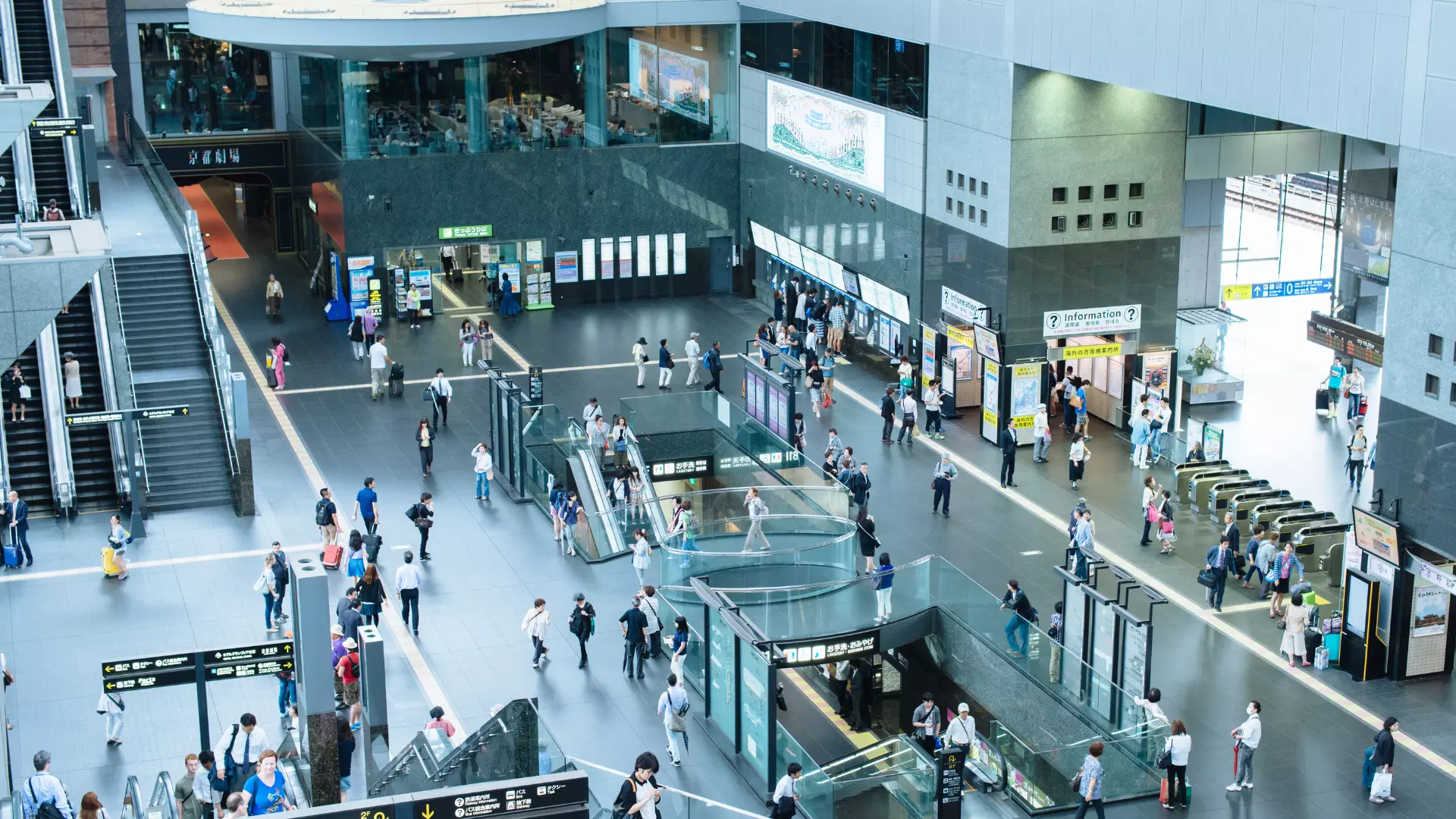
Current situation and risks in the area south of Kyoto Station
While the area around the South Exit (Hachijo Exit) of Kyoto Station has undergone large-scale redevelopment in recent years, it still faces issues such as public safety and a sense of unity in the streetscape. The gap between the well-developed area in front of the station and the dimly lit alleys a little further away makes the area seem "unlivable."
This chapter provides a balanced explanation of the dual aspects of crime rate, landscape issues, and transportation convenience, and outlines the points to pay attention to when moving or choosing a home.
Crime Rates and Public Safety Trends
The criminal offense rate in Kyoto Prefecture is 1 per 237 people, ranking 20th in the nation, but areas around Kyoto Station, such as Minami Ward and Shimogyo Ward, tend to be slightly higher. A certain number of violent crimes and thefts have been reported south of the station, with approximately 10% of all violent crimes in Kyoto occurring in this area.
However, security guards are patrolling the area in front of the station and security cameras are being installed, so although it is not completely safe, it does serve as a deterrent to a certain extent.
Impacts and challenges of redevelopment
On the south side of Kyoto Station, a redevelopment plan (commonly known as the "Kyoto Project") for Kyoto Central Post Office and the Station Building West No. 2 Parking Lot is currently underway, and is scheduled for completion in 2029. This will strengthen the commercial, office, and hotel functions, and is expected to improve convenience for daily life and have an economic impact.
On the other hand, harmony with the area, where existing dilapidated buildings and ruins remain, is an issue, and local residents have expressed concerns about the destruction of the landscape and whether the benefits of redevelopment will be fully realized.
Voices of local residents and internet users
Some local residents and those online say that the area south of Kyoto Station still has an "old, deserted atmosphere." Some Yahoo! Answers say things like, "Just hearing the name of the place makes me frown," and "It's best to avoid it at night," so there are strong concerns about safety.
On the other hand, with the development of commercial facilities such as Avanti and Aeon Mall, there are also voices praising the convenience of the area, and there is also hope that "the redevelopment has made the area even more attractive."
Search for a room
Only furnished properties with appliances are listed!
Tips for choosing an area in Kyoto you won't regret
When choosing a home in Kyoto, don't just make the simple decision that "it's a tourist destination, so it's easy to live there." If you don't comprehensively consider multiple factors, such as public safety, infrastructure, transportation access, and the local atmosphere, you may end up regretting your decision after moving in. Since needs vary depending on your life stage, such as living alone, raising children, or retirement, it's important to choose an area that suits your lifestyle.
In this chapter, we will explain in detail the key points to consider when choosing an area in Kyoto that will not disappoint you.
Things to check before moving in
Before choosing a place to live in Kyoto, the first three things you should check are safety, accessibility, and convenience of living.
- Check the safety of your area by checking police crime maps.
- In terms of access, it's important to check the distance to the nearest station, the number of trains, and whether there are smooth connections to major lines.
- In terms of convenience, an important factor to consider is whether facilities necessary for daily life, such as supermarkets, hospitals, government offices, and daycare centers, are within walking distance.
Research into the atmosphere of the surrounding area and the characteristics of the residents is essential, as they are directly linked to the actual living experience.
Points to look at when viewing and conducting preliminary investigations
When viewing a property, be sure to check not only the room itself but also the surrounding environment. The atmosphere can be very different during the day and at night, so it is best to view the property at different times of the day if possible.
It's also important to consider crime prevention, such as whether there are streetlights on the way from the station to the property, and how much traffic there is. Other important things to check include noise levels and the impact of nearby buildings (schools, restaurants, entertainment districts, etc.) on your daily life. Since there are many things you won't realize until you see the property, advance preparation will help prevent mistakes.
How to choose from the perspectives of single people, children, and the elderly
The ideal residential area varies depending on your lifestyle. For single people, areas that prioritize convenience, such as being close to the station and having plenty of convenience stores and restaurants, are convenient. For families with children, educational areas with plenty of parks and childcare facilities and good public safety (e.g., Kita-ku and Sakyo-ku) are popular.
On the other hand, elderly people and those considering a second life tend to choose quiet residential areas with few hills (e.g. Nagaokakyo City or Nishikyo Ward). Choosing a home based on your own and your family's age and goals is the first step to choosing a home you won't regret.
FAQ
We have compiled a Q&A format of frequently asked questions regarding choosing a home in Kyoto.
Based on actual feedback such as "Which areas are unsafe?", "Which areas are not suitable for raising children?", and "Which places have cheap rent but should be avoided?", the book provides easy-to-understand information that will help you choose an area you won't regret. Kyoto in particular has its appeal as a tourist city, but there are also many points that residents need to be aware of.
The purpose of this article is to provide information to help readers live safely in Kyoto and to alleviate their concerns and questions.
Q. Which areas in Kyoto are particularly unsafe?
Areas in Kyoto that are considered to be unsafe include Minami Ward (especially the Higashikujo and Sujin districts) and Fushimi Ward (around Mukojima). These areas have a relatively high number of reports of violent crimes and noise problems, and even local residents are advised to be careful.
Additionally, there may be reports of suspicious people in areas with few streetlights at night or in areas where young people tend to gather. If you are considering moving, we recommend checking the Kyoto Prefectural Police crime map and local reviews in advance.
Q. What areas are not suitable for raising children?
Areas that are considered unsuitable for raising children include areas where there are concerns about public safety and the educational environment.
Specifically, careful consideration is required in areas where there are concerns about noise, traffic, and neighborhood troubles, such as parts of Fushimi Ward and Minami Ward in Kyoto City.
Additionally, areas that are far from nurseries and elementary schools, or have few parks and other child-friendly facilities, are also considered unsuitable for raising children. Compared to Nakagyo Ward, Nagaokakyo City, and Sakyo Ward, which have extensive child-rearing support, it is safer to avoid areas with many issues in terms of education and safety.
Q. What are some places that have cheap rent but should I avoid?
Areas where you may regret choosing based solely on low rent include Mukojima (Fushimi Ward) and Sujin/Higashikujo (Minami Ward). While rent is certainly cheaper in these areas, many people have concerns about the safety and living environment, particularly issues such as safety at night and not following rules for garbage disposal.
It is important to make a comprehensive decision, taking into account convenience and the availability of nearby facilities, and to make a choice that prioritizes livability rather than just focusing on "cheapness."
Q. What are the advantages and disadvantages of living near a tourist spot?
The benefits of living near a tourist destination include easy access, a wide range of nearby facilities, and plenty of places to explore on the weekends.
On the other hand, the disadvantages include the disruption to daily life caused by the crowds of tourists, noise, traffic congestion, and increased garbage. Residents tend to feel more stressed during peak tourist seasons, especially in areas such as Gion, around Kiyomizu-dera Temple, and near Kyoto Station.
You need to decide whether you want convenience or tranquility based on your lifestyle.
Q. What are some recommended areas with good security?
Areas in Kyoto that are considered to have good security include Sakyo Ward (Shimogamo and Kitashirakawa), Kita Ward (Kitayama and Murasakino), and along Oike Street in Nakagyo Ward.
These areas are well-developed residential areas, have low crime rates, and are known for relatively strong community ties. They also have attractive child-rearing support and educational environments.
For those looking for a quiet and peaceful environment, suburban areas outside Kyoto City, such as Nagaokakyo City and Joyo City, are also recommended.
Search for a room
Only furnished properties with appliances are listed!
summary
Kyoto has many attractive tourist spots and cultures, but you need to be careful when choosing an area to live in. In particular, there are regional differences in terms of safety, transportation access, and the state of infrastructure, so if you decide on a place just because "the rent is cheap" or "it's a famous place," you may regret it.
This article provides a detailed introduction to the "ranking of cities you don't want to live in," as well as important points to bear in mind and the characteristics of each area. We hope that this article will help you choose an area that suits your lifestyle and values, and help you achieve a safe and comfortable life when searching for a home in the future.