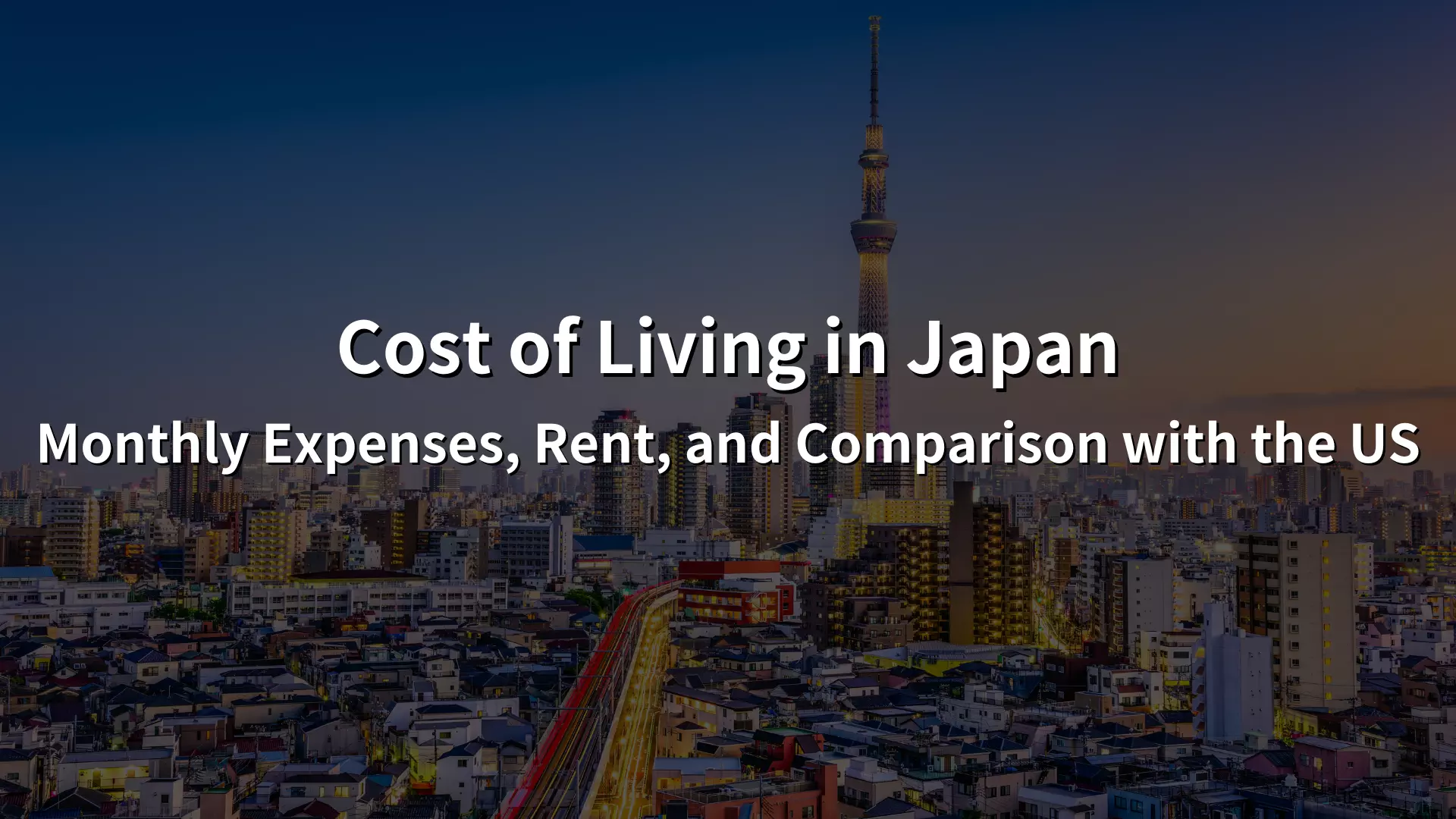
Cost of Living in Japan: How Much Do You Need Per Month?
One of the most common questions Americans ask before moving abroad is: “How much does it actually cost to live there every month?”
Japan has a reputation for being expensive, but the reality is more nuanced. While some costs—especially housing—can feel high depending on location and housing type, many daily expenses are significantly lower than in major U.S. cities.
For a single person living in Japan, the total monthly cost of living depends mainly on rent, city, and lifestyle. Once those factors are clear, Japan becomes far more predictable—and often more affordable—than expected.
Average Monthly Cost for a Single Person
For someone living alone in Japan, a realistic monthly cost range is:
- Low-cost lifestyle: ¥120,000 – ¥150,000
- Average lifestyle: ¥150,000 – ¥200,000
- Comfortable lifestyle: ¥200,000 – ¥250,000+
This estimate includes rent, food, transportation, utilities, and basic daily expenses.
A typical monthly breakdown for a single person looks like this:
- Housing (rent): ¥60,000 – ¥100,000
- Food & groceries: ¥30,000 – ¥50,000
- Transportation: ¥8,000 – ¥15,000
- Utilities & internet: ¥10,000 – ¥15,000
- Other daily expenses: ¥10,000 – ¥20,000
Housing alone often accounts for 40–50% of total monthly spending, making it the single biggest factor in your cost of living.
It’s also worth noting that many people in Japan live comfortably on less than what would be considered “bare minimum” in the U.S., thanks to reliable public transportation, affordable food options, and a generally lower cost of everyday goods and services.
Cost of Living in Japan in USD vs JPY
To make these numbers easier to understand for Americans, here is the same monthly cost converted into U.S. dollars.
At an approximate exchange rate of ¥150 = $1 USD:
- ¥120,000 ≈ $800
- ¥150,000 ≈ $1,000
- ¥200,000 ≈ $1,330
- ¥250,000 ≈ $1,670
That means a single person can live in Japan for around $1,000–$1,500 per month, even in or near major cities, depending on housing choices.
For comparison, this level of monthly spending would be difficult to achieve in large U.S. cities such as New York or Los Angeles without shared housing or significant compromises.
One important difference to keep in mind is that Japan often has higher upfront housing costs (such as deposits and fees), even if rent itself is reasonable. This is why choosing the right housing option has a major impact on affordability—an issue we’ll cover in detail later in this guide.
Breakdown of Monthly Living Expenses in Japan
To understand the true cost of living in Japan, it’s important to look beyond the total monthly figure and break it down by category. While housing is the largest expense, other daily costs tend to be stable, predictable, and often lower than in the United States.
Below is a realistic overview of the main monthly living expenses for a single person in Japan.
Housing and Rent Costs
As noted above, housing is by far the largest monthly expense in Japan and the biggest factor that determines your overall cost of living.
For a single person, typical monthly rent ranges are:
- Shared housing/compact apartments: ¥50,000 – ¥80,000
- Private studio apartment: ¥70,000 – ¥120,000
- Larger or centrally located units: ¥120,000+
Rent varies significantly depending on:
- City and neighborhood
- Distance from major train stations
- Type of housing (shared vs private)
- Whether the unit is furnished or not
One important difference compared to the U.S. is that many standard apartments in Japan are completely unfurnished (this includes no refrigerator or laundry machine), meaning additional upfront costs. Moreover, traditional rental contracts often require deposits, non-refundable key money, and agency fees, which can add several months’ worth of rent before you even move in.
Because of this structure, housing decisions have an outsized impact not only on monthly costs but also on total moving expenses.
Food and Groceries
Food costs in Japan are generally lower and more flexible than many Americans expect.
A typical monthly food budget looks like this:
- Groceries: ¥20,000 – ¥35,000
- Eating out: ¥10,000 – ¥20,000
Japan offers a wide range of affordable food options:
- Supermarkets with fresh produce and prepared meals
- Convenience stores with surprisingly high-quality food
- Casual restaurants where meals can cost as low as ¥500–¥1,000
Cooking at home keeps costs low, but even eating out regularly does not dramatically increase monthly spending compared to U.S. standards. As a result, food expenses are rarely a major financial burden in Japan.
Transportation Costs
Transportation in Japan is efficient, reliable, and relatively affordable, especially if you live near a train station.
Typical monthly transportation costs include:
- Daily commuting: ¥8,000 – ¥15,000
- Occasional travel: ¥2,000 – ¥5,000
Most people rely entirely on public transportation, as owning a car is unnecessary in major cities. Many Japanese employers also subsidize commuting costs, which can further reduce out-of-pocket expenses.
Compared to car ownership in the U.S.—which includes fuel, insurance, maintenance, and parking—Japan’s public transportation system significantly lowers overall transportation costs.
Utilities and Internet
Utilities and internet costs in Japan are consistent and easy to budget for.
A typical monthly breakdown is:
- Electricity, gas, and water: ¥8,000 – ¥12,000
- Internet: ¥3,000 – ¥5,000
Utility costs can increase slightly during extreme summer or winter months due to air conditioning or heating, but overall expenses remain predictable.
In some housing arrangements, utilities and internet are included in the rent, which simplifies budgeting and reduces the number of separate contracts—an advantage for newcomers to Japan.
Search for a room
Only furnished properties with appliances are listed!
Housing Costs in Japan (Why Rent Feels Expensive)
When people say that Japan is expensive, they are almost always talking about housing. While daily expenses such as food and transportation are relatively affordable, rent—and especially the way housing contracts work—often feels costly and unfamiliar to foreigners.
The key reason is not just the monthly rent itself, but how housing costs are structured in Japan.
Average Rent in Major Cities
Monthly rent in Japan varies widely depending on location, but the difference between major cities and regional areas is clear.
For a single person, typical rent in major cities is:
- Tokyo: ¥70,000 – ¥120,000
- Osaka: ¥60,000 – ¥100,000
- Other areas: ¥40,000 – ¥80,000
Even within the same city, rent can change significantly based on:
- Distance from the city center
- Walking distance to the nearest train station
- Building age and size
- Whether the unit is furnished or not
Compared to large U.S. cities, the monthly rent itself is not always higher. However, the total cost of securing housing and moving often feels more expensive due to upfront fees.
Initial Housing Cost Breakdown
One of the biggest surprises for foreigners moving to Japan is the amount of money required before moving in.
Traditional rental contracts often include:
- Security deposit
- Key money (a non-refundable payment to the landlord)
- Agency fees
- First month’s rent
Together, these costs can easily total 3 to 6 months’ worth of rent upfront.
For example, a ¥80,000 apartment may require ¥240,000–¥480,000 just to move in.
In addition, many apartments are unfurnished, meaning extra expenses for:
- Furniture
- Appliances
- Setup costs (delivery, installation)
For foreigners unfamiliar with Japanese rental customs—or without a local guarantor—this system creates both financial and logistical barriers.
Why Rent Is the Biggest Cost in Japan
Rent is the biggest monthly expense in Japan for three main reasons:
- Housing takes up a large share of income
For many single residents, rent alone accounts for 40–50% of total monthly spending.
- Upfront costs amplify the financial burden
Even if monthly rent seems reasonable, the initial payment required can significantly raise the effective cost of living, especially in the first year.
- Limited flexibility in traditional rentals
Standard leases often require long-term commitments (usually around two years), strict rules, and complex paperwork—making it difficult for newcomers to adjust their housing based on lifestyle or budget changes.
Because of these factors, housing decisions play a much larger role in overall affordability in Japan than any other expense category.
Choosing the right type of housing—and understanding how contracts work—can dramatically reduce both monthly costs and upfront financial stress.
Cost of Living by City in Japan
The cost of living in Japan can vary significantly depending on where you live. While major cities offer convenience, job opportunities, and transportation access, they also come with higher housing costs. On the other hand, smaller cities and more suburban or rural areas provide much lower rent but fewer community amenities.
Understanding these differences is essential when deciding where to live in Japan.
Living Costs in Tokyo
Tokyo is Japan’s most expensive city and the benchmark most foreigners use when estimating living costs.
For a single person living in or near Tokyo, a realistic monthly cost is:
- Total monthly cost: ¥170,000 – ¥250,000
- Rent: ¥70,000 – ¥120,000
- Food & daily expenses: ¥40,000 – ¥60,000
- Transportation: ¥10,000 – ¥15,000
- Utilities & internet: ¥10,000 – ¥15,000
Living closer to central districts or major train lines increases rent significantly, while choosing suburban areas with good rail access can reduce housing costs without sacrificing convenience.
Despite higher rent, Tokyo offers advantages that can offset costs, such as extensive public transportation, abundant job opportunities, and access to affordable food options throughout the city.
Living Costs in Osaka
Osaka is generally more affordable than Tokyo while still offering a large-city lifestyle.
Typical monthly costs for a single person in Osaka are:
- Total monthly cost: ¥150,000 – ¥220,000
- Rent: ¥60,000 – ¥100,000
- Food & daily expenses: ¥35,000 – ¥55,000
- Transportation: ¥8,000 – ¥12,000
- Utilities & internet: ¥10,000 – ¥15,000
Osaka is known for its reasonable rent, relaxed atmosphere, and local food culture. For many foreigners, it offers an excellent balance between affordability and urban convenience.
Major Cities vs Suburban Areas
Living outside major metropolitan areas can significantly reduce your cost of living in Japan.
In regional cities, suburban and rural areas, typical monthly costs are:
- Total monthly cost: ¥120,000 – ¥180,000
- Rent: ¥40,000 – ¥80,000
While these areas offer much lower rent and typically more living space, there are trade-offs to consider:
- Fewer job opportunities, especially for non-Japanese speakers
- Less convenient public transportation
- Smaller international communities
Major cities offer convenience, accessibility, and social opportunities, but at a higher housing cost. Other areas boast affordability and space but require greater lifestyle flexibility.
Choosing the right location ultimately depends on your priorities—whether that’s minimizing expenses, maximizing career opportunities, or finding a balance between the two.
Search for a room
Only furnished properties with appliances are listed!
Is Japan Expensive Compared to the United States?
Whether Japan feels expensive or affordable largely depends on what you compare it to in the United States. While Japan has higher upfront housing costs, many everyday expenses are noticeably lower than in major U.S. cities.
For Americans coming from large metropolitan areas, Japan often feels more affordable in daily life, even if rent initially appears high.
Japan vs New York
Compared to New York, living in Japan—especially outside central Tokyo—is significantly cheaper.
A rough monthly comparison for a single person:
- New York: $3,500 – $5,000+
- Tokyo: $1,300 – $1,700
Key differences include:
- Rent in New York is substantially higher for similar-sized apartments
- Public transportation in Japan is more reliable and less expensive
- Healthcare and basic services cost far less in Japan
Even when accounting for Japan’s upfront housing fees, total annual living costs in Tokyo are often lower than those in New York.
Japan vs Los Angeles
Los Angeles presents a different comparison due to car dependency and sprawling geography.
Monthly cost comparison:
- Los Angeles: $3,000 – $4,500
- Major cities in Japan: $1,200 – $1,600
In Los Angeles, expenses such as car payments, insurance, fuel, and parking significantly increase monthly costs. In contrast, most residents in Japan rely entirely on public transportation, eliminating many car-related expenses.
Rent in Japan’s major cities is generally lower than in desirable areas of Los Angeles, especially when comparing access to transportation and amenities.
What Is Cheaper in Japan?
Many everyday costs are consistently cheaper in Japan than in the U.S. and other countries, including:
- Food: Affordable restaurants and high-quality groceries
- Transportation: Public transit vs car ownership
- Healthcare: National health insurance with low out-of-pocket costs
- Utilities: Stable and predictable monthly bills
- Mobile plans: Lower-cost SIM and data options
While Japan may feel expensive at first due to housing contracts and initial setup costs, day-to-day living is often more affordable, particularly for single residents and young professionals.
For Americans used to high urban living costs, Japan can offer a balance between affordability, quality of life, and convenience.
How to Reduce Your Cost of Living in Japan
Many residents significantly lower their monthly costs by making a few strategic choices—especially when it comes to location and housing type.
For most people, reducing living expenses in Japan does not require sacrificing quality of life. Instead, it comes down to understanding how cities are structured and how housing options differ.
Choosing the Right Location
Location has the biggest impact on your cost of living in Japan, particularly on rent.
Living in the city center is convenient, but it comes at a premium. However, Japan’s extensive train network allows you to live slightly outside central areas while maintaining easy access to work, schools, and social life.
Cost-saving location tips include:
- Choosing neighborhoods one or two train stops away from major hubs
- Living along commuter train lines rather than subway-only areas
- Prioritizing train access over physical distance to downtown
In many cases, moving just 15–30 minutes away from a city center can reduce rent by 20–40%, without a meaningful loss of convenience. Because public transportation is reliable and safe, commuting is rarely stressful compared to driving in major U.S. cities.
Reducing Housing Costs with Furnished Housing
Housing is the largest expense in Japan, but it’s also where the biggest savings opportunities exist—especially for foreigners.
One effective way to lower both monthly and upfront costs is to choose furnished housing.
Furnished housing often includes:
- Furniture and appliances
- Utilities and internet
- Flexible contract terms
- Fewer upfront fees
This eliminates the need to purchase furniture, pay installation costs, or commit to long-term leases. While the monthly rent may appear slightly higher at first, the total cost of living is often lower, especially during the first year.
For newcomers to Japan, furnished housing also reduces risk. It allows you to settle in quickly, understand your lifestyle needs, and adjust your location later if necessary—without being locked into expensive contracts.
By combining a smart location choice with the right housing type, many residents manage to live comfortably in Japan while keeping their monthly expenses well below those of big U.S. cities.
Search for a room
Only furnished properties with appliances are listed!
Living in Japan with XROSS HOUSE
For many foreigners, the biggest challenge of living in Japan isn’t the monthly cost—it’s finding housing that is affordable, adaptable to your lifestyle, and easy to move into.
XROSS HOUSE offers a housing option designed specifically to reduce both the financial and logistical barriers that newcomers often face when moving to Japan.
Typical Monthly Cost with XROSS HOUSE
The typical monthly cost of living with XROSS HOUSE is:
¥60,000 – ¥90,000 per month, depending on location and room type
This range generally covers:
- Rent
- Utilities
- Internet
- Furniture and appliances
Compared to traditional apartments, this allows residents to keep their total monthly living costs predictable and manageable, often below ¥150,000–¥180,000, including food and transportation.
For many single residents, this makes it possible to live in or near major cities like Tokyo or Osaka at a cost that would be difficult to achieve with standard rental apartments.
What Is Included in the Rent
One of the key advantages of XROSS HOUSE is that most essential living costs are bundled into a single monthly payment.
Typically included in the rent:
- Fully-furnished room
- Shared or private living spaces
- Electricity, gas, and water
- High-speed internet
- Access to common facilities
By including these items, residents avoid:
- High upfront move-in costs
- Separate utility contracts
- Furniture purchases
- Installation and setup fees
This structure simplifies budgeting and makes it much easier to start living in Japan immediately after arrival.
Who XROSS HOUSE Is Best For
XROSS HOUSE is particularly recommended for:
- International students
- Working professionals relocating to Japan
- First-time residents unfamiliar with Japanese housing contracts
- People planning short- to mid-term stays
- Anyone looking to minimize upfront costs and financial risk
For those who value flexibility, simplicity, and taking charge of their finances, XROSS HOUSE provides a practical alternative to traditional apartments—especially during the first years of living in Japan.
By lowering housing-related barriers, residents can focus on building their lives in Japan with work, study, and hobbies rather than navigating complex rental systems.
Summary: Is the Cost of Living in Japan Worth It?
Japan’s cost of living is often perceived as expensive, but for many Americans, the reality is more affordable than expected—especially compared to U.S. cities.
While housing is the highest cost and can feel expensive due to upfront fees, everyday expenses such as food, transportation, and utilities are generally lower and more predictable. With the right location and housing choice, a single person can live comfortably in Japan within their chosen budget.
By understanding how living costs are structured and choosing flexible housing options, many newcomers find that Japan offers an excellent balance of affordability, convenience, and quality of life.