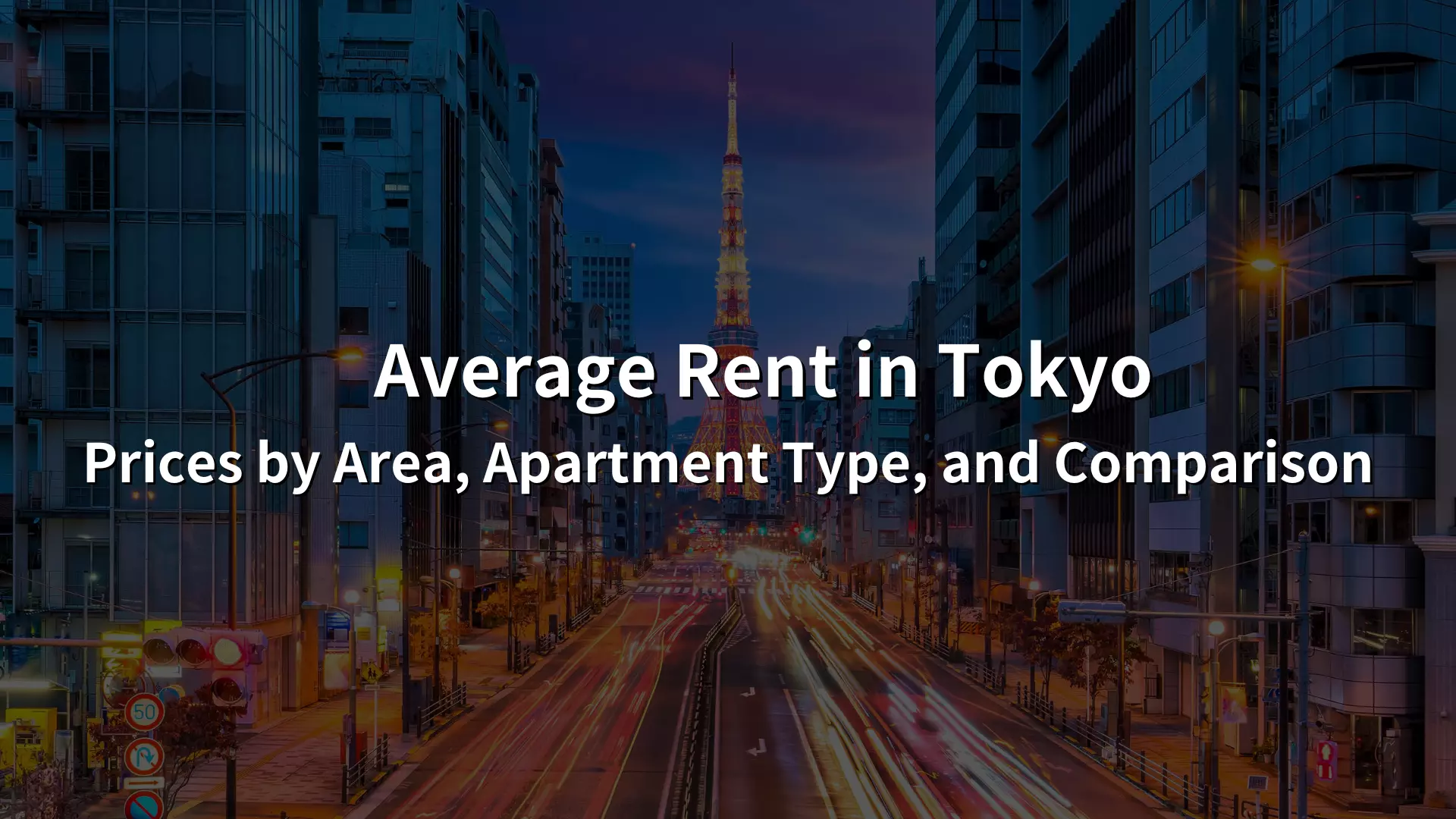
What Is the Average Rent in Tokyo?
The average rent in Tokyo varies widely depending on location, apartment size, and housing type. As of 2026, Tokyo remains one of the most affordable global megacities, particularly when rent is compared to that of big U.S. cities, despite its reputation for high living costs.
Below, we break down the average rent in Tokyo by apartment type, convert prices into USD, and compare Tokyo with major cities in the United States.
Average Monthly Rent in Tokyo (Studio, 1BR, Family)
Monthly rent in Tokyo and throughout Japan is typically categorized by layout rather than by the number of bedrooms. Here is a general market average across Tokyo’s 23 wards:
- Studio / One Room (20–25㎡, or 215-270 sq. feet)
¥75,000 – ¥95,000 per month
- 1 Bedroom Apartment (1LDK, 30–40㎡, or 322-430 sq. feet)
¥120,000 – ¥160,000 per month
- Family Apartment (2LDK–3LDK, 50–70㎡, or 538-753 sq. feet)
¥180,000 – ¥280,000 per month
Rent tends to be higher in central districts such as Minato-ku or Shibuya-ku, while more residential wards further from the city center offer significantly lower prices for similar unit sizes.
Average Rent in Tokyo in USD
For international residents and U.S.-based readers, converting rent into American dollars may make Tokyo’s affordability clearer.
Using an approximate exchange rate of ¥150 = $1 USD, average monthly rents in Tokyo look like this:
- Studio apartment: $500 – $630
- 1 bedroom apartment: $800 – $1,070
- Family apartment: $1,200 – $1,870
Even in central Tokyo, it is possible to rent a private apartment for under $1,000 per month—something that is increasingly rare in many U.S. metropolitan areas.
How Tokyo Rent Compares to Major U.S. Cities
When comparing rent internationally, Tokyo stands out for offering relatively affordable housing despite its high quality of life for residents, big city size, and economic power.
- New York
Average 1-bedroom rent: $3,500 – $4,500
- San Francisco
Average 1-bedroom rent: $3,000 – $4,000
- Los Angeles
Average 1-bedroom rent: $2,300 – $3,200
- Tokyo
Average 1-bedroom rent: $800 – $1,070
Unlike many U.S. cities, Tokyo has strict zoning laws, extensive public transportation, and a steady supply of new housing, which helps prevent extreme rent inflation. As a result, Tokyo consistently ranks as one of the most affordable global megacities in the world, relative to income and quality of life.
Average Rent in Tokyo by Area (Ward and City Comparison)
Rent prices in Tokyo vary significantly by ward and neighboring city. Even a difference of a few train stops can change monthly rent prices by several hundred dollars. Below is a breakdown of average rent in Tokyo by area, including central business districts as well as more affordable residential neighborhoods.
Central Tokyo (Minato, Shibuya, Chiyoda wards)
Central Tokyo is the most expensive area to live in and is popular among executives, expats, and high-income professionals.
- Minato
Studio: ¥110,000 – ¥140,000 ($730 – $930)
1 Bedroom: ¥180,000 – ¥250,000 ($1,200 – $1,670)
- Shibuya
Studio: ¥100,000 – ¥130,000 ($670 – $870)
1 Bedroom: ¥160,000 – ¥230,000 ($1,070 – $1,530)
- Chiyoda
Studio: ¥105,000 – ¥135,000 ($700 – $900)
1 Bedroom: ¥170,000 – ¥240,000 ($1,130 – $1,600)
These areas offer excellent access to business hubs, international offices, and luxury amenities, but at a premium rent level.
Popular Residential Areas (Shinjuku, Meguro, Setagaya wards)
These wards offer a balance convenience, livability, and rent, making them some of the most popular residential areas in Tokyo.
- Shinjuku
Studio: ¥90,000 – ¥115,000 ($600 – $770)
1 Bedroom: ¥140,000 – ¥190,000 ($930 – $1,270)
- Meguro
Studio: ¥95,000 – ¥120,000 ($630 – $800)
1 Bedroom: ¥150,000 – ¥200,000 ($1,000 – $1,330)
- Setagaya
Studio: ¥80,000 – ¥105,000 ($530 – $700)
1 Bedroom: ¥125,000 – ¥170,000 ($830 – $1,130)
Additionally, Shibuya, Shinjuku, Meguro, and Setagaya wards are well-connected by train and are known for having nice parks, shopping streets, and a more relaxed residential atmosphere.
Affordable Areas in Tokyo (Itabashi, Adachi, Katsushika wards)
For renters prioritizing affordability, the outer wards offer significantly lower rent while remaining within commuting distance of central Tokyo.
- Itabashi
Studio: ¥65,000 – ¥85,000 ($430 – $570)
1 Bedroom: ¥100,000 – ¥140,000 ($670 – $930)
- Adachi
Studio: ¥60,000 – ¥80,000 ($400 – $530)
1 Bedroom: ¥95,000 – ¥135,000 ($630 – $900)
- Katsushika
Studio: ¥60,000 – ¥78,000 ($400 – $520)
1 Bedroom: ¥90,000 – ¥130,000 ($600 – $870)
These areas are popular with students, young professionals, and long-term residents seeking lower rent without leaving Tokyo.
Tokyo vs Neighboring Areas (Yokohama, Kawasaki, Chiba)
Many residents choose to live in cities and prefectures just outside Tokyo to reduce rent while maintaining access to the city.
- Yokohama City
Studio: ¥65,000 – ¥90,000 ($430 – $600)
1 Bedroom: ¥105,000 – ¥150,000 ($700 – $1,000)
- Kawasaki City
Studio: ¥60,000 – ¥85,000 ($400 – $570)
1 Bedroom: ¥95,000 – ¥140,000 ($630 – $930)
- Chiba Prefecture
Studio: ¥55,000 – ¥75,000 ($370 – $500)
1 Bedroom: ¥85,000 – ¥120,000 ($570 – $800)
Living in outside of city limits can reduce rent by 20–40% compared to central Tokyo, while commute times often remain under 45 minutes by train.
Search for a room
Only furnished properties with appliances are listed!
Average Rent in Tokyo by Housing Type
In Tokyo and in Japan, rent prices are strongly influenced by housing type and the layout of the property. Japanese apartments and houses are typically categorized by layout (such as 1K or 1LDK), which differs from typical U.S. standards. Below is a breakdown of average rent in Tokyo by housing type, from compact studios to family-sized apartments.
Studio Apartments (One Room)
Studio apartments—called One Room in Japan—are the most common and affordable option for single residents.
- Size: 18–25㎡ (190–270 sq ft)
- Average Rent: ¥65,000 – ¥100,000 per month ($430 – $670)
These units usually include a small kitchen area integrated into the room and a private bathroom. Studio apartments are popular with students, young professionals, and foreign residents who want to keep rent low while living close to train stations.
1 Bedroom Apartments (1LDK)
A 1LDK apartment includes one separate bedroom plus a multipurpose room that acts as a living room, kitchen, and dining area. This layout is popular with couples and singles employed remotely who want a distinct area from their bedroom to work in.
- Size: 30–45㎡ (320–480 sq. ft)
- Average Rent: ¥120,000 – ¥180,000 per month ($800 – $1,200)
1LDK apartments offer noticeably more comfort and privacy than studios, and are widely available across both central and residential areas of Tokyo.
Family Apartments (2LDK, 3LDK+)
Family apartments are designed for long-term living and typically accommodate couples with children or shared living arrangements.
- Size: 2LDK: 50–65㎡ (538-700 sq. feet) / 3LDK: 65–80㎡ (700-861 sq. feet)
- Average Rent: ¥180,000 – ¥300,000 per month ($1,200 – $2,000)
Rent varies greatly depending on location, building age, and proximity to major stations. Newer buildings in central wards can exceed this range, while the more outlying neighborhoods of Tokyo offer larger units at lower prices.
Share Houses vs Apartments: Rent Comparison
Share houses (residences specifically for renters to co-live with roommates) are a popular alternative to private apartments, especially among international residents.
Share Houses
- Average Rent: ¥40,000 – ¥70,000 ($270 – $470)
- Utilities: Often included
- Furnishing: Fully furnished
- Privacy: Private room, shared kitchen, and living areas
Private Apartments
- Average Rent: ¥65,000+ ($430+)
- Utilities: Separate cost
- Furnishing: Usually completely unfurnished
- Privacy: Fully private
While private apartments offer more independence, share houses significantly reduce upfront costs and monthly expenses, making them attractive for short-term stays or newcomers to Tokyo.
What Affects Rent Prices in Tokyo?
Rent in Tokyo is influenced by several factors that may be unfamiliar to renters from the United States. Understanding these elements helps explain why apartments with similar sizes can have very different monthly rents.
Location and Train Access
Location is the single most important factor affecting rent in Tokyo.
Apartments within 5–7 minutes walking distance of a major train station typically cost 10–30% more than similar units farther away. For example, properties located on major lines with direct access to business districts such as Shinjuku, Shibuya, or Tokyo Station command higher rents.
Because daily life in Tokyo relies heavily on public transportation, proximity to train, subway, or metro stations often matters more than neighborhood prestige.
Apartment Size, Age, and Building Type
Apartment characteristics also play a major role in pricing.
- Size: Larger apartments cost more, but price per square meter often decreases as size increases.
- Building Age: Newer buildings (under 10 years old) can be 15–40% more expensive than older properties.
- Building Type:
- Reinforced concrete buildings tend to have higher rent due to sound insulation and earthquake resistance.
- Wooden structures are generally cheaper but may have thinner walls and less insulation.
Unlike in the U.S., even older apartments in Tokyo are often well-maintained and remain in active use.
Furnished vs Unfurnished Apartments
Most long-term rentals in Tokyo are completely unfurnished, meaning tenants must provide their own furniture, appliances (including refrigerator and laundry machine), and lighting.
- Unfurnished Apartments
Lower monthly rent but higher upfront setup costs.
- Furnished Apartments
Typically cost ¥10,000–¥30,000 ($70–$200) more per month, but are move-in ready and popular with expats and short-term residents.
Furnished apartments are often located near central areas and may also include utilities and internet in the rent.
Short-Term vs Long-Term Contracts
Contract length significantly affects rent pricing in Tokyo.
- Long-Term Contracts (2 years)
Lower monthly rent but require upfront fees such as deposits and agency fees.
- Short-Term Contracts (1–12 months)
Monthly rent is usually 20–50% higher, but upfront costs are reduced or eliminated.
Short-term rentals are ideal for digital nomads, students, and corporate relocations, while long-term contracts offer better value for residents planning to stay in Tokyo for several years.
Search for a room
Only furnished properties with appliances are listed!
Is Tokyo Expensive to Live In?
At first glance, living in Tokyo may seem pricy. However, when rent is compared to local salaries and daily living costs—and especially when compared to major U.S. cities—Tokyo is often more affordable than expected.
Rent vs Salary in Tokyo
The average annual salary in Tokyo ranges from ¥5.5 million to ¥6.5 million
(approximately $37,000–$43,000 USD).
- Average monthly net income: ¥300,000–¥380,000 ($2,000–$2,530)
- Typical rent for a studio or 1LDK: ¥80,000–¥150,000 ($530–$1,000)
This means rent usually accounts for 25–40% of monthly income, in alignment or better than compared to affordability benchmarks used in global cities.
In central areas, rent-to-income ratios are higher, but many residents reduce costs by living slightly farther from city centers while maintaining convenient train access.
Total Monthly Living Costs (Rent + Utilities + Food)
A realistic estimate of total monthly living costs for a single person in Tokyo is as follows:
- Rent: ¥80,000–¥130,000 ($530–$870)
- Utilities (electricity, gas, water): ¥10,000–¥15,000 ($65–$100)
- Internet & mobile: ¥6,000–¥10,000 ($40–$65)
- Food (groceries + eating out): ¥40,000–¥60,000 ($270–$400)
Total estimated monthly cost: ¥140,000–¥215,000 ($930–$1,430)
Public transportation costs are relatively low, and many employers cover commuting expenses, further reducing out-of-pocket costs.
Is Tokyo Cheaper Than New York or San Francisco?
When compared internationally, Tokyo is significantly more affordable than major U.S. cities.
- New York
1-bedroom rent: $3,500–$4,500
Total monthly cost (single): $5,000+
- San Francisco
1-bedroom rent: $3,000–$4,000
Total monthly cost (single): $4,500+
- Tokyo
1-bedroom rent: $800–$1,100
Total monthly cost (single): $1,200–$1,600
Despite being one of the world’s largest cities, Tokyo offers a rare balance of reasonable rent, efficient infrastructure, and a high quality of life, making it one of the most cost-effective global megacities to live in.
How to Find Affordable Rent in Tokyo
Finding affordable rent in Tokyo is often easier than many newcomers expect. With the right area selection and housing strategy, it is possible to significantly reduce monthly rent without sacrificing convenience
Best Areas for Budget-Friendly Living
Rent tends to decrease as you move away from central business districts, even if commute times remain reasonable.
Some of the most budget-friendly areas in Tokyo include:
- Outer Tokyo Wards
Areas such as Adachi, Katsushika, and Itabashi offer rents 20–40% lower than central Tokyo while staying within the city.
- Neighborhoods Along Local Train Lines
Stations on non-express lines or with fewer transfers often have noticeably lower rent.
- Residential Districts with Direct Rail Access
Living 25–40 minutes from major hubs like Shinjuku or Shibuya can dramatically reduce rent without adding much commute stress.
These areas are popular among students, young professionals, and long-term residents seeking affordability.
Tips to Lower Your Rent in Tokyo
Small decisions can make a large difference in monthly rent.
- Choose a Longer Walk to the Station
Apartments more than 10 minutes from a station are often 10–20% cheaper.
- Consider Older Buildings
Properties over 15–20 years old are often well-maintained but significantly cheaper.
- Avoid Peak Moving Seasons
Moving outside March and April can lead to better availability and negotiation opportunities.
- Expand Your Area Search
Being flexible with neighborhood choices often unlocks better rent options.
Unlike many U.S. cities, Tokyo offers a wide supply of rental housing, which helps keep prices competitive year-round.
Search for a room
Only furnished properties with appliances are listed!
Frequently Asked Questions About Rent in Tokyo
Below are answers to the most common questions people ask when researching rent in Tokyo, especially from the perspective of international and U.S.-based renters.
What Is the Cheapest Rent in Tokyo?
The cheapest rent in Tokyo is typically found in outer wards and nearby suburban areas.
- Private studio apartments:
¥55,000 – ¥70,000 per month ($370 – $470)
- Share houses:
¥40,000 – ¥60,000 per month ($270 – $400)
These lower-priced options are usually located 30–45 minutes from central Tokyo by train but still offer safe neighborhoods and reliable public transportation.
How Much Rent Do Expats Usually Pay in Tokyo?
Most expats in Tokyo pay more than the local minimum rent but less than what they would pay in major U.S. cities.
- Studio or 1K apartment:
¥80,000 – ¥110,000 ($530 – $730)
- 1 bedroom apartment (1LDK):
¥120,000 – ¥160,000 ($800 – $1,070)
- Furnished apartments or central locations:
¥150,000+ ($1,000+)
Many expats choose furnished units or share houses to reduce setup costs and simplify the move-in process.
Is Rent in Tokyo Going Up or Down in 2026?
As of 2026, rent in Tokyo is generally stable, with moderate increases in certain areas.
- Central wards:
Slight rent increases due to demand from foreign residents and new developments.
- Outlying wards and suburbs:
Stable or slowly declining rents due to abundant housing supply.
Overall, Tokyo’s rental market remains more balanced than those of many global cities, with no extreme rent spikes expected in the near future.
Summary: Understanding the Average Rent in Tokyo
The average rent in Tokyo is more affordable than many people expect, especially when compared to major U.S. cities.
While rent varies widely by location, housing type, and contract length, most single residents can find comfortable housing in the range of ¥70,000–¥150,000 ($470–$1,000) per month. Families and larger households generally pay more, but still significantly less than equivalent housing in cities like New York or San Francisco.
Tokyo’s extensive public transportation system, steady housing supply, and well-regulated rental market help keep rent relatively stable. By choosing the right area, understanding housing types, and considering alternatives such as share houses, it is possible to live in Tokyo affordably without sacrificing quality of life.
For international residents, students, and professionals alike, Tokyo remains one of the world’s most accessible, cost-effective, and comfortable global cities to live in.