Why Renting in Japan Can Be Challenging for Foreigners
Renting an apartment in Japan as a foreigner is absolutely possible — tens of thousands of expats do it every year. But it's honest to say the process has some extra hurdles. Understanding them upfront will save you a lot of frustration.
The Guarantor (Hoshounin) Requirement
Traditionally, Japanese landlords required renters to provide a Japanese national guarantor (保証人, hoshounin) — usually a family member or employer — who would be personally responsible if you failed to pay rent. For foreigners without Japanese connections, this was a significant barrier.
Today, many landlords accept a rental guarantee company (保証会社, hoshō gaisha) instead of a personal guarantor. You pay the guarantee company a fee (usually one month's rent upfront, then a small annual fee), and they act as your backer. This has made the market much more accessible to foreigners.
Language Barriers and Paperwork
Most rental contracts, applications, and property listings are in Japanese. Unless you're fluent, you'll want to work with an agent that offers English-language support or a foreigner-friendly real estate service.
Landlord Discrimination
Some landlords still decline foreign applicants. This is less common than it once was, especially in Tokyo, but it does still happen. The best strategy is to specifically search for "foreigner-friendly" (外国人OK) properties and work with agencies experienced in helping international tenants.
Key Vocabulary to Know for Japan's Rental Market
Japan's rental market has its own vocabulary that doesn't translate neatly into English. Learn these terms before you start searching, and you'll feel far more confident.
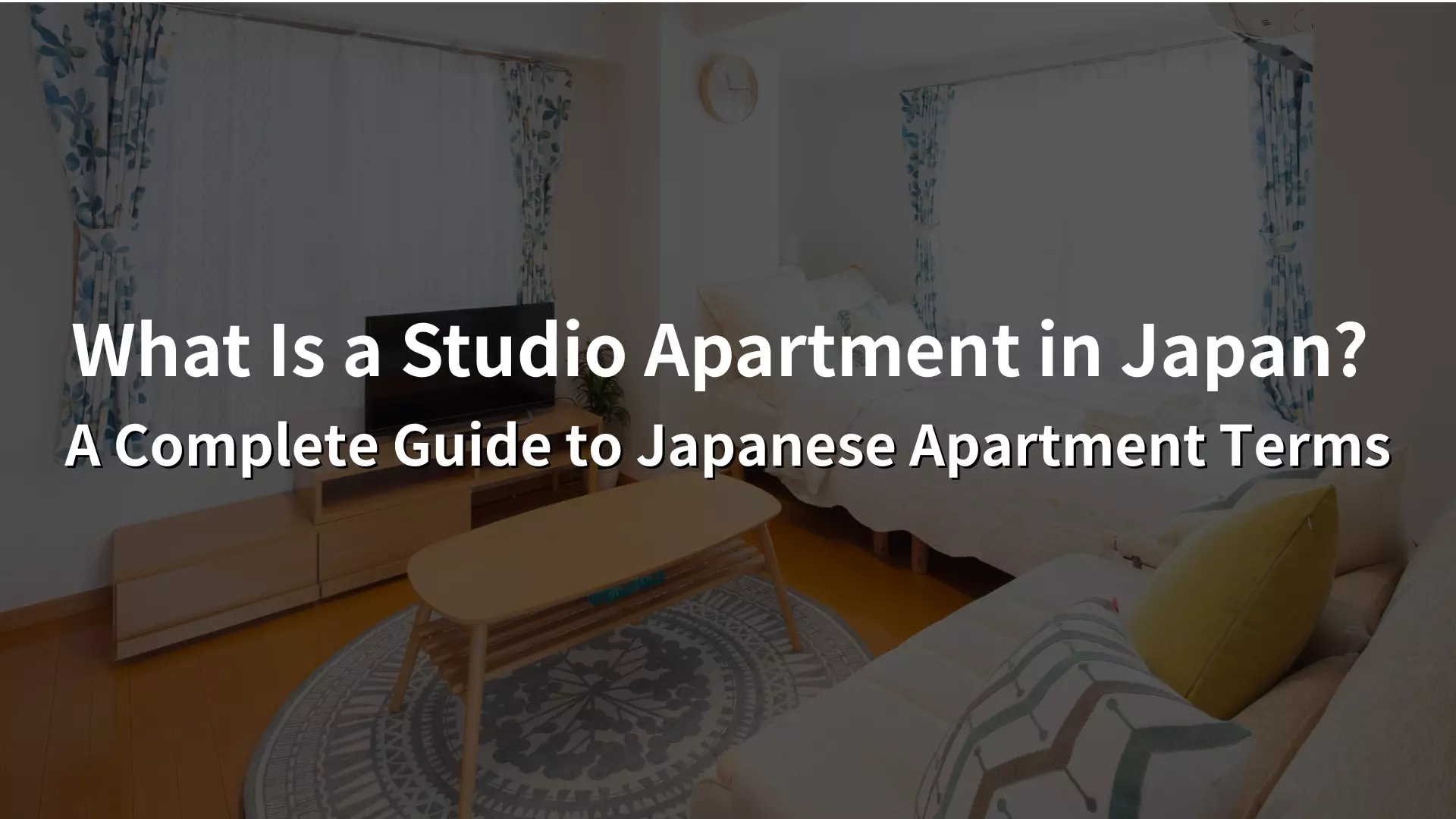
Apartment Types: 1K, 1DK, 1LDK, and More
Japanese listings use a number + letter system to describe apartment layout:
- 1K — One room plus a separate kitchen area. Compact; common for solo renters.
- 1DK — One room plus a combined dining and kitchen area. Slightly larger.
- 1LDK — One bedroom plus a living/dining/kitchen combo. More spacious.
- 2LDK — Two bedrooms plus an LDK. Popular for couples or small families.
The number refers to bedrooms; the letters describe the kitchen/living configuration. K = kitchen, D = dining, L = living.
Key Money, Deposit, and Agency Fees
The biggest surprise for most foreigners renting in Japan for the first time is the upfront costs:
- Shikikin (敷金) — Security deposit. Usually 1–2 months' rent; returned (minus deductions) when you move out.
- Reikin (礼金) — "Key money." A non-refundable gift to the landlord. 0–2 months' rent. This is becoming less common but still exists.
- Agency fee (仲介手数料) — Paid to the real estate agent. Typically 1 month's rent plus tax.
- First month's rent — Often paid in advance.
Budget 4–6 months' rent as upfront costs when moving into a traditional Japanese apartment.
Other Important Terms
- Shinsa (審査) — Background check / screening by the landlord or guarantee company.
- Jukken (住民票) — Residence registration certificate. Required for the application process.
- Guarantor (保証人 / 保証会社) — Personal or corporate guarantor for your lease.
- Manshon (マンション) — A reinforced-concrete apartment building (not a mansion!).
- Apāto (アパート) — A lighter-construction apartment, often wood-frame; typically cheaper.
Search for a room
Only furnished properties with appliances are listed!
How Much Does It Cost to Rent an Apartment in Japan?
Initial Move-In Costs
As outlined above, initial costs in Japan's rental market can be significant. Here's a realistic estimate for a 1K apartment in Tokyo:
- Deposit (shikikin): ¥60,000–¥130,000
- Key money (reikin): ¥0–¥130,000
- Agency fee: ¥60,000–¥130,000
- Guarantee company fee: ¥30,000–¥60,000
- First month's rent: ¥60,000–¥130,000
Total initial outlay: roughly ¥200,000–¥600,000 (approximately $1,300–$4,000 USD). No-key-money properties (礼金なし) are increasingly available and can significantly reduce this.
Monthly Costs
Monthly rent varies enormously by city and location:
- Tokyo (central wards): ¥70,000–¥150,000+ for a 1K/1DK
- Tokyo (outer areas): ¥50,000–¥90,000 for a 1K
- Osaka, Nagoya, Fukuoka: ¥40,000–¥80,000 for a 1K
- Regional cities: ¥20,000–¥50,000 for a 1K
Factor in utilities (¥10,000–¥20,000/month), internet (¥3,000–¥5,000), and renters' insurance (¥1,500–¥3,000).
Apartment Hunting in Large Cities vs. Regional Areas
Tokyo and Osaka offer the widest selection of foreigner-friendly real estate agents and English-language services. However, competition is high and costs are greater. Regional cities like Kyoto, Fukuoka, and Hiroshima often offer excellent quality of life at lower costs — though English-language support from agencies may be more limited.
The Property Search Process: Where to Find Foreigner-Friendly Apartments
Online Platforms and Real Estate Agencies
Several platforms cater specifically to foreigners searching for apartments in Japan:
- GaijinPot Apartments — English interface; foreigner-friendly listings nationwide.
- Wagaya Japan — Bilingual real estate portal with a strong foreigner focus.
- SUUMO / Homes.co.jp — The major Japanese portals (in Japanese; use with a translation tool or bilingual agent).
- Plaza Homes — English-speaking agents specializing in foreigner clients in Tokyo.
In all cases, working with an agent who speaks English and understands the needs of foreign applicants will dramatically improve your experience.
Best Areas in Tokyo for Different Expat Profiles
Tokyo is vast, and the "best" area depends entirely on your lifestyle and priorities:
- Shibuya / Shinjuku — Central, convenient, vibrant nightlife. Higher rents.
- Minato / Roppongi — Expat-heavy, close to embassies. Premium prices.
- Nakameguro / Shimokitazawa — Trendy, artsy neighborhoods. Mid-range rents.
- Suginami / Setagaya / Nerima — Quieter residential areas. More affordable.
- Koenji / Asagaya / Kichijoji — Popular with young foreigners; great atmosphere; accessible.
For those commuting to central Tokyo, living slightly outside the Yamanote Line can save ¥20,000–¥40,000/month in rent.
Property Inspection Etiquette
When viewing properties in Japan, keep the following in mind:
- Remove your shoes at the entrance. This is non-negotiable.
- Don't open drawers or cabinets without asking.
- Take photos only after confirming the agent is okay with it.
- Be on time — punctuality is extremely important in Japan.
- Ask about any items that might be left behind by the previous tenant.
Take note of the room's condition carefully. Photograph any existing damage before signing, so you are not held liable for it when you move out.
Search for a room
Only furnished properties with appliances are listed!
Required Documentation and Application Process for Foreigners
Documents You Will Need
The standard documents required when applying for an apartment in Japan as a foreigner include:
- Residence card (在留カード, zairyū kādo) — Proof of your visa status and residence.
- Passport
- Residence registration certificate (住民票) — Obtained from your local ward office.
- Proof of income — Recent pay slips, an employment contract, or a bank statement.
- Guarantor information — Either a personal guarantor or enrollment in a guarantee company.
- Emergency contact information — Usually a Japanese contact or your company's HR department.
Some landlords may additionally request a seal (hanko) for the contract, though signatures are increasingly accepted.
The Background Check (Shinsa)
After submitting your application, the landlord and/or guarantee company conducts a screening process (審査, shinsa). This typically takes 3–7 business days. They verify your income, employment stability, visa status, and rental history. Approval is not guaranteed — having stable employment or a corporate contract significantly improves your chances.
The Rental Contract
Japanese rental contracts are almost always in Japanese. Before signing, make sure you understand (or have translated):
- The term of the lease — usually 2 years, with renewal possible.
- Rules regarding pets, smoking, guests, and subletting.
- The move-out process and how the deposit is handled.
- Any fixed-term lease clauses (定期借家契約) that prevent renewal.
Finalizing the Contract and Moving In to Your New Home in Japan
Once approved, you'll sign the lease and pay all initial fees. The move-in date is usually 2–4 weeks after approval. Before or on the day you move in:
- Register your address at your local ward office (required by law within 14 days).
- Set up utility contracts (gas, electricity, water) — some providers require in-person setup or a Japanese-language call.
- Set up internet service — allow 1–2 weeks for installation.
- Check the apartment condition carefully and document any damage with photos.
Most apartments in Japan are unfurnished (and often have no light fixtures), so budget for furnishing costs on top of your move-in fees.
Search for a room
Only furnished properties with appliances are listed!
Is a Share House the Better Option? Why XROSS HOUSE Could Be Your Answer
Given the complexity and high upfront costs of traditional apartment hunting in Japan, many foreigners — especially those arriving for the first time or planning to stay for 1–2 years — find that a share house is a far more practical starting point.
What Is a Share House in Japan?
A share house (シェアハウス) is a furnished, ready-to-move-in property where multiple residents share communal spaces like kitchens, bathrooms, and lounges, while having their own private room. Unlike standard apartments, share houses typically require:
- No key money
- A much lower deposit (often 1 month or less)
- No guarantor requirement
- A shorter minimum stay (sometimes as short as 1 month)
- Utilities and internet included in the monthly fee
This dramatically reduces the barrier to entry for foreigners who are new to Japan, don't yet have a Japanese guarantor, or prefer flexibility over a 2-year lease commitment.
Why Choose XROSS HOUSE
XROSS HOUSE is one of Tokyo's leading share house providers, offering a range of properties across the city designed specifically with international residents in mind. Key advantages include:
- Foreigner-friendly contracts — No Japanese guarantor required.
- Fully furnished rooms — Move in immediately without buying furniture.
- All-inclusive monthly fees — Utilities and high-speed internet included.
- Diverse communities — Live alongside residents from around the world.
- Flexible lease terms — Suited for both short-term and long-term stays.
- English support — Staff and materials available in English.
XROSS HOUSE properties are located in popular residential neighborhoods well-connected to Tokyo's train network, making it easy to commute anywhere in the city.
Who Is XROSS HOUSE Best For?
- Foreigners arriving in Japan for the first time who want to avoid the complexity of a standard lease.
- Those on working holiday visas, student visas, or short-term work assignments.
- People who want to live in a community, meet new people, and experience Japan while having the security of a professional, English-friendly operator.
- Anyone who wants to test out living in different parts of Tokyo before committing to a long-term apartment lease.
Frequently Asked Questions About Renting in Japan as a Foreigner
Can foreigners rent an apartment in Japan without a guarantor?
Yes. Many modern properties accept a rental guarantee company (保証会社) in lieu of a personal guarantor. You pay a fee to the guarantee company rather than needing a Japanese individual to vouch for you. Some foreigner-friendly platforms and operators like XROSS HOUSE eliminate this requirement altogether.
Do I need to speak Japanese to rent an apartment in Japan?
Not necessarily. Many foreigner-focused agencies and platforms offer English-language services. That said, your landlord and neighbors will likely communicate in Japanese, so basic Japanese is always helpful.
How long does it take to find and move into an apartment?
From starting your search to receiving the keys, budget at least 3–6 weeks. The screening process alone takes 3–7 business days, and most landlords set the move-in date 2–4 weeks after contract signing. Share houses like XROSS HOUSE can often have you moving in within days.
Is it expensive to rent an apartment in Japan compared to the USA?
Tokyo rents are broadly comparable to major US cities like Los Angeles or Chicago for similar-quality units. However, the upfront costs (key money, deposit, fees) are much higher than what American renters typically expect. Regional Japanese cities are often considerably cheaper than their US equivalents.
What happens to my deposit when I move out?
Your deposit (shikikin) is returned minus any deductions for damage or restoration work. Japan has specific guidelines (国土交通省ガイドライン) about what landlords can and cannot deduct. Normal wear and tear should not be charged to you. Document the apartment's condition carefully when you move in.
Ready to Find Your Home in Japan?
Renting an apartment in Japan as a foreigner doesn't have to be an overwhelming experience. Whether you choose a traditional apartment lease or the more flexible path of a share house, understanding the process ahead of time puts you in control.
If you're looking for a convenient, foreigner-friendly place to live in Tokyo — with no guarantor, no key money, and English support — XROSS HOUSE is ready to welcome you.