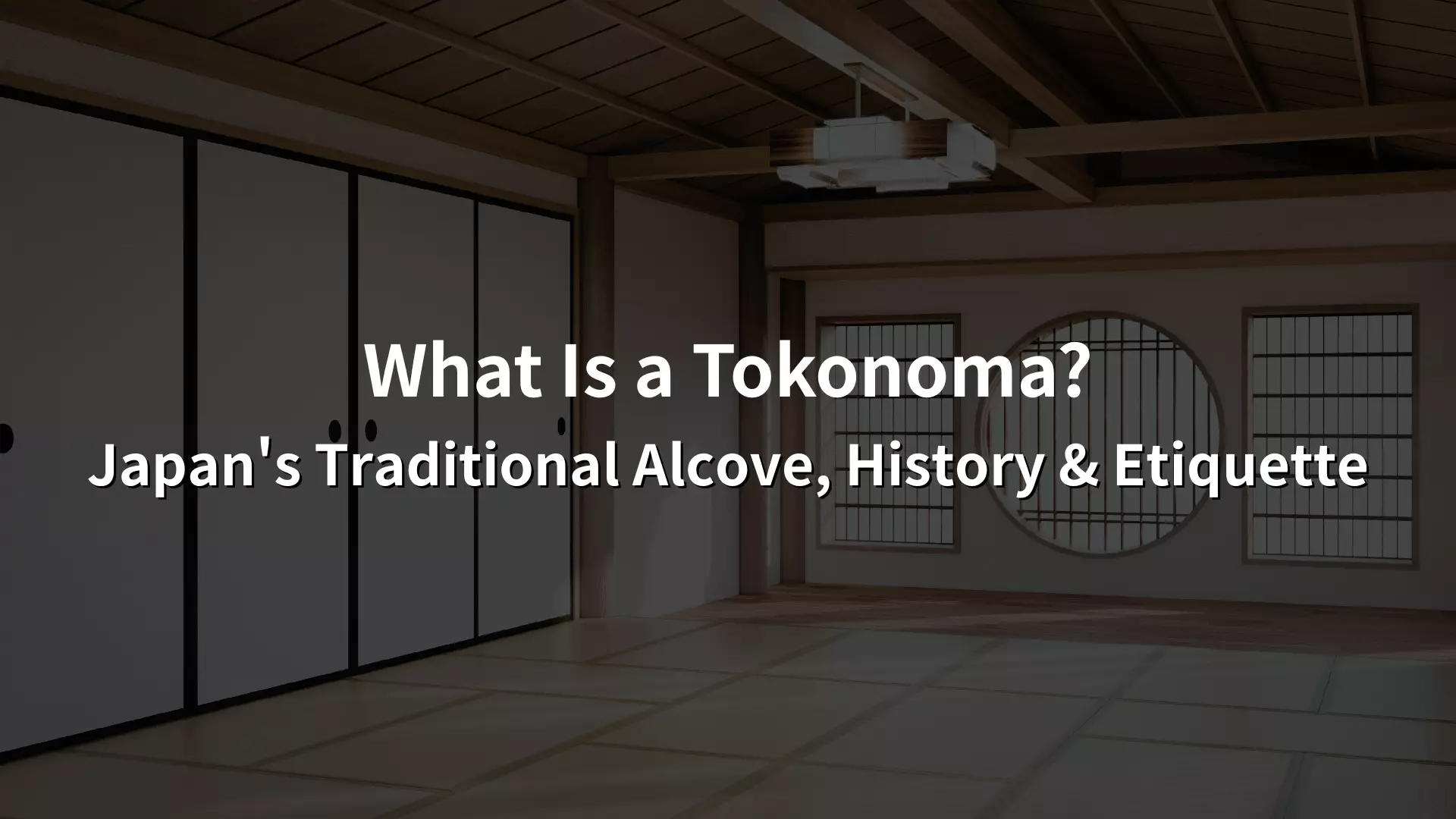
What Is a Tokonoma? The Japanese Alcove Explained
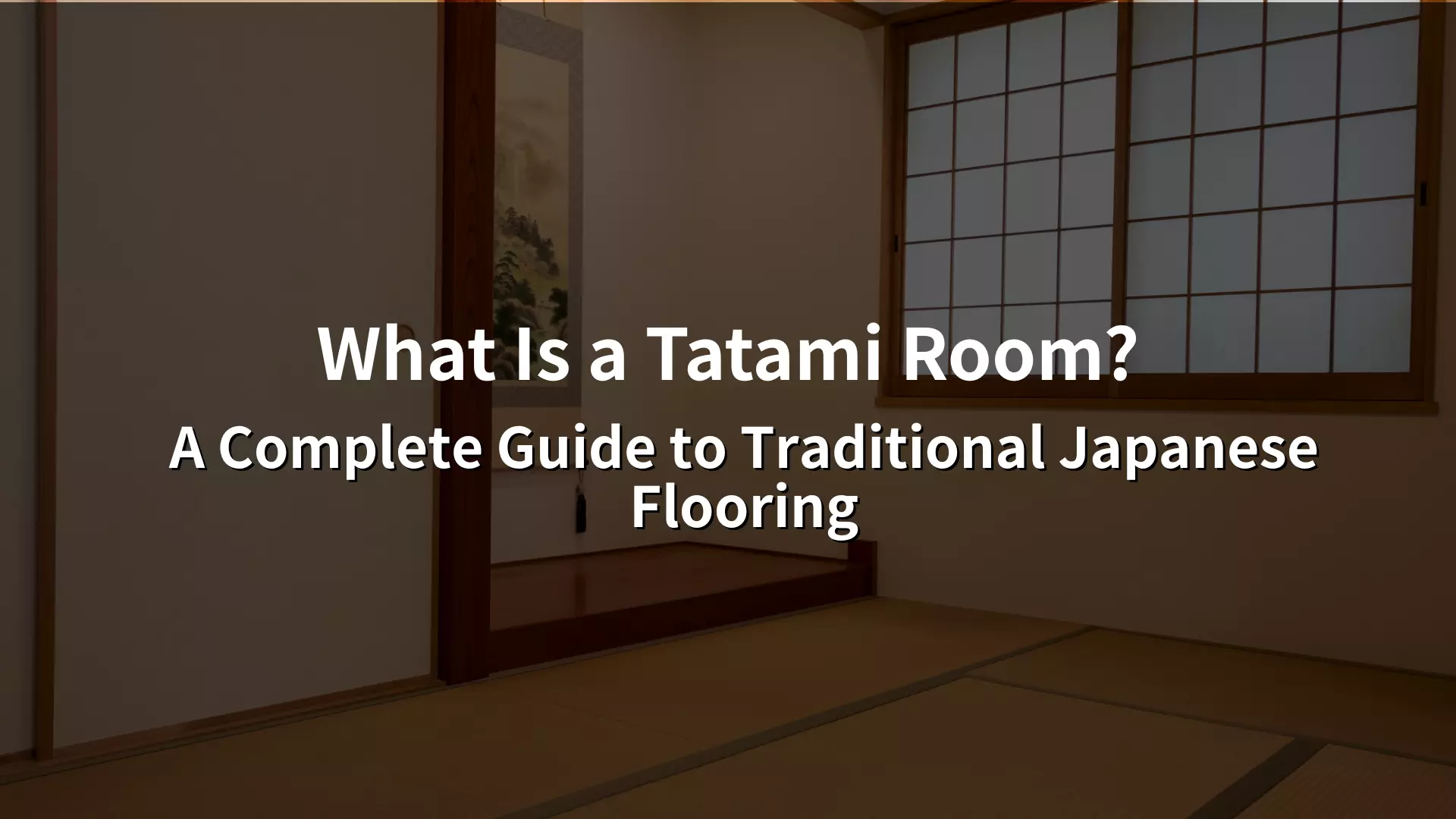
A tokonoma (床の間) is a recessed alcove built into a Japanese-style room, known as a washitsu. It is typically elevated slightly above the main floor level and positioned on the most important wall of the reception room. Unlike other parts of the house, the tokonoma is not a storage space or a functional area — it is a dedicated space for artistic appreciation and cultural expression.
In English, a tokonoma is sometimes called a "Japanese alcove" or simply an "alcove." The word itself is made up of the kanji toko (床, meaning floor or bed platform) and ma (間, meaning room or space). Together, they describe a platform space — a raised area set apart from the ordinary living floor.
Key Structural Elements of a Tokonoma
A formal tokonoma typically includes several distinct structural components. The tokonoma is framed by a vertical post called the tokobashira, which is often made from a carefully selected piece of natural wood — the grain, texture, and shape of this post are considered an art form in themselves. The back wall and ceiling of the alcove are finished in a refined style, often with shoji-style paper or carefully plastered surfaces.
Beside the main alcove, there is often a smaller adjoining shelf unit called the chigaidana — a set of staggered shelves used to display smaller decorative objects. Together, the tokonoma and chigaidana create the formal focal point of the entire room.
The History of Tokonoma in Japan
The tokonoma has a long and layered history that reflects major shifts in Japanese society, religion, and aesthetics. Understanding where it came from helps explain why it is still considered a meaningful feature of Japanese homes today.
Origins in Zen Buddhist Temples
The earliest ancestors of the tokonoma appeared in Zen Buddhist temples during the Kamakura period (1185–1333). Monks would hang a portrait of the Buddha or a revered teacher on the wall and place incense, flowers, and candles in front of it as offerings. This practice of creating a sacred display space gradually evolved from a religious context into a broader cultural tradition.
As the Muromachi period (1336–1573) progressed and Zen aesthetics became deeply intertwined with samurai culture, the idea of a dedicated display alcove began making its way into the private reception rooms of aristocrats and warriors. The shoin-zukuri architectural style — a formal style associated with samurai residences — established the tokonoma as a defining feature of the main reception room.
The Tokonoma as a Symbol of Rank and Social Status
During the Edo period (1603–1868), the tokonoma became strongly associated with social hierarchy. The most honored guest at any gathering was always seated with their back to the tokonoma — a position called the kamiza, or "upper seat." The objects displayed in the alcove were chosen to honor the guest and reflect the host's taste, wealth, and cultural refinement.
The quality and formality of a tokonoma also signaled the owner's social standing. Samurai residences had strict rules about who could have certain types of tokonoma. Even the choice of tokobashira post — curved or straight, natural or polished — was a sign of the household's rank and aesthetic sensibility.
Search for a room
Only furnished properties with appliances are listed!
What Is Displayed in a Tokonoma?
The objects placed in a tokonoma are chosen with care and intention. Rather than cluttering the space, the tradition calls for restraint — typically just one or two items displayed at a time, allowing each piece to be fully appreciated.
Traditional Items: Hanging Scrolls, Ikebana, and Bonsai
The most common display in a tokonoma is a kakejiku, or hanging scroll. Scrolls may feature ink paintings of landscapes, calligraphy, or seasonal imagery such as cherry blossoms, autumn leaves, or cranes. The scroll hangs from the ceiling of the alcove and establishes the mood and theme of the entire room.
Below the scroll, a flower arrangement (ikebana) is often placed. Ikebana is not like a Western-style bouquet — it is a considered art form focused on balance, space, and the natural form of the plant materials. A single branch with a few blooms can be enough. Bonsai trees, ceramic vessels, incense burners, and small figurines are also traditional display items. Seasonal objects — such as a fan in summer or pinecones in winter — are rotated throughout the year to reflect the passage of time.
Seasonal Arrangements and How They Change
One of the most distinctive aspects of tokonoma culture is its relationship with the seasons. Japanese aesthetics place great value on impermanence and the cycles of nature, and the tokonoma is a primary place where this is expressed in daily life. A thoughtful host changes the scroll, flowers, and objects in their tokonoma several times a year to align with the current season or a specific occasion.
In spring, cherry blossoms and plum branches may appear. In autumn, maples and chrysanthemums are common. During the New Year, pine and bamboo arrangements (kadomatsu-style) are traditional. This ongoing rotation keeps the tokonoma alive as a reflection of the present moment rather than a static decoration.
Tokonoma Etiquette: Important Rules to Know
The tokonoma is considered a sacred or elevated space within the home, and there are several key rules of etiquette that apply — both for hosts and for guests.
Never step into or sit inside the tokonoma. Even if the alcove appears to have enough room, entering it is considered deeply disrespectful. The space belongs to the displayed objects, not to people.
Avoid turning your back on the tokonoma carelessly. While honored guests are traditionally seated facing away from it (with the tokonoma framing them from behind), this positioning is a gesture of respect — not an invitation to ignore it.
Do not place everyday items in the tokonoma. Bags, shoes, or household objects should never be left there, even temporarily. The tokonoma is for art and appreciation only.
When visiting a Japanese home, take a moment to quietly acknowledge the tokonoma display. Noticing the scroll, the flower arrangement, or the ceramic piece — and perhaps offering a brief comment to the host — is considered a sign of cultural awareness and good manners.
Search for a room
Only furnished properties with appliances are listed!
Tokonoma in Modern Japanese Homes and Apartments
As Japan modernized throughout the 20th century, Western-style interiors gradually became the norm, and many new homes were built without washitsu rooms at all. However, the tokonoma has not disappeared — it has adapted.
Does Your Japanese Home Have a Tokonoma?
In Japan today, the presence of a tokonoma depends heavily on the age and style of the property. Older homes and traditional machiya townhouses are more likely to have at least one washitsu room with a proper tokonoma. Many older apartment buildings and housing complexes from the 1960s to 1980s also include at least one tatami room, which may feature a simplified tokonoma.
Modern condominiums and newer apartments, especially in urban areas, often lack washitsu rooms entirely. However, some homeowners and designers are bringing the tokonoma concept back into contemporary interiors — creating minimalist display niches inspired by the traditional alcove and incorporating natural wood, ceramics, and seasonal items into otherwise modern spaces.
How Expats Can Use a Tokonoma in Japan
If you are living in Japan and your home has a tokonoma, you have a wonderful opportunity to engage with one of the country's most elegant domestic traditions. You do not need to follow formal rules strictly — even a simple approach can be deeply meaningful.
Start by keeping the space uncluttered. Choose one or two items to display at a time: a small plant, a piece of pottery, a candle, or a postcard-sized print. If you can find a simple hanging scroll at a local market or antique shop, it will immediately transform the feel of the alcove. Change what you display every season, and notice how it shifts the atmosphere of the room.
Living with a tokonoma is one of the quieter, more profound ways to connect with Japanese culture in daily life — not through tourism or spectacle, but through the simple act of paying attention to beauty in your own home.
Experience Japanese Culture at Home with XROSS HOUSE
At XROSS HOUSE, our share houses throughout Tokyo are designed to help residents — both from Japan and abroad — experience authentic Japanese living. Many of our properties feature traditional elements including tatami rooms, and we believe that the small details of daily Japanese life, like the tokonoma, are part of what makes living here so unique.
Whether you are moving to Japan for work, study, or adventure, living in a space that reflects Japanese culture from the inside out is one of the best ways to settle in and feel at home. Explore our available rooms and discover a share house experience that is truly rooted in Japan.