What Makes Japanese Apartment Types Unique?
How Japan names its apartments differently
In the United States, apartments are typically described by bedroom count: studio, one-bedroom, two-bedroom, and so on. Japan uses a completely different system that tells you not just how many rooms exist, but how those rooms are divided — specifically how the kitchen, dining, and living areas are arranged in relation to the bedrooms.
This system originated because Japanese apartments, especially in Tokyo, tend to be significantly smaller than American units. Layout and room function matter more when space is tight, so the naming convention reflects actual usage rather than just room count.
The key letters explained: R, K, DK, and LDK
The abbreviations in Japanese apartment listings stand for:
- R = Room (no separate kitchen area; everything in one open space)
- K = Kitchen (a separate, enclosed kitchen space)
- DK = Dining Kitchen (a combined dining and kitchen area)
- LDK = Living, Dining, Kitchen (a combined living room, dining area, and kitchen — open-plan)
The number in front (1, 2, 3, etc.) tells you how many additional bedrooms exist beyond the main area. So a 2LDK has two bedrooms plus the shared living-dining-kitchen space.
Every Japanese Apartment Type Explained
1R — Studio Apartment (One Open Room)
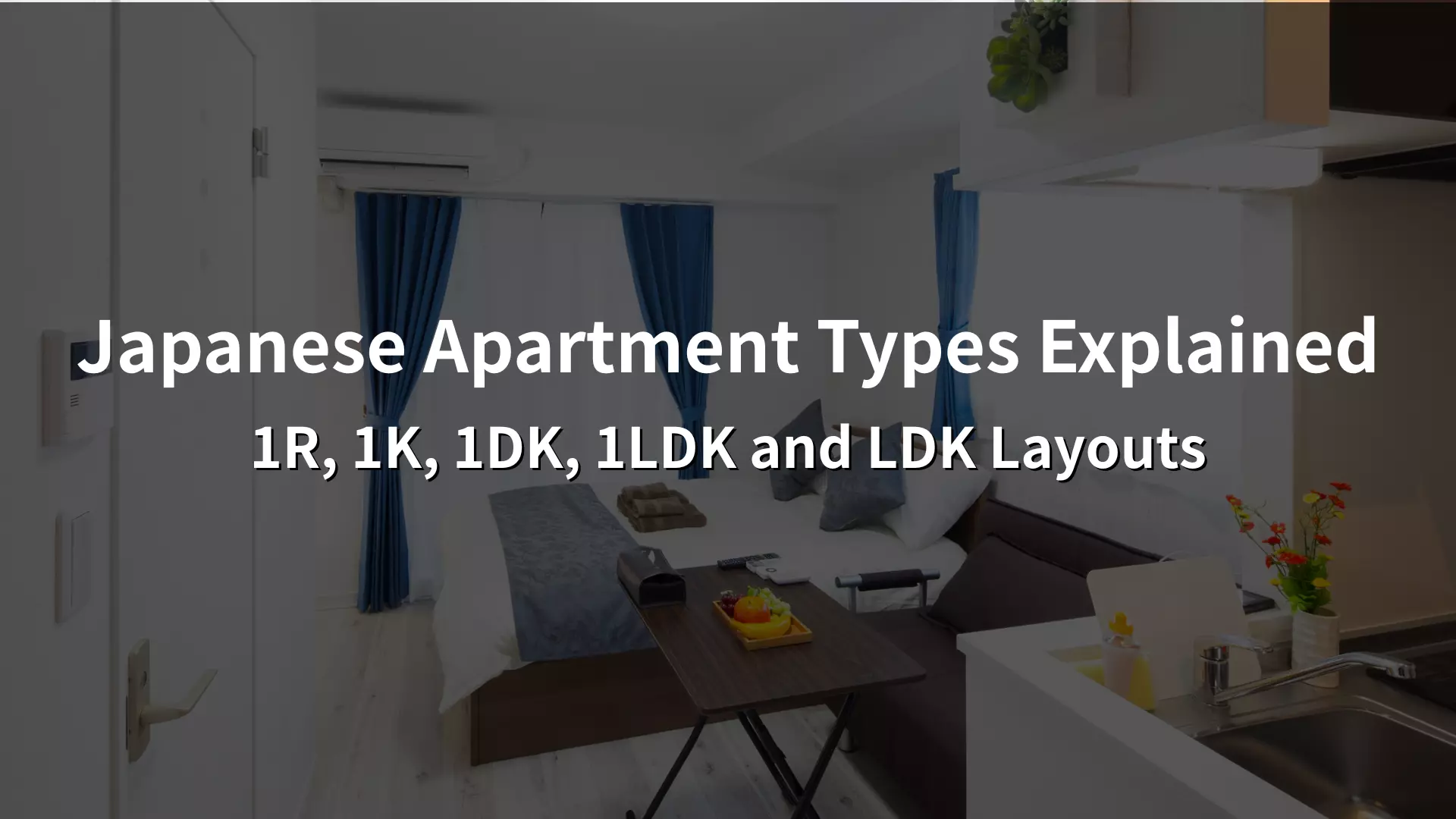
A 1R, or "one room" apartment, is the most compact type you'll find. There is no partition between the entrance area, sleeping space, and kitchen — everything shares a single open room. The bathroom is typically a compact unit bath (tub and shower combined in a small modular unit).
1R apartments are popular among students and single workers who spend most of their time outside the home. Sizes usually range from around 15 to 25 square meters (roughly 160 to 270 square feet). Rents in Tokyo for a 1R start from around ¥50,000 to ¥80,000 per month depending on the neighborhood.
Best for: Solo renters on a tight budget who want a central location.
1K — One Room + Separate Kitchen
A 1K is a step up from the 1R. It has a small but separate kitchen area, usually divided from the main room by a wall or sliding door. This separation matters — it means cooking smells and steam stay out of your living and sleeping space.
The kitchen in a 1K is small (typically 4.5 square meters or less), usually fitted with a two-burner stovetop and a compact refrigerator space. The main room is still used as a combined bedroom and living area. Sizes typically range from 20 to 30 square meters.
Best for: Solo renters who cook at home and want a bit more privacy.
1DK — One Bedroom + Dining and Kitchen
A 1DK has a proper bedroom that is separate from the dining and kitchen area. The DK (dining kitchen) space is larger than a standard kitchen — big enough to fit a small dining table. This means you can eat your meals in a separate area from where you sleep.
1DK apartments typically run between 25 and 40 square meters. The bedroom and DK area are distinctly separate rooms. This is a noticeable quality-of-life upgrade from the 1K for people who spend more time at home.
Best for: Solo renters or couples who want a real dining area without paying for a full LDK.
1LDK — One Bedroom + Living, Dining, and Kitchen
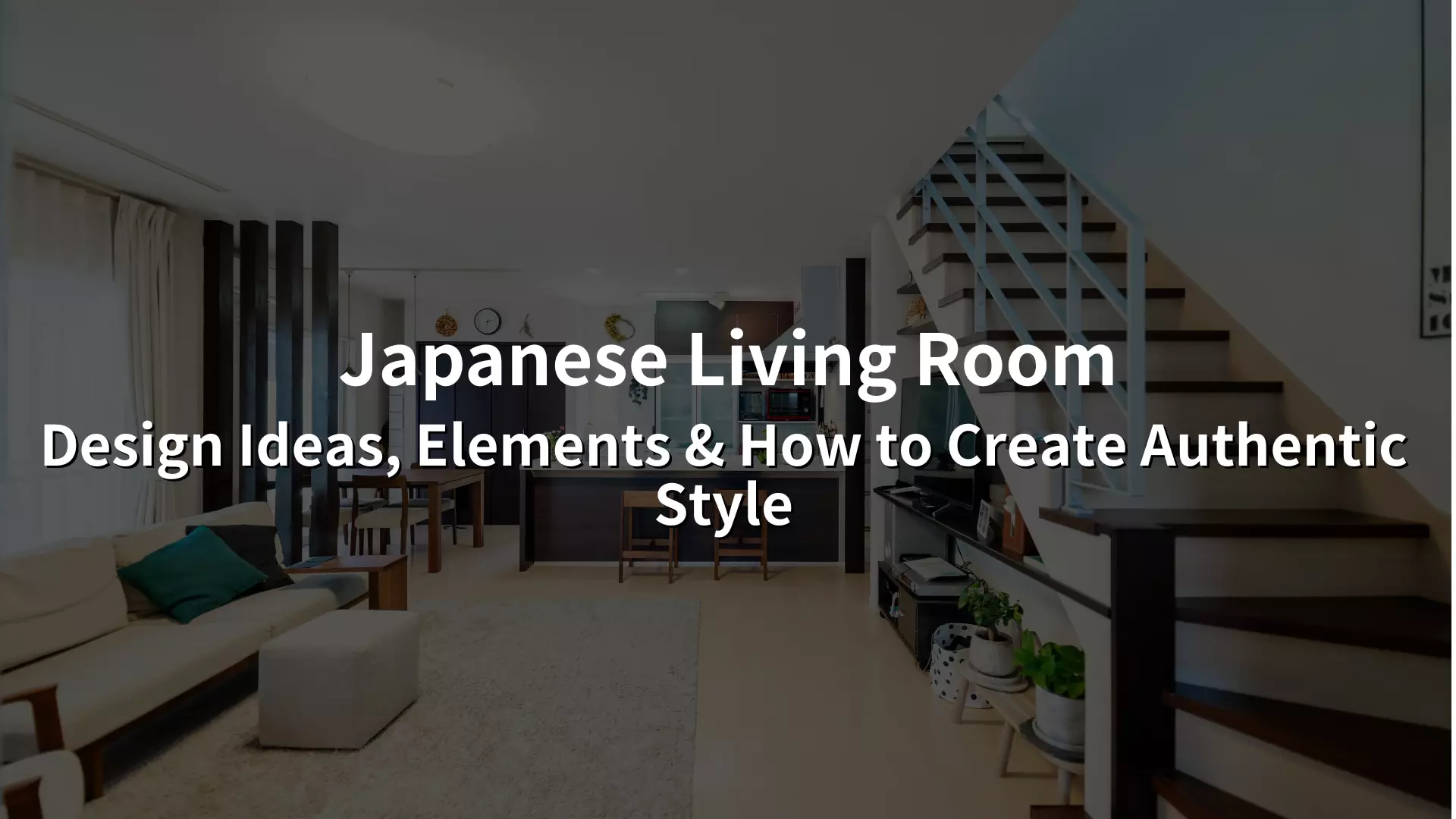
A 1LDK is widely considered the most practical layout for a single person or couple living comfortably in Japan. The LDK (living-dining-kitchen) is a fully open-plan space — typically 8 square meters or larger — where you can have a couch, a dining table, and a kitchen all in one well-lit room. The bedroom is completely separate.
1LDK units range from roughly 35 to 55 square meters. They feel significantly more spacious than 1DK layouts because the LDK functions as a real living room rather than just a dining space.
Best for: Professionals, couples, or remote workers who want a comfortable, livable space.
2LDK and Larger — Multi-Bedroom Apartments
A 2LDK follows the same pattern: two separate bedrooms plus an open-plan LDK. These apartments are well-suited for couples who both need a home office, small families, or roommate pairs. Typical sizes range from 50 to 80 square meters.
3LDK and larger apartments exist but are less common in central Tokyo. They are more frequently found in suburban neighborhoods and are priced accordingly. A 3LDK in a family-friendly area of Tokyo typically starts at ¥150,000 per month.
Best for: Families, couples with children, or two-person households that need separate work and sleep spaces.
SLDK and Other Variations
You may also encounter SLDK, where the "S" stands for Service Room — a small, windowless room that doesn't officially qualify as a bedroom under Japanese regulations (usually because it lacks a window or doesn't meet minimum size requirements). In practice, it's often used as a storage room, walk-in closet, or small home office.
Other variations include 2DK (two rooms plus dining kitchen, common in older buildings) and 3DK, which were standard layouts in postwar Japanese housing before LDK became the norm. These are still found in older buildings and typically cost less than equivalent LDK layouts.
Search for a room
Only furnished properties with appliances are listed!
How Room Size Is Measured in Japanese Apartments
Tatami mats vs. square meters
Japanese listings often give room sizes in tatami (畳, jō), a traditional unit based on the size of one woven straw mat. One tatami mat equals approximately 1.62 square meters, though this varies slightly by region (Tokyo tatami are slightly smaller than those in Osaka and Kyoto).
As a rough guide: 6 tatami ≈ 9.7 sq meters (about 104 sq ft), and 8 tatami ≈ 13 sq meters (about 140 sq ft). Most modern listings also provide square meter measurements, so you don't need to rely on tatami alone.
What counts as a "room" in Japan?
In Japan, a space officially counts as a "room" only if it meets certain requirements: it must have a window for natural light, adequate floor space (typically at least 4.5 tatami, or about 7.3 sq meters), and be structurally separated from the LDK or kitchen area. Rooms that don't meet these criteria are labeled "S" (service room) and appear in listings like 1SLDK rather than 2LDK.
This distinction matters when comparing listings — two apartments that both say 2LDK may have quite different livable configurations depending on whether both bedrooms qualify as full rooms.
Which Japanese Apartment Type Is Right for You?
Best for solo renters and students
If you're moving to Japan alone and keeping costs low, a 1R or 1K in a centrally located neighborhood gives you the most value. For access to trains, convenience stores, and daily life necessities without overpaying for space, these compact layouts work well — especially if you're rarely home.
If budget allows and you spend a fair amount of time at home, a 1DK or 1LDK makes a meaningful difference to daily comfort. Having a separate kitchen or living area prevents your bedroom from doubling as everything else.
Best for couples and working professionals
A 1LDK is the sweet spot for most couples or solo professionals who want a genuinely comfortable home. The open-plan LDK handles both relaxing and dining, while the bedroom stays private. For couples where both partners work from home, a 2LDK with a dedicated office room is well worth the rent premium.
Best for families or those who work from home
Families with one or more children typically need a 2LDK or 3LDK. Suburban areas of Tokyo — such as Nerima, Adachi, or Setagaya — offer larger units at more manageable rents than central neighborhoods. A 3LDK in these areas can feel spacious by Tokyo standards and provides enough separation for children's rooms and adult workspace.
Search for a room
Only furnished properties with appliances are listed!
Tips for Foreigners Renting in Japan
What to know before signing a lease
Renting a standard Japanese apartment as a foreigner can involve extra steps. Many landlords require a Japanese guarantor (保証人, hoshounin), and some older buildings still have policies that make it difficult for non-Japanese renters to apply. You'll also typically need to pay a substantial upfront cost: first month's rent, last month's rent, a security deposit (敷金, shikikin) of one to two months, and an agent fee (仲介手数料, chukai tesuuryou).
Some newer buildings and real estate companies have foreigner-friendly policies and accept foreigners without a Japanese guarantor. Websites like GaijinPot Apartments, Sakura House, and XROSS HOUSE specialize in connecting foreigners with accessible rental options.
Share houses as a foreigner-friendly alternative
Share houses (シェアハウス) are an excellent option for foreigners who are new to Japan, on a short-term stay, or looking to meet people and skip the complexity of a standard rental contract. In a share house, you rent a private room while sharing common areas — kitchen, bathroom, and lounge — with other residents.
Share houses typically require no guarantor, have flexible contract terms (often month-to-month), and come partly or fully furnished. They cost less upfront than standard apartments and provide a built-in social environment — especially valuable when you've just arrived in a new country.
Find Your Ideal Living Space in Tokyo with XROSS HOUSE
XROSS HOUSE offers a range of share house options across Tokyo designed with international residents in mind. Whether you're looking for a private room in Shinjuku, a bilingual community in Shibuya, or an affordable base in a quieter neighborhood, XROSS HOUSE properties are available on flexible terms with simple, foreigner-friendly contracts.
Browse available rooms, check monthly rates, and see floor plans on the XROSS HOUSE website. If you're new to Tokyo and navigating Japanese apartment types for the first time, the XROSS HOUSE team can also help you find a layout and location that fits your lifestyle.
Search for a room
Only furnished properties with appliances are listed!
Frequently Asked Questions
What is the most common apartment type in Tokyo?
The 1K and 1LDK are the most common types in central Tokyo. 1K apartments dominate the lower price range, while 1LDK units are popular with working professionals who want more living space.
Is a 1LDK big enough for two people?
Yes, a 1LDK can comfortably accommodate two people. The shared LDK serves as the main living space, and the bedroom handles sleeping. It becomes tight if both people work from home full-time, in which case a 2LDK with a dedicated workspace is worth considering.
What does the "D" in 1DK stand for?
The "D" stands for Dining. In a 1DK layout, there is a combined dining and kitchen area (DK) that is separate from the main bedroom. It's large enough to fit a dining table, but there is no dedicated living room — that distinction belongs to the LDK layouts.
Can foreigners rent a 1LDK in Tokyo easily?
It depends on the building and landlord. Some properties are foreigner-friendly and accept English-speaking renters without a Japanese guarantor. Others may require one. Using platforms that specialize in foreigner-accessible rentals — such as XROSS HOUSE or dedicated expat rental services — simplifies the search considerably.