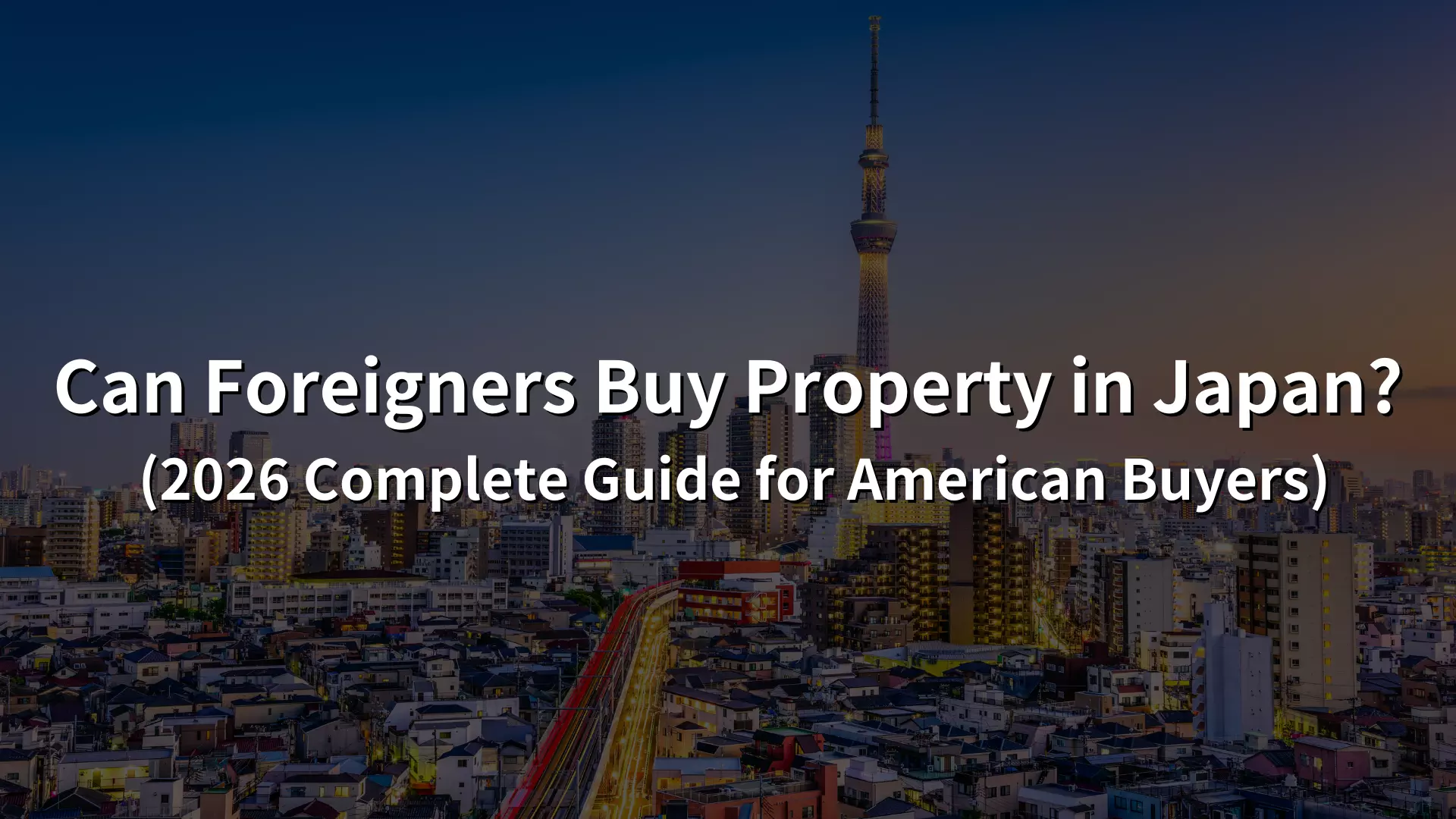
Quick Answer: Can Foreigners Legally Buy Property in Japan?
Yes, foreigners can legally buy property in Japan. There are no nationality restrictions on purchasing real estate in Japan. American citizens, permanent residents, and even non-residents can buy both land and buildings freely. You don’t need Japanese citizenship, a visa, or even residency to complete a purchase.
Japan’s property ownership laws treat foreign buyers almost identically to Japanese nationals. You receive full freehold ownership rights with no time limitations or expiration dates. This means you can buy, sell, and inherit Japanese real estate just like any Japanese citizen.
However, starting in fiscal year 2026 (April 2026), Japan will require new property owners to disclose their nationality in the real estate registry database. This is a registration requirement—not a restriction on purchasing—and does not prevent foreigners from buying property.
Property Ownership Laws in Japan
Understanding Japan’s property ownership laws is essential before making any real estate investment. Here are the key legal points every foreign buyer should know:
Freehold Ownership
Japan offers freehold ownership, meaning you own both the building and the land it sits on permanently. There are no leasehold complications like in some other Asian countries. Your ownership has no expiration date.
Equal Rights for Foreigners
Under Japanese law, foreigners have the same property rights as Japanese nationals. There are no additional taxes, fees, or legal restrictions placed on foreign buyers specifically. The contract, registration, and tax obligations are identical.
Land Ownership
Unlike some countries that prohibit foreigners from owning land, Japan allows full land ownership by foreign nationals. You can own residential land, commercial land, and even agricultural land (though agricultural land requires special permission from the local Agricultural Committee).
2026 Regulatory Update
Japan’s government has been reviewing foreign property ownership policies for national security purposes. In late 2025, Prime Minister Takaichi’s administration launched a fact-finding study examining how other countries regulate foreign real estate ownership. While an outright ban on foreign buyers is considered highly unlikely, targeted restrictions—particularly around military facilities and strategic areas—may be introduced in the coming years. For American buyers, these potential changes are not expected to affect standard residential or investment purchases in major cities like Tokyo or Osaka.
Search for a room
Only furnished properties with appliances are listed!
Can Americans Buy Property in Japan?
Absolutely. Americans are among the most active foreign buyers in Japan’s real estate market. The United States and Japan have a strong bilateral relationship, and there are no specific restrictions targeting American property buyers.
Here’s what American buyers should know:
No Visa Required for Purchase
You do not need a Japanese visa to buy property. Americans can enter Japan visa-free for up to 90 days, which is typically enough time to view properties, sign a contract, and complete the initial steps of a purchase. However, if you plan to live in Japan long term, you will need to obtain an appropriate visa or residence status.
Buying Property Does Not Grant Residency
It’s important to understand that purchasing real estate in Japan does not automatically grant you a visa or residency rights. If you want to live in Japan, you’ll need to apply for a work visa, spouse visa, investor/business manager visa, or another qualifying residence status separately.
Tax Implications for Americans
American property owners in Japan must be aware of tax obligations in both countries. The U.S. requires citizens to report worldwide income, including any rental income or capital gains from Japanese property. However, the U.S.-Japan tax treaty helps avoid double taxation through foreign tax credits. It’s strongly recommended to work with a tax advisor who understands both U.S. and Japanese tax systems.
Can Foreigners Get a Mortgage in Japan?
Securing a mortgage in Japan as a foreigner is possible but comes with specific requirements that vary depending on your residency status.
With Permanent Residency
If you hold permanent residency (eitaiken) in Japan, you have access to the same mortgage products as Japanese nationals. Major banks like MUFG, Mizuho, and Sumitomo Mitsui Banking Corporation will generally approve your loan application provided you meet standard income and credit requirements. Interest rates remain competitive—variable rates hover around 0.5–1.0%, while fixed rates (including the government-backed Flat 35 program) typically range from 1.5% to 2.5% as of early 2026.
Without Permanent Residency
Foreigners without permanent residency face more challenges. Most major banks require PR status as a prerequisite. However, several financial institutions cater to non-PR holders:
- Prestia (SMBC Trust Bank): Offers mortgages to non-PR residents with English-language support. Annual income requirement of over 10 million yen.
- Tokyo Star Bank: Provides loans to non-permanent residents with terms up to 35 years.
- AEON Bank: Requires at least 6 months of employment and a 20% down payment.
- Suruga Bank: Welcomes consultations from non-PR residents with English documentation support.
Non-PR borrowers typically need a higher down payment (20–50%), may face shorter repayment periods, and often receive slightly higher interest rates. Having a Japanese spouse or a co-signer with PR can significantly improve your chances of loan approval.
Non-Resident Buyers
If you don’t live in Japan, obtaining a Japanese mortgage is extremely difficult. Most non-residents purchase property with cash. Some buyers explore financing through international banks or their home country’s financial institutions, though interest rates and terms are typically less favorable than Japanese domestic loans.
Search for a room
Only furnished properties with appliances are listed!
How to Buy Property in Japan: Step-by-Step Process
The process of buying property in Japan typically takes 60 to 90 days from initial offer to final settlement. Here is a step-by-step guide to help you navigate each phase.
Step 1: Define Your Budget and Requirements
Determine your total budget, including not just the purchase price but all associated costs (typically 6–10% on top). Consider your preferred location, property type (apartment, house, building), size, and whether the property is for living, investment, or both. Planning ahead is crucial for a smooth purchasing experience.
Step 2: Find a Real Estate Agent
Choose a licensed real estate agent (fudousan-ya) who specializes in working with foreign buyers. In Japan, licensed brokers handle both brokerage and legal roles—lawyers are typically not involved in standard transactions. A bilingual agent who understands cross-border requirements is invaluable. Make sure the agent or company is properly licensed and registered.
Step 3: Property Search and Viewing
Your agent will help identify suitable properties based on your requirements. Many listings are available online, but visiting Japan to inspect properties in person is highly recommended. Check the building’s management status, surrounding area, and local amenities during your visit.
Step 4: Make an Offer and Sign the Contract
Once you choose a property, your agent will help negotiate the price with the seller. Before signing the purchase agreement (baibai keiyakusho), you will receive the Explanation of Important Matters (juuyou jikou setsumeisho)—a legally required document that details the property’s condition, legal status, and any restrictions. A licensed real estate professional must explain this document to you. At contract signing, you’ll typically pay a deposit of 10–20% of the sale price.
Step 5: Prepare Required Documents
Foreign buyers must prepare several documents for the purchase. If you are a resident in Japan, you’ll need your residence card (zairyu card), a registered seal (inkan) or signature certificate, your bank account information, and proof of income. Non-residents need a notarized power of attorney, consular authentication of documents, and must designate a domestic tax agent (nouzei kanrinin).
Step 6: Secure Financing (If Applicable)
If you’re applying for a mortgage, begin the loan process early. Submit your preliminary loan application (jizen shinsa) and, once approved, proceed with the formal application (hon shinsa). The bank will evaluate your income, employment, credit history, and the property itself. Keep in mind that loan approval can take 2–4 weeks.
Step 7: Final Settlement and Registration
At the final settlement meeting, you’ll pay the remaining balance, and the property ownership will be transferred to your name. A judicial scrivener (shihou shoshi) handles the title transfer and registration with the Legal Affairs Bureau. You’ll also pay various fees and taxes at this stage. Once the registration is complete, you officially own your Japanese property.
Costs of Buying Property in Japan
Beyond the purchase price, buyers should budget for additional costs that typically total 6–10% of the property value. Understanding these costs upfront helps you avoid surprises during the purchasing process.
One-Time Purchase Costs
Real estate agent fee: Up to 3% of the sale price + 60,000 yen + consumption tax (10%)
Registration and license tax: 1.5% for land transfer (through March 2026), 2.0% for building transfer
Stamp duty (documentary stamp tax): Ranges from 1,000 to 60,000 yen depending on purchase price
Judicial scrivener fee: Approximately 100,000–200,000 yen for title transfer work
Mortgage-related fees: Loan guarantee fees, insurance premiums, and registration costs if financing applies
Real estate acquisition tax: 3–4% of the assessed value (paid within a few months after purchase)
Taxes for Foreign Property Owners
Japan’s tax system applies equally to Japanese and foreign property owners. Here are the main taxes you need to understand:
Annual Taxes
Fixed asset tax (kotei shisan zei) is charged annually at approximately 1.4% of the assessed property value. City planning tax (toshi keikaku zei) adds about 0.3% in designated urban areas. Both are paid to the local government and billed each year. If you don’t live in Japan, you must appoint a local tax agent to receive and manage these bills on your behalf.
Income Tax on Rental Income
If you earn rental income from your Japanese property, it’s subject to Japanese income tax. Non-residents are taxed at a flat rate of 20.42% on gross rental income. Residents pay progressive income tax rates. As an American citizen, you must also report this income on your U.S. tax return, but you can claim foreign tax credits to avoid double taxation.
Capital Gains Tax
When you sell a property in Japan, capital gains are taxed differently depending on how long you’ve owned the property. Short-term gains (5 years or less of ownership) are taxed at approximately 39%. Long-term gains (more than 5 years) are taxed at approximately 20%. Financial planning around the timing of a sale can result in significant tax savings.
Search for a room
Only furnished properties with appliances are listed!
Best Areas in Japan for Foreign Buyers
Japan offers diverse options for property investment, from buzzing city centers to peaceful countryside areas. Here are the top cities and areas that foreign buyers should consider.
Tokyo
As Japan’s capital and largest city, Tokyo remains the most popular choice for foreign property buyers. Central wards like Minato, Shibuya, and Shinjuku offer luxury apartments with strong rental demand. More affordable areas like Suginami, Nerima, and Adachi provide excellent value for those looking for houses or larger living spaces. Tokyo’s exceptional transportation network means you’re never far from the city center, making even suburban properties highly desirable.
Osaka
Japan’s second-largest city offers lower property prices than Tokyo while still providing excellent infrastructure, vibrant culture, and strong rental market potential. The upcoming 2025 World Expo has further boosted interest in the area, with continued infrastructure development improving property values.
Kyoto
A favorite among foreign investors for its cultural significance and tourism appeal, Kyoto offers unique opportunities in traditional machiya townhouses and modern apartments. Note that Kyoto has approved a significant lodging-tax increase effective March 2026, which could impact short-term rental income strategies.
Niseko and Resort Areas
Niseko in Hokkaido has become one of Asia’s premier ski resort destinations, attracting massive foreign investment. Properties here can generate strong seasonal rental income, though prices have risen significantly. Other resort areas like Hakuba and Okinawa also attract foreign buyers looking for vacation houses.
Is Buying Property in Japan a Good Investment?
Japan’s real estate market offers several compelling advantages for foreign investors:
- Favorable exchange rates: The weak yen makes Japanese property particularly affordable for American buyers paying in U.S. dollars.
- Low interest rates: Even after recent Bank of Japan rate increases, mortgage rates remain among the lowest in the world.
- Stable legal system: Japan’s transparent property laws and mature legal framework provide strong protections for property owners.
- Rental yields: Tokyo rental yields typically range from 3–6%, with some areas offering even higher returns.
- Capital appreciation: Property prices in major Japanese cities have been steadily rising, with Tokyo condominium prices increasing significantly in recent years.
However, there are important considerations. Japanese buildings depreciate more quickly than in many Western countries—wooden houses can lose most of their value within 20–30 years. Japan’s aging population means some regional markets may experience long-term price declines. Careful market research and choosing the right location are essential for a sound investment strategy.
Common Challenges Foreigners Face
While buying property in Japan is legally straightforward, foreign buyers should be prepared for some practical challenges:
Language Barrier
All legal documents, contracts, and property registration paperwork are in Japanese. While English translations may be provided by some agencies for reference, only the Japanese text has legal effect. Working with a bilingual real estate agent is not optional—it’s essential. Don’t sign any document you don’t fully understand.
Mortgage Difficulties
As discussed, obtaining a mortgage loan without permanent residency can be challenging. Banks are cautious about lending to foreign nationals due to the risk of borrowers leaving Japan. Building a relationship with a Japanese bank and demonstrating long-term commitment to living and working in Japan can improve your chances.
Cultural Differences in Real Estate Transactions
Japan’s real estate market has unique customs. For example, the use of a registered seal (inkan or hanko) rather than a signature is standard for official documents. Properties may also carry cultural stigmas (such as jiko bukken—properties where incidents have occurred), and understanding these nuances requires local expertise.
Remote Management
If you don’t live in Japan, managing your property requires hiring a local property management company. They handle tenant relations, maintenance, rent collection, and tax agent services. Choose a management company with experience serving foreign property owners and one that can provide English-language communication.
Buying vs Renting in Japan
The decision to buy or rent in Japan depends on your personal circumstances, financial goals, and how long you plan to stay.
When Buying Makes Sense
Buying is generally a good choice if you plan to live in Japan for 5 or more years, if you want to build equity, or if you’re looking for investment income through rental properties. With interest rates still historically low in Japan, the cost of a mortgage payment can be comparable to or even less than renting a similar property in major cities.
When Renting Makes Sense
If you’re new to Japan and still exploring neighborhoods, renting gives you flexibility without the commitment. Japan’s rental housing market is well-developed, with options ranging from traditional apartments to share houses and corporate housing. Renting first allows you to understand the local market before making a long-term purchasing decision.
For foreigners who are new to Japan and want an affordable, hassle-free living arrangement while they explore the property market, share house and corporate housing options like those offered by XROSS HOUSE provide an ideal starting point.
Frequently Asked Questions (FAQ)
Can I buy property in Japan without living there?
Yes. Non-residents can buy property in Japan. However, you’ll need to appoint a local representative and a tax agent, and you likely won’t be able to get a Japanese mortgage. Most non-resident buyers purchase with cash.
Do I need a registered seal (inkan) to buy property?
A registered seal is required for official property documents in Japan. Foreigners living in Japan can register a seal at their local city or ward office. Non-residents may use a signature certificate from their home country’s consulate instead.
How much money do I need to buy property in Japan?
Property prices vary widely by location. You can find older apartments in regional cities for under 5 million yen (approximately $33,000 USD), while a modern apartment in central Tokyo may cost 50 million yen or more ($330,000+ USD). Additionally, budget 6–10% of the purchase price for closing costs, fees, and taxes.
Can I get a resident visa by buying property in Japan?
No. Simply buying property does not qualify you for a visa or residency in Japan. You must apply through other visa categories such as work, business, or spouse visas.
Is it safe to invest in Japanese real estate?
Japan’s real estate market is generally considered safe and transparent. The country has strong legal protections for property owners, a stable economy, and a well-regulated financial system. However, like any investment, it carries risks including market fluctuations, natural disaster exposure, and building depreciation.
What is the cheapest city to buy property in Japan?
Regional cities like Kitakyushu, Akita, and parts of rural Hokkaido offer some of the most affordable properties in Japan, with houses available for under 5 million yen. However, these areas may have limited rental demand and declining populations, so careful research is required before choosing where to invest.
How XROSS HOUSE Can Help Foreigners in Japan
Navigating Japan’s real estate and housing market as a foreigner can feel overwhelming, especially when you’re just starting your life in Japan. That’s where XROSS HOUSE comes in.
XROSS HOUSE operates share houses and corporate housing across Tokyo, providing affordable, foreigner-friendly living solutions for people from all over the world. Whether you’re moving to Japan for work, study, or simply exploring the country, XROSS HOUSE offers:
Hassle-free move-in: No guarantor, no large upfront deposits, and simple English-language contracts—removing the typical barriers that foreigners face in Japan’s rental market.
Affordable monthly rents: Starting from around 30,000 yen per month in convenient Tokyo locations, providing significant cost savings compared to standard apartment rentals.
Furnished rooms: Move in with just a suitcase. All rooms come fully furnished with essential amenities, including Wi-Fi.
Community living: Connect with an international community of residents from countries around the world, making it easier to build a support network in Japan.
Flexible contracts: Short-term and long-term options available, so you can stay as long as you need while deciding whether to rent a traditional apartment or buy property in Japan.
Many XROSS HOUSE residents use their stay as a launchpad for their life in Japan—getting settled, understanding the local housing market, building credit history at Japanese banks, and eventually moving into their own purchased property when the time is right.
If you’re considering buying property in Japan but want to test the waters first, starting with a XROSS HOUSE share house is a smart and affordable strategy. Contact us to learn more about our available rooms across Tokyo.
Final Thoughts: Should You Buy Property in Japan in 2026?
Japan remains one of the most accessible and attractive real estate markets for foreign buyers in 2026. With no legal restrictions on foreign property ownership, historically low mortgage rates, a favorable exchange rate for American buyers, and a transparent legal system, the fundamentals are strong.
That said, buying property in any foreign country is a significant financial decision. Take the time to understand the market, work with experienced professionals, and consider your long-term goals. Whether you’re looking for a place to live, a rental investment, or a vacation home, Japan’s real estate market has something to offer.
And if you’re not ready to buy just yet, start your Japan journey with XROSS HOUSE. Our affordable, foreigner-friendly housing across Tokyo gives you the perfect home base while you explore everything Japan has to offer—including its real estate opportunities.