Why It's Difficult for Foreigners to Rent Apartments in Tokyo
Japan's rental market has a reputation for being unwelcoming to foreigners, and unfortunately, that reputation isn't entirely undeserved. There are several structural and cultural reasons why finding an apartment as a non-Japanese resident is harder than it should be.
Language Barriers
Most rental listings, contracts, and communications with landlords and real estate agents are entirely in Japanese. Even if you speak conversational Japanese, legal and real estate terminology is specialized and easy to misunderstand. Many landlords are uncomfortable dealing with tenants who cannot communicate fluently in Japanese, partly out of concern that misunderstandings could lead to disputes or unpaid rent.
Landlord Reluctance
A significant number of Japanese landlords simply prefer not to rent to foreigners. This is often rooted in cultural unfamiliarity, concerns about different lifestyle habits, uncertainty about how long a foreign tenant will stay, and worry about communication difficulties. While outright discrimination is not legal, it remains a practical reality in Tokyo's rental market.
The Guarantor Requirement
Traditionally, renting in Japan required a personal guarantor — a Japanese national who would co-sign the lease and be held financially responsible if the tenant defaulted on rent. For foreigners who don't have a network of Japanese contacts willing to take on that legal responsibility, this requirement has historically been a major barrier. In recent years, professional guarantor companies (hoshō gaisha) have largely replaced personal guarantors, which has made things easier, but some landlords still prefer personal guarantors.
Short Residence History
Landlords and guarantor companies often look at a tenant's financial stability and length of stay in Japan. If you've recently arrived, have a short-term visa, or are self-employed, you may face additional scrutiny or outright rejection.Documentation
Complexity
Japan's rental process involves more paperwork than most Western countries. Foreigners are often unsure what documents they need, what the contracts say, or what their legal rights are — all of which adds to the stress of the process.
Foreigner-Friendly Apartments in Tokyo: What Makes a Property "Foreigner Friendly"?
The term "foreigner friendly" (外国人歓迎, gaikokujin kangei) is used in the Japanese rental market to indicate that a landlord or property management company is open to renting to non-Japanese tenants. But what does that actually mean in practice?
English-Speaking Support
Foreigner-friendly properties typically come with English-speaking staff or agents who can walk you through the contract, answer your questions, and handle ongoing communication during your tenancy. Some services extend this to other languages including Mandarin, Korean, and Spanish.
Flexible Guarantor Requirements
Rather than requiring a Japanese personal guarantor, foreigner-friendly landlords accept applications through professional guarantor companies, many of which are used to working with foreign residents. Some foreigner-friendly properties waive the guarantor requirement entirely.
Simplified or Translated Contracts
Some foreigner-friendly landlords provide bilingual contracts or are willing to explain contract terms in plain language so you know exactly what you're agreeing to.
No Key Money (Reikin)
Traditional Japanese rentals often include "key money" (reikin), a non-refundable payment made to the landlord as a form of gratitude. Foreigner-friendly properties, particularly those targeting expats and international residents, often waive this cost.
Acceptance of Short Stays
Many standard Japanese leases are for two-year terms, with penalties for breaking the contract early. Foreigner-friendly apartments often offer more flexible terms that accommodate the realities of international life, including shorter minimum stays and easier exit clauses.
Search for a room
Only furnished properties with appliances are listed!
Types of Apartments in Tokyo (1R, 1K, 1LDK and More)
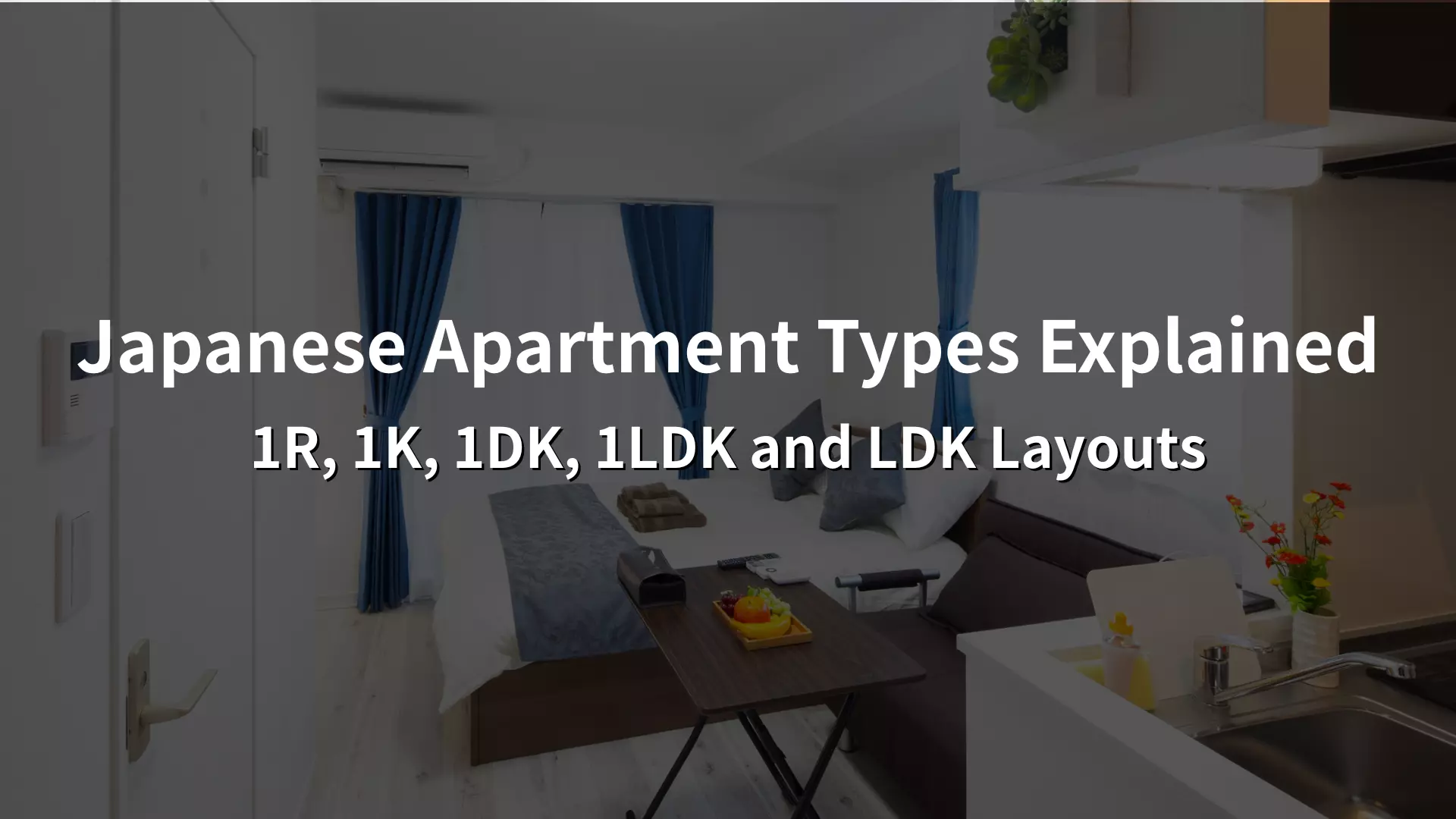
Japanese apartment listings use a specific notation system to describe the layout and size of a unit. Understanding this system is essential before you start your search.
The Basic Notation
Japanese apartments are described using a number followed by letters. The number refers to the number of separate bedrooms, while the letters describe what else is included.
R (Room) — A single room with no separate kitchen area. The kitchen is part of the main living space. These are typically the smallest and cheapest units available.
K (Kitchen) — A separate, small kitchen space distinct from the main room. A 1K apartment has one bedroom plus a separate kitchen.
DK (Dining Kitchen) — A combined dining and kitchen space large enough to fit a dining table. A 1DK has one bedroom and a combined dining and kitchen area.
LDK (Living Dining Kitchen) — A larger combined living, dining, and kitchen space. A 1LDK is suitable for a single person or couple who wants more room to live comfortably.
2LDK, 3LDK — Two or three bedrooms plus a living, dining, and kitchen area. These are family-sized apartments and come at significantly higher price points in Tokyo.
Size in Square Meters
Japanese apartments are measured in square meters (m²). A typical 1R or 1K apartment in Tokyo ranges from around 20 to 35 m². A 1LDK might be 35 to 55 m², while a 2LDK typically starts at around 50 to 70 m².
Mansion vs Apaato
You'll also encounter two words for apartment buildings: "mansion" (マンション) and "apaato" (アパート). Despite the name, a mansion is simply a reinforced concrete condominium-style building, typically more modern and better soundproofed. An apaato is usually a smaller, older, wood-frame building with lower rent but also lower build quality and insulation.
Share Houses vs Private Apartments: Which Is Better for Foreigners?
One of the first decisions you'll need to make is whether to rent a private apartment or live in a share house. Both options have genuine advantages, and the right choice depends on your situation and priorities.
Share Houses
A share house is a property where multiple residents each have a private bedroom but share common areas such as the kitchen, bathrooms, living room, and sometimes a garden or rooftop. Share houses have become increasingly popular with foreigners in Tokyo for several reasons.
The initial costs are dramatically lower than a private apartment. There is typically no key money, no deposit, and no agent fee. Move-in costs can be as low as one or two months' rent. Utilities are often included in the monthly fee, which simplifies budgeting. Leases are more flexible, with some share houses allowing monthly contracts.
Share houses are also an excellent way to build a social network quickly, especially if you're new to Tokyo. Many are specifically designed to house international residents alongside Japanese tenants, creating a multicultural environment that can ease the transition to life in Japan.
The downsides are privacy and space. You will share facilities with strangers, which isn't for everyone. Common areas can be noisy or messy depending on your housemates, and you'll have limited control over your living environment.
Private Apartments
A private apartment gives you your own space, complete with a private kitchen, bathroom, and living area. You set your own rules, keep your own hours, and don't have to coordinate with anyone else. This level of independence is important to many people, especially those who work from home or value quiet.
However, private apartments come with higher upfront costs, stricter application requirements, and longer lease commitments. As a foreigner, navigating the rental process for a private apartment requires more preparation and patience.
For people who are new to Tokyo, plan to stay less than a year, or are on a tight budget, a share house is often the smarter starting point. For those who have lived in Japan for a while, have a stable income, and are ready to settle in for the long term, a private apartment is worth the extra effort.
Search for a room
Only furnished properties with appliances are listed!
Best Areas in Tokyo for Foreigners to Live
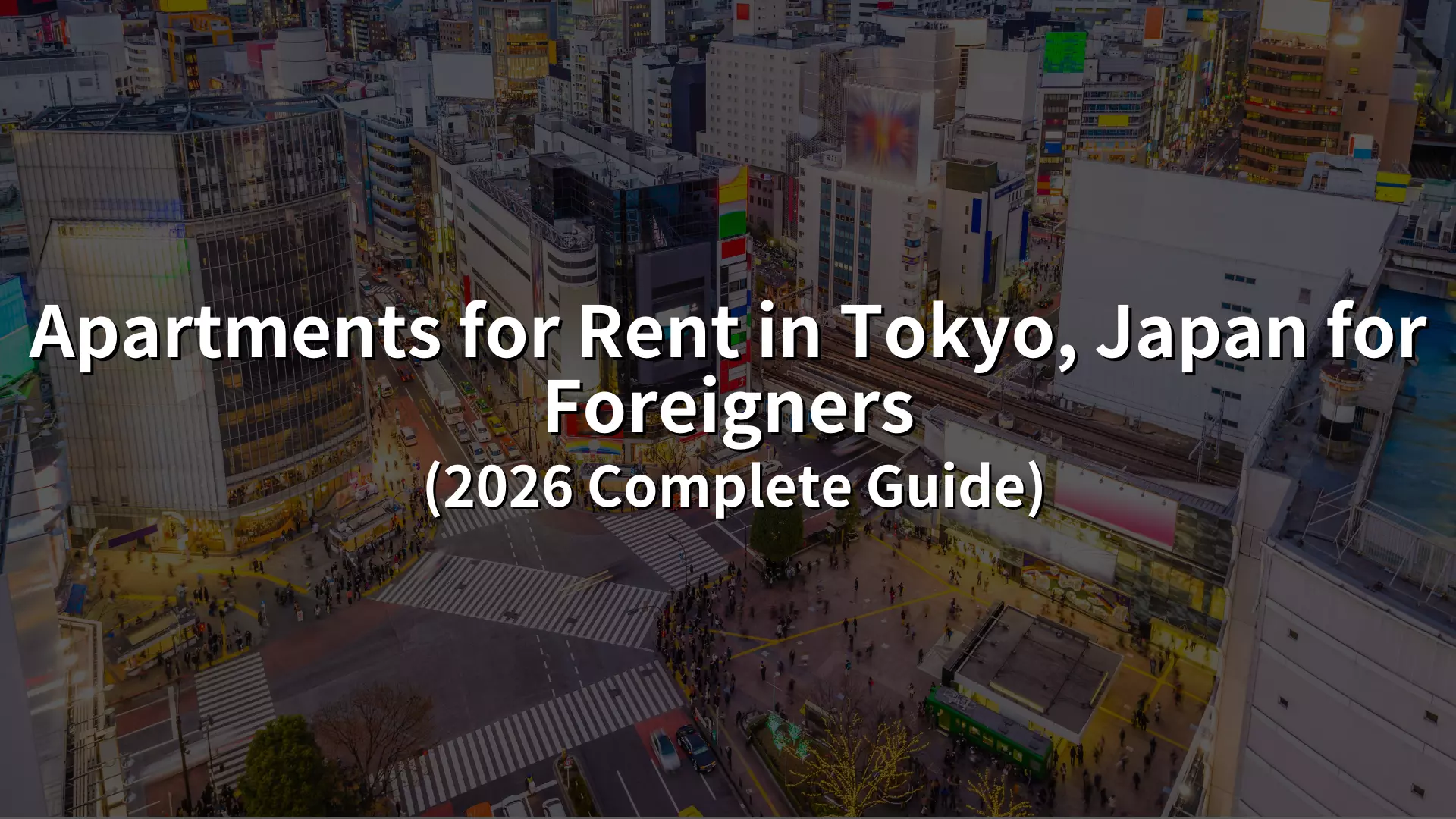
Tokyo is a massive city made up of 23 special wards, each with its own character. Some neighborhoods have established international communities and foreigner-friendly infrastructure; others are quieter residential areas popular with expats for their balance of quality and price.
Shinjuku
Shinjuku is one of Tokyo's most cosmopolitan areas, home to a large Korean community in Shin-Okubo and significant international populations throughout the ward. It's exceptionally well-connected by train, with Shinjuku Station being the busiest in the world. The area offers every amenity imaginable and a wide range of apartments at various price points.
Shibuya
Shibuya and its surrounding neighborhoods — Daikanyama, Nakameguro, Ebisu — are popular with young professionals and creative expats. The area has a stylish, international atmosphere, excellent dining and nightlife, and good transport links. Rents tend to be on the higher side.
Minato
Minato ward covers Roppongi, Azabu-Juban, Hiroo, and Shinbashi. It has one of the highest concentrations of foreign residents in Tokyo and is home to many embassies and international schools. Hiroo in particular has long been considered the heart of Tokyo's expat community. This prestige comes with a high price tag.
Sumida and Taito (Asakusa Area)
For those who want a more traditional Tokyo experience without sacrificing connectivity, the Asakusa area in Taito and neighboring Sumida ward offers a fascinating blend of old Tokyo culture and modern convenience. Rents are more affordable than central wards, and the area is well-connected to the rest of the city.
Nakano and Koenji
Slightly west of Shinjuku along the Chuo Line, Nakano and Koenji are beloved by younger residents and artists for their indie culture, local shopping streets, and relative affordability. The commute into central Tokyo is easy, and the neighborhoods have a welcoming, community-oriented feel.
Koto and Edogawa (East Tokyo)
East Tokyo wards like Koto, Edogawa, and Sumida offer some of the most affordable rents in the 23 wards. These areas are popular with families and those who prioritize space over location prestige. Public transport links have improved significantly in recent years.
Average Rent Prices in Tokyo (2026 Update)
Rent in Tokyo varies widely depending on location, apartment size, building age, and amenities. The following figures represent typical monthly rent ranges in 2026 for the 23 special wards.
Studio and 1K Apartments
A 1R or 1K apartment in central wards like Minato, Shibuya, or Shinjuku typically ranges from ¥80,000 to ¥130,000 per month. In less central areas such as Edogawa, Adachi, or Nerima, the same size apartment can be found for ¥55,000 to ¥85,000 per month.
1LDK Apartments
A 1LDK in central Tokyo typically costs between ¥120,000 and ¥200,000 per month. In outer wards, prices range from ¥85,000 to ¥130,000 per month.
2LDK and Larger
A 2LDK in central Tokyo typically starts at ¥180,000 per month and can go well above ¥300,000 for premium addresses. In outer areas, expect to pay ¥120,000 to ¥180,000 for a similar layout.
Share Houses
Share houses in Tokyo typically charge ¥50,000 to ¥100,000 per month for a private room, often including utilities and internet. Premium share houses in central locations with high-quality amenities can charge ¥80,000 to ¥120,000.
Search for a room
Only furnished properties with appliances are listed!
Initial Costs and Fees When Renting in Tokyo
One of the most important things to understand before renting in Tokyo is that the upfront costs go well beyond the first month's rent. Traditional Japanese rentals involve several fees that can add up to several months' worth of rent before you even move in.
Security Deposit (Shikikin)
The security deposit is typically one to two months' rent and is held by the landlord to cover damages or unpaid rent at the end of the tenancy. In theory, it is refundable, but Japanese landlords are known for deducting restoration costs from the deposit at the end of a lease. Make sure you understand what is and isn't covered before signing.
Key Money (Reikin)
Key money is a non-refundable "gift" to the landlord that originated as a traditional Japanese custom. It is typically one to two months' rent and represents pure cost with no benefit to the tenant. Fortunately, key money is becoming less common, particularly for foreigner-friendly properties and newer buildings. If you can find an apartment without reikin, do so.
Agency Fee (Chukai Tesuryo)
Real estate agents in Japan typically charge a fee equivalent to one month's rent plus consumption tax. This fee is paid once when you sign the contract. Some agencies charge less or waive this fee for certain properties.
Guarantor Company Fee
If you use a professional guarantor company (which most foreigners will need to), expect to pay an initial fee of around 0.5 to 1 month's rent, plus an annual renewal fee of around ¥10,000 to ¥20,000.
Fire Insurance
Most landlords require tenants to purchase renters' fire insurance (kasai hoken). This is inexpensive — typically ¥15,000 to ¥20,000 for a two-year policy — but it is an additional upfront cost.
Lock Exchange Fee
Some landlords charge a fee to replace the locks when a new tenant moves in. This is usually around ¥15,000 to ¥30,000.
Total Upfront Cost
Factoring in all the above, expect to pay anywhere from three to six months' worth of rent before your first night in a traditional Tokyo rental. On a ¥100,000/month apartment, that means initial costs could easily reach ¥300,000 to ¥600,000. This is one of the main reasons share houses and foreigner-friendly services that waive some of these fees are attractive to new arrivals.
Step-by-Step Guide to Renting an Apartment in Tokyo
Step 1: Determine Your Budget and Needs
Before you start searching, be clear about how much you can afford per month and what you need. Consider proximity to your workplace or school, minimum room size, must-have amenities (laundry, internet, air conditioning), and whether you need a furnished unit.
Step 2: Research Neighborhoods
Use this guide and your own research to identify two or three neighborhoods that suit your lifestyle and commute. Visit them in person if you can — the feel of an area is hard to judge from listings alone.
Step 3: Search Listings
Use reputable listing sites and foreigner-friendly services (covered later in this guide) to find properties that match your criteria. Filter for foreigner-friendly options to narrow down landlords who are open to your application.
Step 4: Visit Properties
Request viewings for your shortlisted properties. Bring a friend who speaks Japanese if possible, and take photos and notes during each visit. Pay attention to the condition of the building, the neighbors, and the surrounding area.
Step 5: Submit an Application
If you find a property you like, you'll submit a rental application (moushikomi). This involves providing personal information, proof of income, and details of your guarantor or guarantor company. The landlord or management company will review your application, which can take a few days.
Step 6: Sign the Contract
Once approved, you'll be invited to sign the lease. Read the contract carefully and ask for clarification on anything you don't understand. Key things to check include the lease term, notice period, renewal fees, and conditions for deposit refund.
Step 7: Pay Initial Fees
Upon signing, you'll pay all upfront fees including the deposit, key money, agency fee, and insurance. This is typically done by bank transfer.
Step 8: Move In
Once payment is confirmed, you'll receive the keys and can move in on the agreed date. You'll need to register your address at your local ward office (ku yakusho) within 14 days of moving in.
Documents Foreigners Need to Rent in Japan
Having your documents in order is critical to a smooth application process. The exact requirements vary by landlord and guarantor company, but the following are commonly requested.
Residence Card (Zairyu Card) — All foreign residents in Japan are required to have this card. It confirms your visa status, address, and length of permitted stay. Landlords use it to verify your legal right to reside in Japan.
Passport — A copy of your passport is typically required alongside your residence card.
Certificate of Alien Registration or Resident Certificate (Jūminhyō) — This document, obtainable from your ward office, confirms your registered address in Japan. If you haven't registered an address yet, you may need to provide your previous address or hotel.
Proof of Income — This could be a salary certificate from your employer (zeikin shōmei sho), recent pay slips, a tax return, or bank statements showing regular income. If you are self-employed or a freelancer, providing clear proof of income is especially important.
Employment Certificate — A letter from your employer confirming your position, salary, and length of employment. If you're a student, an enrollment certificate from your school may be accepted.
Guarantor Information — If using a professional guarantor company, you'll fill out their application form. If using a personal guarantor, you'll need their information and consent.
Bank Account Details — Rent is typically paid by automatic bank transfer in Japan, so a Japanese bank account is usually required. If you don't have one yet, opening a bank account should be one of your first priorities after arriving.
Short-Term vs Long-Term Rentals in Tokyo
The type of rental that suits you depends heavily on how long you plan to stay in Tokyo and how much flexibility you need.
Short-Term Rentals
Short-term rentals typically refer to stays of anywhere from one week to six months. Options include monthly serviced apartments, weekly mansion rentals, and short-stay share houses. These options are ideal for people on corporate assignments, those who are apartment hunting and need temporary accommodation, or visitors who want more space and privacy than a hotel provides.
Short-term rentals cost more per month than long-term leases, but they come with far lower upfront costs and much greater flexibility. Most short-term options come furnished and include utilities, making them genuinely all-inclusive. They are an excellent bridge option for people who have just arrived in Tokyo and aren't yet ready to commit to a long-term lease.
Long-Term Rentals
Standard Japanese leases run for two years. At the end of the term, you can renew (usually for a fee of one to two months' rent) or move out. Long-term rentals offer lower monthly costs and greater stability, but the higher upfront costs, longer commitment, and more complex application process are significant considerations.
For most people planning to live in Tokyo for more than a year, a long-term private apartment makes financial sense once the initial costs are recovered through lower monthly rent compared to short-term alternatives.
Furnished Apartments in Tokyo for Expats
Furnished apartments are particularly popular with expats and corporate relocations because they eliminate the need to buy and later dispose of furniture, which is both expensive and logistically complicated in Tokyo.
Most standard Japanese apartments are rented unfurnished. You would be responsible for purchasing or arranging delivery of all furniture and appliances, including the refrigerator, washing machine, curtains, light fixtures, and everything else. This can easily cost ¥200,000 to ¥400,000 for a modest setup.
Furnished apartments charge a premium — often 20 to 40 percent above comparable unfurnished units — but for stays of under two or three years, they frequently work out cheaper overall when you factor in the cost and hassle of furnishing from scratch.
Many foreigner-friendly services and share houses include all necessary furniture and appliances as standard. When evaluating rent prices, always check what is and isn't included so you're comparing like with like.
No Guarantor Apartments in Tokyo
Traditionally, renting in Japan required a Japanese personal guarantor — someone who would vouch for you and accept legal financial responsibility if you defaulted. For most foreigners, finding such a person is simply not possible.
The good news is that the landscape has changed significantly. Most landlords now work with professional guarantor companies (hoshō gaisha), which function similarly to insurance companies. You pay them a fee, and they guarantee your rent to the landlord. This has opened up much of the rental market to foreigners.
Some properties go even further and are marketed as "no guarantor required" (hoshōnin fuyō), either because the management company self-guarantees or because the property targets the short-stay market where guarantor arrangements are built into the fee structure.
When searching for apartments as a foreigner, look specifically for properties that accept professional guarantor companies or are listed as guarantor-free. These will dramatically increase your options and reduce the complexity of the application process.
Best Websites to Find Apartments for Rent in Tokyo
Several platforms cater specifically to foreigners looking for apartments in Tokyo, alongside major Japanese portals that have English-language interfaces.
SUUMO — Japan's largest real estate portal, available in Japanese with some English support. It aggregates listings from thousands of agencies and is the most comprehensive source of available properties. Best used with some Japanese language ability or translation tools.
LIFULL HOME'S — Another major Japanese portal with a wide selection of listings. An English-language version is available at homes.co.jp/en, though the selection is more limited than the Japanese version.
GaijinPot Housing — A platform specifically designed for foreigners, offering English-language listings and support. The selection is smaller than Japanese portals but the properties are verified as foreigner-friendly and the process is more accessible.
Sakura House — One of Tokyo's most well-known foreigner-friendly housing services, offering share houses and private rooms across multiple Tokyo locations. Strong English support and very low initial costs.
Tokyo Apartment Inc. — Specializes in serving international clients with English-speaking agents and a curated selection of foreigner-friendly apartments across Tokyo.
Leopalace21 — A major apartment network known for furnished units on flexible lease terms. Has dealt with foreigners for many years and offers English support.
XROSS HOUSE — A foreigner-friendly housing service offering share houses and corporate housing options with English support, flexible terms, and low initial costs. Particularly suitable for expats and newly arrived foreigners (more on this below).
Common Mistakes Foreigners Make When Renting in Japan
Understanding what not to do is as important as knowing what to do. These are the most common errors foreigners make when renting in Tokyo.
Not Reading the Contract Carefully
Japanese rental contracts are detailed documents with specific clauses about how you can use the property, what modifications you can make, noise restrictions, rules about guests, and conditions for deposit refund. Signing without understanding what you've agreed to leads to disputes and unexpected charges when you move out.
Underestimating Initial Costs
Many people budget for the first month's rent and are blindsided by the full scope of upfront costs. Always calculate your total move-in budget including deposit, key money, agency fee, guarantor fee, and insurance before committing to a property.
Ignoring the Renewal Fee
Most two-year leases in Japan include a renewal fee (kōshin ryō) of one to two months' rent when you renew. This is not optional and can come as a surprise if you weren't aware of it.
Not Registering Your Address
After moving in, you are legally required to register your new address at your ward office within 14 days. Failing to do so can cause problems with your visa, banking, and various administrative processes.
Assuming "Deposit Refundable" Means You'll Get It Back
Japanese landlords have broad latitude to deduct restoration costs from your deposit, and restoration expectations in Japan are high. Normal wear and tear is sometimes charged to tenants. Be meticulous about documenting the condition of the apartment when you move in (with photos and the move-in inspection form), and clean thoroughly before moving out.
Choosing an Area Without Visiting First
Tokyo's neighborhoods vary enormously in character, convenience, and noise levels. A central address that looks great on a map might be on a busy nightlife street that's loud until 3am, or have limited access to supermarkets and daily necessities. Always visit before you commit.
Start Searching for Apartments in Tokyo Today
Tokyo is waiting for you. Whether you're arriving for a one-year adventure, a three-year corporate posting, or the beginning of a permanent new chapter in your life, there is a home here that fits your needs, your budget, and your vision of what living in this extraordinary city can look like.
The rental process may have a steeper learning curve than you're used to, but with the right information and the right support, it's entirely manageable. Use this guide as your foundation, do your research on neighborhoods, get your documents in order, and don't be afraid to ask for help from services that specialize in making Tokyo accessible to people just like you.
XROSS HOUSE is ready to help you find your home in Tokyo. Browse our available properties, get in touch with our English-speaking team, and take the first step toward life in one of the world's great cities.
Your Tokyo apartment is out there — let's find it together.