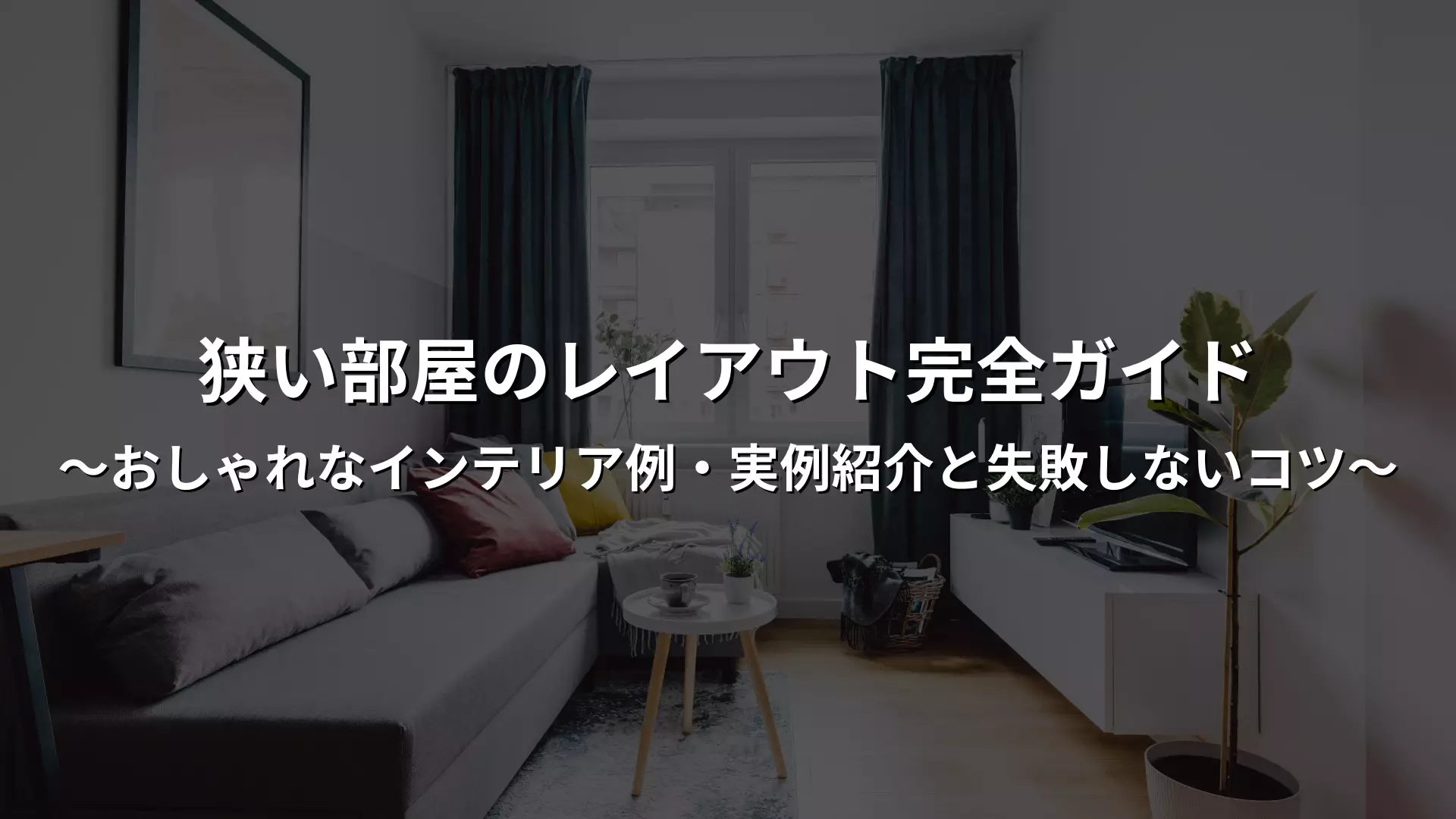
How small is a room? The first thing to consider
Whether or not a room is perceived as "small" is not determined simply by the number of tatami mats. The perceived size of a room can vary greatly depending on the layout, furniture arrangement, storage capacity, and lifestyle. When considering the layout of a small room, it is important to first know the general guidelines for what size a room is considered small, and then organize the "conditions for comfortable living" and "priority points."
Here we will explain the standards and ideas you should keep in mind before thinking about the layout.
Standard size for what is considered "small" (studio/1K/LDK)
Generally speaking, a room that is considered "small" is one-room or one-kitchen apartments with an area of 6 tatami mats or less, and living, dining, and kitchen areas with an area of 8 to 10 tatami mats or less.
One-room and one-kitchen apartments tend to have more furniture and can feel cramped, as they need to accommodate all the functions of daily life, such as sleeping, relaxing, eating, and working, in the same space. On the other hand, even in living, dining, and kitchen apartments with less than 10 tatami mats, placing a sofa or dining table can narrow the flow of movement, and it is not uncommon for people to feel that the space is "more cramped than expected."
However, the comfort level can change significantly depending on the height of the ceiling, the position of the windows, and whether or not there is storage space, so don't judge by the number of tatami mats alone; comfort can be improved significantly depending on the layout.
Conditions for a small but comfortable room
Whether or not you can live comfortably in a small room depends on whether the room has the "conditions" that make it easy to arrange the layout. Typical examples include having ample storage space, having windows that let in natural light, and a floor plan that allows for freedom in furniture placement. If there is little storage space, things tend to be exposed, making the space feel cramped.
Also, if the windows are small or blocked by furniture, the room will feel more cramped than it actually is. Furthermore, rooms with few pillars or uneven surfaces and that make effective use of the wall space offer more layout options. In a small room, it is important to carefully consider the conditions and make adjustments to make it more comfortable to live in.
Priorities to be decided before layout
One of the most common mistakes when designing a small room layout is trying to cram everything in. First, you need to clarify your priorities and think about what is most important to you.
For example, if you prioritize getting a good night's sleep, then bed placement should be your top priority, if you do a lot of work from home then you should ensure there is desk space, and if you want to relax then you should have a layout that is centered around sofas and rugs. Once you have decided your priorities, you can reduce unnecessary furniture and make it easier to ensure clear movement lines.
The key to creating a comfortable layout in a small room is to "carefully select only what you need" rather than "put everything in there."
The pros and cons of a small room
Small rooms tend to have the image of being "difficult to live in" or "cramped," but in reality, they have both advantages and disadvantages. In many cases, especially when living alone or for a short period of time, the small size can actually make the room more livable. The important thing is to correctly understand the characteristics of a small room and understand what you can take advantage of in the layout and interior design, as well as what you should be careful of.
Here we will summarize the advantages and disadvantages you should know before living in a small room.
merit
The biggest advantage of a small room is that it's easy to keep rent and living costs down. Even in the same area, a compact room means rent is likely to be cheaper and utility bills are lower. Another major advantage is that cleaning and tidying up doesn't take much time, reducing the burden of daily housework. Furthermore, with shorter movement routes and easy access to essential items, it's easier to achieve an efficient and minimalist lifestyle.
Another feature of this style is that it's easy to develop the habit of carefully selecting your furniture and belongings, making it suitable for people who want to live a "lifestyle without too many possessions." With some ingenuity, a small room can become a comfortable home with good cost performance.
Disadvantages
On the other hand, small rooms also have some disadvantages that you should be aware of. A prime example is the tendency to run out of storage space. As the number of things increases, it quickly becomes a sense of clutter, and the entire room tends to look messy. Another issue is that the placement of large furniture such as beds and sofas is restricted, limiting the freedom of layout. Furthermore, if you choose the wrong furniture height or color, it can create a feeling of oppression, which can make you feel psychologically cramped.
However, these disadvantages can be mitigated by selecting the right furniture and creating a layout that takes traffic flow into consideration. It is especially important to think about countermeasures in advance, especially in a small room.
Search for a room
Only furnished properties with appliances are listed!
[Basics] 7-10 Tips for Layouting a Small Room
In order to make a small room look comfortable, it is important to understand basic layout concepts rather than just arranging furniture haphazardly. In particular, the "visual size," "activity lines," and "how storage is displayed" have a major impact on the impression of the room.
Here we will introduce some basic tips for layouts that are easy to implement and less likely to fail when living alone or in small rooms such as studios and 1K apartments.
Arrange furniture to focus on the "main feature"
In a small room, if you place all the furniture with the same importance, the space will look cramped. Therefore, it is important to first decide which piece of furniture you want to cherish the most as the focal point.
For example, if you prioritize relaxation, the sofa should be the focal point, if you prioritize sleep, the bed, and if you do a lot of work, the desk should be the focal point. By reducing the size of the furniture other than the focal point or replacing it with multifunctional pieces, you can create more balance in the space.
When arranging a small room, focusing on one main feature will help keep the eye from being distracted and create a clean impression.
Attach large furniture to the wall to create space
Placing large furniture such as beds, sofas, and storage shelves in the center of a room narrows the passageway and can create a feeling of oppression. In a small room, the larger the furniture, the closer it is to the wall. Placing it against the wall creates more floor space, making the entire room appear larger.
In addition, the flow of movement becomes more linear, making daily activities smoother. In particular, in studio apartments and one-room apartments, simply being mindful of wall placement can make a big difference in the perceived spaciousness.
Ensuring daily life routes and making life easier
To live comfortably in a small room, it's important to ensure not only the appearance but also the flow of daily life. Be mindful of whether it's easy to move from the bed to the door, storage, desk, etc. As a guideline, the width of an aisle that people can pass through comfortably is about 60cm.
Placing furniture and objects in the way of movement can cause stress and make the room feel smaller. When considering the layout, it is important to first ensure the movement of people and then arrange furniture in the remaining space.
Use low and thin furniture to reduce the feeling of oppression
In a small room, the "height" and "design" of the furniture greatly affect the impression of the space. If there is too much tall furniture, it will block the line of sight and create a feeling of oppression. For this reason, it is recommended to choose low furniture such as low beds and low sofas.
In addition, furniture with thin legs or delicate frames increases the visible floor area, creating a light impression. In a small room layout, the key to making the room appear larger is to reduce the presence of the furniture itself.
Showing the floor and walls creates a sense of openness
To make a small room appear larger, it is important to show as much of the floor and walls as possible. If the floor is covered with furniture and objects, the room will appear smaller than it actually is. By choosing furniture with legs and utilizing wall storage, you can create more space on the floor.
Also, leaving empty space on the wall allows the eye to wander and reduces the feeling of oppression. In small room layouts, it is more effective to "leave space to show" rather than "add something."
Don't block windows and be mindful of line of sight
Windows are the most important element in creating a sense of spaciousness in a small room. Placing tall furniture in front of a window will block the light, making the whole room look dark and narrow. Try to keep the furniture around the window as low as possible to keep the line of sight to the outside.
Additionally, a layout that allows the line of sight to flow from the entrance to the window is recommended as it emphasizes depth. In a small room, it is important to be aware of the line of sight.
Incorporate multi-functional furniture
In a small room, it is important to reduce the amount of furniture, so multifunctional furniture that can serve multiple purposes is useful. For example, beds with storage, sofa beds, and folding desks can save space while ensuring functionality. Reducing the amount of furniture creates more space on the floor and walls, making the room look neater overall.
However, some units can be so multifunctional that they can be quite large, so it's important to choose one that fits the size of your room.
Prevent clutter with storage that has doors and is in a designated location
In a small room, even a little bit of clutter can make the whole room look messy. For this reason, we recommend storage with doors that hide the contents. Also, by deciding on a "fixed place" for each item, it becomes easier to prevent items from being left out. Even when using open storage, it is necessary to use storage boxes and other methods to reduce the amount of visual clutter.
When it comes to the layout of a small room, the way storage is displayed can affect comfort.
Create depth and dimension with mirrors and lighting
By using mirrors and lighting effectively, you can create a sense of depth and dimension even in a small room. Installing a mirror on the wall widens the line of sight, making the space feel larger than it actually is.
In addition to ceiling lighting, combining floor lights and indirect lighting will create shadows and prevent monotony. The smaller the room, the more ingeniously you can use light to create a cozy space.
Create a "relaxation corner" in one corner of the room
To increase comfort even in a small room, it is effective to create a "corner for relaxing" rather than using the entire room uniformly.
For example, simply placing a small rug by a window or in a corner of the room and placing a single-seater sofa and cushions will create a space where you can change your mood. By creating a relaxation corner, you can differentiate between everyday activities such as sleeping, working, and resting, making even a small room feel more spacious. The important thing is not the size, but to clarify its purpose. By combining slightly dimmed indirect lighting and low furniture, you can create a relaxing space without feeling oppressive.
Tips for making your interior look spacious
To make a small room appear larger, it's essential to think about not only the layout but also the interior. Even if the furniture arrangement is the same, the impression of the room can change dramatically depending on the theme, color, material, and lighting selection. In small rooms in particular, it's important to reduce the amount of visual information and be conscious of unity and lightness.
Here we will introduce some basic interior design tips that are easy for anyone to adopt and are hard to go wrong with.
Decide on a theme and style to create a sense of unity
In a small room, if the interior styles are all different, the space will look cluttered. For this reason, it is important to first decide on a theme for the entire room, such as "natural," "Scandinavian," "simple modern," or "hotel-like." Once a theme is decided, consistency will emerge in the design of furniture and accessories, as well as in the color choices, reducing the amount of visual information.
As a result, the room will be neat and tidy, and will tend to feel larger than it actually is. The smaller the room, the more important it is to think of "matching" rather than "adding."
Color basics (white, beige, light colors/how to add accent colors)
If you want to make a small room look larger, choosing the right color is very important. The basics are to use light colors such as white, beige, or pale gray as a base, which reflect light well and make the space feel larger. Matching the colors of the walls, floors, and large furniture blurs the boundaries and creates a sense of depth.
On the other hand, using too many light colors throughout the room can make it look monotonous, so it's recommended to add a little pop of color with cushions or accessories. By limiting the number of colors to one or two, even a small room can be balanced.
Creating a sense of lightness through the selection of materials (wood, cloth, metal)
In a small room, the "weight" of the material directly affects the impression of the space. Using a lot of heavy materials such as solid wood can make the room appear smaller than it actually is. Therefore, choosing mainly light-colored wood and fabric materials will create a soft and light impression.
In addition, incorporating metal or glass materials in certain areas will create a clear line of sight and reduce the feeling of oppression. By carefully combining materials, you can create a comfortable space without making it too heavy, even in a small room.
Make your space look larger by choosing the right rug (size, color, pattern)
Rugs are an important item that can affect the impression of a small room. If the size is too small, the floor will look divided, emphasizing the narrowness of the space. By choosing a size that fits slightly under the sofa or bed, you can create a sense of unity in the space. We recommend light colors that blend in with the floor and walls, and simple patterns that are not too detailed.
By using rugs well, you can create a cohesive and spacious impression even in a small room.
How to choose curtains, blinds, and roller screens
The interior decor around the windows can greatly affect the impression of a small room. Thick, dark-colored curtains can create a feeling of oppression, so it's important to choose light-colored or sheer materials. Blinds and roller screens fit neatly into the window frame and emphasize the vertical lines, making the ceiling appear higher.
Keeping your windows as simple as possible will allow light in and make the room feel larger.
Lighting (indirect lighting, multiple lights) makes the space feel less cramped
If you rely solely on ceiling lighting in a small room, the space will appear flat and emphasize its narrowness. Therefore, we recommend using multiple lights in combination with indirect lighting, floor lamps, desk lamps, etc. The shadows created by the light will give the room depth and a three-dimensional feel.
Indirect lighting that illuminates the walls and ceiling also has the effect of making the space appear larger. By using lighting in an ingenious way, you can create a calm and comfortable space even in a small room.
Search for a room
Only furnished properties with appliances are listed!
[By tatami size] Small room layout examples
The optimal layout for a small room varies greatly depending on the number of tatami mats. Even if the room is the same size, the furniture that can be placed and the points that should be prioritized are completely different between a 3-tatami mat room and an 8-tatami mat room. If you arrange the furniture in a way that doesn't match the number of tatami mats, it will be difficult to move around, and the room will feel more cramped than it actually is.
Here we will introduce layout examples and ideas for living comfortably in a small room, based on typical tatami mat sizes.
Layout example for 3-4 tatami mats
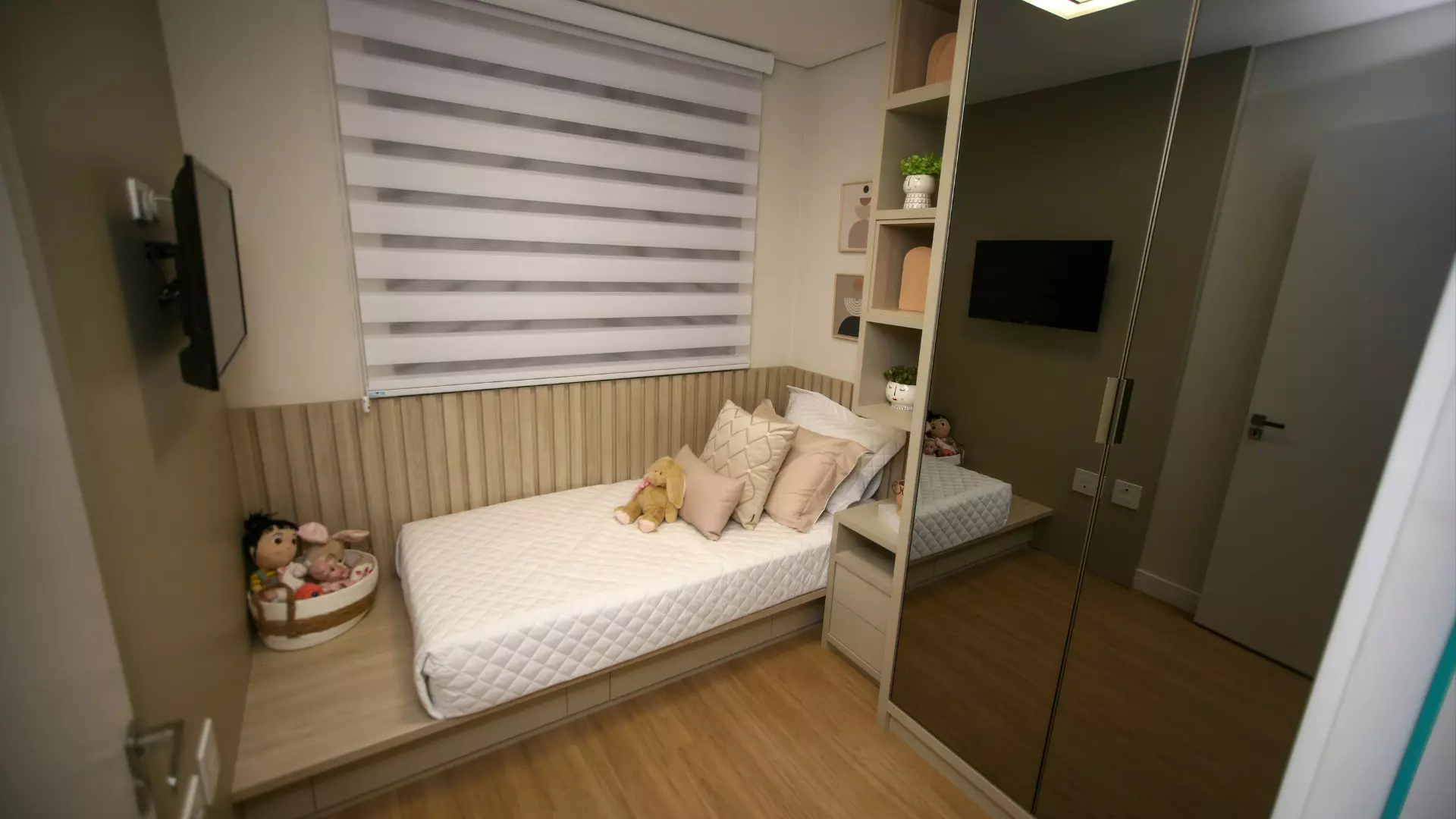
The biggest point in a room of 3 to 4 tatami mats is how to arrange the minimum functions. In this size, you need to focus on "sleeping" and "storage," and simplify the space for relaxation and work.
The basic idea is to place a low or compact bed against the wall and use the remaining space for movement. It is important to use storage under the bed or on the wall and not place items on the floor. Using a foldable or small side table will prevent the room from feeling cramped.
In a room with 3 to 4 tatami mats, carefully selecting furniture and choosing not to have any will lead to comfort.
Layout example for 5-6 tatami mats
Five to six tatami mats is the most common size for a single person, and the comfort level can vary greatly depending on the layout.
By placing your bed against the wall and placing a desk or small sofa on the other side, you can sleep, work, and relax all at the same time. It's also a good idea to eliminate the low table and use it as a desk. For storage, choosing compact storage furniture with doors will make the room look neater. Also, using low furniture will reduce the feeling of oppression.
By keeping "zoning" in mind, it is possible to create a layout that does not feel cramped for a 5-6 tatami room.
Layout example of 7-8 tatami mat 1K
If you have a 1K apartment of 7 to 8 tatami mats, you will have much more freedom in terms of layout.
In addition to a bed, you can also add a one-seater or compact two-seater sofa. The key is to avoid placing furniture too close to the center of the room, and to stick to the wall as a rule. Creating a simple relaxation space with a sofa and table will add structure to your life. Also, choosing furniture with storage will help prevent clutter even if you accumulate more items.
In a room with 7 to 8 tatami mats, you can maintain a spacious and comfortable impression by being conscious of leaving some space.
Layout example of a living/dining/kitchen area of around 10 tatami mats
A living, dining, and kitchen area of around 10 tatami mats may seem spacious at first glance, but if you cram too much in a sofa, dining area, and storage, it can end up looking cramped.
The basic layout is to choose a "sofa dining" that doubles as a sofa and dining area, or compact furniture. Arranging furniture so as not to block traffic flow and being mindful of a layout that allows for clear lines of sight will create a sense of spaciousness.
By utilizing wall storage and not leaving items on the floor, you can create a spacious living, dining, and kitchen space even in an area of 10 tatami mats.
[By purpose] How to create a layout that suits your lifestyle
To make a small room comfortable, it is essential to design a layout that is suited not only to the size and layout but also to "who will be living there and how they will be living." The furniture needed and the points that should be prioritized vary greatly depending on whether you are living alone, with two people, or with a family or children. A layout that does not suit the purpose can lead to poor flow of movement and a feeling of oppression.
Here we will explain layout ideas that will allow you to live comfortably in a small room, depending on your lifestyle.
Living alone
In a small room where you live alone, you need to be able to perform multiple daily activities such as sleeping, relaxing, and working in a limited space. Therefore, it is important to first clarify your lifestyle and decide your priorities.
Place the bed against the wall to ensure movement and choose a desk or table that can be used for multiple purposes to save space. Also, by using furniture with storage and not leaving things on the floor, the whole room will look neater.
When living alone, a layout that is both compact and functional is the key to making the space feel less cramped.
Living together
In a small room for two people, it's important to strike a balance between "shared space" and "personal space." Trying to share everything can easily become cramped, so be mindful of how you use relaxation space and storage.
For example, you can reduce stress by keeping the sofa and dining area compact and sharing the space, and by assigning a designated storage space for each individual. It is important to choose furniture that is not too large and to arrange it in a way that does not obstruct movement.
Even in a small room, two people can live comfortably by dividing the roles into different layouts.
Family/children's room
When using a small room for a family or children, it is important to keep safety in mind and to use it in a way that accommodates their growth.
By keeping things off the floor and using wall storage and low furniture, you can ensure a safe and easy-to-play space. Another key point is to choose furniture with movable storage and easy-to-rearrange layouts, with future redecorating in mind. In a child's room, gently separating the study space from the play space will help create a well-balanced environment.
Even a small room can be made into a space that is easy for the family to use with a little ingenuity.
Search for a room
Only furnished properties with appliances are listed!
Choosing furniture for a small room
In order to make the most of a small room, not only the layout but also the choice of furniture is extremely important. Choosing furniture that is the wrong size or items that are not suited to the purpose can create a feeling of oppression and restrict movement. In a small room, the key is to choose based on whether you can live comfortably with the items you have, rather than whether you can fit them in.
Here we will explain how to choose furniture that is suitable for a small room, item by item.
bed
In a small room, the bed is the piece of furniture that takes up the most space, so the choice of bed will affect the overall impression of the room. We recommend a low bed or one with legs so that the floor is visible. This will help to keep your line of sight unobstructed and make the room appear larger. Also, if you choose a bed with storage, you can compensate for the storage capacity even in a room with a small closet.
However, drawer-type beds tend to restrict movement, so you need to consider the space required to open and close them. In small rooms, it's important to choose a bed that balances size, height, and storage.
sofa
When placing a sofa in a small room, it's important to consider whether you really need one. If you do, choose a compact design that doesn't feel oppressive, such as a one-seater or single-arm sofa. A sofa with legs that allows you to see the floor will make the room look lighter.
You can also reduce the amount of furniture you need by choosing multi-functional items such as sofa beds and sofas with storage. In a small room, it's important to choose a size that suits your style of relaxation, rather than trying to fit in a large sofa.
table
In a small room, the size and use of the table directly affect the comfort of living. If placing a low table will restrict movement, it is recommended to choose a desk table or side table.
Folding or nesting tables can be stored to save space when not in use. Choosing a light color that blends in with the floor and walls will reduce the feeling of oppression. In a small room, it's best to choose a table based on whether it will be "furniture that will always be out."
Storage
In a small room, the impression of the room can change dramatically depending on the storage you choose. We recommend storage furniture with doors so the contents cannot be seen. By hiding the signs of everyday life, the whole room will look neater.
Also, if you have tall storage, arranging it all together against the wall will reduce the feeling of oppression. If you use open storage, it's important to coordinate the colors and materials of the storage boxes. In a small room, it's important to focus not only on the amount of storage but also on how it looks.
Home appliances and wiring
In a small room, the way you display your appliances and wiring is also an important point. By choosing appliances that are as compact as possible and placing them in a fixed location, you can avoid wasting space.
Also, visible wiring increases the amount of information and tends to make the room look cluttered. Hiding it using a cable box or wiring cover reduces visual noise. The smaller the room, the more comfortable it will be to "hide" all the appliances and wiring together.
Common examples of bad practices
When arranging a small room, even a small mistake in your choices can make it feel smaller than expected or difficult to live in. If you neglect to consider the basics of furniture, color, storage, traffic flow, and lighting, the room will end up feeling more cramped than it actually is.
Here we will introduce some common mistakes that are especially common in small rooms and explain why they should be avoided.
The furniture is too big
The most common mistake in small rooms is having furniture that is too large for the size of the room. It may look just right in the store, but once it's placed there, it narrows the aisles and restricts traffic flow. Beds, sofas, and storage shelves in particular have a big presence, so you need to be careful.
When choosing furniture, it is important to consider the width of the aisle and the line of sight after installation. In a small room, you should decide on the size based on whether there will be space left, rather than whether you can fit it in.
The colors are varied and there is a lot of information.
Too many colors in a small room increases the amount of visual information, making it seem more cluttered than it actually is. If the colors of the furniture, rugs, curtains, and accessories are not coordinated, the eye will be scattered and the space will tend to feel unsettled.
In particular, using a lot of dark colors and patterns can make a room feel cramped. In a small room, the key to making it appear larger is to use light colors such as white or beige as the base color and keep the use of accent colors to a minimum.
The storage is open and looks messy
Open storage looks stylish, but you need to be careful in a small room. Because the contents are always visible, even a small amount of stuff can make the room look cluttered. If you line up items that give the impression of everyday life, the whole room will look cluttered.
In a small room, it is important to use storage with doors or storage boxes to reduce the amount of visual information. By using both visible and hidden storage, you can maintain a neat and tidy space.
The flow of traffic is interrupted, making it difficult to live
Another common example of a bad idea is when furniture is arranged with appearance as the priority, resulting in interruptions to daily life routes. The placement of beds and tables narrows the passageway, causing stress every time you move. In particular, if the flow of movement from the entrance to the window or from the bed to the storage area is blocked, the entire room becomes difficult to use.
In a small room, it is more comfortable to determine the flow of traffic before arranging the furniture and then plan the layout within that range.
Windows and lights are closed, making it dark
If you block windows and lights with furniture, the room will become dark and feel smaller. Rooms with little natural light can easily create a feeling of claustrophobia. It's especially important to avoid placing tall furniture in front of windows. Also, relying solely on ceiling lighting can make the space appear flat.
In a small room, you can create a bright and spacious impression by keeping the area around the windows neat and tidy and incorporating indirect lighting.
Steps for changing the layout
To successfully rearrange a small room, it's important to follow a set procedure rather than moving furniture around on a whim. Especially in a small room, even the slightest misalignment can make it feel cramped or difficult to use. By measuring, zoning, and running simulations in advance, you can greatly reduce the risk of failure.
Here we will explain the basic steps for changing the layout that anyone can easily put into practice.
Measurement Checklist
The first thing you should do when changing the layout is to take accurate measurements of the room and furniture. It's important to know not only the length and width of the room, but also the ceiling height, the location of windows and doors, and the location of electrical outlets. One thing that's often overlooked is the space required for doors and storage doors to open and close. If the doors won't open after you've placed the furniture, it will become much less convenient to use.
Also, aim for a passageway width of at least 60cm. The smaller the room, the more carefully you measure, so you can achieve a natural layout.
Zoning (sleeping/relaxing/working)
In order to live comfortably in a small room, it is essential to "zonate" the space by its purpose. Rather than just thinking about it in your head, it is easier to visualize it by actually dividing it into sections by putting masking tape on the floor.
By clearly defining "sleeping areas," "relaxing areas," and "working areas," the size and placement of the furniture you need will become clear. Zoning also makes it easier to notice unnecessary furniture and furniture that has overlapping functions, allowing you to create a well-balanced layout even in a small room.
Try out placement on paper, in an app, or using a 3D simulation
When rearranging the layout of a small room, it is very effective to simulate it before actually moving the furniture. By drawing a simple floor plan on paper and arranging the furniture, or by using a layout app or 3D simulation, you can get a better idea of what the finished product will look like.
Large furniture in particular can be difficult to move once it's placed, so it's important to consider it in advance. By performing a simulation, you can easily notice problems with traffic flow and a sense of oppression, preventing mistakes.
Have criteria for reducing things before buying more
When rearranging a small room, it's important to think about what to remove rather than what to add. Before buying new furniture, take a look at whether you really need the furniture and things you currently have.
The criteria for judgment are:
- "Have you used it recently?"
- "Can we substitute it?"
- "Will placing it interfere with the flow of traffic?"
Keeping these things in mind will make it easier to organize. Reducing unnecessary items will give you more freedom in layout, allowing you to create a comfortable space with more space even in a small room.
FAQ
Many people have similar concerns and questions about arranging a small room. In particular, the placement of the bed and sofa, how to deal with a lack of storage space, and the constraints that come with renting can all be areas where mistakes are easy to make.
Here we will look at some frequently asked questions about small rooms and provide easy-to-implement ideas and solutions in an easy-to-understand manner.
Q: Where is the best place to put the bed?
In a small room, the best place to place the bed is against the wall. Placing it in the center of the room will disrupt the flow of traffic and make the room feel smaller than it actually is. We recommend placing the bed against the wall in a position that does not block the view from the doorway to the window.
Also, if you are placing a bed in front of a window, choosing a low bed will reduce the feeling of oppression. If you are using a bed with storage, be sure to consider the space required to open and close the drawers.
In a small room, the basic rule for bed placement is to place it in a position that does not obstruct traffic flow or block the view.
Q: Should I have a sofa or not?
In a small room, it's not necessary to have a sofa. Even if you want to relax, there are cases where a bed, rug, or cushions can be used instead. If you absolutely must have one, choose a compact, one-seater or one-arm type that doesn't feel oppressive.
Another option is to choose a multi-functional type, such as a sofa bed or a sofa with storage. In a small room, it is important to decide based on whether you can fit it in or not, but whether it will be comfortable even after you put it there.
Q: What is the first priority when you don't have enough storage space?
When you feel like you don't have enough storage space, the first thing you should do is not to increase the amount of storage space, but to reassess what you have. Check to see if there are any items that you don't use often or if there are any substitutes. Then, consider using storage space under the bed, on the walls, or in dead space.
When adding storage furniture, choosing a type with doors that hide the contents can make the room look cluttered and difficult to see. In a small room, how you use the storage is more important than the amount of storage.
Q: How can I add storage space to a rental property without drilling holes in the walls?
In a small rented room, it is essential to find ways to increase storage space without drilling holes in the walls. A typical method is to use tension-type storage racks or shelves. Since they are fixed to the floor and ceiling, they can ensure storage capacity without damaging the walls.
Additionally, if you use under-bed storage or a cart with casters, you can pull out items only when you need them. When renting, it is important to make good use of movable and freestanding storage while being mindful of restoring the property to its original condition.
summary
Even in a small room, it's entirely possible to create a comfortable and cozy space by being creative with the layout and interior. The important thing is not to judge solely by the number of tatami mats, but to set priorities that suit your lifestyle. Also, try not to place too much furniture, and be mindful of the layout, taking into account movement lines and white space. You can also create the visual impression of spaciousness by choosing low furniture and light colors, and showing the floor and walls.
Also, by thinking about storage in terms of "organizing" rather than "increasing," you can reduce the stress caused by small spaces. Because a room is small, every decision you make directly affects the comfort of the space. Keep in mind the basics introduced in this article and try to find a layout that suits your lifestyle.