
What is a share house? Basic structure and features
A share house is a housing style in which multiple residents have their own private rooms in one building but share common spaces such as the kitchen, living room, and bathroom. It is characterized by its economic benefits and emphasis on interaction between residents, and is particularly popular among young people and foreign residents in urban areas.

Common types of share houses
There are various types of share houses depending on the needs and lifestyles of the residents. They can be divided into three main types: "coliving type," "community-oriented type," and "low-cost type."
The "coliving type" offers ample workspace and event space to support remote work and entrepreneurship, and is particularly popular with freelancers and startups.
The "community-oriented" type values interaction between residents, and events are frequently held in the spacious living rooms and common areas.
The "low-cost" type offers simple accommodation with minimal facilities and low rent, making it particularly suitable for students and short-term residents.
By choosing a share house that suits your lifestyle and purpose, you can enjoy a comfortable communal life.
Characteristics of people who live in share houses
Share houses are chosen by people with a variety of lifestyles and goals. Here we will introduce the main characteristics of people who live in share houses and explain the benefits that suit each person's needs.

① People who choose for economic reasons
Shared houses are the perfect option for people who want to keep rent and initial costs down. Many properties do not require a security deposit or key money, which reduces the burden of moving in compared to regular rental properties. Additionally, many properties come with furniture and appliances, which means you can significantly reduce moving costs, which is another attractive feature.
Furthermore, since utility bills and living expenses can be shared, it is possible to live comfortably while keeping monthly expenses down. Particularly in urban areas, shared houses are often more cost-effective than living in a one-room apartment, making them popular among people who are very budget-conscious.
②People who value good location
Shared houses are also an attractive option for people who want to live in convenient urban areas. Even in areas near train stations or popular areas where regular rental housing tends to have high rents, shared houses allow you to live at relatively reasonable rents.
Additionally, share houses with good access to work or school are ideal for people who want to make the most of their time. For example, for working adults in the city or students attending university, choosing a property with easy access to their workplace or school can reduce travel time and improve the quality of life.

3. People looking for ease of moving in
Shared houses are an easy option for people who are worried about the tenant screening process or who don't have a guarantor. While a typical rental contract requires proof of income and securing a guarantor, many shared houses have relaxed these requirements, making it easy for people living alone for the first time or who have just changed jobs or been transferred to live in a shared house.
In addition, many share houses have simple contract procedures, so you can move in on the same day. This provides a safe and secure living environment for freelancers and foreigners who may find it difficult to pass the screening process of a guarantor company.
④People looking for short-term housing
Shared houses are also suitable for people looking for a temporary place to stay, such as for studying abroad, being transferred, or changing jobs. While most rental properties have a long minimum contract period of 1-2 years, there are plenty of shared houses available for short-term contracts.
Shared house contracts are also attractive for people looking for flexible housing. For example, for people who only want to stay for a few months or who are concerned that their living environment may change due to a job change or transfer, shared houses, which offer a high degree of freedom in terms of contract options, are the perfect choice.
⑤ People who want to enjoy interacting with others
Shared houses are the perfect environment for people who love communication and want to make new friends and networks. In particular, properties with ample common spaces make it easy for residents to naturally interact with each other and expand their network of contacts.
Another attraction of share houses is the regular parties and events that residents hold together. People with diverse backgrounds, such as travel enthusiasts, entrepreneurs, and creators, gather here, so you can expect to have stimulating encounters and exchanges that broaden your perspective.
Search for a room
Only furnished properties with appliances are listed!
Attribute data of people living in share houses
Share houses are a popular housing option for people seeking a specific lifestyle. Here we will take a closer look at the age groups, employment status, gender ratio, and foreign residents of share houses.
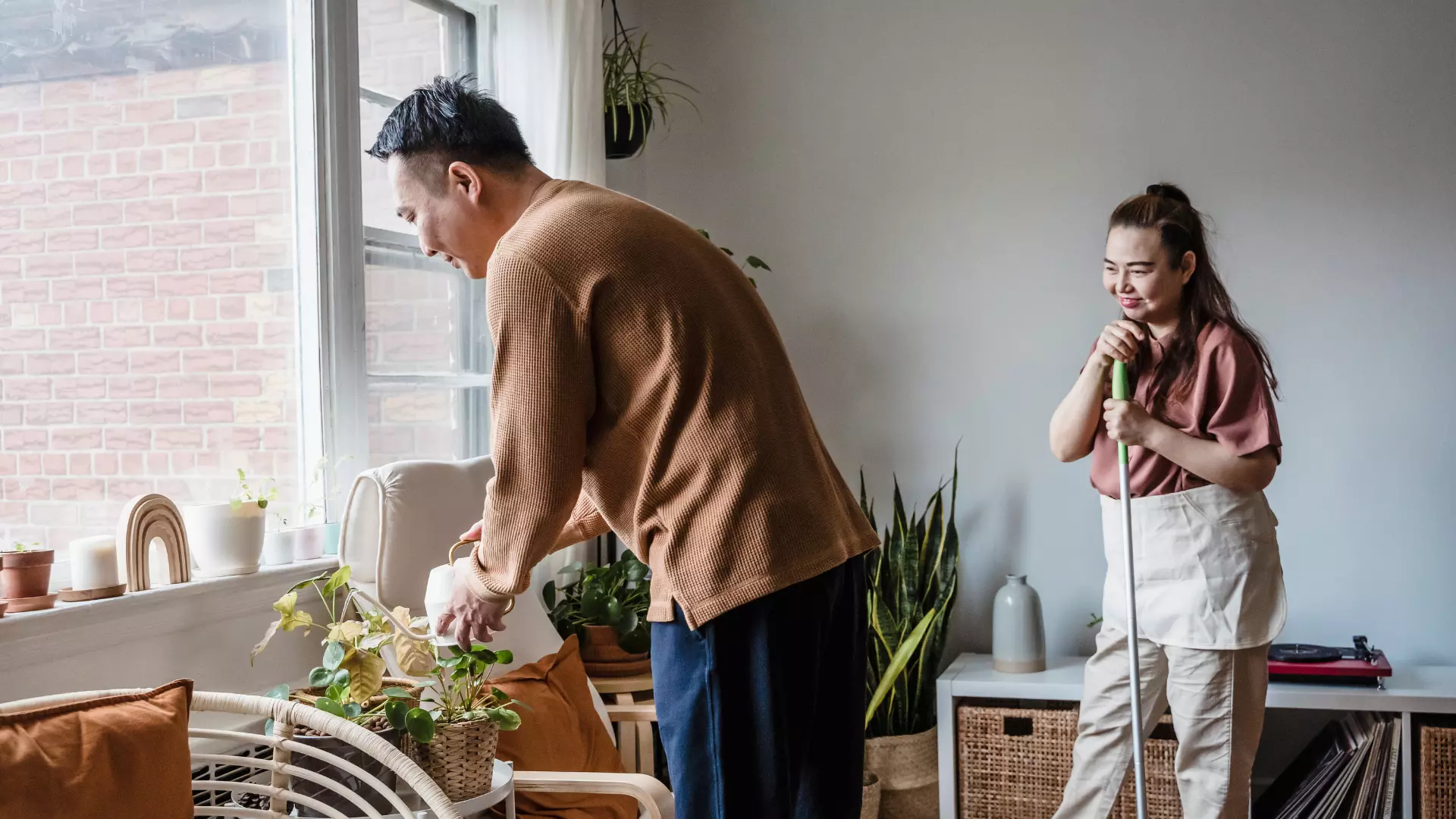
Age group: Mostly in their 20s and 30s, with many working adults and students
The majority of share house residents are young people in their 20s and 30s, and are especially popular with working adults and students.
- Working adults: Especially in urban areas, many people want to live in a convenient area while keeping rent low, so they tend to choose shared houses.
- Students: Many university and vocational school students choose to live in a share house to reduce the cost of living alone. There is also a high proportion of international students, making it a good choice for those seeking intercultural exchange.
Employment status: Many full-time employees and freelancers, as well as many creative and IT-related positions
A notable feature of people living in share houses is that they are not only full-time employees, but also freelancers and remote workers.
- Full-time employees: The reason why working adults choose to live in a share house is because of the economic benefits, such as wanting to live in the city center but wanting to keep rent low, and being able to share living costs.
- Freelancers and remote workers: Recently, the number of share houses with coworking spaces has increased, and many people working in IT or creative professions live there. Share houses are ideal for people looking for a property with good internet access and an environment that makes it easy to balance work and personal life.
Male to female ratio
The ratio of men to women in share houses varies greatly depending on the property, but in general, there are an increasing number of properties that are women-only or have a majority of female residents.
- Mixed-gender: In typical share houses, the ratio of men to women tends to be equal, or there are slightly more women than men.
- Women-only share houses: In urban areas in particular, properties for women who prioritize security and privacy are gaining popularity. Women-only share houses often come equipped with auto-locks and security cameras, providing a safe and secure living environment.
Foreign residents
Share houses have many foreign residents, creating an environment conducive to international exchange. They are especially popular with people who have the following characteristics:
- International students: In order to get used to life in Japan, an increasing number of people are choosing to live in share houses, which offer many opportunities for cultural exchange.
- Working holiday makers: For those looking for a short-term stay, shared houses offer low initial costs and flexible contract periods, making them very attractive.
- Japanese people seeking international exchange: For Japanese people who are interested in overseas countries or who want to learn foreign languages, the ability to interact with residents from various countries is a major attraction of share houses.
Advantages and disadvantages of a shared house
Shared houses are chosen by many people as a style of living that allows for a highly convenient lifestyle while keeping costs down. However, there are also issues such as maintaining privacy and potential conflicts between residents. Here we will explain the advantages and disadvantages of shared houses in detail to help you choose the right home for you.
In addition, the article "A thorough explanation of the advantages and disadvantages of share houses! How to choose the right one and tips for a comfortable life" not only details the specific advantages and disadvantages, but also introduces tips for living comfortably in a share house and tips for choosing a property. If you're interested in share houses, be sure to check it out!
Advantages of a share house
Shared houses are a housing style that allows you to live a convenient life while keeping costs down. There are many reasons why many people choose to live in shared houses, especially in urban areas. Here we will introduce the main benefits of shared houses.
1. Reduced rent and initial costs
The biggest appeal of share houses is that the rent is cheaper than regular rental properties. Many properties do not require a security deposit or key money, and most come with furniture and appliances, so you can significantly reduce moving costs.
2. You can share utility bills and living expenses
Many properties include utilities such as water, electricity, gas, and internet in the rent, which is a major benefit as it helps keep monthly fixed costs down. Residents can also share food with each other, which can help save on living expenses.
3. You can live in a conveniently located area
Even in city centers and popular areas where regular rentals are expensive, share houses often offer reasonable prices. They can shorten your commute time and improve the convenience of your life.
4. Increased opportunities for interaction and new connections
Share houses offer an environment where communication is active, making it easy to meet people who share the same values and expand your circle of friends. One of the attractions, especially in properties with many foreign residents, is the increased opportunities for international exchange.
5. It can reduce anxiety about living alone.
Since there are multiple residents in a share house, there is a sense of security in terms of security. Another reassuring point is that you can get help from those around you if you get sick or in an emergency.
Disadvantages of a share house
While share houses have the advantages of cost and interaction, they also have some disadvantages that come with communal living. In order to live comfortably, it is important to understand the disadvantages of share houses and think about how to deal with them.
1. Privacy is difficult to ensure
Although there are private rooms, the living room, kitchen, and bathroom are shared, so it can be difficult to secure a completely private space. This may not be suitable for people who want to spend time alone in peace and quiet.
2. Stress due to changes in daily routines
If residents have different lifestyles, you may hear them talking late into the night or be bothered by noises in the early morning. In particular, those who work shifts or remotely need to be aware of the differences in lifestyles between other residents.
3. Rules for using shared spaces are necessary
Since the kitchen and bathroom are shared by multiple people, problems can arise if someone does not follow the rules for cleaning or taking out the trash. It is important to confirm in advance how to use the shared spaces.
4. Possibility of interpersonal problems
In a shared house, differences in values and lifestyles can sometimes cause trouble between residents. Noise issues and troubles over how to use shared spaces are particularly common. In order to build smooth relationships, it's important to maintain an appropriate level of distance and communication.
5. Contract period and moving-out rules are different from rentals
Share house contracts differ from regular rental contracts, and while some properties allow for short-term contracts, there may also be strict rules regarding moving out. Be sure to check the contract details in advance to avoid any issues when moving out.
Search for a room
Only furnished properties with appliances are listed!
Who is suitable for living in a share house and who is not?
While share houses have many benefits, they are a style of living that is suitable for some people and not others. Understand the characteristics of "people who can live comfortably in a share house" and "people who find share house life stressful" and choose the housing that is right for you.
In particular, the article "What are the characteristics of people who are not suited to living in a share house? Key points for choosing the right home for you" provides detailed information about the specific characteristics of people who find living in a share house difficult, as well as what other housing options might be suitable. If you're interested in a share house but have some concerns, be sure to check it out.
Who is suitable for a share house?
1. People who enjoy communication
In a share house, there are many opportunities to use common spaces such as the living room and kitchen, which naturally leads to interaction between residents. A share house is an attractive environment for people who enjoy talking and interacting with others. In particular, if there are foreign residents, there are many opportunities for cross-cultural exchange and you can be exposed to new values.
2. People who can cooperate with others
In a shared house, you will have to do communal tasks such as cleaning and taking out the trash. For people who can cooperate with others to maintain a comfortable living environment, a shared house is a very comfortable environment to live in. On the other hand, it may not be suitable for people who like to live only thinking about themselves.
3. People who want to keep living expenses down
One of the great attractions of a share house is that you can share the rent and utility costs. Especially in urban areas, a share house often costs less than renting a one-room apartment, making it the perfect place to live for those who are budget-conscious. Furthermore, many properties come with furniture and appliances, so it is also recommended for those who want to keep initial costs down.
People who are not suited to living in a share house
1. People who value alone time
In a share house, it can be difficult to find time completely alone because you share common spaces such as the living room, kitchen, and bathroom. For those who value quiet time alone, it may be difficult to find privacy in this environment.
2. People who are sensitive to noise and privacy
In a shared house, you may be bothered by the sounds of daily life from the next room or conversations in the common areas. This can be stressful for people who prefer a quiet environment or who are sensitive to noise. Also, for those who are uncomfortable using a shared kitchen or bathroom, living alone with private facilities may be a better option.
3. People who are bad at following rules
Share houses have rules to make communal living smooth, such as rules for taking out the trash, deciding who should clean, and banning noise at night. If you're not good at following these rules or if you want to live freely at your own pace, a share house may not be for you.
summary
Shared houses are ideal for people who want economic benefits and interaction with other residents. There are many advantages, especially for those who want to keep rent low, who value urban convenience, and who wish to stay for a short period of time. On the other hand, there may be many stressful situations for people who value privacy, are sensitive to noise, or have difficulty following rules.
It's important to determine whether a share house is right for you and choose a comfortable living environment. Choose a home that suits your lifestyle and values, and realize your ideal life!