What Is a Tatami Room?
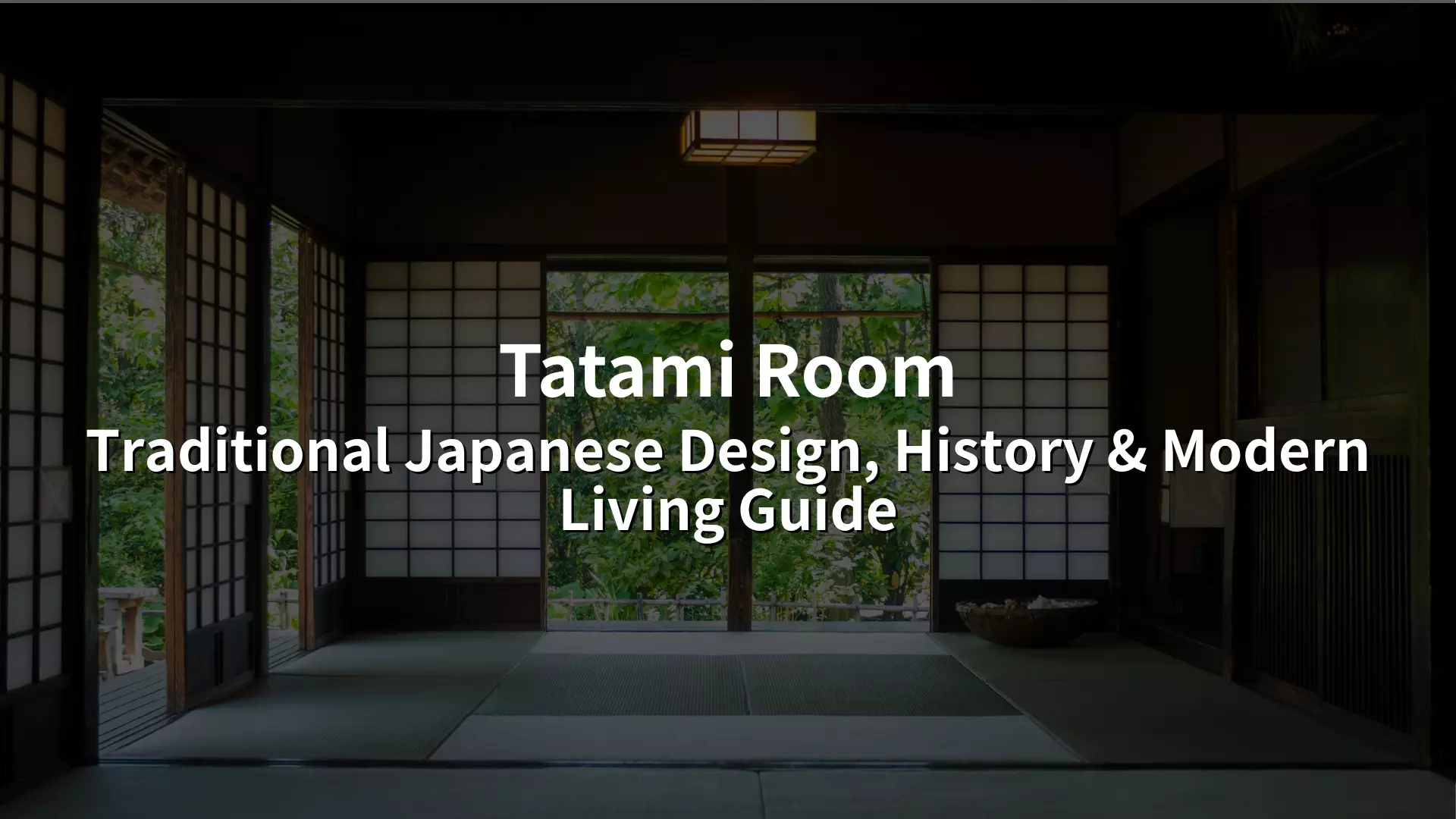
A tatami room is a Japanese-style room where the entire floor is covered with tatami mats — thick, rectangular mats traditionally made from a core of compressed rice straw (waradoko) and a surface layer of woven rush grass (igusa). The term "tatami" comes from the Japanese verb tatamu, meaning "to fold" or "to stack," reflecting the mat's original role as portable, foldable flooring in aristocratic homes.
What "Washitsu" Means
In Japanese, a tatami room is called a washitsu (和室). The word combines wa (和), meaning "Japanese" or "harmony," and shitsu (室), meaning "room." It stands in contrast to yoshitsu (洋室), or "Western-style room," which features hardwood or laminate flooring rather than tatami. When browsing apartment listings in Japan, you will frequently see floor plans labeled with these terms — and the distinction matters significantly for the furniture, lifestyle, and daily experience inside the space.
Key Characteristics of a Japanese Tatami Room
Several design elements make a tatami room immediately recognizable. The flooring itself is the most obvious: tatami mats are arranged edge to edge in standardized patterns, and their soft, slightly springy texture underfoot is entirely different from Western hardwood or carpet. The rooms are typically enclosed by shoji — sliding doors made from translucent paper stretched over a wooden lattice frame — and fusuma, opaque sliding panels that serve as room dividers between adjacent spaces. Furniture is kept to a minimum, and people traditionally sit on the floor using cushions called zabuton or low floor chairs rather than elevated Western-style chairs and tables.
The overall effect is a space that feels open, flexible, and deeply connected to nature and natural materials — wood, paper, woven grass, and natural light. This is not accidental. The tatami room is a physical expression of Japanese aesthetic values: simplicity, respect for natural elements, and the idea that less creates more room for presence and calm.
History of Tatami Rooms in Japan
The history of tatami stretches back more than a millennium, evolving from a luxury item reserved for the highest ranks of Japanese society to the standard flooring found in homes across the country.
Origins in Aristocratic Homes
The earliest references to tatami appear in Japanese literature from the Nara period (710–794), where mats were used as individual seating for nobility — not as full-room flooring. During the Heian period (794–1185), aristocratic families in Kyoto began placing tatami mats in their shinden-zukuri palaces, though even then, mats were arranged selectively. They were luxury items, and their number and placement in a room signaled the owner's wealth and social standing.
Samurai-Era Development and the Muromachi Period
The transformation of tatami from portable furnishing to permanent flooring occurred primarily during the Muromachi period (1336–1573). This era saw the emergence of shoin-zukuri, a new architectural style closely associated with samurai culture, Zen Buddhism, and the tea ceremony. In shoin-zukuri design, tatami mats were laid wall to wall across entire rooms for the first time, and the rooms incorporated elements still recognizable today: the tokonoma decorative alcove, built-in shelving (chigaidana), and the characteristic arrangement of sliding shoji and fusuma doors.
By the end of the Muromachi period, full tatami flooring had become a defining feature of samurai residences, Zen temples, and tea houses. The practice eventually spread to common homes during the Edo period (1603–1868), and by the early modern era, tatami rooms were standard in Japanese houses of every social class.
Tatami and Traditional Architecture
Tatami mats did not merely sit inside Japanese architecture — they actively shaped it. The dimensions of rooms, the placement of pillars, and the proportions of sliding doors were all designed around the standardized size of a tatami mat. This relationship between the mat and the building is one of the most distinctive features of Japanese traditional architecture, creating a modular system where the tatami mat serves as both a unit of flooring and a unit of spatial measurement. Understanding this connection is essential to appreciating why tatami rooms look and feel the way they do today.
Search for a room
Only furnished properties with appliances are listed!
Key Features of a Traditional Japanese Tatami Room
A traditional tatami room is more than just a floor covered in mats. It is an integrated design system where every element — from the flooring to the walls, doors, and decorative alcove — works together to create a cohesive, functional, and aesthetically balanced space.
Tatami Mat Size and the Jō Measurement System
Tatami mats come in standardized sizes, and rooms are measured in jō (畳) — the number of mats that fit the floor. A single standard tatami mat, called kyōma (the Kyoto standard), measures approximately 191 cm × 95.5 cm (roughly 6.3 ft × 3.1 ft, or about 19.4 square feet per mat). However, mat sizes vary by region: the edoma (Tokyo standard) is slightly smaller at approximately 176 cm × 88 cm (5.8 ft × 2.9 ft).
This modular system means that when Japanese people describe a room as "6-jō" or "8-jō," they are communicating not just the area but also the proportions and layout of the space — an elegant shorthand that has been used for centuries.
Shoji and Fusuma Sliding Doors
Two types of sliding doors define the walls and openings of a tatami room. Shoji (障子) are translucent panels made from washi (Japanese paper) stretched over a delicate wooden lattice. They diffuse natural light beautifully while maintaining privacy — one of the most striking visual elements of a Japanese-style room. Fusuma (襖) are fully opaque sliding panels, typically decorated with paintings, calligraphy, or plain paper, used to divide adjacent rooms or close off storage spaces. Because fusuma slide rather than swing, they preserve floor space and allow rooms to be reconfigured quickly — opened up for large gatherings or closed off for sleeping.
Tokonoma Alcove
The tokonoma (床の間) is a recessed alcove found in formal tatami rooms, traditionally used to display a hanging scroll (kakejiku), a seasonal flower arrangement (ikebana), or a piece of art. It is the visual and spiritual focal point of the room — the area of highest honor where a guest of distinction would be seated facing toward it. Even today, the tokonoma represents a core element of Japanese interior design, linking the living space to seasonal awareness and aesthetic refinement.
Minimalist Design Philosophy
Perhaps the most important feature of a tatami room is what it lacks. There are no heavy sofas, no towering bookshelves, no cluttered surfaces. The design philosophy behind the tatami room is fundamentally minimalist: clear the space of unnecessary objects so that the room itself — the texture of the woven mats, the grain of the wooden frames, the glow of light through paper doors — becomes the experience. Furniture, when present, is low to the ground: a low table for dining or tea, zabuton cushions for sitting, a futon for sleeping that is folded and stored each morning. This approach gives the room extraordinary flexibility and a sense of spaciousness that belies its often modest size.
Tatami Room Size and Layout Explained
Understanding the size and layout of tatami rooms is essential if you are considering living in one — especially if you are coming from a Western housing background where rooms are measured in square feet or square meters.
Standard Tatami Mat Dimensions
As noted above, standard tatami mats vary in size depending on the region of Japan:
- Kyōma (Kyoto standard): approximately 191 cm × 95.5 cm (6.3 ft × 3.1 ft) — about 1.82 m² (19.6 sq ft) per mat
- Chūkyōma (Nagoya standard): approximately 182 cm × 91 cm (6.0 ft × 3.0 ft) — about 1.66 m² (17.8 sq ft) per mat
- Edoma (Tokyo/Kantō standard): approximately 176 cm × 88 cm (5.8 ft × 2.9 ft) — about 1.55 m² (16.7 sq ft) per mat
- Danchima (apartment standard): approximately 170 cm × 85 cm (5.6 ft × 2.8 ft) — about 1.45 m² (15.6 sq ft) per mat
In Tokyo apartments, the edoma or smaller danchima sizes are most common. This means that a "6-tatami room" in Tokyo is noticeably smaller than a "6-tatami room" in Kyoto — something worth keeping in mind when reading apartment listings.
6-Tatami and 8-Tatami Room Examples
A 6-tatami room (6畳, roku-jō) is one of the most common room sizes in Japanese apartments. Using the Tokyo edoma standard, it covers approximately 9.3 m² (about 100 sq ft) — roughly the size of a modest bedroom in a Western apartment. This is enough space for a futon, a low table, and basic storage, making it a practical choice for a single person.
An 8-tatami room (8畳, hachi-jō) provides approximately 12.4 m² (about 133 sq ft) and feels noticeably more spacious. It comfortably accommodates a kotatsu (heated table) or a low dining table with floor chairs, a futon, and additional furniture. Traditionally, 8-tatami rooms were considered the standard for a family's main living area or a formal guest reception room.
How Layout Affects Room Function
The arrangement of tatami mats within a room follows specific traditional patterns. Mats are never laid in a grid that creates a cross-shaped seam at the center — this pattern (jumonji-jiki) is considered inauspicious and is reserved for funeral settings. Instead, mats are arranged in staggered patterns that create T-shaped intersections.
The layout also determines where certain activities and furniture naturally fit. A rectangular 6-tatami room, for example, has different functional possibilities than a squarer 8-tatami room. Understanding these proportions helps residents arrange their futon, table, and storage in ways that feel natural and leave adequate open floor space — the hallmark of a well-designed tatami room.
Search for a room
Only furnished properties with appliances are listed!
How Tatami Rooms Are Used Today
While Western-style rooms have become the norm in modern Japanese apartments, tatami rooms remain deeply woven into daily life. Many contemporary homes include at least one washitsu, and the ways it is used reflect both centuries of tradition and the practical realities of living in compact Japanese spaces.
Sleeping with a Futon
One of the most common and practical uses of a tatami room is as a bedroom. A Japanese futon — a thin, foldable mattress entirely different from the thick Western futon frame — is laid directly on the tatami floor for sleeping, then folded and stored in a closet (oshiire) each morning. This transforms the bedroom into an open living area during the day, a space-saving approach that is essential in the compact apartments common across Tokyo and other Japanese cities. The firm yet yielding surface of the tatami provides natural cushioning and ventilation beneath the futon, which many people find comfortable and beneficial for sleep and posture.
Tea Ceremonies
The tatami room is the traditional setting for the Japanese tea ceremony (chadō or sadō), one of Japan's most refined cultural practices. Tea ceremony rooms — called chashitsu — are intimate, carefully proportioned tatami spaces (often as small as 4.5 mats) designed to create a meditative atmosphere for the preparation and sharing of matcha tea. The tea room embodies the principles of wabi-sabi — beauty in simplicity and imperfection — and its design has influenced residential tatami rooms for centuries.
Guest Rooms
Across Japan, tatami rooms are commonly reserved as guest rooms. Because a futon can be quickly laid out and stowed, a tatami room that functions as a family area during the day becomes a comfortable guest bedroom at night. Hotels and traditional inns (ryokan) also feature tatami guest rooms, often with a tokonoma alcove, low tables, and bedding prepared on the floor — offering visitors an authentic experience of Japanese hospitality and living.
Meditation and Relaxation Space
The calm, uncluttered atmosphere of a tatami room makes it a natural choice for meditation, yoga, reading, and relaxation. The soft texture of the woven mat surface, the faint natural scent of fresh igusa rush, and the absence of heavy furniture create an environment that encourages mindfulness and quiet focus. Many families use their tatami room as a dedicated space for unwinding — a room where screens and work stay outside the sliding doors.
Tatami Room vs Western-Style Room
If you are a foreigner considering living in Japan, you will almost certainly encounter the choice between a Japanese-style tatami room and a Western-style room (yoshitsu). Each has distinct advantages and drawbacks, and the best choice depends on your personal lifestyle and preferences.
Flooring Differences
The most obvious difference is the floor. A tatami room has woven rush-grass mats that are warm underfoot, slightly soft, and naturally breathable. A Western-style room typically has hardwood, laminate, or vinyl flooring — smooth, hard, and easy to clean with standard furniture. Tatami mats require more careful maintenance: shoes are never worn on them, heavy furniture can leave permanent indentations, and moisture must be managed to prevent mold, especially during Japan's humid summer months.
Furniture Style
Tatami rooms are designed for floor-level living. You sit on zabuton cushions or low floor chairs, eat at a low table, and sleep on a futon laid directly on the mats. Western-style rooms accommodate beds, elevated dining tables, standard chairs, sofas, and standing desks. If you already own Western furniture — or if sitting on the floor is uncomfortable for you due to physical considerations — a Western-style room will be more practical.
Comfort and Practicality
Many people find tatami rooms exceptionally comfortable and calming. The mats are warm in winter and cool in summer; the natural igusa grass has mild air-purifying properties and a pleasant, distinctive scent; and the absence of heavy furniture makes the room feel spacious. However, tatami mats stain easily, need periodic replacement (typically every 5 to 10 years for the surface layer), and require careful humidity control. Heavy furniture, rolling chairs, and pet claws can all damage the woven surface.
Pros and Cons for Foreigners
For foreigners living in Japan, the appeal of a tatami room often comes down to cultural experience versus convenience. A tatami room offers an authentic connection to Japanese living that a standard apartment floor cannot replicate — you are quite literally stepping into a centuries-old architectural tradition every time you walk barefoot across those mats. On the other hand, the care requirements, floor-level lifestyle, and furniture limitations can be challenging for people who are not accustomed to them. Many expats find a compromise: an apartment with primarily Western-style rooms and one tatami room used as a guest room, meditation space, or relaxation area.
Search for a room
Only furnished properties with appliances are listed!
Can You Find Tatami Rooms in Modern Apartments?
Yes — though full tatami apartments are becoming rarer in newly built properties, many modern apartments in Japan still incorporate at least one tatami room alongside Western-style rooms. In Tokyo, the availability depends on the building's age, location, and design.
Tatami Rooms in Tokyo Apartments
In Tokyo's rental market, you will find tatami rooms primarily in older apartment buildings (danchi and mansion units built before the 2000s). These apartments often feature a layout with one or two Western rooms plus one washitsu, typically used as a bedroom or family room. Newer construction tends to favor all-Western layouts, but renovation trends have also brought contemporary tatami rooms into modern apartments — sometimes using modern materials like machine-made igusa or even synthetic tatami that are easier to maintain while preserving the traditional aesthetic.
Share Houses with Tatami Rooms
For foreigners arriving in Tokyo — especially students, working holiday visa holders, and expats in their first months in Japan — share houses have become one of the most popular and accessible housing options. Some share houses in Tokyo offer rooms with tatami flooring, giving residents the chance to experience traditional Japanese living without committing to a full apartment lease.
XROSS HOUSE, for example, operates fully furnished share houses and apartments across central Tokyo. With flexible monthly contracts, no key money, no security deposit, and no Japanese guarantor required, XROSS HOUSE removes the common barriers that foreigners face when trying to rent in Japan. Whether you are looking for a private room or a shared living arrangement, XROSS HOUSE provides a practical entry point for experiencing life in Tokyo — including properties that feature traditional Japanese design elements alongside modern amenities. For anyone curious about living with tatami, a share house with Japanese-style rooms offers a low-risk, fully supported way to try it.
Renovated Contemporary Washitsu
A growing number of interior designers and architects in Japan are reimagining the tatami room for contemporary lifestyles. These renovated washitsu may feature modern color palettes, half-tatami areas combined with wood flooring, built-in LED lighting, and contemporary fusuma or shoji designs that fit seamlessly into a modern apartment. The result is a space that honors the traditional tatami experience — the texture, the floor-level living, the calm — while adapting to today's aesthetic expectations and practical needs. This trend reflects a broader cultural movement in Japan to preserve and reinterpret traditional design elements rather than simply replace them with Western alternatives.
Tatami Room Maintenance and Care
Living with tatami mats requires more attention than hardwood or carpet, but the care routine is straightforward once you learn the basics. Proper maintenance keeps your mats clean, extends their lifespan, and preserves the room's characteristic fresh-grass scent.
Cleaning Tatami Mats
Regular cleaning is essential. Vacuum or sweep your tatami mats at least once a week, always moving in the direction of the weave — never across or against it, as this can damage the woven surface. Avoid using excessive water; tatami mats absorb moisture readily, and wet cleaning can promote mold growth. For spot cleaning, use a lightly dampened cloth wrung thoroughly dry, then wipe in the direction of the weave and allow the area to air-dry completely. Never use harsh chemical cleaners or abrasive tools on tatami — they will damage the delicate igusa fibers.
Humidity Control
Humidity is the most common enemy of tatami mats. Japan's rainy season (tsuyu, typically June through mid-July) and its hot, humid summers create conditions where mold and mites can thrive on tatami surfaces if air circulation is inadequate. To prevent this, ventilate your tatami room regularly by opening windows and sliding doors on dry days, use a dehumidifier during the rainy season, and avoid placing heavy items or futons on the same spot for extended periods without airing them out. If you notice green or black spots on your tatami, it is likely mold — clean it promptly with a dry brush and a cloth lightly dampened with diluted ethanol, then ventilate thoroughly.
Replacing Tatami Mats
Tatami mats are not permanent installations — they are designed to be maintained and eventually replaced. The typical lifecycle includes three stages: first, the mat is used as-is; after approximately 3 to 5 years, the woven surface (omote) can be flipped to expose the unused underside; after another several years, the surface layer is replaced entirely (omote-gae); and eventually, when the straw core compresses and loses its resilience, the entire mat is replaced (shin-datami). In rental apartments, tatami replacement is generally the landlord's responsibility upon move-out, though tenants may be charged for damage beyond normal wear.
Benefits of Living with a Tatami Room
Despite the rise of Western-style flooring in Japanese homes, tatami rooms continue to offer tangible benefits that many residents — both Japanese and foreign — find genuinely valuable.
Air Quality and Natural Materials
Tatami mats made with natural igusa rush grass have been shown to absorb and release humidity, helping to regulate indoor moisture levels naturally. Fresh igusa also contains compounds that contribute to a mild, pleasant scent and may have a calming effect on the nervous system — a quality long recognized in Japanese culture and increasingly supported by modern research. Unlike synthetic carpet or vinyl flooring, tatami is made from natural, biodegradable materials: woven rush grass over a rice straw or compressed wood fiber core, with cotton or hemp edging.
Flexibility of Space
The floor-level lifestyle that tatami encourages makes rooms remarkably versatile. A single tatami room can function as a bedroom at night (with a futon), a living area during the day (with a low table and zabuton cushions or floor chairs), a dining space (with a kotatsu in winter), a children's play area (the soft surface is forgiving), or a meditation and exercise space. This flexibility is especially valuable in Tokyo, where apartment square footage is limited and every room needs to earn its keep.
Cultural Experience
For foreigners living in Japan, having a tatami room in your home offers an everyday connection to Japanese culture that goes beyond tourism. You learn to remove your shoes at the door, fold and store your futon each morning, sit and eat at floor level, and appreciate the changing seasons through the scent and feel of the mats beneath your feet. It is a quiet, embodied form of cultural immersion — one that many expats come to value deeply during their time in Japan.
Minimalist Lifestyle
The tatami room, by its very nature, resists accumulation. Heavy furniture damages the mats. Clutter disrupts the visual harmony. The room's design gently encourages you toward a lifestyle with fewer possessions, more open space, and greater intentionality about what you bring into your living environment. For people interested in minimalism — whether inspired by Japanese aesthetics, practical necessity in small apartments, or a personal desire to simplify — the tatami room provides a living framework that supports and reinforces those values every day.
Is a Tatami Room Right for You?
Choosing between a tatami room and a Western-style room is a personal decision that depends on your circumstances, physical comfort, and what you want from your living experience in Japan.
For Students
If you are a language student or university student in Japan, a tatami room can be an affordable and culturally enriching choice. Share houses with tatami rooms — like those offered by XROSS HOUSE — provide a fully furnished, low-commitment living arrangement where you can experience traditional Japanese living while keeping your costs manageable. The futon-and-tatami setup is practical for students who do not want to invest in heavy furniture.
For Expats and Working Professionals
Expats working in Japan often find that a mixed apartment — with one tatami room and one or more Western rooms — offers the best of both worlds. The tatami room can serve as a calm retreat, guest room, or dedicated meditation and relaxation space, while the Western rooms accommodate your desk, bed, and existing furniture. This arrangement is widely available in Tokyo apartments and reflects how many Japanese families use their own homes.
For Short-Term Stays
If you are visiting Japan for several weeks or months — for work, study, travel, or a working holiday — a tatami room in a share house or furnished apartment offers an authentic living experience without the complications of a long-term lease. XROSS HOUSE's flexible monthly contracts and fully furnished rooms across Tokyo make it easy to try tatami living with zero hassle: no guarantor, no key money, and support available in English.
For Long-Term Residents
Long-term residents who commit to tatami living often develop a deep appreciation for the lifestyle it encourages. Learning to maintain your mats, adapting to floor-level living, and embracing the room's versatile, minimalist character become second nature over time. If you are settling in Japan for several years and want your home to reflect the culture you are living in, a tatami room is one of the most meaningful architectural features you can choose.
Summary: Why Tatami Rooms Still Matter in Modern Japan
The tatami room is far more than a historical curiosity or a design trend. It is a living architectural tradition — one that continues to shape how millions of people in Japan experience their homes today. From its origins in the aristocratic palaces of the Heian period to its codification in the samurai residences of the Muromachi era, and from its spread into common family homes during the Edo period to its thoughtful reimagining in contemporary Tokyo apartments, the tatami room has demonstrated a remarkable ability to evolve while preserving its essential character.
For Japanese people, the washitsu remains a space of cultural significance — a room for tea ceremonies, family gatherings, sleeping, meditation, and the quiet rituals of daily life. For foreigners discovering Japan, it offers something equally valuable: an opportunity to live, not just visit, inside one of the world's most refined architectural traditions. The soft texture of woven igusa under bare feet, the warm glow of light through paper shoji screens, the gentle discipline of a room that asks you to live simply — these are experiences that no amount of reading can fully convey.
Whether you encounter a tatami room in a traditional Kyoto ryokan, a modern Tokyo apartment, or a share house like XROSS HOUSE that makes Japanese living accessible to newcomers from around the world, take the opportunity to step inside, sit down, and stay a while. The room has been waiting for you for a very long time.