Why Rent an Apartment in Setagaya, Tokyo?
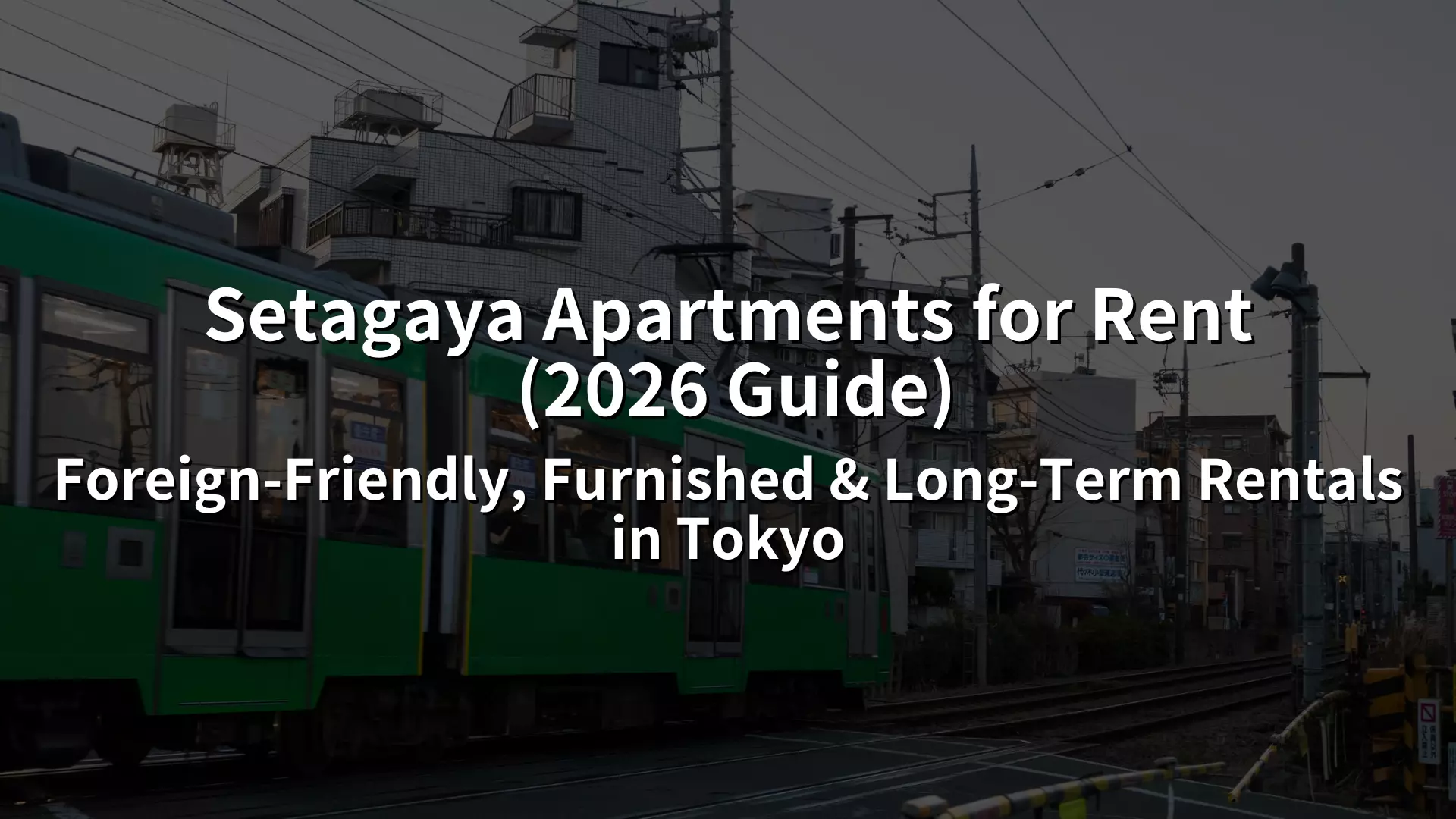
Setagaya-ku (Setagaya Ward) is the most populous of Tokyo’s 23 special wards, with roughly 940,000 residents. Despite its size, it maintains a distinctly residential character that sets it apart from busier commercial hubs like Shinjuku or Shibuya. Here are the top reasons foreigners choose to rent in Setagaya:
Excellent Transportation Access
Setagaya is served by multiple train lines, including the Tokyu Den-en-toshi Line, Tokyu Setagaya Line, Odakyu Odawara Line, and the Keio Inokashira Line. From stations like Sangenjaya or Shimokitazawa, you can reach Shibuya in as little as 4 minutes and Shinjuku within 15 to 20 minutes. This makes Setagaya an ideal base for professionals commuting to central Tokyo offices.
Green Spaces and a Relaxed Atmosphere
Setagaya is home to some of Tokyo’s most beloved parks and green spaces, including Kinuta Park, Komazawa Olympic Park, and the scenic Tamagawa riverside area. Todoroki Valley, one of the only natural ravines within Tokyo’s 23 wards, is also located here. For residents who want nature and city life in one place, Setagaya delivers.
Cultural and Lifestyle Appeal
Neighborhoods like Shimokitazawa are famous for their indie music scene, vintage clothing shops, and cozy cafes. Sangenjaya offers an eclectic mix of izakayas, restaurants, and art galleries. Futako-Tamagawa, often called “Nicotama,” features upscale shopping and riverside recreation. Setagaya truly has something for every lifestyle.
Family-Friendly Environment
Setagaya is consistently ranked among the best wards in Tokyo for families. It boasts reputable public and international schools, children’s play facilities, and a generally safe, quiet atmosphere. Several international school campuses serve the area, making it popular with expat families.
Average Rent in Setagaya (Studio to Family Apartments)
Setagaya falls into the mid-range tier of Tokyo’s rental market. While it is more affordable than premium central wards like Minato or Shibuya, prices can vary significantly depending on the specific area, proximity to a station, building age, and apartment layout. Below is an overview of average monthly rents in Setagaya as of 2026:
| Apartment Type | Size (approx.) | Monthly Rent | Best For |
| 1R / 1K (Studio) | 15–25 m² | ¥70,000–¥100,000 | Students, solo expats |
| 1DK / 1LDK | 25–45 m² | ¥100,000–¥180,000 | Couples, working professionals |
| 2LDK | 45–65 m² | ¥180,000–¥250,000 | Small families, couples |
| 3LDK+ | 65–100+ m² | ¥250,000–¥400,000+ | Larger families |
Rents tend to be higher near popular stations such as Sangenjaya, Shimokitazawa, and Futako-Tamagawa, while areas further along the Tokyu Setagaya Line or Odakyu Line (like Gotokuji, Kyodo, or Chitose-Funabashi) can offer more competitive prices. Properties built within the last five years also command a premium compared to older buildings.
XROSS HOUSE Tip: If you are looking for a budget-friendly furnished option in Setagaya, XROSS HOUSE offers private rooms starting from around ¥35,000 to ¥48,000 per month with no deposit, no key money, and all utilities included—significantly less than a standard apartment lease.
Search for a room
Only furnished properties with appliances are listed!
Best Areas in Setagaya for Foreigners
Setagaya is a large ward with diverse neighborhoods. Here are the most popular areas for foreign residents:
Shimokitazawa
Known as Tokyo’s bohemian neighborhood, Shimokitazawa (“Shimokita”) is a magnet for young creatives, students, and expats. It is located along the Keio Inokashira Line and Odakyu Line, offering direct access to both Shibuya and Shinjuku. The area is packed with live music venues, vintage shops, independent theaters, and international restaurants. Studio apartments here typically range from ¥80,000 to ¥110,000 per month.
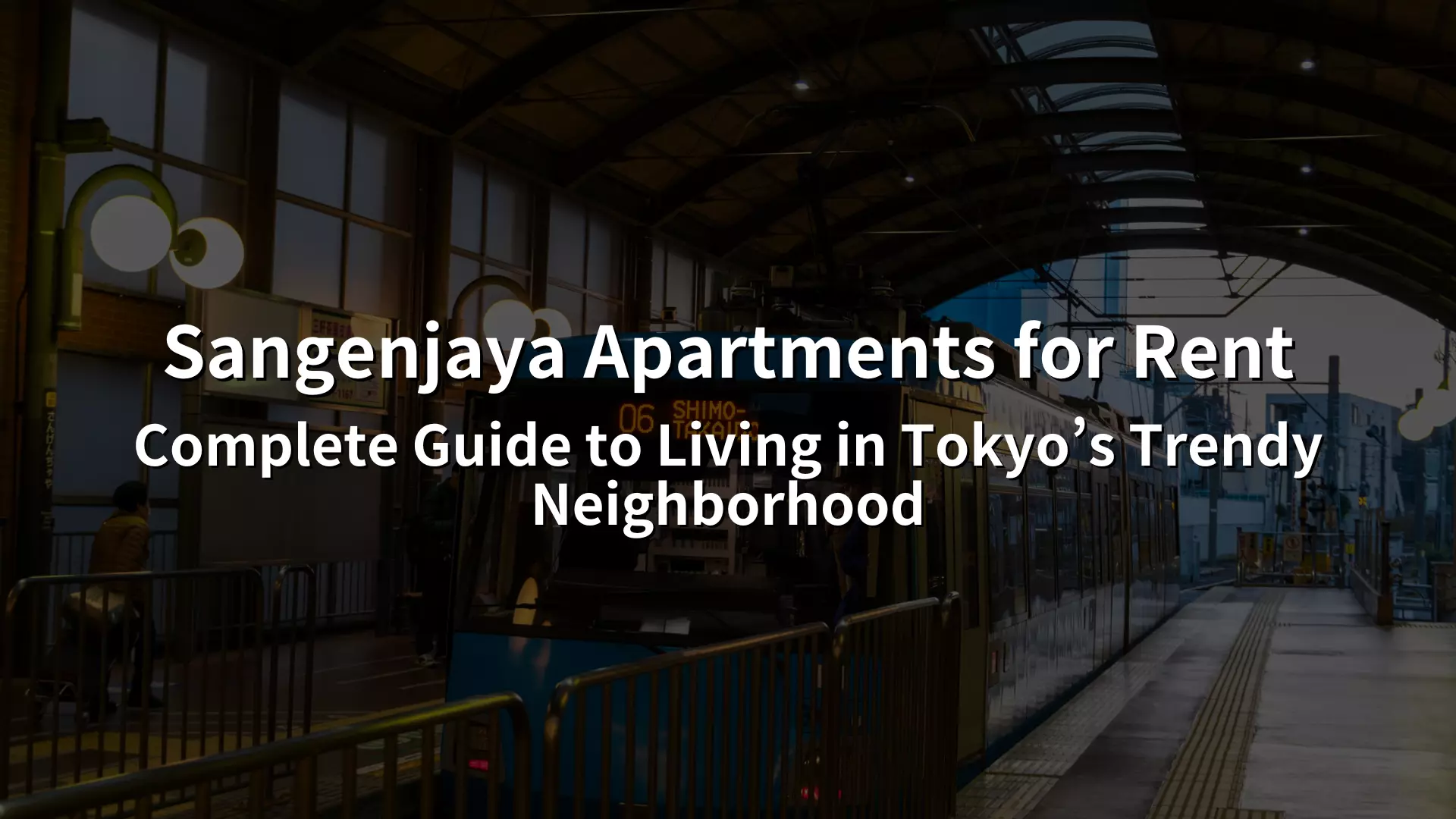
Sangenjaya
Sangenjaya (“Sancha”) is a lively district just two stops from Shibuya on the Den-en-toshi Line. It has a vibrant food and nightlife scene with hundreds of small bars and restaurants. The area has become increasingly popular with younger expats who want a local Tokyo experience without sacrificing convenience. XROSS HOUSE operates several properties near Sangenjaya station, making it easy to find a furnished room in this area.
Futako-Tamagawa
For families and professionals seeking a more upscale environment, Futako-Tamagawa offers premium shopping at Tamagawa Takashimaya and Rise, easy access to the Tamagawa riverside, and a generally polished residential feel. Rents here are at the higher end of Setagaya’s range, but the quality of life is excellent.
Kyodo and Gotokuji
These neighboring areas along the Odakyu Line offer a quieter, more traditional Tokyo living experience. Kyodo has a well-stocked shopping street and is known for its laid-back atmosphere. Gotokuji is home to the famous Gotokuji Temple—the birthplace of the lucky cat (maneki-neko). Both areas offer relatively affordable rents compared to Shimokitazawa or Sangenjaya, and XROSS HOUSE has furnished apartment options in this area starting from ¥35,000 per month.
Komazawa
Located near Komazawa Olympic Park, this area appeals to active residents who enjoy running, cycling, and outdoor recreation. It offers convenient access to the Den-en-toshi Line and is a short ride from Shibuya. The neighborhood has a calm, residential vibe with local supermarkets, cafes, and restaurants.
Furnished Apartments in Setagaya (Short-Term & Long-Term)
One of the biggest challenges for foreigners moving to Japan is furnishing an apartment from scratch. Traditional Japanese rentals are almost always unfurnished—meaning you need to buy or rent everything from a bed and desk to a refrigerator and washing machine. This is not only expensive but also impractical for short-term residents.
Why Choose a Furnished Apartment?
Furnished apartments solve this problem by providing everything you need on day one. They are particularly popular with international students, short-term workers, corporate transferees, and anyone who wants a hassle-free move-in experience. Furnished apartments in Setagaya typically include a bed, desk, refrigerator, microwave, washing machine, air conditioner, and Wi-Fi.
XROSS HOUSE: Furnished Living in Setagaya
XROSS HOUSE (x-house.co.jp/en/) specializes in fully furnished apartments and share houses across Tokyo, with multiple properties in Setagaya-ku. Their apartments come equipped with furniture and appliances, and the move-in process is designed to be foreigner-friendly—you can even complete your application online from overseas via smartphone.
- Key advantages of XROSS HOUSE include:
- Fully furnished rooms (bed, desk, TV, refrigerator, microwave, washing machine, air conditioner, and Wi-Fi included)
- No security deposit, no key money, and no guarantor required
- Short-term stays welcome (minimum one month in most properties)
- Rent starting from approximately ¥35,000/month for shared houses and ¥38,000/month for private furnished apartments
- Online application available in multiple languages (English, Korean, Chinese, Vietnamese, Nepali, and more)
- Free internal transfers—if your workplace or school changes, you can move to another XROSS HOUSE property at no extra cost
- Properties located near key Setagaya stations including Sangenjaya, Shimokitazawa, Gotokuji, Kyodo, and Sakurajosui
Whether you are staying for a month or a year, XROSS HOUSE offers a flexible and affordable alternative to traditional apartment hunting in Setagaya.
Search for a room
Only furnished properties with appliances are listed!
Foreign-Friendly Apartments: What to Expect
The Japanese rental market has historically posed challenges for foreigners. Language barriers, guarantor requirements, and some landlords’ reluctance to rent to non-Japanese tenants can make the search frustrating. However, the situation has improved significantly in recent years, and Setagaya is one of the more welcoming wards for international residents.
Common Challenges Foreigners Face
When searching for apartments in Setagaya, foreign renters may encounter several common hurdles. Many landlords still require a Japanese guarantor (rentai hoshounin), though guarantor companies are now widely available as an alternative. Language can be another barrier, as some property listings and agents operate primarily in Japanese. Additionally, certain buildings may have policies that restrict foreign tenants, although this is becoming less common in popular expat-friendly areas.
What “Foreign-Friendly” Means in Japan
A property described as “foreign-friendly” in Japan generally means the landlord explicitly welcomes non-Japanese tenants, the real estate agent offers English-language support, the application process can accommodate residents without a Japanese guarantor (using a guarantor company instead), and the lease terms and communication are available in English or other languages. Platforms such as GaijinPot Apartments, Real Estate Japan, and wagaya Japan specialize in listing foreigner-friendly properties in areas like Setagaya.
XROSS HOUSE: Built for International Residents
XROSS HOUSE was designed from the ground up to serve international residents. There is no guarantor requirement, the entire application process is available in over 10 languages, and the support team can assist you in English and other major languages. This eliminates many of the typical friction points foreign renters encounter in the Japanese housing market.
Apartment Types in Japan Explained (1R, 1K, 1LDK)
If you are new to Japan’s rental market, apartment layout codes can be confusing. Japanese real estate listings use a shorthand system to describe room configurations. Understanding these codes is essential when searching for your ideal apartment in Setagaya.
| Layout | Meaning | Description | Typical Size |
| 1R | One Room | A single room with no partition between living space and kitchen. | 13–20 m² |
| 1K | 1 Room + Kitchen | One room with a small separate kitchen area (under 4.5 tatami mats). | 18–25 m² |
| 1DK | 1 Room + Dining Kitchen | One room with a larger kitchen/dining area (4.5–8 tatami mats). | 25–35 m² |
| 1LDK | 1 Room + Living/Dining/Kitchen | One bedroom plus a separate living, dining, and kitchen area (8+ tatami mats). | 35–50 m² |
| 2LDK | 2 Rooms + LDK | Two bedrooms with a separate living/dining/kitchen space. | 45–70 m² |
| 3LDK | 3 Rooms + LDK | Three bedrooms with a living/dining/kitchen area. Ideal for families. | 65–100+ m² |
The number before the letters indicates the number of separate rooms (bedrooms). The letter codes describe the kitchen and living space. For most single expats or students in Setagaya, a 1K or 1R apartment is the most common and affordable choice. Couples typically opt for a 1LDK, while families usually need a 2LDK or larger.
Search for a room
Only furnished properties with appliances are listed!
How to Rent an Apartment in Setagaya (Step-by-Step Guide)
Renting an apartment in Japan involves a specific process that differs from many Western countries. Here is a step-by-step guide to help you navigate the rental process in Setagaya:
Step 1: Searching Listings
Start your apartment search online using English-friendly platforms such as GaijinPot Apartments, Real Estate Japan, wagaya Japan, or Suumo (in Japanese). Filter listings by location (Setagaya-ku), rent budget, apartment size, and distance from a station. For furnished options, check XROSS HOUSE’s website directly, as their listings are specifically designed for foreign residents.
Step 2: Contacting an Agent
Once you find properties of interest, contact the real estate agent (fudousan-ya) listed on the posting. Many agents in areas popular with foreigners offer English-language support. When you reach out, confirm the property’s availability, ask about any restrictions on foreign tenants, and inquire about the total move-in cost (initial fees, monthly rent, and maintenance fees).
Step 3: Property Viewing
Schedule a viewing (naiken) to see the property in person. During the viewing, check the condition of the apartment, the surrounding neighborhood, the distance to the nearest station, and the availability of supermarkets and other daily necessities. If you are overseas, some agents and providers like XROSS HOUSE offer virtual tours or allow you to book a room based on online listings.
Step 4: Application & Screening
After selecting an apartment, you submit a rental application (nyukyo-shinsei). The landlord or property management company will conduct a screening process that typically reviews your employment status or enrollment at a school, your income (or proof of financial support), your guarantor information (or guarantor company details), and your visa status (a valid residence card is usually required). This process typically takes three to seven business days.
Step 5: Contract Signing
Once approved, you will sign a lease agreement (chinshaku keiyaku). The contract is usually for two years, with an option to renew. At this point, you pay the initial costs, which typically include one to two months’ rent as a security deposit (shikikin), one month’s rent as key money (reikin, a non-refundable gift to the landlord), one month’s rent as an agency fee (chukai tesuryo), fire insurance, and a guarantor company fee if applicable. Note that XROSS HOUSE eliminates most of these upfront costs, requiring only a registration fee and the first month’s rent.
Step 6: Move-In Process
On your move-in date, you receive the keys and can begin setting up your new home. For traditional unfurnished apartments, this means arranging delivery of furniture and appliances, setting up utility accounts (electricity, gas, water), and registering your address at the local ward office. With a furnished provider like XROSS HOUSE, most of these steps are already taken care of—you can move in with just a suitcase.
Cost of Living in Setagaya
Beyond rent, it is important to budget for the overall cost of living in Setagaya. Here is an approximate monthly breakdown for a single person:
| Expense Category | Estimated Monthly Cost |
| Rent (1K apartment) | ¥70,000–¥100,000 |
| Utilities (electric, gas, water) | ¥8,000–¥15,000 |
| Internet / Wi-Fi | ¥4,000–¥6,000 |
| Groceries | ¥30,000–¥50,000 |
| Transportation (train pass) | ¥8,000–¥15,000 |
| Mobile phone | ¥3,000–¥6,000 |
| Dining out / entertainment | ¥20,000–¥40,000 |
| Total (approx.) | ¥143,000–¥232,000 |
Setagaya’s cost of living is moderate compared to premium central wards. Groceries and daily necessities are readily available from supermarkets like Summit, Seiyu, and OK Store. The many local restaurants and izakayas in areas like Shimokitazawa and Sangenjaya provide affordable dining options as well.
XROSS HOUSE Savings: With XROSS HOUSE, utilities and Wi-Fi are typically included in the monthly fee, which can save you ¥10,000 to ¥20,000 per month compared to a standard apartment where you manage these separately.
Pros and Cons of Living in Setagaya
Like any neighborhood, Setagaya has its strengths and trade-offs. Here is an honest assessment:
Pros
- Excellent transportation access to Shibuya, Shinjuku, and other major hubs via multiple train lines
- Abundant green spaces and parks, including Kinuta Park, Komazawa Olympic Park, and the Tamagawa riverside
- Vibrant culture and lifestyle scene in neighborhoods like Shimokitazawa and Sangenjaya
- Family-friendly environment with reputable schools, children’s facilities, and a safe atmosphere
- More affordable than central wards like Minato and Shibuya, with a wide range of apartment options
- Strong community feel with local shopping streets (shotengai), festivals, and neighborhood events
- Growing number of foreign-friendly rental options and services
Cons
- Further from central business districts than wards like Chiyoda or Minato—commute times can be 20 to 40 minutes
- Some areas have limited nightlife options compared to Shibuya or Shinjuku
- Parts of Setagaya can feel suburban and quiet, which may not suit those seeking a fast-paced urban lifestyle
- Larger family apartments (3LDK and above) can be expensive and limited in supply
- Not all landlords in the ward are open to renting to foreigners, though this is steadily improving
Frequently Asked Questions About Setagaya Apartments
Can foreigners rent apartments in Setagaya without a guarantor?
Yes. While many traditional landlords require a Japanese guarantor, you can use a guarantor company (hoshougaisha) as a substitute. Services like XROSS HOUSE eliminate the guarantor requirement entirely, making it much easier for foreign tenants.
What is the average rent for a studio apartment in Setagaya?
A 1R or 1K studio apartment in Setagaya typically costs between ¥70,000 and ¥100,000 per month, depending on the location and building age. Furnished rooms through XROSS HOUSE start from approximately ¥35,000 per month.
Are there furnished apartments available in Setagaya for short-term stays?
Yes. While most standard Japanese apartments are unfurnished, providers like XROSS HOUSE offer fully furnished rooms in Setagaya with flexible lease terms, including month-to-month options ideal for short-term residents.
How much are the initial move-in costs for a Setagaya apartment?
For a traditional apartment, expect to pay four to six months’ rent upfront (deposit, key money, agency fee, insurance, and first month’s rent). With XROSS HOUSE, initial costs are significantly lower—typically just a registration fee and your first month’s rent.
Which Setagaya neighborhoods are best for expats?
Shimokitazawa, Sangenjaya, and Futako-Tamagawa are the most popular among foreign residents due to their excellent transit access, dining and entertainment options, and relatively high availability of foreign-friendly housing.
Is Setagaya a good area for families with children?
Absolutely. Setagaya is widely regarded as one of the best family-friendly wards in Tokyo, with excellent parks, safe neighborhoods, good public schools, and proximity to several international schools.
How long does it take to commute from Setagaya to central Tokyo?
Commute times vary by station, but most Setagaya locations are 10 to 30 minutes from Shibuya and 20 to 40 minutes from Tokyo Station or Shinjuku, depending on the train line and time of day.
Can I apply for a XROSS HOUSE apartment from overseas?
Yes. XROSS HOUSE offers a fully online application process available in multiple languages, so you can secure your room from anywhere in the world before arriving in Japan.
Ready to find your apartment in Setagaya? Visit XROSS HOUSE to browse furnished apartments and share houses available in Setagaya-ku, Tokyo. With no deposit, no key money, and a fully furnished move-in experience, XROSS HOUSE makes starting your life in Tokyo easy and affordable. Contact the team via email, phone, LINE, or WhatsApp today.