What are the benefits of living alone?
Living alone has many benefits that you cannot get from living at home or with family. One of its major features is the freedom to decide your own lifestyle and where you live, as well as the natural acquisition of skills necessary for daily life, such as housework and money management. Another appealing aspect of living alone is that it can lead to mental independence and improved self-management skills.
Here we will explain in detail the main benefits of living alone.
Live at a free rhythm
One of the great benefits of living alone is being able to set your own rhythm of life. You don't have to adjust your wake-up time, bedtime, meal times, etc. to those around you, and you can tailor your life to fit your work, school, and hobbies. This is a huge advantage for people who work night shifts or shift jobs, or who have set times when they want to concentrate on studying or working.
You also have the freedom to spend your days off at home or go out without having to worry about anyone else. Living at your own pace reduces stress and makes it easier to maintain a balance between mind and body, which is another appealing aspect of living alone.
You can choose where and where to live
Living alone gives you the freedom to choose where to live, focusing on the convenience of commuting to work or school and the surrounding environment. A major benefit is that you are not tied to the location of your parents' home, and can choose a place that suits your lifestyle, such as an area close to work or school, near a station with good transportation access, or an area with convenient shopping. Shorter travel times reduce the burden of commuting to work or school, making it easier to secure more free time.
In addition, by creating a living environment that takes into consideration the safety, atmosphere of the town, surrounding facilities, etc., you can increase your satisfaction with life. Being able to live in an area that suits you is one of the attractions of living alone.
You can arrange and decorate the room to your liking
Living alone gives you the freedom to choose your room's layout and interior. You can easily create a comfortable space because you can reflect your own preferences in the furniture arrangement, color, lighting, and even the selection of accessories. Since you don't have to share with anyone, it's easier to realize your ideal home, such as a minimalist room or a space dedicated to your hobbies.
Having your own space gives you more time to relax and improves your satisfaction with life. Another benefit of living alone is that you can enjoy the joy of organizing your home.
It's easier to concentrate on hobbies, work, and studies
One advantage of living alone is that there are fewer noises and interferences from the surrounding environment, making it easier to create an environment where you can concentrate on your hobbies, work, or studies. You can use your own room as a work space and not be interrupted when you want to concentrate. Living alone is also an efficient environment for people who work from home, study for qualifications, or work a side job.
It's also easy to switch between concentration and rest, allowing you to live a well-balanced life at your own pace. The fact that it's easy to use your time effectively is a benefit that leads to growth and results.
Housework and life skills are acquired naturally
When you live alone, you have to do all the housework yourself, such as cleaning, laundry, and cooking. As a result, you will naturally acquire housework skills as you continue to live there, and your ability to cope with everyday life will improve. It may seem difficult at first, but by finding efficient ways and ways that suit you, you will be able to do housework without difficulty.
These life skills are important experiences that will be useful when considering cohabitation or marriage in the future. Living alone is a good opportunity to develop the ability to live independently.
Learn how to manage and use money
When you live alone, you have to manage your living expenses, such as rent, utilities, and food, by yourself. This naturally makes you conscious of how you spend your money and manage your budget. By understanding your monthly expenses and finding ways to reduce waste, you can easily develop a sense of money.
The habit of saving money and thinking about future expenses is an important skill to have as a member of society. The financial management skills you acquire through living alone will lay the foundation for a stable life in the future.
Developing independence and self-management skills
Living alone requires you to make all your own decisions and act responsibly. This naturally fosters independence and self-management skills. Small everyday decisions, such as managing your health, time, and dealing with problems, lead to personal growth.
By experiencing a situation where you cannot rely on anyone, you will develop the ability to think and act independently and will grow mentally. Living alone can be said to be an experience that will improve your basic skills as a member of society.
It's easy to invite people over and still have privacy
Living alone allows you to invite friends or loved ones over at your own discretion, making it easier to secure private time. One advantage of living alone is that you can invite people over without hesitation, even in situations where you would need to be considerate of your family if you lived with your parents.
Also, having a space where you won't be disturbed by anyone allows you to cherish your own time. It's easy to switch between work and personal time, and it's easy to maintain a sense of mental space, which is another appealing aspect of living alone.
I can feel the gratitude for my family and home.
When people start living alone, many realize how much their parents supported them in their lives. By taking on the responsibility of cooking, doing housework, and providing daily support, they can realize how important their family is to them. This realization can also be an opportunity to reevaluate their relationship with their family and deepen their gratitude.
Living alone can be a valuable experience that allows you to reaffirm your bonds with your family by keeping them apart.
What are the disadvantages of living alone?
While living alone has many benefits, it also has disadvantages that can cause stress and anxiety compared to living with your parents or living with other people. In particular, the burden of paying for living expenses, the burden of housework, and concerns about health and security are issues that many people tend to face. Understanding these beforehand can help prevent gaps and regrets after moving out on your own.
Here we will explain in detail the major disadvantages of living alone that you should be aware of.
Rent, utilities, and living expenses are all your responsibility
The biggest disadvantage of living alone is that you have to pay all of your living expenses, including rent, utilities, and food, yourself. Fixed costs and daily expenses that are hard to be aware of when living with your parents occur every month, so it's easy to feel like your expenses are high compared to your income. Rent in particular accounts for a large portion of living expenses, so choosing an unreasonable property can put a strain on your household budget.
In addition, electricity, gas, water, communication fees, and the cost of purchasing daily necessities can add up, and in many cases expenses can increase more than expected. Living alone requires a well-planned lifestyle that takes into account the balance of income and expenditure.
I have to do all the housework myself
Living alone requires you to do all the housework yourself, such as cleaning, laundry, cooking, and taking out the trash. Finding time to do housework can be surprisingly stressful in a busy daily life, and it can easily get put off during busy periods with work or school. Another disadvantage is that neglecting housework can lead to messy rooms and a worsening living environment.
Also, if you are not feeling well and there is no one to take over, you may end up overdoing it. When living alone, it is important to find ways to continue doing housework without straining yourself and to make it a habit.
Life rhythms are easily disrupted
While living alone offers a high degree of freedom, it also has the disadvantage of disrupting your daily rhythm. With no one to manage your wake-up and bedtime, it's not uncommon to stay up late or eat irregularly. This is especially true when working from home or on long vacations, as it can easily lead to a reversed day and night schedule, which can lead to poor health and a lack of concentration.
Also, you should be careful not to eat simple meals, which can lead to an unbalanced diet. One of the disadvantages of living alone is that it can easily affect your health if you are not conscious of self-management.
I worry about what will happen if I get sick or injured
Living alone can be a major source of anxiety if you become ill or injured and don't have anyone nearby to rely on. Even if you're unable to move due to a high fever or poor physical condition, you may have to cook, go shopping, and go to the hospital on your own. Not having anyone to call for help in an emergency can be a mental burden.
In addition, there are cases where people put off seeing a doctor while symptoms are still mild, and health management tends to be put off.If you live alone, it is important to think about preparations and communication systems in case of an emergency.
You need to think about crime prevention and safety measures yourself.
When living alone, you must make all your own decisions regarding crime prevention and safety measures. In particular, if people outside know that you live alone, the risk of burglary and suspicious people increases. In addition to equipment such as locks, auto-locks, and security cameras, you also need to be careful about your daily actions.
For example, you need to avoid any actions that might reveal that you are at home or unexpected visitors. Having to be aware of crime prevention is one of the disadvantages of living alone.
I sometimes feel lonely and isolated
Living alone can make you feel lonely and isolated at times. Coming home from work or school to an empty room can be a mental strain until you get used to it. It's especially easy to feel anxious when you're feeling unwell or depressed, and there's no one around to talk to.
Furthermore, prolonged feelings of loneliness can lead to depression and a loss of motivation. One of the disadvantages of living alone is that you have to consciously make efforts to connect with others.
Search for a room
Only furnished properties with appliances are listed!
How to reduce the disadvantages of living alone
The disadvantages of living alone can be greatly mitigated with some ingenuity. By reviewing how you manage your living expenses, how you do housework, how you are aware of crime prevention, and how you interact with others, you can live comfortably while reducing burdens and anxiety. It is also important to prepare for unexpected situations, such as illness or disasters.
Here we will explain some concrete steps you can take to help you continue living alone without any stress.
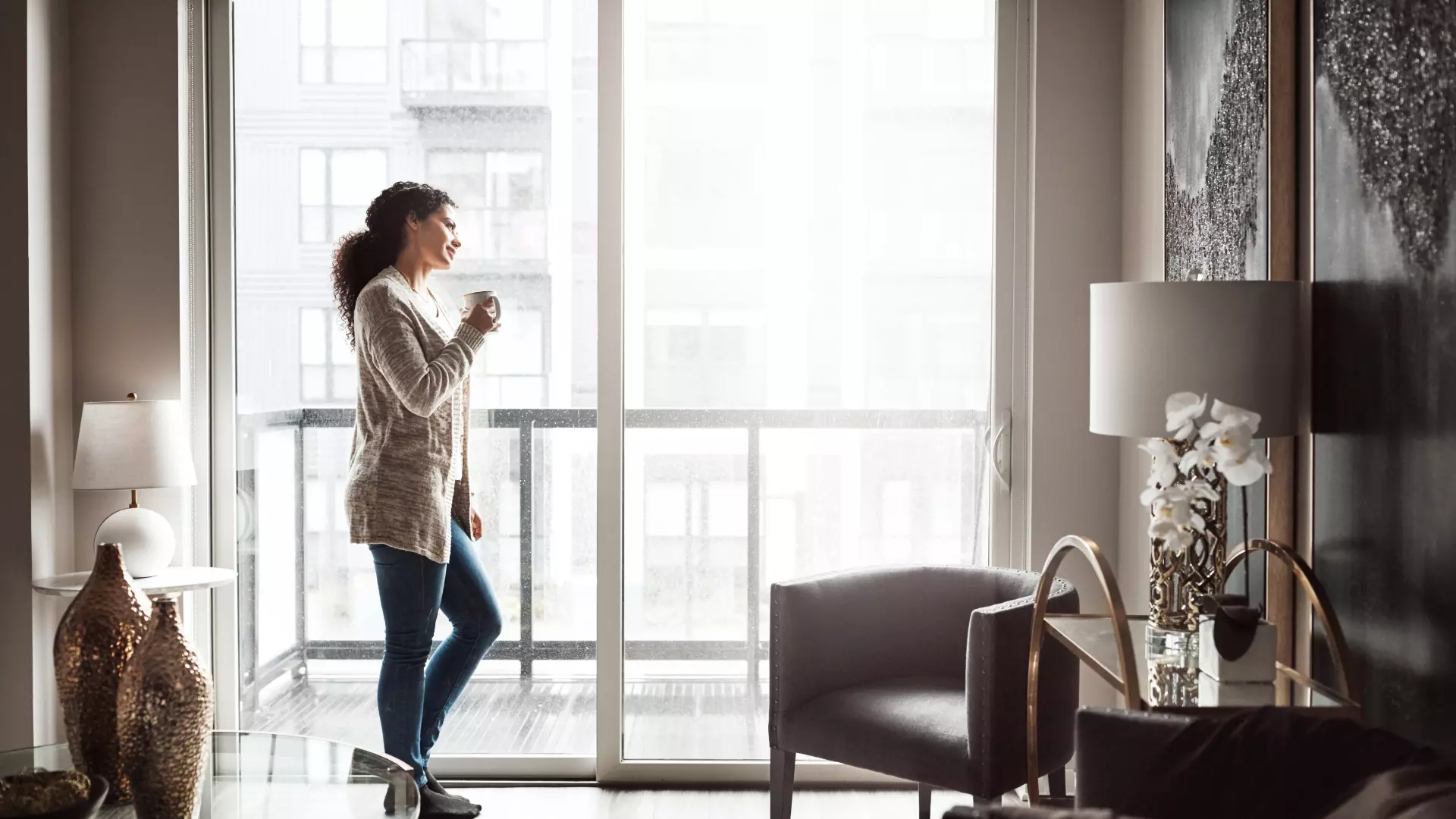
Tips for keeping living expenses down (rent, fixed expenses, food expenses)
The most important thing to do to reduce the burden of living alone is to find ways to keep living expenses down. Rent in particular accounts for a large portion of your monthly fixed expenses, so it's important to set an amount that's not too difficult for your income. You may be able to keep costs down by understanding the average rent and adjusting factors such as the age of the building and distance from the station.
Additionally, fixed costs such as electricity, gas, and communication fees can be reduced by reviewing your contract plan and being mindful of saving money. You can also make big savings on food costs by simply cutting down on eating out and cooking at home. The key is to keep track of your daily expenses and strive to save money in a way that you can continue without straining yourself.
Create a smooth housework routine
Creating a reasonable housework routine is an effective way to reduce the burden of housework. Trying to do everything perfectly can leave you exhausted, so it's important to find a method that suits your lifestyle, such as "doing a little every day" or "doing it all on the weekend." By deciding how often to clean and do laundry and making it a habit, you can prevent tasks from piling up.
You can also reduce the time and effort spent on housework by using convenient home appliances and time-saving items. If you live alone, establishing a housework style that doesn't require too much effort is the key to living comfortably for a long time.
Raising awareness of crime prevention (property selection and facilities)
To reduce the anxiety of living alone, it is essential to raise awareness of crime prevention. First, when choosing a property, it is important to check whether it is equipped with facilities such as auto-locks, monitor-equipped intercoms, and security cameras.
It's also a good idea to check the neighborhood's security, the number of people walking around at night, and whether or not there are streetlights. Even after moving in, you should be careful about your daily actions, such as making sure to lock the door and not letting others know you're at home. Living with an awareness of crime prevention measures can increase the safety of living alone.
Ways to maintain connections with people
To alleviate the loneliness and isolation that can easily be felt when living alone, it is important to consciously make efforts to maintain connections with others. Having opportunities to interact with others, such as regularly contacting family and friends and participating in communities outside of work or school, will lead to mental stability.
Additionally, by using online calls and social media, you can connect with people regardless of distance. By consciously making time to talk to others, you can reduce feelings of loneliness and enjoy living alone in a positive way.
Preparing for illness and disasters
If you live alone, it's important to prepare in advance for when you get sick or in case of a disaster. By having your regular medications, thermometer, emergency food, etc. ready, you can calmly deal with sudden illnesses. It's also a good idea to prepare drinking water, simple food, flashlights, etc. in case of a disaster.
It is also important to know the contact details of family members and acquaintances who can be contacted in an emergency. By preparing for the worst case scenario, you can greatly reduce the anxiety of living alone.
Who is suited to living alone and who isn't?
While living alone offers a high degree of freedom and many benefits, it may not be suitable for everyone. Depending on your personality, lifestyle, and financial sense, it can be a burden or stressful experience. In order to choose a lifestyle that suits you, it is important to understand the characteristics of people who are suited to living alone and those who are not.
Here we will explain each trend in detail.
Characteristics of people suited to living alone
The first characteristic of people suited to living alone is the ability to think and act independently. People who can control their own lifestyle, health, and finances will find it easier to lead a stable life even when living alone.
Living alone is also suitable for people who can enjoy a certain amount of solitude and time alone. Living alone is a great advantage for people who want to focus on their hobbies, work, or studies in a quiet environment. Furthermore, people who are flexible enough to consult with others when they are in trouble tend to be able to overcome problems without difficulty.
Characteristics of people who are not suited to living alone
On the other hand, people who are not suited to living alone tend to rely on others for all aspects of their lives. If you are not good at housework or managing money, living alone can be a big burden. Also, people who tend to feel a strong sense of loneliness and want to be with others all the time tend to become mentally unstable when living alone.
Furthermore, people who spend money impulsively without planning are at a higher risk of not having enough money to live on.When considering living alone, it is important to objectively review your personality and lifestyle.
Search for a room
Only furnished properties with appliances are listed!
What is the difference between living at home and living alone?
When considering living alone, many people worry about the differences between living alone and living with their parents. There are clear differences between the two, such as freedom, lifestyle, costs, and psychological growth. The important criterion for deciding is not which is better or worse, but whether it suits your values and life stage.
Here, we will compare living with your parents and living alone from a specific perspective.
Differences in freedom and lifestyle
In terms of freedom and lifestyle, living alone offers far more freedom. When you live alone, you can decide everything for yourself, from when you wake up and go to bed, when you eat, and how you spend your days off. Not having to worry about your family and being able to live at your own pace is a big attraction.
On the other hand, living with your parents requires you to adjust to a certain extent to your family's daily rhythms, which can sometimes restrict your activities. On the other hand, living with your parents also means you can receive support with housework and daily life, which gives you a sense of security. Whether you're suited to this lifestyle or not depends on whether you value freedom or a stable life.
Differences in costs and ease of saving
When comparing costs, living with your parents tends to make it easier to cut down on expenses and save money. This is because you don't have to pay the full amount of rent and utility bills, so your monthly fixed costs are often lower. On the other hand, if you live alone, you have to pay all of your living expenses, such as rent, utility bills, and food, so your disposable income tends to be lower.
However, living alone makes you more conscious of managing your own expenses, and if you live a planned life, it is possible to reduce wasteful spending. If you prioritize short-term savings, living with your parents is a good choice, but if you prioritize acquiring a long-term sense of money, living alone is a good choice.
Differences in mental and developmental aspects
Living alone is often a great experience in terms of mental health and growth. When living alone, you are responsible for all of your own decisions and responsibilities, so you naturally develop independence and problem-solving skills. By experiencing things like managing your health, time, and dealing with problems, it can be said to be an environment conducive to mental growth. On the other hand, living at home provides a sense of security and less mental stress, but it can also limit opportunities for independence.
However, it is possible to consciously act independently even while living at home. In both types of lifestyles, having a sense of purpose leads to growth.
Things you should know before starting to live alone for the first time
When you start living alone for the first time, if you make a decision based solely on impulse or imagery, you are likely to later find that it is not what you expected. It is especially important to understand in advance the initial costs, monthly living expenses, and criteria for choosing a property. Also, the burden and effort involved can vary greatly depending on how you prepare your furniture and appliances.
Here we will explain the basic points you should keep in mind when living alone for the first time.
Estimated initial costs and living expenses for living alone
When starting to live alone, you need to understand the initial costs of moving in and monthly living expenses. Initial costs include security deposits, key money, agent fees, advance rent, and fire insurance, and are generally estimated to be four to six months' rent. In addition, you will need to pay for furniture and appliances. Monthly living expenses include rent, utilities, food, communication fees, and daily necessities, and vary depending on the region and lifestyle.
By creating a budget that is reasonable for your income, you can reduce financial worries and make it easier to continue living a stable life on your own.
Important points to consider when choosing a property
Choosing a property is an important factor that greatly affects the satisfaction of living alone. The first thing to focus on is rent, and aiming for it to be within one-third of your income will make it easier to live comfortably. Next, you should also check the convenience of commuting to work or school, the surrounding environment, and the safety of the area.
In addition, factors such as the layout, storage space, sunlight, and noise level will also affect your actual lifestyle. Furthermore, checking the security equipment and building management status will help you choose a home where you can live safely. The key to avoiding mistakes is to organize your requirements and set priorities before searching.
The option of furnished and appliance-equipped properties
For people living alone for the first time, a property with furniture and appliances is a good option. Since a bed, refrigerator, washing machine, microwave, etc. are already provided, it is easy to keep initial costs down and the hassle of moving is reduced. This is especially beneficial for students, new employees, and people planning to live alone for a short period of time, as there is no burden of purchasing or disposing of appliances.
On the other hand, the monthly rent may be set a little high, so it's important to compare the total amount. It's a good idea to consider whether it suits your lifestyle.
Search for a room
Only furnished properties with appliances are listed!
Tips for making the most of the benefits of living alone
Living alone offers a high degree of freedom and makes it easier to live the way you want, but making the wrong choice can lead to burdens and dissatisfaction. To make the most of the benefits, it's important to choose a home, set a budget, and organize your living environment. By incorporating ideas that suit your personality and lifestyle, living alone can be more comfortable and fulfilling.
Here are some practical tips to help you avoid regrets.
Choose the type of home that's right for you
To increase your satisfaction living alone, it is important to choose the type of housing that suits you.
For example, if you want a quiet environment, a property in a residential area would be suitable, while if you prioritize convenience, an area near a station or with many commercial facilities would be suitable. Size and layout are also important points, and if you work from home a lot, choosing a 1K or 1DK apartment rather than a studio apartment will make it easier to balance your life. Furthermore, by choosing a property with furniture and appliances or a property with a well-established management system, you can reduce the initial burden and daily hassle.
Since a home is the foundation of your life, it is important to choose one with a specific image of your lifestyle in mind.
Set a reasonable budget
Setting a reasonable budget is essential to living comfortably on your own for a long time. Rent is a fixed expense that occurs every month, and if it is too high compared to your income, you will not be able to afford to live comfortably overall.
Generally, it is considered safe to keep rent to no more than one-third of your take-home pay. It is also important to consider the total amount, including not only rent but also utility bills, communication costs, food, and entertainment expenses. Creating a flexible budget makes it easier to deal with unexpected expenses and save for the future. Setting a well-planned budget is key to increasing your sense of security when living alone.
Creating an environment where being alone does not mean feeling lonely
To make the most of the benefits of living alone, it's important to create an environment where being alone doesn't mean being lonely. While it's important to enjoy time alone, completely cutting yourself off from other people can make you feel more lonely. It's effective to consciously create opportunities to interact with others, such as by regularly contacting family and friends and participating in communities outside of work or school.
Also, choosing a home that is convenient for going out and has shared spaces can naturally increase opportunities to interact with others. Maintaining a moderate level of connection can help you enjoy living alone in a positive way.
FAQ
Many people considering living alone have concerns and questions, such as "Are there really benefits?", "When is the typical time to start?", and "Will money be tight?". By resolving these questions in advance, you can reduce your anxiety about living alone and make it easier to make the right choice for you.
Here we answer some of the most frequently asked questions about living alone.
What is the biggest advantage of living alone?
The biggest advantage of living alone is the freedom it gives you. You can decide everything yourself, such as when you wake up, what you go to bed, what you eat, and how you spend your time, so you can live a life that suits your lifestyle.
Another major attraction is that living in an environment where you are not disturbed by others naturally develops independence and self-management skills. Furthermore, since you are free to choose where you live, you can choose a home that prioritizes convenience for commuting to work or school. Living alone can be said to be a lifestyle that gives you both freedom and growth.
At what age do most people start living alone?
There is no set age for starting to live alone, but many people tend to start around the age of 20 when they go on to higher education or get a job. It is common for people to leave their parents' home when they go to university or start their new career. On the other hand, some people start living alone a few years after joining the workforce, or when they change jobs or change their lifestyle.
What's important is not your age, but your income, lifestyle, and mental readiness. It's important to choose the timing that suits your situation.
Is it hard to afford to live alone?
Living alone means paying for everything from rent to utilities and food, so it can feel like money is tighter than living with your parents. However, if you set a reasonable rent and manage your living expenses, it doesn't have to be an excessive burden. By keeping track of your expenses and making efforts to keep fixed costs down, it is entirely possible to live a stable life.
Another benefit of living alone is that you can learn financial management skills. If you plan your life accordingly, living alone can be a realistic option.
summary
Living alone has many benefits, such as being able to achieve a free lifestyle and gaining independence and life skills. On the other hand, there are also disadvantages, such as having to pay for living expenses, housework, crime prevention, and feelings of loneliness, but these can be fully mitigated with advance preparation and ingenuity.
The key to living comfortably alone is choosing a home that suits you, setting a reasonable budget, and creating an environment that encourages connections with others. By making a decision after understanding both the advantages and disadvantages, you will be able to start living alone without any regrets. If you are considering living alone, please refer to the information in this article.